The Anatomy of a Drivetrain Malfunction: European Warnings vs. Ford Diagnostics
When a modern vehicle limits power or disables torque distribution, the dashboard often displays a vague, panic-inducing warning. For European owners, the infamous BMW 'Drivetrain Malfunction' message is a notorious catch-all fault. However, diagnosing the Ford Maverick drivetrain requires a completely different, highly granular approach. As we move through the 2026 model year, compact truck platforms are utilizing complex, transverse-based all-wheel-drive (AWD) architectures that demand advanced diagnostic strategies and targeted performance upgrades to handle increased torque loads.
To truly understand how to diagnose and bulletproof the Maverick's AWD system, we must first establish a baseline using the industry's most misunderstood fault logic: the BMW xDrive system. By contrasting BMW's masked fault codes with Ford's transparent UDS (Unified Diagnostic Services) protocols, tuners and technicians can build a superior framework for Maverick drivetrain performance and reliability.
Decoding the BMW Baseline: What 'Drivetrain Malfunction' Actually Means
On BMW platforms equipped with the ZF 8HP transmission and xDrive (such as the ATC13 or ATC35L transfer cases), the 'Drivetrain Malfunction' warning is rarely a single mechanical failure. It is a protective limp-mode triggered by the DME (Digital Motor Electronics) when it detects a deviation in expected torque delivery or chassis dynamics.
- The xDrive Actuator Gear (PN 27107568267): The most common mechanical cause is the stripping of the internal plastic gear inside the transfer case actuator motor. When the DME commands a torque split and the encoder wheel fails to register the physical movement, the system defaults to RWD and throws a 480B14 fault code.
- ZF 8HP Mechatronic Sleeve Leaks: The adapter sealing sleeves between the Mechatronic unit and the transmission casing harden and leak fluid onto the speed sensors, causing erratic shifting and secondary drivetrain faults.
- Cost to Repair: An OEM BMW actuator motor replacement ranges from $600 to $950, while a Mechatronic sleeve kit is under $50 but requires 8+ hours of labor to drop the valve body.
Unlike BMW's generic dashboard warnings, Ford's OBD-II and CAN-bus architecture provides specific, module-level diagnostic trouble codes (DTCs) that pinpoint the exact millimeter of a drivetrain failure, provided you are using the right software.
Ford Maverick Drivetrain Architecture: 8F35, PTU, and RDU
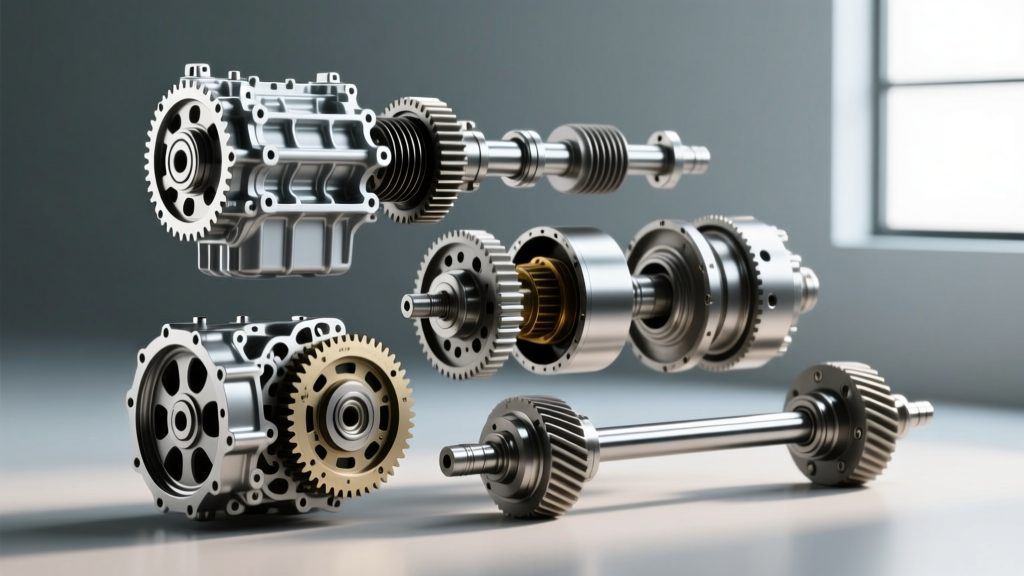
The 2026 Ford Maverick equipped with the 2.0L EcoBoost engine utilizes the 8F35 8-speed automatic transaxle. Because this is a transverse engine layout, the AWD system relies on a Power Transfer Unit (PTU) bolted directly to the transaxle, sending torque via a carbon-fiber or aluminum driveshaft to the Rear Drive Unit (RDU).
Common Maverick Drivetrain Faults
Instead of a generic dash light, a failing Maverick AWD system will trigger specific codes in the AWD Module (AWDM) and the Powertrain Control Module (PCM). Common culprits include:
- C1A03: Left Rear Wheel Speed Sensor - Often misdiagnosed as an ABS issue, but directly inhibits the RDU clutch pack from engaging to prevent binding.
- U0100: Lost Communication with ECM/PCM - A CAN-bus network failure often caused by chafed wiring harnesses near the PTU, where extreme heat degrades the loom.
- P0700 / P073x: Gear Ratio Errors - Indicative of 8F35 internal clutch pack slip, usually exacerbated by aggressive tuning without corresponding TCM line pressure adjustments.
Diagnostic Protocol: Pinpointing Maverick AWD Failures
Generic OBD-II scanners are useless for deep Ford Maverick drivetrain diagnosis. You must use FORScan with an MS-CAN/HS-CAN toggle adapter to access the AWDM and read live Parameter IDs (PIDs).
Step 1: RDU Clutch Coil Resistance Test
The RDU uses an electromagnetic clutch coil to engage the rear axle. If the AWDM detects an open or short circuit, it disables AWD entirely. Disconnect the RDU harness and measure the coil resistance with a multimeter. A healthy coil should read between 2.5 and 4.5 ohms at 68°F (20°C). If the reading is infinite (open) or near zero (short), the RDU clutch assembly must be replaced.
Step 2: PTU Temperature PID Monitoring
Using FORScan, monitor the PTU Fluid Temperature PID during aggressive acceleration. The factory 8F35 PTU holds a mere 0.38 liters of gear oil. Under heavy load or towing, temperatures can easily exceed 240°F (115°C), causing the AWDM to preemptively disable the rear axle to save the internal hypoid gears.
Performance Upgrades: Bulletproofing the Maverick for 2026
If you are pushing the 2.0L EcoBoost beyond the factory 250 hp and 277 lb-ft torque limits, the drivetrain must be upgraded to handle the stress. Here is the definitive performance and reliability roadmap.
1. External PTU Cooling System
The factory PTU relies on passive cooling and a small coolant-to-oil heat exchanger that is highly prone to catastrophic failure (mixing coolant and gear oil). The ultimate performance upgrade is deleting the coolant loop and installing an external air-to-oil cooler. Using a PTO cover plate with -6 AN fittings, route Motorcraft SAE 75W-85 Synthetic Gear Lubricant to a front-mounted finned cooler. This drops sustained PTU temperatures by up to 60°F, preventing gear oil shearing during track days or heavy towing.
2. RDU Clutch Pack and Fluid Overhaul
The factory RDU fluid is essentially a specialty synthetic gear oil designed for fuel economy, not high-torque clamping force. Drain the factory 0.55L fill and replace it with a high-shear synthetic like Red Line 75W-85 or Amsoil Severe Gear. For tuned Mavericks pushing 320+ wheel torque, upgrading the internal RDU friction clutch packs to a high-friction sintered bronze material prevents the micro-slip that triggers AWDM torque-reduction limp modes.
3. TCM Line Pressure Tuning
The 8F35 transmission relies on a variable force solenoid (VFS) to manage clutch apply pressure. When tuning the EcoBoost ECU for higher torque, you must flash the TCM to increase base line pressure by 15-20%. Failing to do so will result in the 3-4 and 4-5 clutch packs slipping under load, rapidly burning up the friction material and throwing P0733/P0734 gear ratio codes.
Cross-Platform Drivetrain Comparison: Maverick vs. BMW xDrive
| Parameter | Ford Maverick 2.0L AWD (8F35) | BMW X1/xDrive (ZF 8HP / ATC13) |
|---|---|---|
| Layout | Transverse FWD-bias with PTU/RDU | Longitudinal RWD-bias with Transfer Case |
| Primary Failure Point | PTU Heat Soak / Coolant Intrusion | Actuator Plastic Gear / Mechatronic Leaks |
| Diagnostic Tooling | FORScan (HS-CAN / MS-CAN) | ISTA+ / INPA (BMW Proprietary) |
| Fault Logic | Specific AWDM / PCM U-Codes | Generic 'Drivetrain Malfunction' DME Mask |
| Fluid Capacity (AWD Unit) | PTU: 0.38L | RDU: 0.55L | Transfer Case: ~0.6L (DTF 1) |
Critical Torque Specifications & Maintenance Data
Whether you are performing a routine fluid service or installing an upgraded RDU, adhering to exact torque specifications is vital to prevent housing warping and fluid leaks. Always reference the latest NHTSA technical service bulletins for updated fastener yields.
- PTU Drain / Fill Plugs: 32 Nm (24 lb-ft) - Use caution, the aluminum housing threads strip easily if over-torqued.
- RDU Fill / Drain Plugs: 35 Nm (26 lb-ft)
- Front Axle Hub Nuts: 350 Nm (258 lb-ft) - Torque-to-yield; must be replaced upon removal.
- PTU to Transaxle Housing Bolts: 48 Nm (35 lb-ft)
- Driveshaft Center Support Bearing: 55 Nm (41 lb-ft)
Final Thoughts on Drivetrain Diagnostics
Understanding the Ford Maverick drivetrain requires moving past the generic 'check engine' paradigm and embracing module-level CAN-bus diagnostics. While European systems like BMW's xDrive attempt to hide complex mechanical faults behind a single dashboard warning, Ford provides the raw data necessary for precise troubleshooting. By leveraging FORScan, upgrading the PTU cooling architecture, and properly scaling TCM line pressure, the Maverick's AWD system can be transformed from a heat-limited commuter setup into a robust, high-performance torque-vectoring platform capable of handling serious 2026 aftermarket tuning.