The Preventive Maintenance Paradox: To Change or Not to Change?
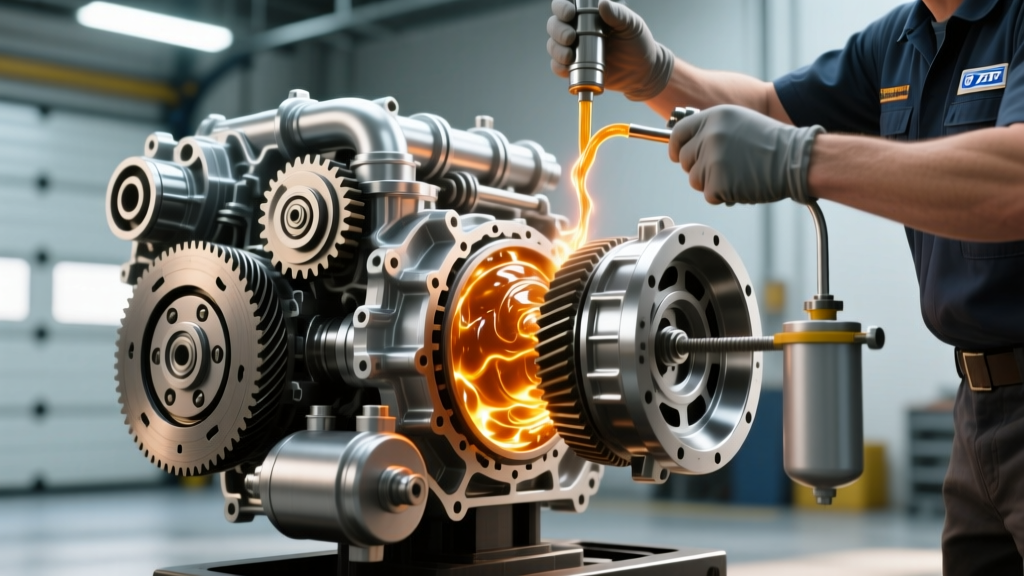
One of the most debated topics in automotive maintenance circles is a single, anxiety-inducing question: can changing the transmission fluid cause problems? The short answer is yes, but almost exclusively when the fluid is swapped blindly without proper diagnostics, or when high-pressure flush machines are used on neglected units. As a core pillar of any preventive maintenance guide, knowing how to check automatic transmission fluid before you ever drain a single drop is the ultimate safeguard against catastrophic drivetrain failure.
At AutoGearNexus, we advocate for data-driven maintenance. Before you spend hundreds of dollars on a flush or a drain-and-fill, you must evaluate the fluid's physical condition, verify the transmission's operating temperature, and understand the specific engineering of your gearbox. In this guide, we will break down the exact procedures for checking both traditional dipstick-equipped transmissions and modern sealed units, ensuring your preventive maintenance actually prevents problems rather than causing them.
The Chemistry of the 'Flush Myth'
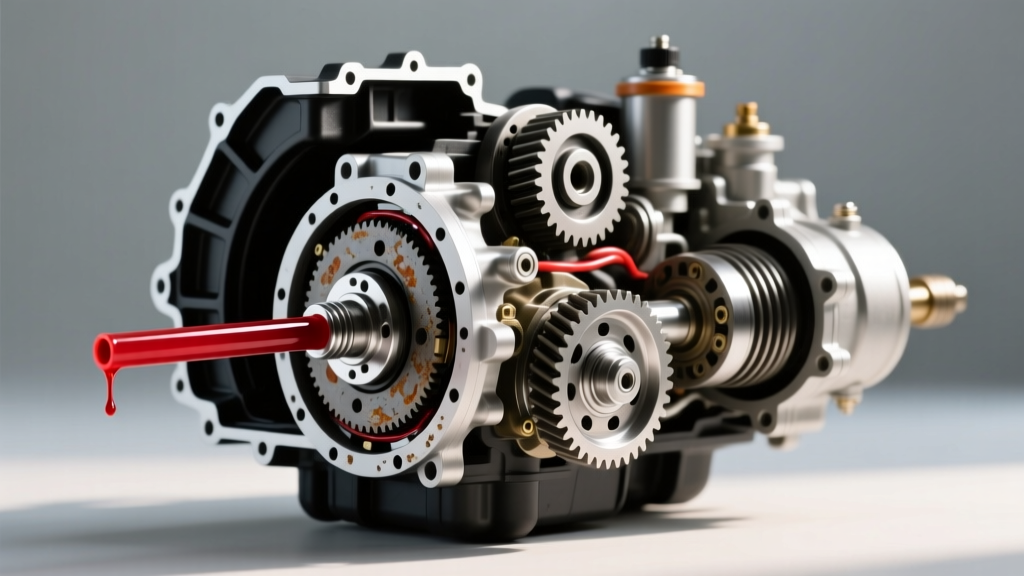
To understand why some vehicles experience slipping after a fluid change, we must look at clutch pack chemistry. Over tens of thousands of miles, automatic transmission fluid (ATF) loses its friction modifiers and detergents. As the fluid degrades, it leaves behind a microscopic layer of varnish on the clutch friction materials. In a high-mileage transmission with already-worn clutch packs, this varnish acts as a secondary friction surface, essentially holding the gears together.
According to Sonnax Technical Resources, introducing fresh, highly-detergent ATF into a severely neglected transmission can strip this varnish away. The result is immediate clutch slip, leading owners to falsely conclude that the new fluid 'killed' the transmission. In reality, the transmission was already failing; the old fluid was simply masking the mechanical wear.
This is exactly why checking the fluid's condition before service is non-negotiable. If the fluid smells burnt or contains heavy metallic particulates, a fluid change will not save the unit—a rebuild is required. Changing the fluid in this state will only accelerate the inevitable failure.
How to Check Automatic Transmission Fluid: Dipstick vs. Sealed Units
The methodology for checking ATF has evolved drastically. While older vehicles rely on a simple dipstick, modern 6-speed, 8-speed, and 10-speed automatics utilize sealed systems that require precise temperature monitoring and specialized tools.
Traditional Dipstick Procedure (e.g., GM 4L60E, Ford AOD)
For legacy transmissions equipped with a dipstick, the checking process is straightforward but frequently done incorrectly by amateurs.
- Surface: The vehicle must be on a perfectly level surface.
- State: The engine must be running and the transmission must be in Park (or Neutral for specific older Chrysler models).
- Temperature: The fluid must be at normal operating temperature (typically 160°F to 200°F). Checking it cold will yield a falsely high reading on the 'HOT' scale, leading to under-filling.
- Procedure: Pull the dipstick, wipe it with a lint-free white cloth, reinsert it fully, and pull it again to read the crosshatched 'HOT' zone.
Sealed Unit Procedure (e.g., GM 6L80, ZF 8HP, Ford 6R80)
Modern transmissions eliminate the dipstick to prevent factory contamination and overfilling. Instead, they use a fluid level check plug located on the transmission pan or side casing. Because ATF expands significantly with heat, checking the level requires knowing the exact Transmission Fluid Temperature (TFT) via an OBD2 bi-directional scanner.
Checking the GM 6L80 / 6L90 (Dexron ULV)
- Connect an OBD2 scanner and monitor the TFT PID.
- Run the engine until the TFT reaches 185°F to 205°F (85°C to 95°C).
- With the engine still running and the vehicle level, cycle the shifter through all gears, pausing for 3 seconds in each, then return to Park.
- Place a drain pan underneath and remove the 8mm Allen fluid level check plug located on the bottom of the transmission pan.
- If fluid drips out and slows to a trickle, the level is correct. If nothing comes out, you must pump fluid into the fill plug until it overflows from the check hole.
- Torque Spec: Reinstall the check plug and torque to 15 Nm (11 lb-ft).
Checking the ZF 8HP (ZF LifeguardFluid 8)
The ZF 8-speed, found in everything from BMWs to Ram trucks, requires a cooler checking temperature but follows a similar sealed logic.
- Ensure the TFT is between 86°F and 122°F (30°C to 50°C). ZF specifically mandates this lower threshold to account for the fluid's unique thermal expansion properties.
- With the engine running, remove the check plug (usually an 8mm or 10mm Allen).
- Allow the excess fluid to drain until it stops dripping.
- Torque Specs: The ZF 8HP check plug must be torqued to 15 Nm (11 lb-ft), while the fill plug requires 35 Nm (26 lb-ft). Note: If you are dropping the plastic pan (which houses the integrated filter), the pan bolts require a precise 10 Nm torque in a specific star pattern to prevent warping the plastic molding.
Fluid Condition Diagnostic Matrix
When you pull the dipstick or drain the check plug, the fluid's physical properties will tell you the exact health of your transmission. Use this diagnostic matrix to determine your next preventive maintenance step.
| Fluid Color | Odor | Particulates on Cloth | Diagnostic Verdict | Required Action |
|---|---|---|---|---|
| Bright Translucent Red | Sweet / Chemical | None | Healthy / Near New | No action required. Continue standard intervals. |
| Dark Ruby / Brownish-Red | Slightly Burnt | Fine friction material | Normal Wear / Service Due | Perform a drain-and-fill. Do NOT use a pressure flush. |
| Opaque Black / Dark Brown | Severe Burnt Smell | Heavy clutch debris / metal flakes | Internal Mechanical Failure | Do not change fluid. Prepare for transmission rebuild or replacement. |
| Milky / Strawberry Milkshake | Sweet (Coolant) | Emulsified sludge | Coolant Intrusion (Radiator failure) | Immediate teardown. Coolant destroys clutch adhesives rapidly. |
Verifying Transmission Fluid Temperature (TFT) Sensors
When learning how to check automatic transmission fluid in modern sealed units, you are entirely reliant on the transmission's internal TFT sensor. If this sensor fails or drifts out of calibration, it can cause severe problems. A faulty TFT sensor might tell the Powertrain Control Module (PCM) that the fluid is 140°F when it is actually 210°F. If you perform a level check based on skewed data, you will drastically underfill the transmission, leading to pump cavitation, aerated fluid, and immediate clutch burnout.
Always cross-reference your OBD2 scanner's TFT reading with an infrared thermometer pointed at the transmission pan or cooler lines. If the variance is greater than 15°F, diagnose the sensor circuit before attempting any fluid level adjustments. According to the Mobil Oil Transmission Fluid Guide, maintaining precise fluid levels is critical for modern units that rely on tight hydraulic tolerances for variable valve timing and clutch apply rates.
Fluid Specifications and Real-World Costs
Using the incorrect fluid is another primary reason owners ask if changing the transmission fluid can cause problems. Modern transmissions are incredibly sensitive to friction modifiers. Using a generic 'multi-vehicle' ATF in a transmission that requires a specific OEM fluid can result in harsh shifts, torque converter shudder, and premature wear.
- GM 6L80 / 6L90: Requires Dexron ULV (Ultra Low Viscosity). Part Number: ACDelco 10-9394. Cost: ~$12 per quart. Total dry fill capacity is roughly 11.2 quarts, but a standard pan drop yields about 6 quarts.
- ZF 8HP: Requires ZF LifeguardFluid 8. Part Number: S671 090 255. Cost: ~$38 to $45 per quart. Because the filter is integrated into the plastic pan, a service requires buying the entire pan assembly (approx. $250-$350), making this a premium preventive maintenance service.
- Ford 6R80: Requires MERCON LV. Part Number: Motorcraft XT-10-QLV. Cost: ~$9 per quart.
Final Preventive Maintenance Verdict
So, can changing the transmission fluid cause problems? Only if you skip the diagnostic phase. By understanding how to check automatic transmission fluid properly—evaluating its color, verifying the exact temperature via OBD2, and adhering to strict OEM torque specs and fluid capacities—you transform a risky gamble into a highly effective preventive maintenance strategy. Stick to drain-and-fill services for high-mileage vehicles, avoid high-pressure flush machines, and always trust the data on your scan tool over guesswork. Your drivetrain will reward you with hundreds of thousands of miles of seamless operation.