The Dipstick Tells a Story: Decoding Transmission Fluid Color
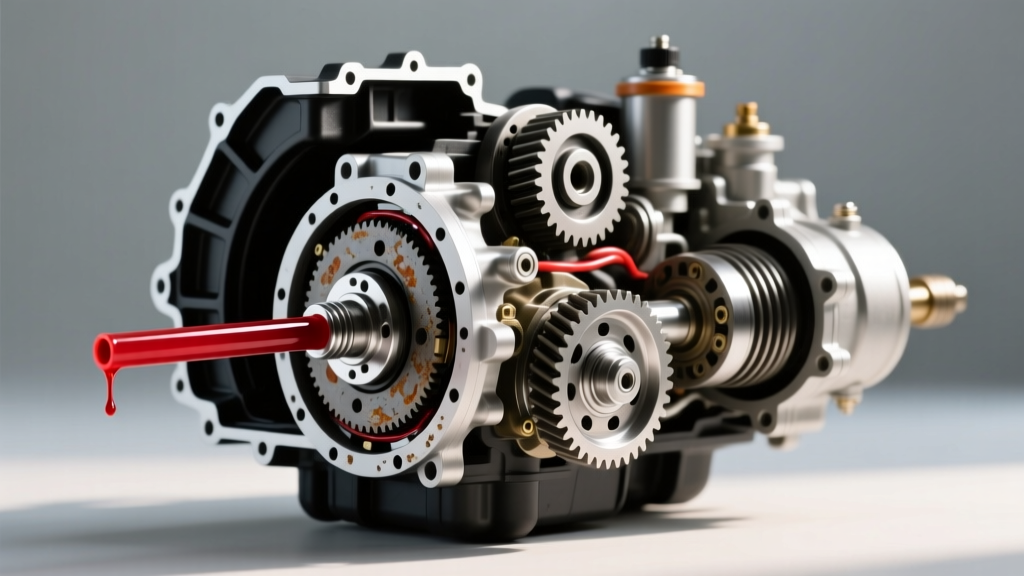
Checking your automatic transmission fluid (ATF) is not merely a matter of verifying the level; the color, opacity, and odor of the fluid provide a real-time diagnostic window into the mechanical and thermal health of your drivetrain. For automotive technicians and advanced DIYers, fluid color is the primary indicator of internal clutch wear, valve body contamination, and critically, the efficiency of your transmission fluid cooler. In modern vehicles equipped with complex thermal management systems, ignoring subtle shifts in fluid color can lead to catastrophic failure of the friction materials and solenoid packs.
This expert guide breaks down the precise meaning behind ATF color variations, with a specialized focus on how thermal management failures and cooler cross-contamination manifest on the dipstick.
Baseline Fluid Colors: OEM Specifications
Before diagnosing a problem, you must establish the baseline. Modern synthetic ATFs are dyed specific colors for identification and leak detection. Note that the dye itself offers no lubricating properties and will degrade over time due to thermal cycling.
| OEM Fluid | Specification | Baseline Color | Common Applications |
|---|---|---|---|
| ACDelco Dexron VI | GMW16444 | Cherry Red | GM 6L80, 8L90, 10L80 |
| Motorcraft Mercon LV | WSS-M2C938-A | Bright Red | Ford 6R80, 10R80 |
| ZF LifeguardFluid 8 | TE-ML 11 | Yellow/Golden | ZF 8HP45, 8HP70, 8HP90 |
| Honda ATF DW-1 | 08200-9008 | Ruby Red | Honda 6-speed, 9-speed |
| Toyota WS (World Standard) | JWS 3324 | Pink/Red | Aisin U660F, UA80E |
The Color Spectrum: What Your Fluid Means
1. Bright, Translucent Red (or Golden for ZF)
Diagnosis: Optimal Health.
The fluid is within its service life window. The friction modifiers, anti-wear additives (like zinc dialkyldithiophosphate), and antioxidants are fully intact. The transmission fluid cooler is operating within design parameters, keeping sump temperatures below 200°F (93°C).
2. Dark Red to Light Brown
Diagnosis: Normal Oxidation / Approaching Service Interval.
As ATF is subjected to shear forces in the torque converter and clutch packs, the dye breaks down. If the fluid is still translucent and smells slightly sweet or neutral, this is normal wear. A drain-and-fill is recommended within the next 5,000 miles to replenish depleted friction modifiers.
3. Opaque Black with a Burnt Acrid Odor
Diagnosis: Severe Thermal Degradation.
When ATF exceeds 250°F (121°C), the base oils begin to oxidize rapidly, forming varnish and sludge. This sludge clogs the micro-filters in the valve body and coats the clutch plates, causing slip. Expert Insight: A burnt smell without evidence of mechanical failure almost always points to a restricted, bypassed, or undersized transmission fluid cooler. In heavy-duty applications (e.g., GM 6L90 pulling heavy trailers), the OEM integrated radiator cooler often cannot shed heat fast enough, leading to localized fluid boiling and rapid oxidation.
4. Milky Pink / Frothy (The 'Strawberry Milkshake')
Diagnosis: Coolant Cross-Contamination.
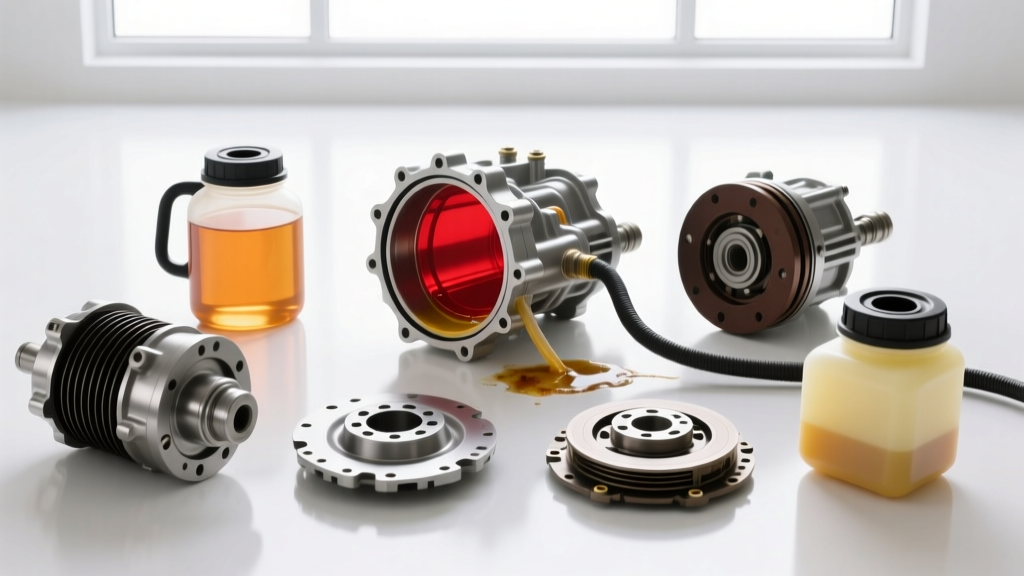
This is a critical, time-sensitive failure. The milky appearance is an emulsion of ATF and engine coolant (ethylene glycol). This occurs when the internal transmission fluid cooler located inside the vehicle's radiator ruptures.
Deep Dive: The 'Strawberry Milkshake' Phenomenon
To understand why coolant intrusion is so devastating, we must look at the chemical interaction between ethylene glycol and the transmission's internal components. Modern automatic transmissions rely heavily on paper-based or cellulose-lined friction clutches. When glycol mixes with ATF, it acts as a powerful solvent to the adhesives binding the friction material to the steel clutch plates.
According to Automatic Transmission Rebuilders Association (ATRA) technical bulletins, even trace amounts of glycol (as low as 1%) can cause the friction material to delaminate and wash away within a few hundred miles. This is a notorious issue in early GM 6L80 applications equipped with Delphi/Harrison radiators, as well as certain Nissan CVT setups.
Pro Diagnostic Tip: Visual inspection is not enough. If you suspect minor coolant intrusion, use a coolant test strip (such as Acustrip) designed to detect glycol. Dip the strip into the fluid; a color change indicates glycol presence, mandating an immediate transmission teardown and radiator replacement.
The Pressure Differential Factor
Why does coolant enter the transmission rather than ATF entering the coolant? It comes down to pressure dynamics. Engine coolant systems typically operate between 15 and 18 psi. The transmission cooling circuit, fed by the lube regulator valve, operates between 25 and 50 psi at idle, and can spike over 150 psi during heavy load. Therefore, when the engine is running, ATF is usually pushed into the coolant overflow tank (which you will see as a red, oily film in your radiator cap). However, when the engine is shut off and pressures equalize, the residual coolant pressure can force coolant past the ruptured transmission fluid cooler barrier and into the transmission sump.
Thermal Management Failures & Fluid Degradation
If your fluid is turning black and burnt, but there is zero coolant in the system, your cooling circuit is failing to shed heat. Modern transmissions use complex routing to manage fluid temperature.
The ZF 8HP Thermal Management Module (TMM)
The ZF 8-speed (found in BMW, Audi, Dodge, and Ram vehicles) uses a wax-element Thermal Management Module. The TMM routes ATF to the engine coolant circuit to warm the fluid quickly for reduced cold-start emissions. Once at operating temperature, it routes fluid to the auxiliary transmission fluid cooler. If the TMM wax pellet fails in the closed position, the fluid is trapped in a high-heat loop, rapidly degrading the golden ZF Lifeguard 8 fluid into a black, varnished state. Replacement of the TMM (Part # ZF 0501 216 243) costs roughly $450, but ignoring it will destroy the mechatronic sleeve and clutch packs.
Expert Diagnostics: Testing Cooler Flow and Integrity
Never assume the transmission fluid cooler is flowing correctly just because the lines are connected. Debris from a failing torque converter or degraded clutch material can easily pack the cooler tubes, creating a massive restriction.
The 20-Second Flow Test
Perform this test to verify cooler circuit volume. You will need a catch pan, a spare length of hose, and a one-quart measuring container.
- Locate the cooler return line (the line returning fluid from the radiator/auxiliary cooler back to the transmission).
- Disconnect the return line at the transmission fitting and attach your spare hose, routing it into the measuring container.
- Start the engine and let it idle in Park. Caution: Do not run the engine for more than 20 seconds without adding fluid back, or you risk cavitating the transmission oil pump.
- Measure the volume dispensed in exactly 15 to 20 seconds.
| Engine State | Expected Flow Rate | Diagnostic Indication |
|---|---|---|
| Idle (500-700 RPM) | 1 Qt per 15-20 sec | Normal cooler circuit flow; no restrictions. |
| Idle (Restricted) | Less than 1 Qt per 45 sec | Clogged radiator cooler, pinched line, or stuck cooler bypass valve. |
| 1500 RPM (Stall) | 1 Qt per 8-12 sec | High-pressure pump output is normal; confirms pump health. |
Reassembly Torque Specifications
When reinstalling cooler lines after a flush or radiator replacement, precision is mandatory to prevent high-pressure leaks. Always use a calibrated torque wrench. Referencing Sonnax technical resources and OEM service manuals, adhere to these general parameters:
- GM 6L80 / 8L90 M12x1.5 Flare Nuts: 15-20 Nm (11-15 lb-ft). Over-torquing will crack the aluminum transmission case adapter.
- Ford 10R80 Quick-Connects: These do not use a torque spec. They require a specialized disconnect tool (e.g., Lisle 39960). Reassembly requires pushing the line in until a definitive 'click' is heard, followed by a firm 30-lb manual pull test to verify the retaining clips are seated.
- AN-Fitting Aftermarket Coolers: -6 AN fittings on aftermarket Hayden Automotive or Derale coolers should be tightened to 12-15 ft-lbs using an aluminum wrench to prevent galling.
Preventative Upgrades: Bypassing the Radiator Cooler
For vehicles subjected to towing, off-roading, or track use, the OEM radiator-integrated transmission fluid cooler is often the weak link. A highly recommended preventative measure is installing a radiator cooler bypass kit and running a standalone auxiliary air-to-oil cooler mounted in front of the A/C condenser.
Using a high-efficiency stacked-plate cooler (such as the Hayden 678 Rapid-Cool or Derale 15800) will drop ATF sump temperatures by 20°F to 40°F under load. By dropping the operating temperature from 230°F down to 195°F, you effectively quadruple the oxidative lifespan of the ATF, preserving the critical friction modifiers and keeping the fluid a healthy, translucent red for tens of thousands of miles.
Final Verdict
Your transmission fluid color is the ultimate report card for your drivetrain's thermal and mechanical environment. Bright, clear fluid means your friction materials are safe and your cooling system is efficient. Dark, burnt fluid demands an immediate audit of your cooler flow rates and thermal routing. And the dreaded milky pink emulsion requires an immediate halt to driving to prevent irreversible glycol damage to your clutch packs. Read the dipstick, respect the chemistry, and maintain your cooling circuits to ensure maximum transmission longevity.