The Thermal Bottleneck in Performance Transmissions
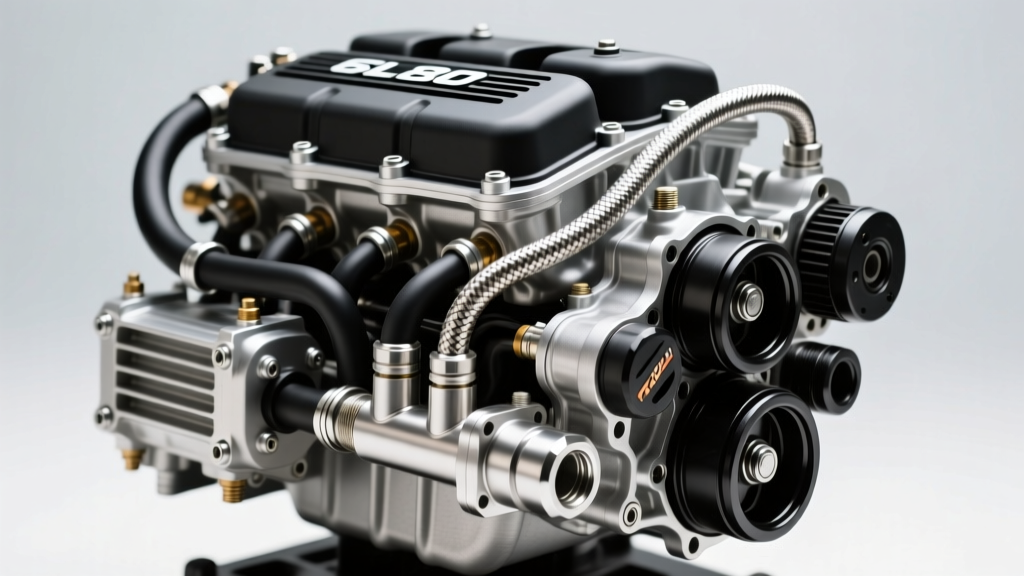
Heat is the undisputed enemy of the automatic transmission. In performance applications—whether you are running a cammed GM 6L80, a built Ford 10R80, or a high-torque ZF 8HP—the torque converter and clutch packs generate massive amounts of parasitic heat. While internal upgrades like billet clutch drums and reinforced sun shells handle mechanical stress, they do nothing to mitigate thermal degradation. When automatic transmission fluid (ATF) exceeds 250°F, it begins to oxidize, lose its frictional modifiers, and ultimately fail to protect the planetary gearsets.
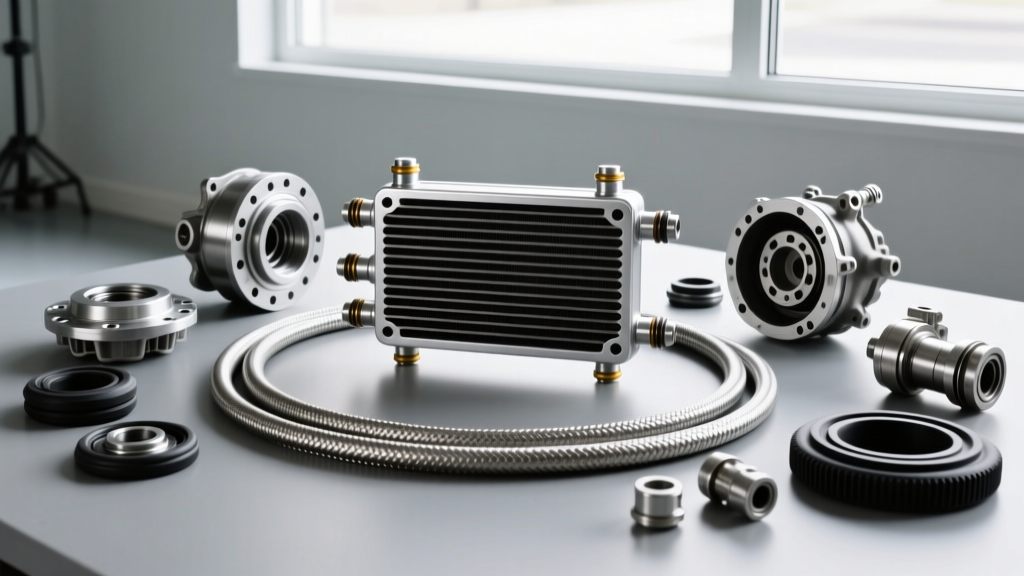
Upgrading to a high-flow stacked-plate cooler is the most effective way to manage these temperatures. However, a massive cooler is entirely useless if the plumbing feeding it acts as a restrictor. This is where the critical process of changing transmission cooler lines comes into play. By transitioning from restrictive, failure-prone OEM rubber hoses to high-flow PTFE braided stainless steel lines, you ensure that the cooler receives the necessary volume of ATF to actually dissipate heat.
Why OEM Lines Fail Under Track and Towing Loads
Factory transmission cooler lines are designed for cost-efficiency and NVH (noise, vibration, and harshness) reduction, not maximum fluid flow or extreme thermal endurance. They typically consist of a steel hardline section mated to a synthetic rubber hose via crimped fittings.
Rubber Degradation and Flow Restrictions
Under sustained track use or heavy towing, ATF temperatures at the converter outlet can easily spike past 280°F. Standard synthetic rubber hoses are not rated for continuous exposure to these temperatures. Over time, the inner liner of the rubber hose begins to blister and delaminate. This internal degradation creates a 'flap' that acts as a one-way check valve, severely restricting return flow and causing the transmission to overheat. Furthermore, OEM crimp fittings are notorious for blowing off when line pressure is increased via performance valve body modifications or ECU tuning, leading to catastrophic fluid loss in seconds.
Sizing Your Performance Cooler and Line Setup
When changing transmission cooler lines for a performance build, selecting the correct AN (Army-Navy) hose size is paramount. Undersized lines increase fluid velocity and friction, generating more heat and starving the cooler. Oversized lines can increase overall system fluid capacity to the point where the transmission pump struggles to maintain adequate line pressure during rapid gear changes.
| Transmission Model | OEM Line ID | Recommended AN Size | Peak Flow (GPM) | Common Adapter Thread |
|---|---|---|---|---|
| GM 6L80 / 6L90 | 3/8' (9.5mm) | -6 AN | 1.2 - 1.5 | M18x1.5 / M16x1.5 |
| Ford 10R80 | 1/2' (12.7mm) | -8 AN | 1.8 - 2.2 | 5/8' & 1/2' Quick-Disconnect |
| ZF 8HP (Gen 2) | 1/2' (12.7mm) | -8 AN | 1.6 - 2.0 | Metric O-Ring Boss (Chassis Dependent) |
| GM 4L60E / 4L80E | 3/8' (9.5mm) | -6 AN | 1.0 - 1.4 | 1/4' NPSM / M14x1.5 |
Note: Always consult Sonnax transmission line pressure and flow resources when calculating total system volume and pump capacity for heavily modified valve bodies.
Step-by-Step: Changing Transmission Cooler Lines for High-Flow Setups
Executing this upgrade requires precision, clean working conditions, and the correct sealing compounds. ATF is a highly effective solvent and will find any microscopic leak path.
1. Draining and Prepping the OEM Connections
Begin by safely elevating the vehicle and placing a drain pan beneath the transmission pan and the front-mounted heat exchanger. Disconnect the OEM lines at the transmission case. Critical Step: Immediately cap the transmission case ports with clean, lint-free plastic caps or aluminum plugs. Ingesting even a small piece of road debris or shop lint into the cooler feed circuit can lodge in the torque converter clutch (TCC) apply valve, causing converter lockup failure.
2. Adapting to AN Fittings (The Crucial Step)
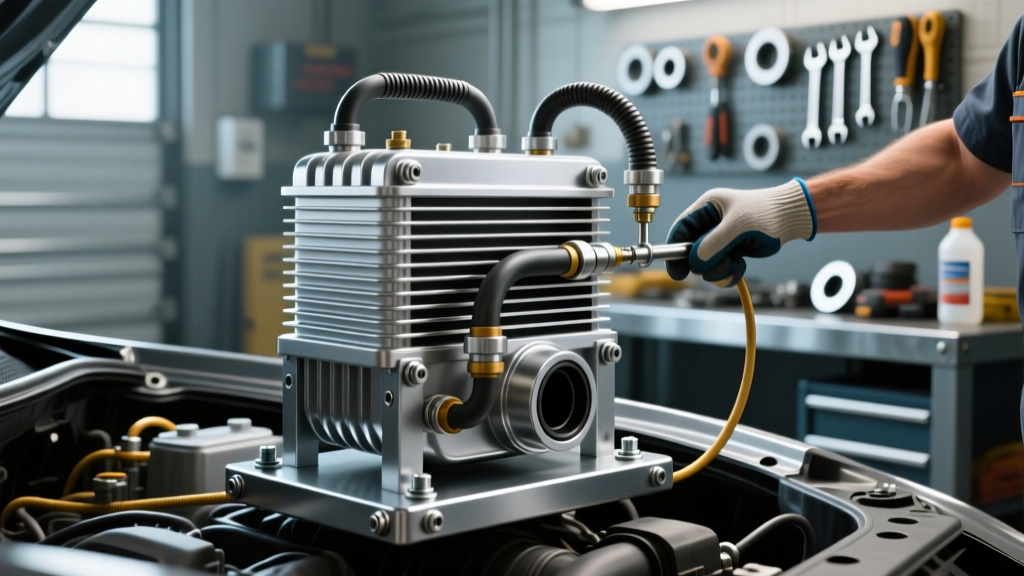
Most modern transmissions use metric O-ring boss (ORB) ports or proprietary quick-disconnect fittings. You must install billet aluminum adapter fittings to convert these ports to standard AN male threads. For example, the GM 6L80 requires an M18x1.5 to -6 AN male adapter for the pressure (feed) line, and an M16x1.5 to -6 AN male adapter for the return line. Apply a high-quality, ATF-compatible liquid thread sealant (such as Loctite 565 or Earl's Liquid Wrench) to the metric threads. Never use PTFE tape on transmission case adapters; shredded tape will inevitably enter the hydraulic circuit and destroy the solenoid pack.
3. Routing PTFE Braided Lines
When selecting your hose, you must use a PTFE (Polytetrafluoroethylene) inner core, often referred to by the brand name Teflon. PTFE handles temperatures up to 500°F and is completely impervious to the harsh detergents in modern synthetic ATFs like Dexron ULV or Mercon LV. Route the -6 AN or -8 AN lines away from exhaust headers, steering shafts, and suspension components. Use cushioned aluminum clamps (Adele clamps) every 12 to 18 inches to prevent chassis vibration from fatiguing the hose ends.
Thermal Bypass Valves: The Hidden Flow Killer
When upgrading cooling systems on modern vehicles like the GM 8L90 or Ford 10R80, you must address the thermal bypass valve. To meet CAFE fuel economy standards, OEMs install a thermostat in the cooler circuit that blocks ATF flow to the cooler until the fluid reaches roughly 185°F–195°F. In a performance or track environment, this delay causes massive heat spikes during the first few laps. When changing transmission cooler lines, performance builders often delete this valve using a billet bypass block (available from companies like PPE or Cicio Performance) to ensure 100% of the fluid flows through the stacked-plate cooler at all times.
Torque Specs and Leak-Down Testing
Overtightening AN fittings is a common rookie mistake that leads to galled threads and catastrophic leaks. Follow these specifications strictly:
- Metric Adapter to Trans Case (Aluminum Case): 18-22 lb-ft. (Ensure the factory O-ring is replaced with a fresh Viton O-ring).
- Metric Adapter to Trans Case (Cast Iron Case, e.g., 4L80E): 25-30 lb-ft.
- AN Hose Ends to Adapters: Hand-tight, plus exactly 1/6th of a turn (one flat on the hex nut) using a dedicated aluminum AN wrench. Do not use steel wrenches, which will destroy the anodized finish and cause galvanic corrosion.
- Quick-Disconnect to AN Adapters (Ford 10R80): Ensure the retaining clip fully seats with an audible 'click'. Test by pulling firmly on the line before filling with fluid.
After assembly, fill the transmission to the correct level, start the engine, and cycle the gear selector through all positions. Inspect the fittings with a clean white paper towel; even a single drop of red fluid indicates a need to re-seat the O-ring or hose end. For a comprehensive guide on hose assembly, refer to Summit Racing's AN fitting and hose selection guide.
Selecting the Right Stacked-Plate Cooler
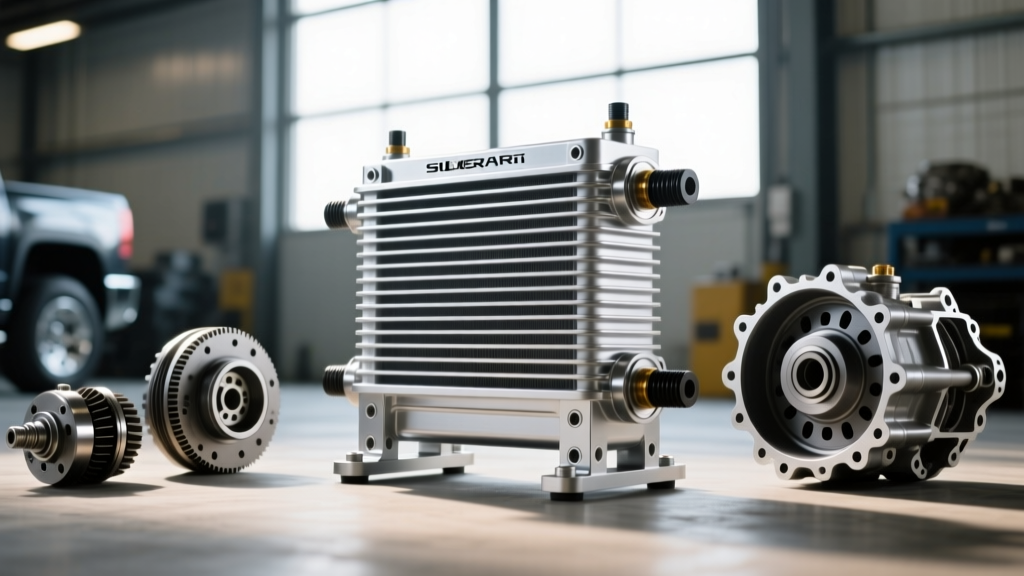
For performance applications, tube-and-fin coolers are obsolete. You must use a stacked-plate design. Stacked-plate coolers (such as those from Mishimoto, Derale, or Setrab) force the ATF through a series of turbulated internal plates, while ambient air is channeled through external fins. This design offers the highest BTU/hr heat rejection per square inch of frontal area.
According to TCI Automotive's technical guidelines on transmission cooling, a stacked-plate cooler can drop fluid temperatures by up to 40% compared to a similarly sized tube-and-fin unit. For a 600+ wheel-horsepower vehicle, look for a cooler with a minimum core thickness of 3/4' and a gross row count of at least 25 rows.
Real-World Cost Breakdown and ROI
Building a custom PTFE line setup and installing a premium cooler requires a larger upfront investment than buying a pre-packaged rubber-hose kit from a local auto parts store, but the ROI in transmission longevity is undeniable.
- High-Flow Stacked-Plate Cooler (e.g., Derale Hyper-Cool or Mishimoto): $160 - $280
- PTFE Braided Stainless Hose (25ft roll, -6 or -8 AN): $130 - $190
- Billet Metric-to-AN Adapters & Hose Ends (Qty 4-6): $90 - $160
- Thermal Bypass Delete Block (If applicable): $45 - $85
- Total Estimated Cost: $425 - $715
Considering that a performance rebuild for a GM 6L80 or Ford 10R80 easily exceeds $4,500 in parts and machine shop labor, spending $500 to properly plumb a high-flow cooling system is the cheapest insurance policy you can buy. By correctly changing transmission cooler lines and eliminating thermal bottlenecks, you ensure your drivetrain survives the punishment of the track, the drag strip, or the steep mountain grade.