The ZF 8HP70 Thermal Bottleneck in the WK2 Platform
The 2014 Jeep Grand Cherokee (WK2 generation) represents a massive leap forward in drivetrain technology, primarily due to the integration of the ZF 8HP70 8-speed automatic transmission in V8 and EcoDiesel models (while the 3.6L V6 utilized the Chrysler-built 845RE). While the ZF 8HP is an engineering marvel capable of handling immense torque and delivering lightning-fast shift times, it has a critical Achilles heel in performance, towing, and off-road scenarios: thermal management. As of 2026, the WK2 platform is well over a decade old, and the OEM rubber-crimped transmission cooler lines are reaching the end of their service life, leading to sudden fluid loss and catastrophic transmission failure.
For performance enthusiasts building track-focused SUVs, heavy-duty tow rigs, or dedicated off-road crawlers, simply replacing the OEM lines with identical factory parts is a missed opportunity. Upgrading the cooling system is mandatory to keep the ZF Lifeguard 8 fluid below its 220°F (104°C) degradation threshold. Below, we break down the baseline repair metrics, including the highly searched 2014 jeep grand cherokee transmission cooler line replacement labor time, before detailing the ultimate performance cooling upgrade path.
Baseline: 2014 Jeep Grand Cherokee Transmission Cooler Line Replacement Labor Time
When owners and independent mechanics research the 2014 jeep grand cherokee transmission cooler line replacement labor time, they are typically reacting to a blown OEM crimp fitting. The factory lines utilize a combination of hard metal tubing and flexible rubber hose segments joined by crimped ferrules. Under sustained high-line-pressure conditions (such as towing a 6,000 lb trailer in 4th gear), these crimps fatigue, weep, and eventually burst.
Book Time vs. Real-World Wrenching
According to the factory service manual (FSM), the standard book time for removing and replacing both the feed and return transmission cooler lines on a 2014 Grand Cherokee is 2.8 to 3.2 hours. However, real-world labor times frequently push past 4.5 hours. Why the discrepancy?
- Subframe Corrosion: The hard lines route along the steel subframe and through tight chassis cross-members. A decade of road salt and moisture causes severe galvanic corrosion between the aluminum line brackets and steel frame.
- Exhaust Proximity: The passenger-side line routes dangerously close to the exhaust manifold and catalytic converter heat shields, often requiring the removal of secondary heat shields just to gain wrench clearance.
- Brittle Plastic Retainers: The quick-connect fittings at the radiator-mounted OEM cooler utilize plastic retaining clips that become incredibly brittle from years of heat cycling, often breaking during removal and necessitating the replacement of the radiator-side cooler fitting.
The Performance Pivot: Why Upgrade the Cooling Matrix?
If you are already paying for 4+ hours of labor to drop the skid plates, remove the front fascia, and bleed the cooling system, reinstalling OEM rubber-crimped lines is a regression. Performance vehicles demand absolute thermal stability. When ZF 8HP70 fluid exceeds 212°F (100°C), the fluid's viscosity begins to shear, leading to clutch pack slip, delayed shift events, and accelerated wear on the mechatronic unit's internal solenoids.
Furthermore, the OEM transmission cooler integrated into the Grand Cherokee's radiator is designed for EPA emissions compliance and light-duty cruising, not for the sustained 300°F+ heat rejection required during track days or steep-grade towing. To solve this, performance builders utilize a dual-circuit approach: retaining the OEM radiator cooler for cold-weather warm-up, but routing the primary cooling loop to a dedicated, front-mounted stacked-plate auxiliary cooler.
Selecting a Stacked-Plate Matrix
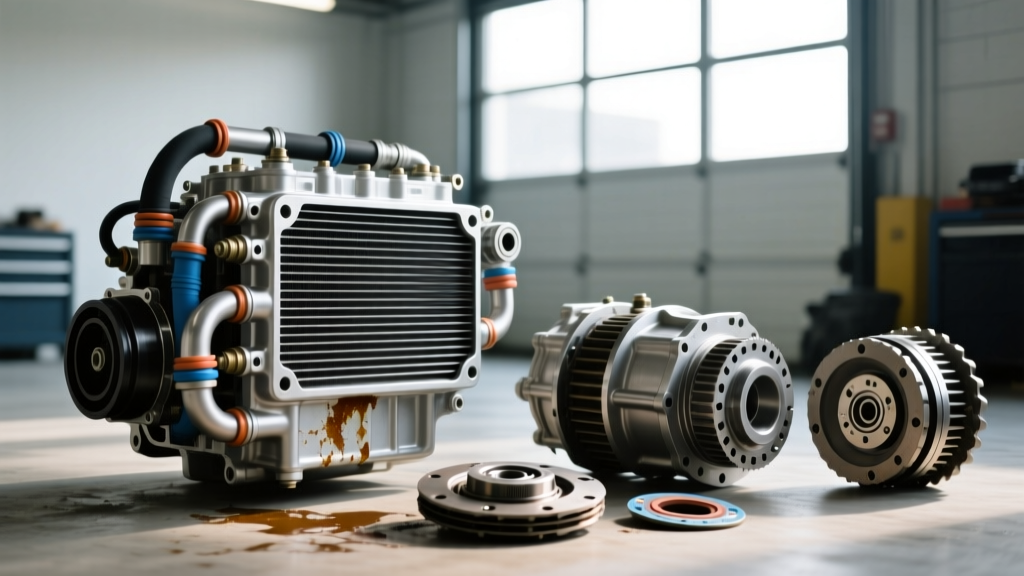
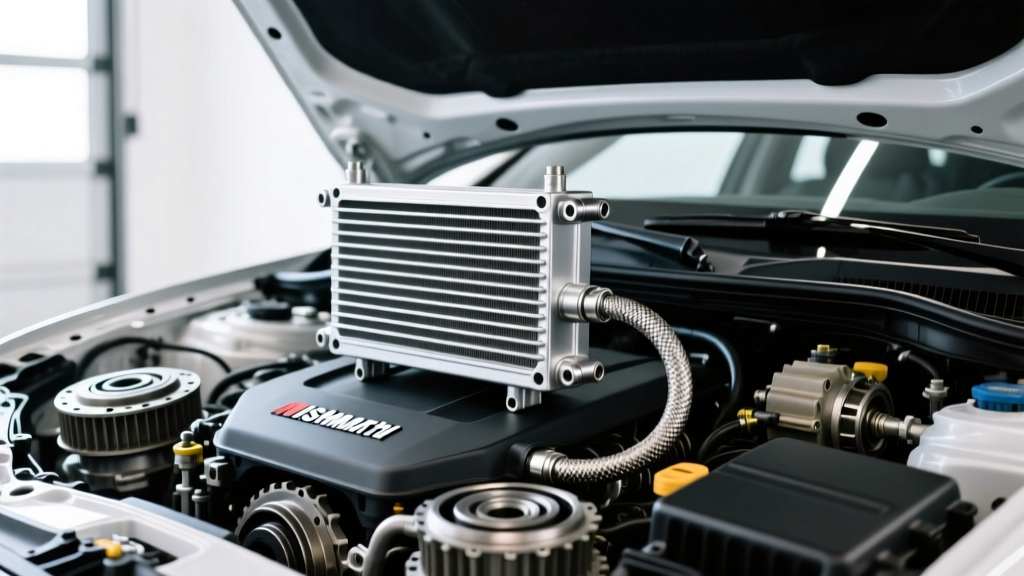
For the WK2 Grand Cherokee, tube-and-fin coolers are obsolete. You must utilize a stacked-plate cooler (such as the Derale Series 9000 or Mishimoto X-Duty). Stacked-plate designs offer up to 30% more surface area per cubic inch than tube-and-fin designs, promoting turbulent fluid flow inside the plates which drastically increases the thermal transfer coefficient. For the 5.7L V8 and 6.4L SRT models, a cooler with a minimum GVW rating of 24,000 lbs and dimensions of roughly 13" x 9.5" x 2" fits perfectly behind the lower grille opening without blocking the primary A/C condenser.
AN-Line Conversion: Ditching the OEM Crimp Lines
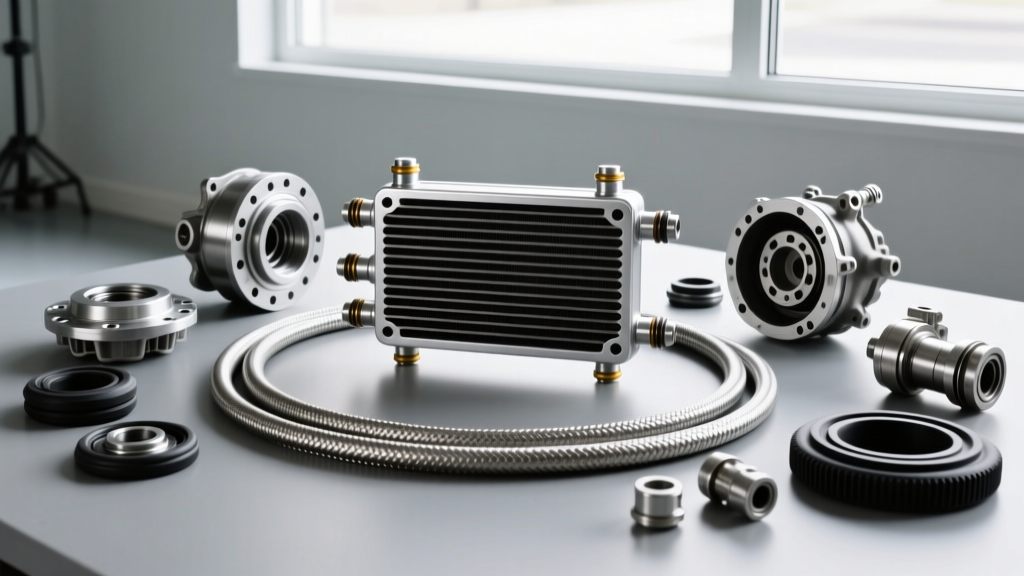
The cornerstone of a true performance transmission cooling upgrade is eliminating the OEM rubber lines entirely. By converting to aerospace-grade AN (Army-Navy) fittings and PTFE-lined braided stainless steel hoses, you eliminate the crimp-burst failure point and allow for modular, leak-proof routing.
Step-by-Step AN-8 Conversion Guide
- Remove OEM Lines: Drain the ZF 8HP70 pan. Disconnect the hard lines from the transmission case using a 22mm crowfoot wrench to avoid rounding the soft aluminum case threads.
- Install Case Adapters: The ZF 8HP70 case utilizes metric O-ring boss (ORB) ports. You will need M14x1.5 to AN-8 male adapters with Viton O-rings. Torque these adapters to exactly 25 Nm (18 lb-ft). Over-torquing will crack the magnesium-alloy transmission housing.
- Route PTFE Hoses: Use AN-8 PTFE (Teflon) lined stainless braided hose. PTFE is critical here; standard rubber-lined AN hoses will degrade when exposed to the aggressive synthetic esters in ZF Lifeguard 8 fluid over extended periods.
- Mount the Auxiliary Cooler: Fabricate a bracket to mount the stacked-plate cooler to the front chassis cross-member, ensuring it receives direct, unobstructed ram-air.
OEM vs. Performance Setup Comparison
| Metric | OEM Replacement Setup | Performance AN-8 / Stacked-Plate Setup |
|---|---|---|
| Material | Steel hard-line + Rubber crimp | AN-8 PTFE Braided Stainless |
| Burst Pressure | ~450 PSI (drops with age) | 3,000+ PSI |
| Thermal Capacity | 15,000 GVW (Radiator integrated) | 24,000+ GVW (Dedicated Stacked-Plate) |
| Estimated Parts Cost (2026) | $180 - $260 | $450 - $650 |
| Real-World Labor Time | 4.0 - 4.5 Hours | 6.0 - 8.0 Hours (includes fabrication) |
The ZF Thermal Management Module (TMM) Bypass
An often-overlooked aspect of upgrading the cooler on a 2014 Grand Cherokee is the ZF transmission's internal Thermal Management Module (TMM). To meet strict cold-start emissions standards, the ZF 8HP70 utilizes a thermostat-style bypass valve located inside the transmission pan/filter assembly. This valve prevents fluid from flowing to the external cooler until the fluid reaches approximately 80°C (176°F).
While great for fuel economy, this creates a massive thermal overshoot in performance scenarios. By the time the valve opens and the fluid reaches the new front-mounted stacked-plate cooler, the transmission internals have already heat-soaked to dangerous levels. Performance builders utilize a ZF 8HP Bypass Delete Kit (available from specialty manufacturers like Sonnax or custom 3D-printed/machined delete blocks). This forces 100% of the fluid to the cooler at all times. Note: If you live in a climate with sub-freezing winters, a delete block will result in sluggish cold shifts until the fluid warms up via the torque converter.
Fluid Specs, Torque, and Fill Procedures
Upgrading the lines and cooler requires a complete fluid refresh. The ZF 8HP70 is incredibly sensitive to fluid friction modifiers. You must use ZF LifeguardFluid 8 or the exact Mopar equivalent (Part# 68218925AB). Total system capacity is roughly 9.5 Liters, but a pan drop, cooler swap, and line flush will require approximately 6.5 to 7.0 Liters to refill.
Critical Expert Warning: The ZF 8HP70 does not have a traditional dipstick. The fluid level is set via an overflow tube integrated into the plastic transmission pan. The transmission MUST be between 30°C and 50°C (86°F - 122°F) when checking the level. If the fluid is too cold, it will overfill; if it is too hot, it will underfill, leading to immediate clutch cavitation. You must use an advanced OBD2 scanner capable of reading the ZF internal temperature sensor PID to perform this procedure accurately.
When reinstalling the ZF 8HP70 transmission pan (which houses the mechatronic valve body and filter), the aluminum pan bolts must be torqued in a specific spiral pattern starting from the center outward. The final torque spec is strictly 10 Nm (89 in-lbs). Do not exceed this, as stripping the threads in the transmission case requires a costly helicoil repair or case replacement.
Final Thoughts on WK2 Thermal Management
Understanding the baseline 2014 jeep grand cherokee transmission cooler line replacement labor time is just the first step in preserving your drivetrain. By pivoting from a reactive OEM repair to a proactive AN-8 braided line and stacked-plate cooler upgrade, you effectively bulletproof the ZF 8HP70 against the thermal abuse of modern performance driving. For further technical discussions on ZF mechatronic adaptations and custom cooler bracket fabrication, the JeepGarage Transmission Forums remain an invaluable community resource. Additionally, reviewing the engineering parameters of the ZF 8-Speed Automatic directly from the manufacturer provides crucial insight into the thermal limits of the clutch packs you are working so hard to protect.