The Physics of Centrifugal Clutch Chatter in Performance Builds
In high-performance auxiliary drivetrains, rock crawler PTOs, and competition karting, the centrifugal clutch is the critical link between the engine's powerband and the rear axle. When properly tuned, it delivers seamless, violent acceleration. When improperly configured, it introduces severe clutch chatter and harmonic vibration that can crack welds, shear crankshaft keys, and destroy sprockets. As of 2026, with the widespread adoption of high-horsepower, small-displacement engines (like the Predator 420cc and Honda GX390 modified platforms), the stock centrifugal clutch springs included in entry-level clutches are vastly inadequate for the torque loads they face.
Chatter occurs during the engagement phase—typically between 1,800 and 3,500 RPM. It is the physical manifestation of a 'slip-grip' cycle. If the centrifugal force generated by the clutch shoes overcomes the spring tension, but the engine lacks the torque to fully lock the drum, the shoes will grab, slow the engine, release, and grab again in a matter of milliseconds. This micro-cycling sends violent shockwaves through the driveline. Upgrading your centrifugal clutch springs to match your engine's specific torque curve is the most effective way to eliminate this destructive chatter.
Slip-Grip Harmonics and Drivetrain Shock
To understand why upgrading the springs is necessary, you must analyze the friction interface. A standard 5-inch or 6-inch centrifugal clutch utilizes organic friction material bonded to steel shoes. Under heavy load, organic material glazes, reducing the coefficient of friction. When the friction coefficient drops, the spring rate required to maintain a locked state increases. If your springs are too weak (e.g., a 2,000 RPM engagement spring on a 4,000 RPM torque-peak engine), the clutch will slip continuously under load, generating immense heat and severe vibration. By installing stiffer, higher-RPM centrifugal clutch springs, you force the engine to rev deeper into its powerband before engagement occurs, ensuring that when the shoes finally bite the drum, the engine has the torque required to lock instantly and cleanly.
Diagnostic Protocol: Isolating the Vibration Source
Before tearing down the clutch assembly, you must confirm that the vibration is indeed caused by the clutch and not a secondary driveline issue. Misdiagnosing clutch chatter often leads to unnecessary part replacements. Follow this diagnostic hierarchy to isolate the fault:
- Low-Speed Shudder (Engagement Phase): If the vibration occurs strictly as the vehicle begins to move and smooths out at higher speeds, the issue is almost certainly related to weak centrifugal clutch springs, glazed friction shoes, or an out-of-round drum.
- High-Speed Harmonic Shake: If the vibration worsens as top speed increases and is accompanied by a whining or rattling noise, suspect chain/sprocket misalignment, a bent axle, or a worn clutch bearing (specifically the internal 6203-ZZ or 6204-ZZ sealed bearings).
- Deceleration Rattle: A metallic clatter when letting off the throttle indicates excessive clearance between the clutch hub and the crankshaft keyway, or a loose drive sprocket.
Expert Insight: Never ignore low-speed chatter. While it may feel like a minor drivability nuisance, the shock loads generated by a slipping centrifugal clutch can exceed 400 ft-lbs of instantaneous torque on a 3/16-inch crankshaft key, leading to catastrophic keyway wallowing and a spun hub.
Spring Rate Selection and Engagement RPM Tuning
Upgrading your centrifugal clutch springs requires matching the spring rate to your engine's modified powerband. A built engine with a high-lift camshaft will produce very little torque at 2,000 RPM, meaning a stock 2,000 RPM spring will cause massive chatter. You must delay engagement until the engine enters its torque curve. Below is the industry-standard tuning matrix for performance 5-inch and 6-inch drum clutches (such as the Hilliard Extreme-Duty and Max-Torque series).
| Spring Color | Engagement RPM | Approx. Spring Rate (lb/in) | Best Application |
|---|---|---|---|
| Yellow | 1,800 - 2,000 | 18 lb/in | Stock engines, low-end torque, heavy crawlers |
| Red | 2,400 - 2,600 | 26 lb/in | Mildly modified engines, general racing, mud bogging |
| Blue | 3,000 - 3,200 | 34 lb/in | High-compression builds, drag karts, sprint racing |
| Green | 3,500 - 3,800 | 42 lb/in | Heavily cammed engines, high-stall torque converter setups |
| Black (Heavy) | 4,500+ | 55+ lb/in | Competition drag karts, specialized PTO winch drives |
Step-by-Step Spring Upgrade and Rebuild Procedure
Replacing the centrifugal clutch springs is a straightforward process, but it requires meticulous attention to tolerances and torque specifications. A sloppy rebuild will result in immediate chatter recurrence or total clutch failure.
1. Safe Extraction and Disassembly
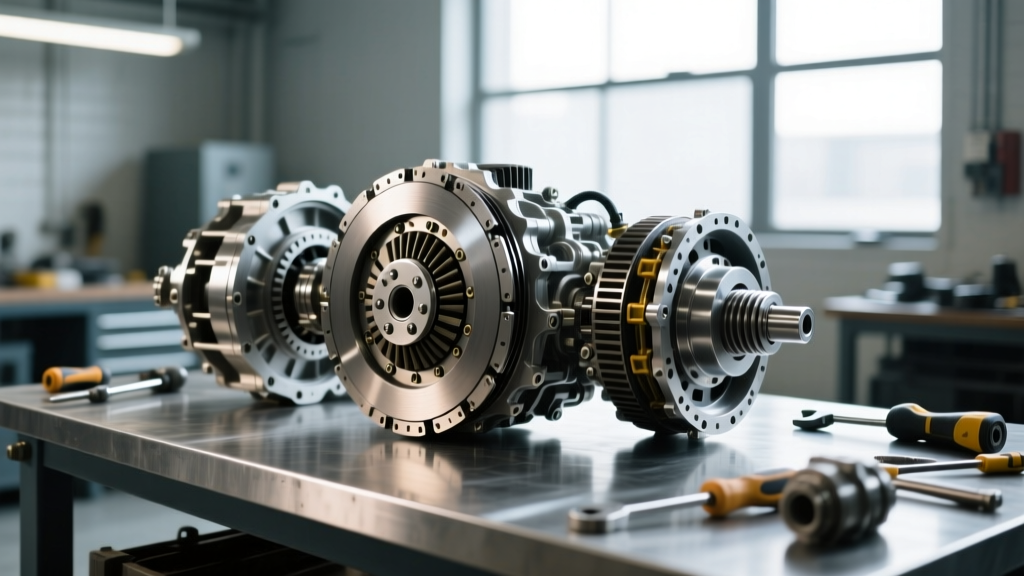
Never strike the clutch hub with a hammer to remove it from the crankshaft. This will destroy the internal needle bearings and score the crank. Apply penetrating oil to the shaft interface and use a dedicated 3-jaw gear puller. Once removed, use internal snap-ring pliers to extract the retaining ring securing the drum. Carefully slide the drum off the hub assembly, exposing the shoes, friction material, and the centrifugal clutch springs. Note the orientation of the springs on the retaining pins; they must be seated evenly to prevent asymmetric shoe deployment.
2. Drum Inspection and Friction Surface Prep
Before installing the new springs, you must verify the drum's integrity. Mount the drum in a lathe or use a dial indicator on a surface plate to measure the inner diameter (ID) runout. According to Hilliard Corporation engineering specifications, the drum ID runout must not exceed 0.005 inches. If the runout is greater than 0.010 inches, the drum is warped from heat and must be replaced; no spring upgrade will cure the chatter caused by an out-of-round drum. If the friction shoes are glazed (shiny and hardened), scuff them lightly with 120-grit sandpaper in a cross-hatch pattern to restore the bite surface.
3. Reassembly and Critical Torque Specifications
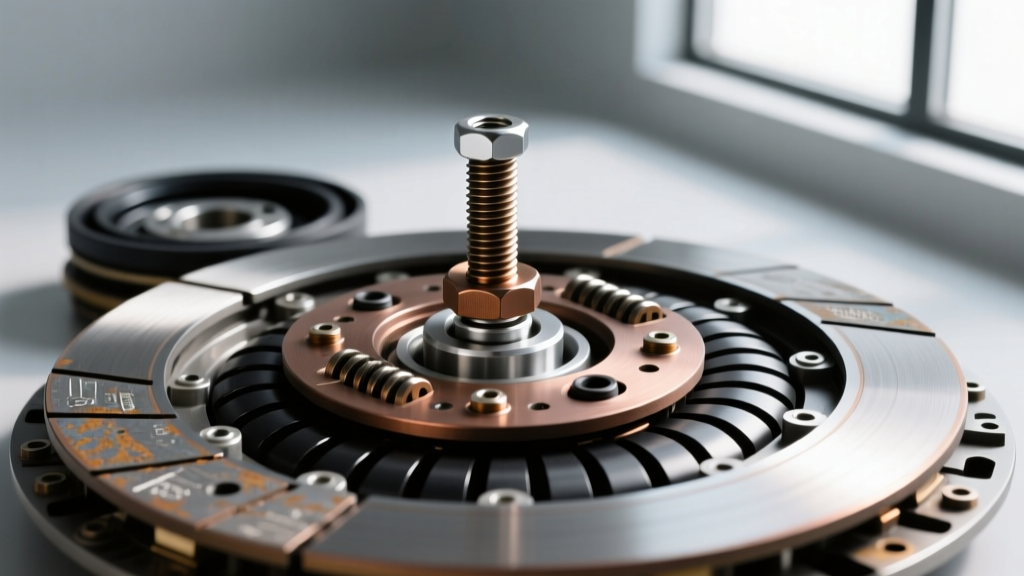
Install the upgraded centrifugal clutch springs by stretching them over the brass or steel retaining pins. Use a spring hook tool to avoid deforming the ends of the spring. Ensure all shoes move freely on their pivot pins without binding. When reinstalling the clutch onto the crankshaft, the 3/16-inch square keystock must fit with zero lateral play. If a 0.002-inch feeler gauge can slip between the key and the hub slot, the hub is wallowed and requires replacement. Secure the clutch using the OEM washer and bolt, torquing to 25-30 ft-lbs (for 3/8-inch hardware) or 45-50 ft-lbs (for 1/2-inch hardware). Apply a medium-strength threadlocker, such as Loctite 243, to the crank bolt to prevent backing out under high-RPM vibration.
Advanced Edge Cases: When New Springs Fail to Cure Chatter
If you have upgraded to the correct spring rate, verified the drum runout, and confirmed the keyway is tight, but the drivetrain still exhibits chatter, you must look at the surrounding driveline geometry. Chain tension and sprocket alignment are frequent culprits of secondary vibration that mimic clutch chatter.
Use a laser alignment tool or a precision straightedge to verify that the clutch sprocket and the rear axle sprocket are perfectly parallel. The alignment tolerance should be within 0.030 inches. A misaligned chain will bind and release as it travels around the sprocket, creating a rhythmic shudder that transfers directly back through the clutch drum, feeling exactly like engagement chatter. Furthermore, ensure your chain is properly lubricated. As noted in BMI Karts technical resources, a dry or rusted chain increases the rolling resistance and drag on the clutch drum, artificially raising the engagement threshold and causing the newly installed springs to slip prematurely under load. Always use a dedicated dry PTFE chain lube, applying it to the lower run of the chain while keeping the spray nozzle at least three inches away from the clutch drum to prevent friction surface contamination.
Sourcing Performance Springs and Rebuild Kits
When sourcing replacement centrifugal clutch springs and friction shoes, avoid unbranded, bulk-imported kits found on general e-commerce sites. The metallurgy of cheap springs degrades rapidly under high heat, leading to 'spring sag' where the engagement RPM drops by 500+ RPM after just a few heat cycles. Stick to reputable manufacturers like Hilliard, Max-Torque, or Comet. A high-quality, USA-manufactured spring and shoe rebuild kit typically costs between $45 and $85, a small investment compared to the $300+ cost of replacing a shattered drum or a sheared crankshaft. By meticulously diagnosing the root cause of the vibration and selecting the precise spring rate for your engine's torque curve, you will transform a sluggish, chattering drivetrain into a violent, instantly responsive performance machine.