The Role of Centrifugal Clutches in Modern Automatic Transmissions
When automotive technicians diagnose clutch problems in automatic transmissions, the focus typically shifts to hydraulically applied multi-plate wet clutches found in planetary gearsets like the ZF 8HP or GM 10L80. However, a critical subset of automatic architectures—most notably Continuously Variable Transmissions (CVTs) and specific torque converter lock-up mechanisms—rely heavily on centrifugal clutches for initial engagement, low-speed coupling, and stator reaction control. As we navigate the 2026 service landscape, understanding the unique failure modes, diagnostic protocols, and replacement options for these friction-based, mass-actuated components is essential for accurate drivetrain repair.
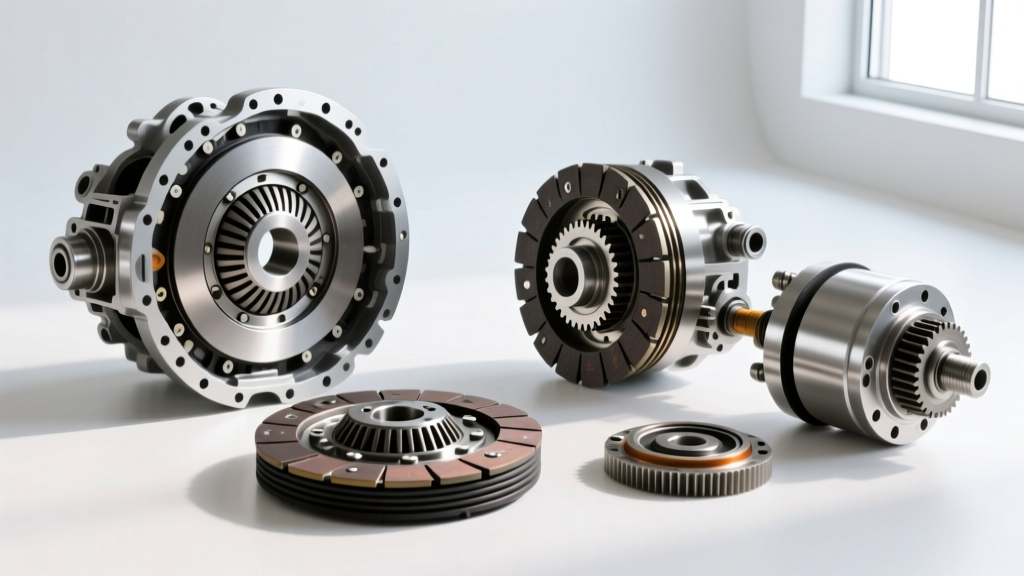
Unlike traditional wet clutches that engage via hydraulic line pressure pushing a piston against a friction pack, a centrifugal clutch utilizes weighted shoes or friction pads lined with specialized friction material. As engine RPM increases, centrifugal force overcomes the tension of return springs, forcing the shoes outward against the inner diameter of a clutch drum. In applications like the Honda CVT lineup (found in the Fit, HR-V, and Civic) and various powersports/UTV automatic transmissions, this starting clutch is the sole mechanical bridge between the engine's input shaft and the transmission's primary pulley system.
Identifying Centrifugal Clutch Failure Symptoms
Diagnosing clutch problems in automatic transmissions equipped with centrifugal starting elements requires a nuanced approach. Because engagement is dictated by rotational mass and spring tension rather than direct solenoid-controlled hydraulic pressure, the symptoms manifest differently than a slipping planetary clutch pack.
- Low-Speed Judder and Shudder: The most common complaint is a violent shaking or shudder occurring precisely between 15 and 25 mph during light throttle application. This is caused by a stick-slip friction phenomenon as the clutch shoes fail to grab the drum smoothly.
- RPM Flaring at Takeoff: If the return springs have fatigued or the friction shoes are glazed, the clutch will slip excessively, causing engine RPMs to flare without a corresponding increase in vehicle speed.
- Delayed Forward Engagement: A hesitation when shifting from Park to Drive, often requiring the driver to press the throttle slightly to 'force' the centrifugal clutch to expand and engage.
- Diagnostic Trouble Codes (DTCs): While centrifugal clutches lack direct pressure switches, the Transmission Control Module (TCM) monitors input and output shaft speed sensors. Discrepancies often trigger judder-specific codes, such as Honda's P1890 (CVT Start Clutch System Malfunction) or generic P0730 (Incorrect Gear Ratio) during the engagement phase.
Engineering Comparison: Centrifugal vs. Hydraulic Wet Clutches
To effectively troubleshoot, technicians must understand the engineering divergence between these two systems. In a standard automatic like the Ford 10R80, a slipping clutch is almost always a hydraulic issue—such as a leaking piston seal, a worn accumulator bore, or low line pressure from a failing oil pump. Conversely, centrifugal clutches in automatics are purely mechanical and tribological. Failure is rarely hydraulic; it is almost exclusively tied to friction material degradation, spring fatigue, or severe contamination from degraded fluid friction modifiers.
2026 Buyer’s Guide: OEM vs. Aftermarket Centrifugal Clutch Assemblies
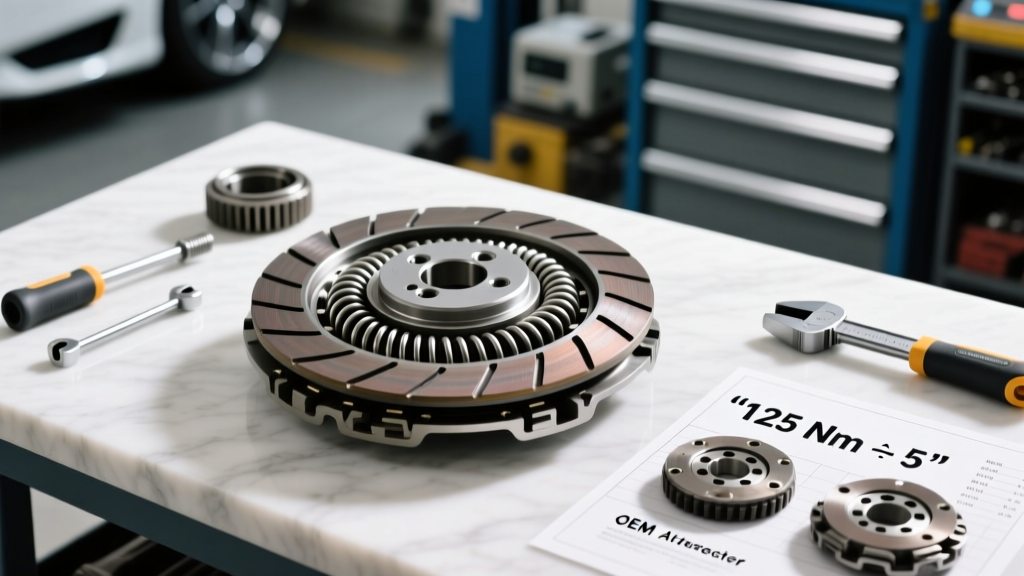
When a mechanical failure is confirmed, sourcing the correct replacement is critical. The market offers both complete OEM assemblies and aftermarket friction rebuild kits. Below is a comparative analysis for common Honda CVT applications (e.g., 2015-2024 Fit/Jazz and HR-V platforms) to guide your purchasing decision in 2026.
| Brand / Type | Part Number Example | Friction Material | Price Range (2026) | Warranty & Fitment |
|---|---|---|---|---|
| Honda OEM Assembly | 22100-RZA-010 | OEM Paper/Ceramic Composite | $380 - $520 | 12-Month / Perfect Drop-In |
| Aftermarket Complete (F-M) | FM-22100-RZA | Upgraded Kevlar Blend | $240 - $310 | 12-Month / Minor Shim Adjustments |
| Rebuild Kit (Friction & Springs) | ATK-CVT-START-KIT | Standard Organic | $85 - $140 | 90-Day / Requires Press & Tools |
Expert Recommendation: For daily-driven passenger vehicles, the OEM complete assembly is highly recommended. The cost of the specialized press tools and the risk of improper spring seating in rebuild kits rarely justifies the $150 savings for independent shops. However, for high-torque modified applications, aftermarket Kevlar-lined shoes offer superior thermal resistance.
Diagnostic Protocol: Fluid Degradation vs. Mechanical Wear
Before ordering parts, it is imperative to rule out fluid-induced judder. Honda's proprietary HMMF (Honda Multi-Matic Fluid) and modern CVTF formulations contain complex friction modifiers designed specifically for the slip-controlled environment of centrifugal clutches and steel belts.
- Fluid Inspection: Drop the transmission pan. If the fluid smells burnt or contains excessive metallic particulate (clutch shoe rivets or spring fragments), mechanical failure is confirmed.
- The Double-Flush Test: If the fluid is merely dark but devoid of debris, perform a drain-and-fill using genuine OEM fluid. Drive the vehicle for 50 miles to allow the new friction modifiers to coat the clutch shoes. If the judder persists, the friction material is permanently glazed or worn beyond the 0.15mm minimum thickness specification.
- TCM Relearn: After any fluid service or clutch replacement, a CVT start clutch calibration must be performed via a bi-directional scan tool to recalibrate the TCM's baseline slip parameters.
Precision Teardown and Torque Specifications
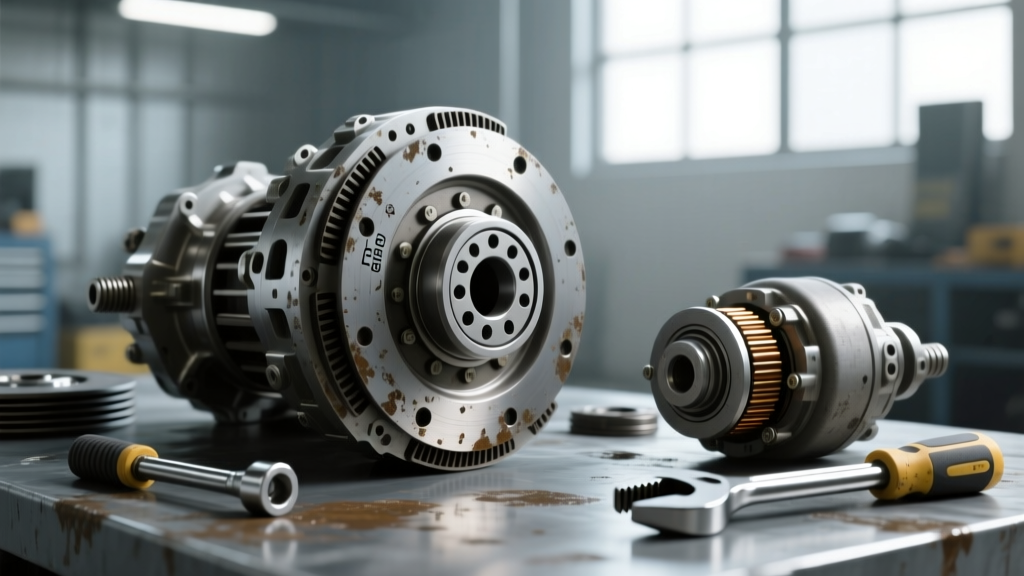
Replacing the centrifugal starting clutch requires removing the transmission side cover and extracting the primary pulley assembly. This is a high-precision procedure. Improper torque on the primary pulley locknut will lead to catastrophic belt slippage, while under-torquing the clutch drum bolts will result in immediate harmonic vibration.
Critical Torque Specs (Honda CVT Platform Reference)
- Primary Pulley Locknut: 167 lb-ft (226 Nm). Must be secured with a specialized CVT pulley holding tool (e.g., Honda Tool 07GAE-PGE0100) to prevent shaft damage.
- Starting Clutch Mounting Bolts (8mm x 1.25): 29 lb-ft (39 Nm). Apply a medium-strength threadlocker (blue) to prevent backing out under centrifugal load.
- Clutch Shoe Clearance: When installing aftermarket shoes, measure the clearance between the shoe friction surface and the drum inner diameter using a feeler gauge. Target specification is typically 0.20mm - 0.35mm at rest.
Master Technician Warning: Never use standard ATF or generic 'Multi-Vehicle' CVT fluids in transmissions utilizing centrifugal starting clutches. The friction coefficients are entirely different. Using the wrong fluid will cause immediate stick-slip judder and can permanently ruin new friction shoes within 500 miles. Always verify the exact OEM fluid specification (e.g., HMMF 08200-9006 or HCF-2 08200-HCF2).
Advanced Diagnostics: Oscilloscope and Pressure Transducer Testing
For intermittent clutch problems in automatic transmissions that defy standard scanning tools, advanced waveform analysis is the gold standard. By tapping into the input shaft speed sensor and overlaying it with the engine crankshaft position sensor using a PicoScope, technicians can visually map the exact micro-slipping events of the centrifugal clutch during engagement. A healthy clutch will show a smooth, linear convergence of engine and input shaft speeds. A failing centrifugal clutch will display a 'sawtooth' waveform pattern, indicating rapid grab-and-release stick-slip events before full lock-up is achieved. For a deeper dive into waveform diagnostics, resources from Transmission Digest provide excellent case studies on CVT judder waveform mapping.
Summary: Making the Right Repair Decision
Diagnosing centrifugal clutches in automatic transmissions requires moving beyond standard hydraulic line-pressure logic and embracing mechanical and tribological troubleshooting. Whether you are dealing with a degraded HMMF fluid batch or physically worn friction shoes, accurate diagnosis prevents unnecessary transmission replacements. By utilizing OEM-spec fluids, adhering strictly to pulley and drum torque specifications, and selecting the appropriate replacement assembly for the vehicle's duty cycle, you can permanently eliminate low-speed judder and restore seamless automatic engagement.