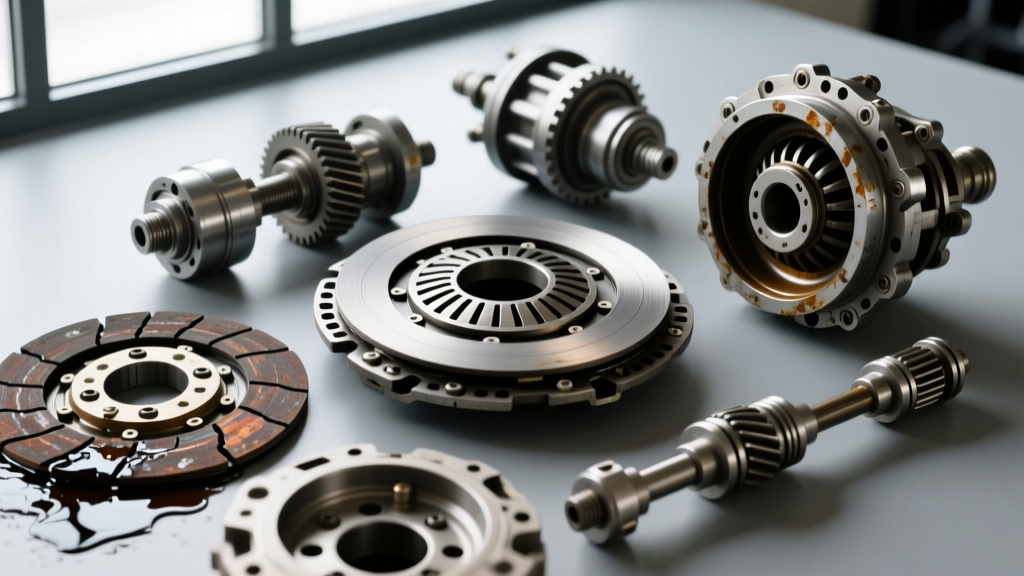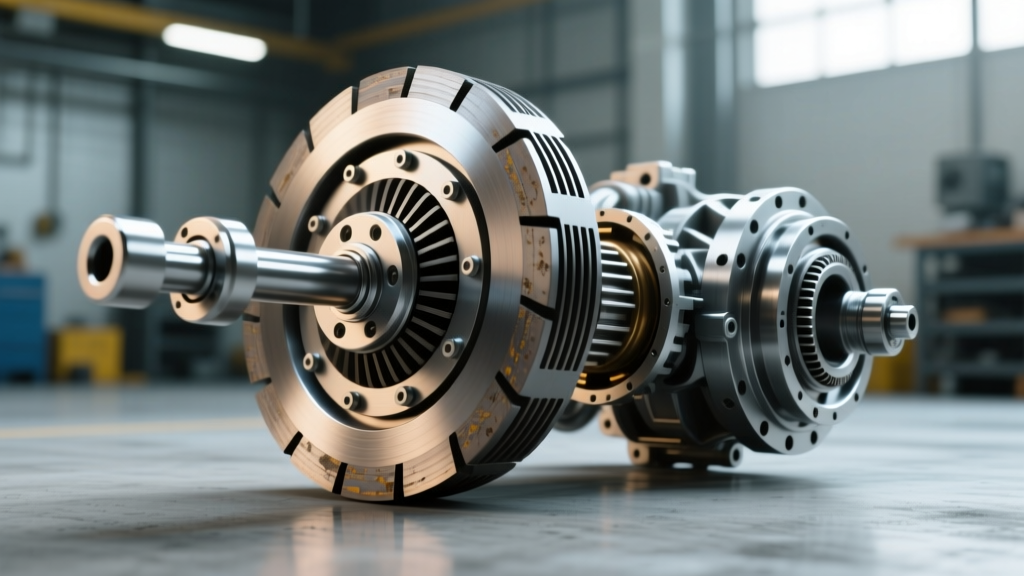
As of 2026, while modern dual-clutch and 10-speed automatic transmissions dominate the OEM performance landscape, the manual transmission renaissance in restomods, track cars, and high-horsepower street builds keeps advanced manual clutch systems highly relevant. Among these, the centrifugal clutch—specifically centrifugal-assist multi-disc and single-disc setups like the McLeod Soft Lok or Ram PowerGrip—remains the gold standard for managing 800+ horsepower applications. However, these aggressive systems are notoriously prone to clutch chatter and low-speed vibration if not meticulously diagnosed and tuned.
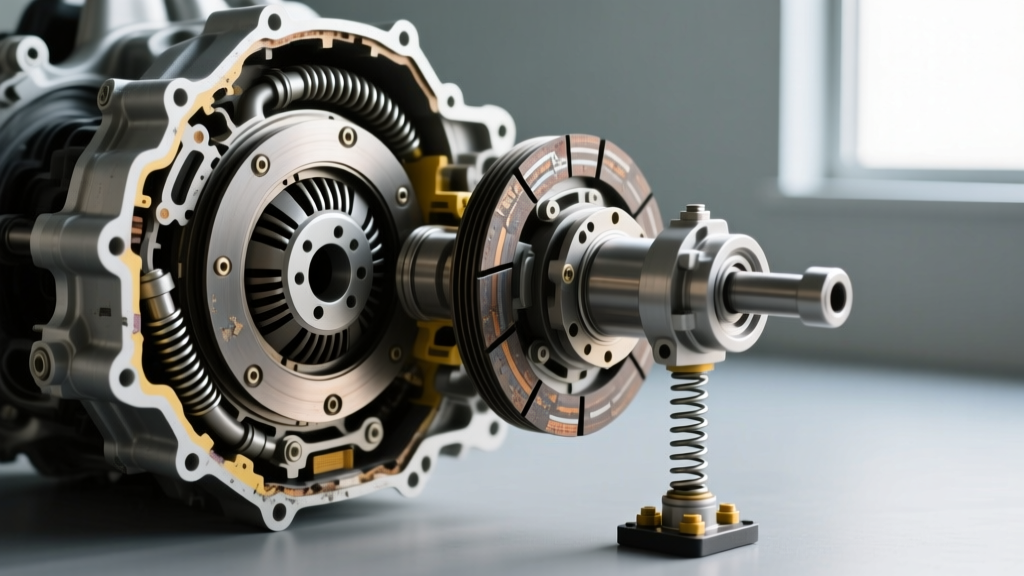
Unlike standard diaphragm clutches that rely solely on static spring pressure, centrifugal-assist clutches utilize lever arms and weighted mechanisms. As engine RPM increases, centrifugal force pulls the weights outward, dynamically multiplying the clamp load on the friction disc. This allows builders to run a soft pedal and low base pressure for streetability, while achieving massive clamping force at the top of first and second gear. But this dynamic operation introduces unique failure modes, specifically violent engagement chatter and high-frequency driveline vibrations.
The Anatomy of Centrifugal Clutch Chatter
Clutch chatter in a centrifugal setup is fundamentally a loss of kinetic friction control during the slip-to-lock transition phase. When you feed in the clutch pedal at 1,500 RPM, the centrifugal weights have not yet generated their peak dynamic clamping force. The system is relying entirely on its static "base pressure." If the base pressure is insufficient to smoothly transition the vehicle's mass into motion, the friction disc will micro-slip, grab, slip, and grab. This rapid oscillation transfers directly through the transmission input shaft, the bellhousing, and into the chassis, manifesting as violent shuddering.
Vibration, on the other hand, is often a harmonic or mechanical issue disguised as clutch chatter. It can stem from flywheel runout, bellhousing misalignment, or improper driveline pinion angles, all of which are amplified by the rigid, high-friction materials used in performance centrifugal clutches.
Diagnostic Matrix: Isolating the Vibration Source
Before tearing into the bellhousing, use this diagnostic matrix to isolate the root cause of your centrifugal clutch chatter. Accurate diagnosis saves hundreds of dollars in unnecessary replacement parts.
| Symptom Profile | Engagement RPM | Probable Root Cause | Diagnostic Action |
|---|---|---|---|
| Violent shudder upon initial take-off | Low (1,200 - 1,800) | Insufficient base pressure | Add base pressure shims (0.010" increments) |
| High-frequency buzzing or pedal vibration | Mid-Range | Flywheel runout exceeding 0.005" | Dial indicate flywheel face and bellhousing bore |
| Chatter only present when drivetrain is hot | Varies | Glazed sintered iron or ceramic friction material | Inspect friction surfaces; sandblast or replace disc |
| Driveline clunk followed by rhythmic vibration | Varies | Excessive pinion angle or worn U-joints | Check pinion angle (target 2-3 degrees offset) |
| Chatter accompanied by harsh cabin NVH | Low | Solid motor/polyurethane trans mounts | Swap to hydraulic or high-durometer rubber mounts |
Flywheel Runout and Bellhousing Alignment
The most overlooked cause of centrifugal clutch vibration is improper bellhousing alignment and flywheel runout. High-performance manual transmissions like the Tremec TKX or Magnum F require absolute precision. If the bellhousing bore is not perfectly concentric with the engine crankshaft, the transmission input shaft will run at an angle. This forces the clutch disc to wobble slightly within the pressure plate, causing the centrifugal weights to pulse unevenly against the release bearing.
Measuring Runout to OEM and Aftermarket Specs
According to Tremec’s official installation guidelines, maximum allowable bellhousing runout is 0.005" Total Indicator Reading (TIR). Flywheel face runout should also not exceed 0.005". To measure this:
- Mount a magnetic base dial indicator to the engine block or crankshaft flange.
- Sweep the indicator across the friction surface of the flywheel. If runout exceeds 0.005", the flywheel must be resurfaced or replaced.
- Move the indicator to the bellhousing bore. Rotate the crankshaft 360 degrees. If the bore is out of spec, install offset dowel pins (such as those from Lakewood or RobbMc Performance) to shift the bellhousing into perfect alignment.
Base Pressure Tuning: The Centrifugal Balancing Act
Tuning the base pressure on a centrifugal-assist clutch is a delicate balancing act. Manufacturers like McLeod Racing design their Soft Lok and Street Twin clutches with adjustable base pressure mechanisms, usually via shims placed under the pressure plate springs or by adjusting the release levers.
If your vehicle chatters violently when pulling away from a stoplight, your base pressure is too low. The centrifugal weights need engine RPM to generate clamping force; at 1,500 RPM, they are barely engaged. By adding 0.015" to 0.020" of shims to the base pressure springs, you can increase the static clamping force by roughly 150 to 200 lbs. This provides enough initial bite to eliminate low-speed chatter without making the pedal effort unbearable for street driving. Conversely, if the car bucks or stalls easily at low RPM, the base pressure is too high, and the centrifugal assist is overloading the tires upon engagement.
Friction Material Matrix and Chatter Propensity
The friction material you pair with your centrifugal clutch dictates its heat tolerance, holding capacity, and chatter propensity. In 2026, the market is dominated by three primary performance materials:
- Sintered Iron (e.g., McLeod Part #511051): Offers exceptional heat resistance and aggressive bite. However, sintered iron is notorious for low-speed chatter if not properly bedded in. It requires high heat to transfer a layer of friction material to the flywheel.
- Full-Face Ceramic: Provides a smoother engagement than sintered iron and handles up to 900 hp. Ceramic is more prone to glazing if the clutch is slipped excessively in stop-and-go traffic, which leads to hot-weather chatter.
- Ceramic Puck (Multi-Disc): Used in extreme drag applications. Puck clutches have no dampening springs in the hub and offer zero slip tolerance. They will inherently chatter and vibrate at low speeds; this is a feature, not a bug, and should only be used in dedicated track or strip cars.
Expert Break-In Tip: When installing a new sintered iron or ceramic centrifugal clutch, perform 10 to 15 moderate-engagement stops from 40 mph in a safe, empty industrial park. This generates the necessary heat to burn off manufacturing resins and transfers an even layer of friction material to the flywheel, drastically reducing first-week chatter.
Driveline Harmonics: U-Joints, Pinion Angle, and Mounts
Sometimes, what the driver perceives as clutch chatter is actually driveline harmonic vibration amplified by the clutch engagement. When a centrifugal clutch locks up aggressively, it sends a shockwave through the driveline. If the pinion angle is incorrect, the universal joints will bind and vibrate.
For a leaf-spring or four-link rear suspension setup, the transmission output shaft and the differential pinion gear should not be perfectly parallel. You need a 2 to 3-degree offset (where the pinion points slightly downward relative to the driveshaft) to ensure the U-joint needles rotate fully under load. Furthermore, if you have upgraded to solid aluminum motor mounts and polyurethane transmission mounts to reduce engine movement during hard launches, you have created a direct acoustic bridge for driveline NVH (Noise, Vibration, and Harshness) to enter the cabin. Upgrading the transmission mount to a high-durometer rubber or hydraulic unit (like the Energy Suspension or Prothane performance lines) can absorb the high-frequency vibrations generated by the centrifugal weights.
Real-World Setup: Tremec TKX with Ram PowerGrip
To illustrate the precision required, let’s look at a popular 2026 restomod configuration: a 700-hp LS-swapped muscle car utilizing a Tremec TKX 5-speed and a Ram PowerGrip centrifugal-assist clutch. Proper installation requires strict adherence to torque specifications to prevent harmonic vibrations that mimic clutch chatter.
Critical Torque Specifications
- Flywheel to Crankshaft (LS Engine with ARP 234-2503 bolts): 74 lb-ft + 90 degrees of rotation. Use ARP Ultra-Torque fastener assembly lubricant. An improperly torqued flywheel will warp under heat, causing severe runout and chatter.
- Pressure Plate to Flywheel: 35 lb-ft. Tighten in a strict star pattern, one turn at a time, to ensure the pressure plate housing does not distort. Distortion alters the geometry of the centrifugal levers, causing uneven clamping.
- Bellhousing to Engine Block: 35-40 lb-ft. Ensure all dowel pins are fully seated before applying torque.
By methodically checking flywheel runout, dialing in the base pressure shims, and verifying driveline geometry, you can tame the aggressive nature of a centrifugal clutch. The result is a high-horsepower manual drivetrain that hooks violently on the drag strip, yet remains surprisingly civil and chatter-free on the street.