The Great Transmission Deception: External Pedal Mechanics vs. Internal Clutch Packs
When drivers experience RPM flares, delayed engagements, or sudden loss of gear ratios, the immediate assumption often leans toward catastrophic internal failure. However, as we navigate the complex diagnostic landscape of 2026, automotive technicians and advanced DIYers must distinguish between internal hydraulic failures and external mechanical anomalies. This comprehensive buyer's guide and diagnostic comparison explores the severe reality of clutch problems in automatic transmissions while contrasting them with the often-misunderstood external clutch pedal return spring installation—a repair frequently conflated with transmission limp modes due to shared cruise control and interlock circuit symptoms.
Whether you are sourcing overhaul kits for a slipping GM 6L80 or diagnosing a stiff pedal assembly that triggers false neutral safety codes, understanding the exact cost, part numbers, and torque specifications is critical for an accurate repair.
Decoding Clutch Problems in Automatic Transmissions
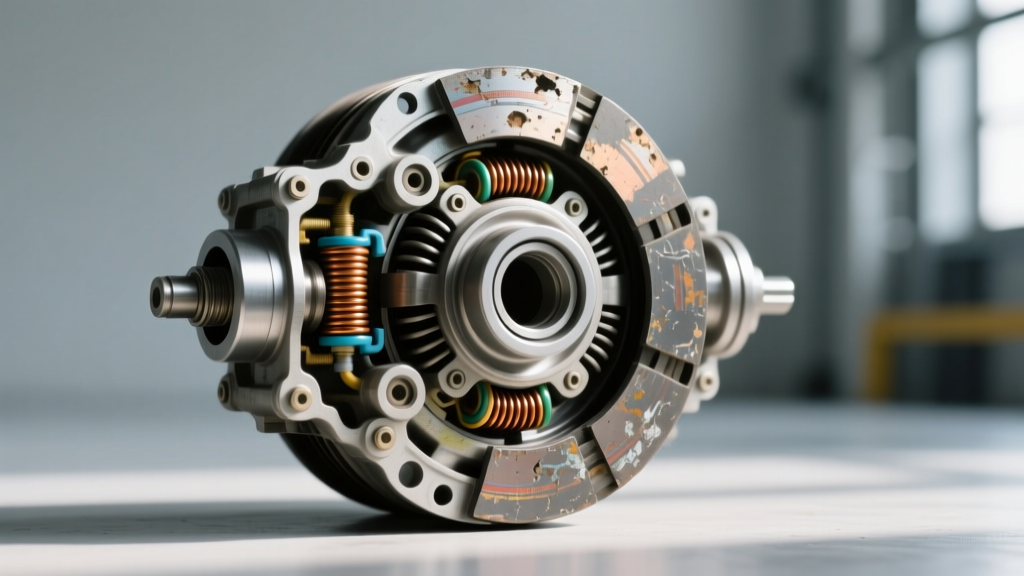
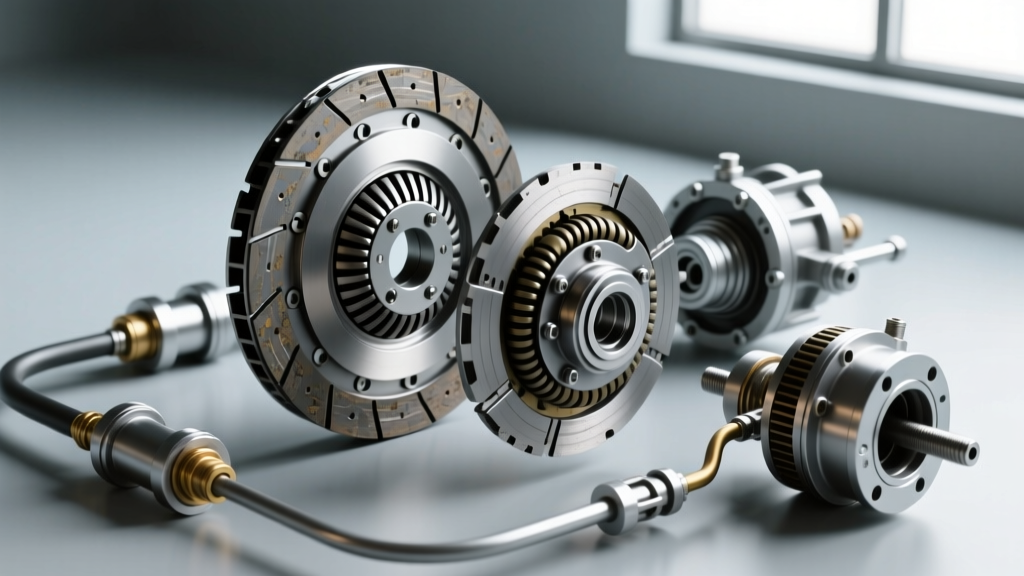
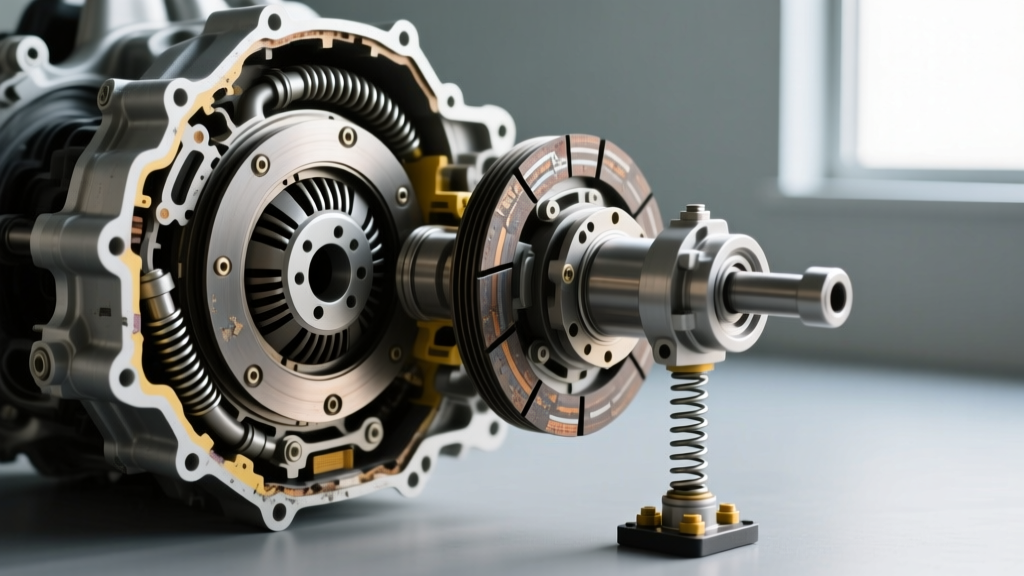
Unlike manual gearboxes that rely on a single friction disc, modern automatic transmissions utilize multiple internal clutch packs to route power through planetary gear sets. When these friction materials degrade, or the apply pistons leak, the results are immediate and often destructive.
Case Study 1: The GM 6L80 / 6L90 3-5-R Clutch Pack Failure
The GM 6L80 is notorious for a specific internal flaw: the fracture of the 3-5-R clutch wave plate. According to data from the Sonnax Transmission Specialists, when this stamped steel wave plate fatigues and shatters, it acts like a blender inside the clutch drum. The metallic debris instantly contaminates the friction steels and clogs the valve body solenoids.
- Symptoms: Loss of 3rd, 5th, and Reverse gears; severe RPM flaring; metallic flakes on the magnetic drain plug.
- Required Parts: Updated 3-5-R Friction Pack (GM 24226861), Reinforced Wave Plate (Sonnax 104740-01K), and a complete TEHCM (Transmission Electronic Hydraulic Control Module) flush.
- Fluid & Torque Specs: Requires 11.2 quarts of Dexron VI. Pump-to-case bolts must be torqued to exactly 13 Nm (115 lb-in) in a star pattern to prevent stator support misalignment.
- 2026 Market Cost: $2,800 - $4,200 for a complete teardown, clutch pack replacement, and torque converter swap.
Case Study 2: ZF 8HP Mechatronic Sleeve Leaks & Clutch Starvation
The ZF 8HP (found in Ram, BMW, and Jaguar applications) relies on a Mechatronic unit that houses the TCM and valve body in one sealed assembly. A frequent cause of clutch problems in these automatics is the degradation of the Mechatronic adapter sealing sleeves. When these plastic sleeves warp, apply pressure bleeds off before reaching Clutch A and Clutch B, resulting in harsh 2-3 shifts and delayed forward engagement.
- Symptoms: 'Transmission Fault' dash warning, limp-home mode (locked in 3rd or 5th gear), and delayed reverse engagement when cold.
- Required Parts: ZF Mechatronic Adapter Sleeve Kit (ZF 0501 216 243) and updated separator plate.
- Torque Specs: Mechatronic retaining bracket bolts require a precise 8 Nm (71 lb-in). Overtightening will crack the plastic valve body housing.
- 2026 Market Cost: $1,400 - $2,100 (pan, filter, fluid, and sleeve kit replacement without full transmission removal).
The External Illusion: Clutch Pedal Return Spring Installation
Why discuss a manual component in an automatic transmission guide? In 2026, the lines between pedal assemblies and transmission control modules (TCM) are heavily intertwined. Many modern vehicles feature manual-shift automatic modes, cruise control interlocks, or clutch-cut-off switches (like the Honda CPP switch) that share wiring harnesses with the brake and transmission range sensors.
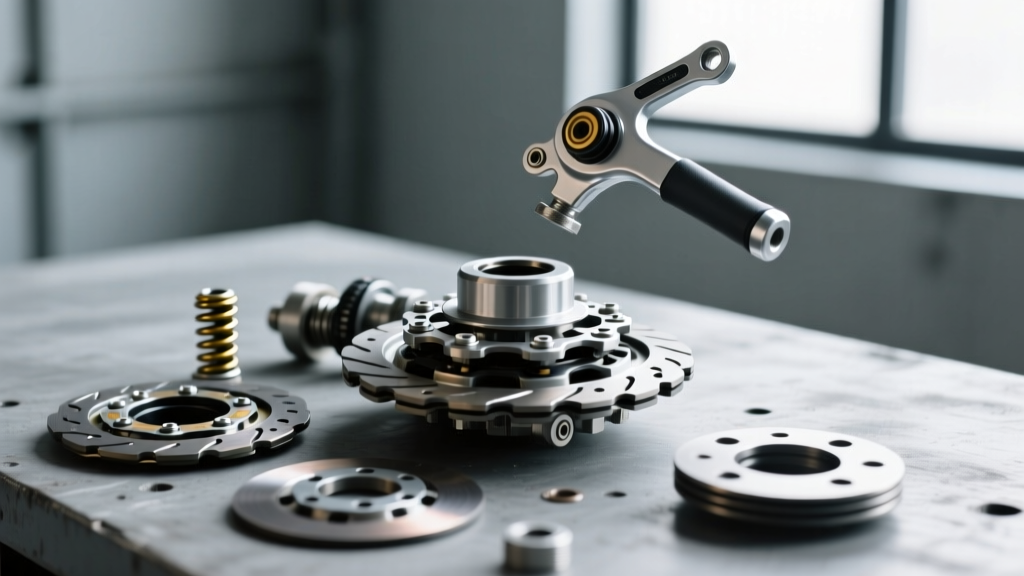
When a driver performs a clutch pedal return spring installation to fix a sagging pedal, they are often addressing a secondary symptom of a misaligned Clutch Pedal Position (CPP) switch. If the return spring (e.g., Dorman 74016) loses its 25-lb tension rating, the pedal fails to return to the top stop. This tricks the TCM into believing the clutch is engaged, which can disable cruise control, prevent push-button starts, or force an automatic transmission with a manual-gate shifter into a rev-limiting limp mode.
Furthermore, in the booming EV-swap and manual-to-automatic conversion market, technicians frequently install dummy clutch pedals with heavy return springs to retain factory cruise control functionality. Diagnosing a 'slipping' sensation in these converted automatics often traces back to a poorly tensioned return spring pulling on the cruise-cancel switch, rather than internal clutch pack failure.
2026 Buyer's Guide: Repair Kits & Diagnostic Cost Comparison
To help you allocate your repair budget accurately, we have compiled a direct comparison between sourcing internal automatic clutch overhaul kits and external pedal spring/switch assemblies.
| Diagnostic Scenario | Primary Symptoms | Key Part Numbers (2026) | Avg. Parts Cost | Labor Time |
|---|---|---|---|---|
| GM 6L80 Internal Clutch Pack Failure | Loss of 3rd/5th/Reverse, RPM flares, metallic debris | GM 24226861 (Frictions), Sonnax 104740-01K (Wave Plate) | $650 - $950 | 8.5 - 12.0 Hours |
| ZF 8HP Mechatronic Clutch Starvation | Harsh 2-3 shifts, delayed reverse, TCM limp mode | ZF 0501 216 243 (Sleeve Kit), ZF LifeguardFluid 8 | $350 - $500 | 3.0 - 4.5 Hours |
| Clutch Pedal Return Spring Installation | Sagging pedal, cruise control failure, no-crank condition | Dorman 74016 (Spring), GM 12597978 (CPP Switch) | $15 - $45 | 0.2 - 0.5 Hours |
Advanced Diagnostic Framework: Isolating the Fault
Before dropping a transmission pan or ordering a master rebuild kit, follow the Automatic Transmission Rebuilders Association (ATRA) guidelines for isolating hydraulic faults from external electrical gremlins.
Step 1: Rule Out the External Circuit
If your vehicle features a clutch interlock or manual-mode cancellation switch, inspect the pedal assembly first. Use a digital fish scale to measure the pull weight of the return spring. A factory-spec spring should exert between 20 and 30 lbs of force at full extension. If the spring is weak, perform a clutch pedal return spring installation and recalibrate the CPP switch via your bidirectional OBD2 scanner. If the RPM flares persist after the switch reads 'Open' (pedal up), the fault is strictly internal.
Step 2: Monitor TCM Apply Pressures via OBD2 PIDs
Connect a high-end diagnostic tablet (e.g., Snap-on Zeus or Autel MaxiSys) and graph the commanded vs. actual clutch apply pressures. In a healthy ZF 8HP, Clutch A apply pressure should match commanded pressure within 0.2 bar during a 2-3 upshift. If actual pressure drops while commanded pressure spikes, you have confirmed internal clutch problems in the automatic transmission—specifically a leaking apply piston or blown sealing ring.
Step 3: The Stall Test and Volume Check
For the GM 6L80, perform a stall test in Drive and Reverse. If the engine RPM easily exceeds 2,200 RPM in Reverse but holds firm in Drive, the 3-5-R clutch pack is physically destroyed. No external spring, switch, or valve body adjustment will cure this; a full teardown and clutch pack replacement is mandatory.
Final Verdict for Technicians and DIYers
Diagnosing drivetrain faults requires a methodical elimination of variables. While a simple clutch pedal return spring installation can cure frustrating electrical gremlins, cruise control dropouts, and false neutral safety codes, it will never cure the mechanical slip of burnt friction steels. By understanding the specific failure points of modern automatics like the 6L80 and ZF 8HP, and utilizing precise torque specs and pressure data, you can confidently purchase the correct overhaul kit or external switch assembly, saving thousands in misdiagnosed labor costs.