The Core Dilemma: Spot Repair vs. Full Overhaul
When your vehicle throws a P0700 Transmission Control System code, experiences harsh 2-3 shifts, or slips under heavy throttle, you are immediately faced with a critical financial decision. Do you attempt a targeted spot repair, or do you commit to a full transmission rebuild? For those researching transmission rebuilds, Cedar Creek vehicle owners know that local labor rates and parts availability can heavily influence this choice. In the modern automotive landscape, transmissions are no longer purely mechanical hydraulic valves; they are complex, computer-controlled electro-hydraulic systems. This guide breaks down the technical and financial realities of transmission repair versus a complete rebuild, utilizing real-world data from popular platforms like the GM 6L80, Ford 6R80, and ZF 8HP.
Defining a Transmission Repair (Targeted Fixes)
A transmission 'repair' typically refers to a spot fix aimed at resolving a specific, isolated fault without removing and completely dismantling the entire unit. This approach is highly effective when the failure is external or limited to the valve body and electronic control modules.
Common Spot Repair Scenarios
- External Sensor Replacement: Replacing an Input/Output Speed Sensor (ISS/OSS) or a Transmission Fluid Temperature (TFT) sensor. For example, a failing OSS on a Ford 6R80 (Part # BL3Z-7H103-A) can cause erratic shifting and torque converter clutch (TCC) slip codes. This requires only a pan drop and fluid top-off.
- Valve Body or TEHCM Replacement: The GM 6L80 utilizes a Transmission Electro-Hydraulic Control Module (TEHCM) mounted directly inside the pan. If the internal pressure switches fail, the entire TEHCM can be replaced without pulling the transmission from the vehicle.
- Solenoid Pack Swaps: Many Chrysler and Ford units allow for solenoid pack replacement with the transmission still in the car, saving massive amounts of labor.
Technical Note: When performing internal spot repairs that require dropping the pan, always adhere to precise torque specifications. Over-tightening the 6L80 transmission pan bolts will warp the aluminum casing and cause persistent leaks. The factory spec is exactly 106 lb-in (12 Nm), and the fluid must be refilled to the correct level using Dexron VI, checking the dipstick at operating temperatures between 180°F and 200°F.
What a Full Transmission Rebuild Actually Entails
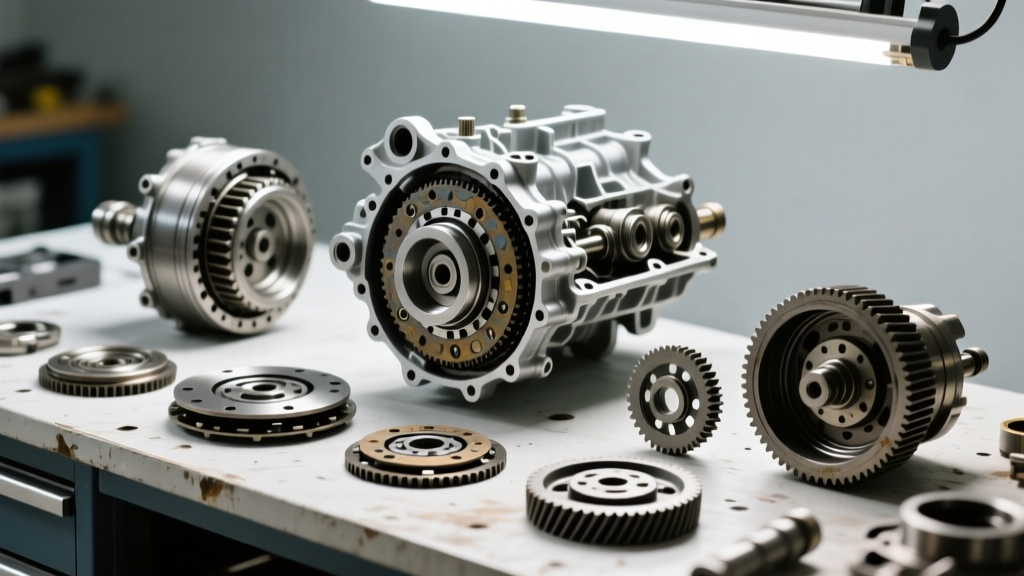
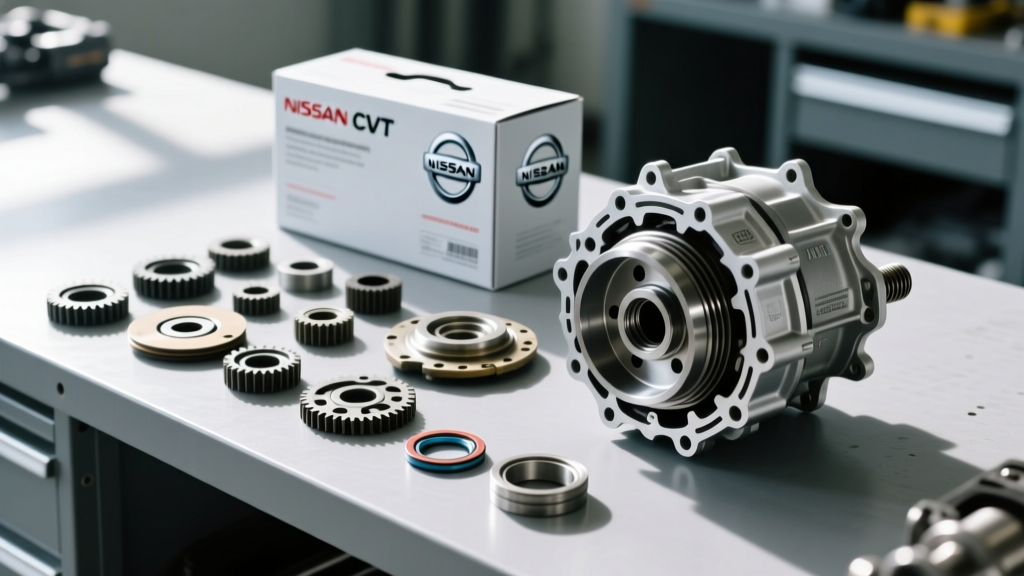
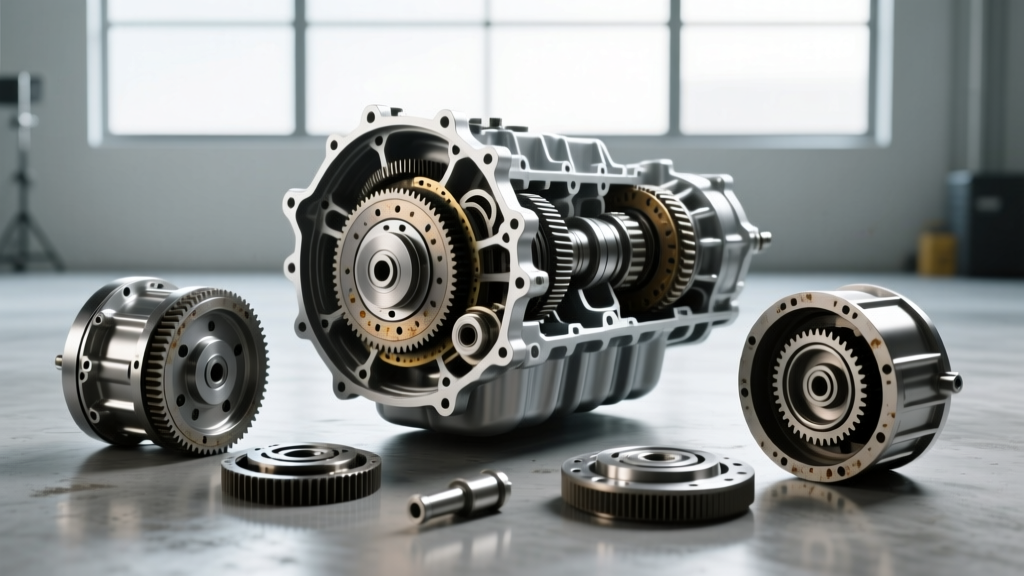
A full rebuild is a comprehensive restoration process. The transmission is removed from the vehicle, disassembled down to the last snap ring, and cleaned. Every 'soft part'—including friction clutches, steel reaction plates, rubber O-rings, lip seals, and gaskets—is replaced using a Master Rebuild Kit (such as those offered by Sonnax Industries or Raybestos). 'Hard parts' like planetary gearsets, clutch drums, and the torque converter are inspected for wear, scored surfaces, or heat bluing, and replaced if they fall outside of factory clearance specifications.
According to the Automatic Transmission Rebuilders Association (ATRA), a proper rebuild also mandates a complete flush of the transmission cooler lines and the replacement of the torque converter. Reusing a failed torque converter is a primary cause of 'comeback' failures, as it harbors metallic debris and worn clutch material that will immediately contaminate the freshly rebuilt unit.
Cost Breakdown: Cedar Creek Market Rates (2026 Estimates)
Labor rates in the Cedar Creek and greater Austin metro area generally range from $130 to $175 per hour for specialized transmission work. Below is a comparative matrix to help you budget for either route.
| Service Type | Typical Cost Range | Estimated Downtime | Warranty Coverage | Best Application |
|---|---|---|---|---|
| External Spot Repair (Sensors/Wiring) | $250 - $600 | 1 - 2 Days | 12 Months / 12k Miles | Isolated electrical/sensor faults |
| Internal Spot Repair (Valve Body/TEHCM) | $800 - $1,600 | 2 - 4 Days | 12 Months / 12k Miles | Low-mileage units with clean fluid |
| Full Transmission Rebuild (In-House) | $2,800 - $4,500 | 5 - 8 Days | 3 Years / 100k Miles | Burnt fluid, mechanical slip, high mileage |
| Remanufactured Unit Swap | $3,200 - $5,500 | 3 - 5 Days | 3 Years / Unlimited Miles | Severe case damage, catastrophic failure |
Technical Deep Dive: Model-Specific Scenarios
To truly understand the repair vs. rebuild decision, we must look at how specific transmission models fail. Transmission Digest frequently highlights that misdiagnosing the root cause can lead to wasted money on spot repairs that ultimately fail.
Scenario A: GM 6L80 - The 3-5-R Wave Plate Failure (Rebuild Required)
The GM 6L80, found in millions of Silverados, Tahoes, and Camaros, has a notorious weak point: the 3-5-R wave plate. Over time, this plate fatigues and fractures. When it shatters, it sends shards of hardened steel directly into the valve body and the transmission cooler.
The Trap: A shop might pull the pan, find metal debris, and suggest replacing the valve body and flushing the cooler (a $1,400 spot repair).
The Reality: The clutch packs are already scored by the debris. If you do not pull the transmission, disassemble it, and replace the compromised clutch frictions and the updated wave plate, the transmission will fail again within 2,000 miles. This scenario strictly demands a full rebuild.
Scenario B: ZF 8HP - Mechatronic Adapter Sleeve Leak (Repair Viable)
The ZF 8-speed (8HP70/8HP90) is a marvel of modern engineering, utilized in everything from Dodge Chargers to BMWs. A common issue is the degradation of the plastic Mechatronic adapter sleeve, which houses the electrical pass-through pins. As the plastic ages and heat-cycles, it warps, allowing transmission fluid to leak onto the external transmission control module, causing communication faults.
The Fix: This is a highly successful spot repair. The technician drops the pan, removes the valve body (Mechatronic unit), and extracts the old sleeve. Installing an updated Sonnax Zip Kit sleeve and resealing the mechatronic unit resolves the issue. The mechatronic-to-case bolts must be torqued to exactly 10 Nm (88 lb-in) in a specific star pattern to prevent casing distortion. The unit is then refilled with ZF LifeguardFluid 8, and the fluid level is verified via an OBD2 scanner when the sump temperature is precisely between 30°C and 50°C. Total cost is usually under $1,200, saving the owner from an unnecessary $4,000 rebuild.
The Mechanic’s Decision Matrix: How to Choose
Before authorizing any work, run your vehicle through this diagnostic checklist to determine the correct path forward:
- Evaluate the Fluid Condition: Pull the dipstick or drop the inspection pan. If the fluid is bright red or slightly dark but smells neutral, a spot repair is viable. If the fluid is black, opaque, and smells like burnt toast, the friction clutches are destroyed. A rebuild is mandatory.
- Check for Cross-Contamination: If transmission fluid has pushed past the radiator cooler and mixed with your engine coolant (creating a 'strawberry milkshake' in the radiator), the transmission's internal seals and clutch linings are compromised by the water/glycol. The unit must be rebuilt or replaced.
- Scan for Gear Ratio Codes: Codes like P0731 (Gear 1 Incorrect Ratio) or P0735 (Gear 5 Incorrect Ratio) indicate internal clutch slip or seal blowouts inside the rotating drum assemblies. These cannot be fixed with a valve body swap; they require a teardown.
- Consider Vehicle Value vs. Cost: If you are driving a 2014 Chevy Silverado with 160,000 miles, a $3,500 rebuild might exceed the vehicle's book value. In this case, sourcing a low-mileage used unit or a remanufactured exchange unit might offer a better return on investment with a stronger warranty.
Finding the Right Shop for Transmission Rebuilds in Cedar Creek
Not all general repair shops possess the clean-room environment, specialized clutch-pack compressors, and dyno-testing equipment required for modern transmission rebuilding. When vetting local shops, ask if they perform 'in-house' rebuilds or if they simply swap remanufactured crate units. In-house rebuilders can often customize the build with heavy-duty upgrade kits (like the Sonnax Smart-Tech lineup) tailored to your specific towing or performance needs. Always demand a line-pressure test report post-rebuild to verify that the pump and hydraulic circuits are operating at factory specifications before you take delivery of your vehicle.