The Diagnostic Crossroads: Hydraulics vs. Internal Gearbox Wear
When a manual transmission vehicle exhibits hard shifting, gear grinding, or a spongy clutch pedal, the immediate assumption often leans toward catastrophic internal gearbox failure. However, as we navigate the 2026 aftermarket landscape, experienced drivetrain technicians know that up to 40% of perceived manual transmission failures are actually rooted in hydraulic clutch actuation deficits. Diagnosing the exact failure point is the critical first step before sourcing a clutch master cylinder rebuild kit or committing to a full transmission teardown.
Manual transmission troubleshooting requires a systematic approach to isolate hydraulic bypass from mechanical synchro wear. If the clutch master cylinder's internal cup seals are degraded, hydraulic fluid bypasses the piston under load. This results in incomplete clutch disengagement, which forces the synchronizer rings to absorb the RPM differential between the engine and the transmission input shaft. Over time, this misdiagnosed hydraulic fault will rapidly destroy brass or carbon-lined synchro rings, turning a $40 hydraulic rebuild into a $2,500 transmission overhaul.
Symptom Profile: Spongy Pedal and Incomplete Disengagement
A spongy pedal that slowly sinks to the floor while holding the clutch in at a stoplight is the hallmark of internal master cylinder bypass. Unlike external leaks, which leave visible fluid trails on the firewall or pedal box, internal bypass leaves no visual evidence. To verify this, clamp the flexible hydraulic line connecting the master cylinder to the hardline. If the pedal suddenly becomes firm, the master cylinder is bypassing internally, and it is time to source a rebuild kit or a complete replacement assembly.
Symptom Profile: Grinding Gears and False Synchro Failure
If the vehicle grinds specifically when shifting into 2nd or 3rd gear, but shifts smoothly when the engine is turned off, the issue is almost certainly hydraulic. The clutch is not fully releasing, meaning the input shaft is still spinning. Conversely, if the transmission grinds even when the engine is off, or if it pops out of gear under load, you are looking at internal mechanical failure requiring a full transmission rebuild kit.
Sourcing a Clutch Master Cylinder Rebuild Kit: OEM vs. Aftermarket
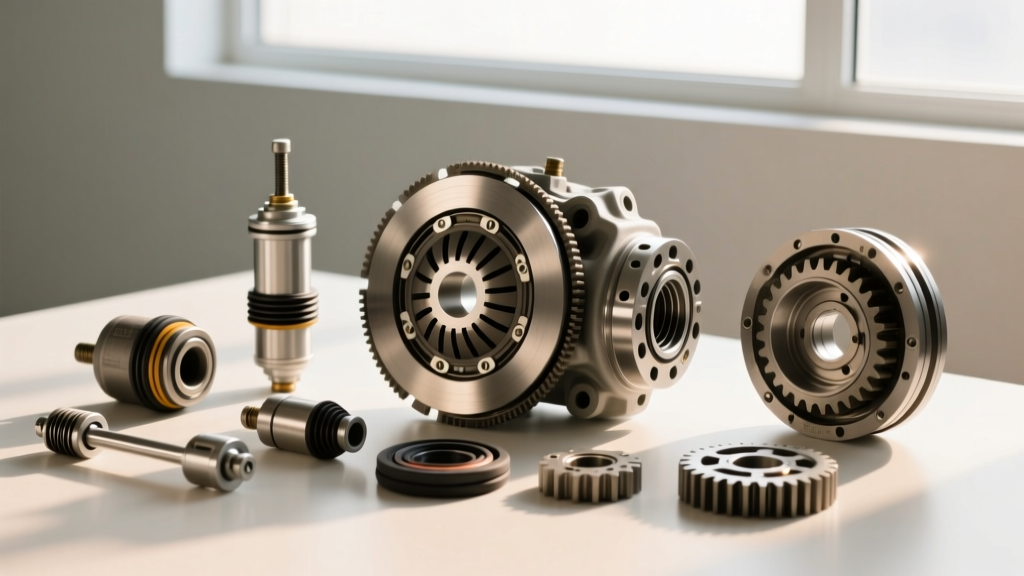
Once diagnosis confirms internal hydraulic failure, sourcing the correct clutch master cylinder rebuild kit is paramount. The hydraulic clutch system operates under immense pressure—often exceeding 1,200 PSI during rapid clutch engagement. Substandard seals will extrude and fail within weeks.
Material Science: EPDM vs. Polyurethane Cup Seals
When browsing catalogs like RockAuto or specialized European import suppliers, you will encounter different seal materials. Most OEM manufacturers, such as FTE Automotive or Sachs, utilize high-grade EPDM (Ethylene Propylene Diene Monomer) rubber designed specifically for DOT 3, DOT 4, and DOT 5.1 glycol-based brake fluids. Avoid cheap aftermarket kits that use standard nitrile (Buna-N) seals, as glycol-based fluids will cause nitrile to swell, bind, and ultimately tear inside the aluminum bore.
For high-performance applications or track vehicles running high-temperature DOT 5.1 fluid, some specialty rebuild kits offer Polyurethane or Viton seals. While more expensive (typically $65-$90 compared to $25-$40 for EPDM kits), they offer superior resistance to heat cycling and fluid degradation.
Firewall Mounting and Torque Specifications
When reinstalling a rebuilt master cylinder, proper torque is critical to prevent firewall flex, which mimics a spongy pedal. For most passenger vehicles utilizing M8 mounting nuts on the firewall or pedal box bracket, the torque specification is strictly 18 to 22 Nm (13-16 lb-ft). Over-torquing can warp the plastic or cast-aluminum master cylinder body, causing the piston to bind. Furthermore, the hardline flare nut connecting to the master cylinder typically requires a precise 10 to 12 Nm torque using a crowfoot wrench; overtightening here will strip the soft aluminum threads of the master cylinder housing.
When Diagnosis Points Internal: Sourcing Manual Transmission Components
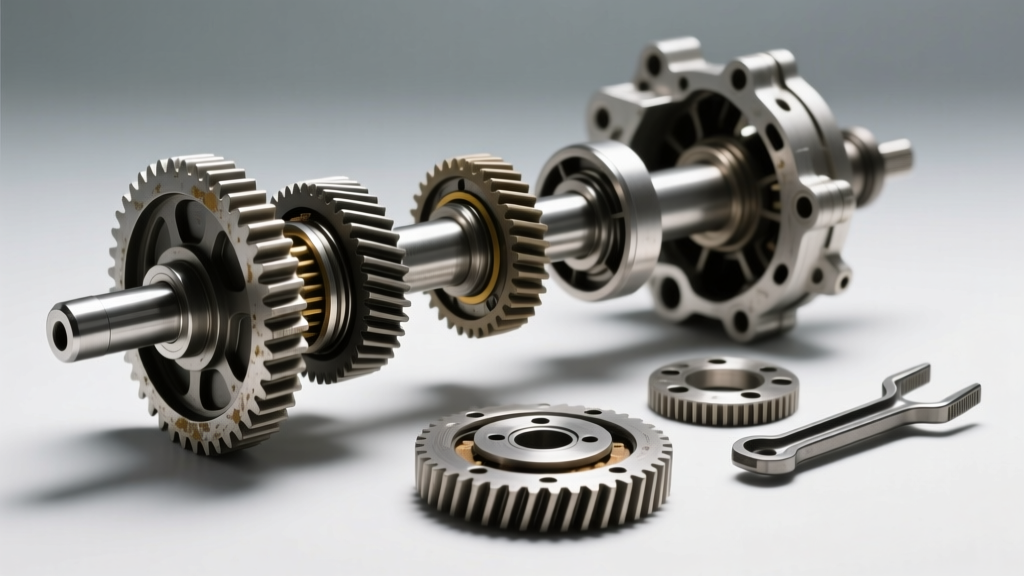
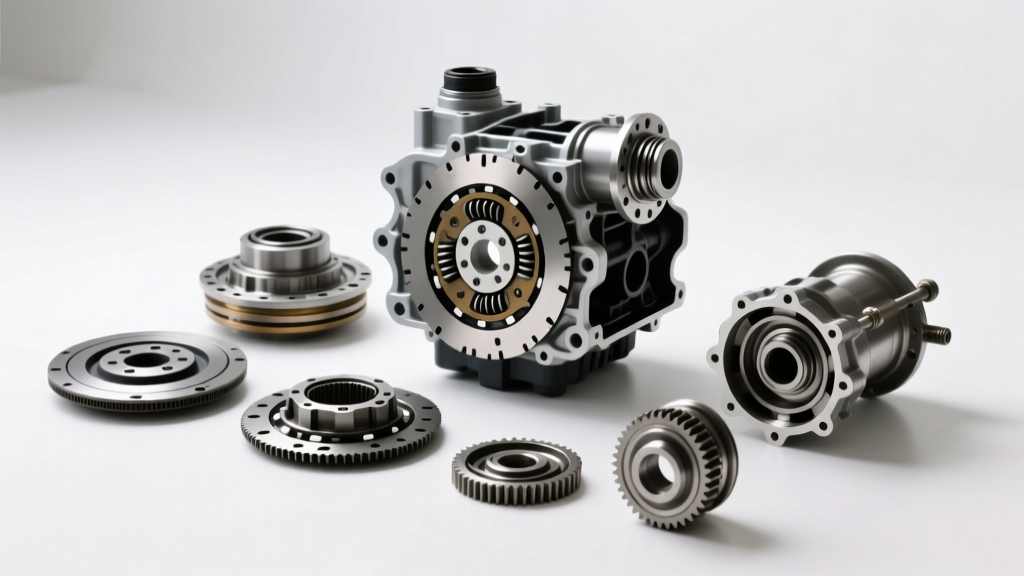
If the hydraulic system checks out perfectly, the diagnosis moves inside the bell housing. Sourcing internal manual transmission parts requires exactness, as gearsets and synchronizers are highly specific to transmission families like the Tremec T56 Magnum, Mazda M5OD-R1, or the Porsche G50.
Carbon-Fiber vs. Brass Synchronizer Rings
Modern manual transmissions (post-2010) heavily utilize carbon-fiber lined synchronizer rings, such as those found in the Tremec T56 Magnum series. According to Tremec engineering specifications, carbon-lined synchros provide a higher coefficient of friction and superior heat dissipation compared to traditional brass rings. When sourcing a rebuild kit, never substitute brass rings in a transmission designed for carbon, as the friction characteristics will cause immediate gear clash and synchro burnout.
Bearings and Shafts
Internal rebuild kits should include premium Japanese or European bearings (NSK, SKF, or Koyo). The input shaft bearing and countershaft bearings are the most common failure points in high-mileage manual transmissions. Ensure your sourced kit includes the correct selective thrust washers and snap rings, as end-play specifications are usually held to a tight tolerance of 0.004 to 0.008 inches.
2026 Cost Breakdown: Hydraulic Rebuild vs. Full Manual Overhaul
Understanding the financial delta between a hydraulic repair and an internal transmission rebuild highlights why accurate diagnosis is the most valuable tool in a technician's arsenal. Below is a comparative cost analysis based on 2026 North American market pricing for a typical rear-wheel-drive performance vehicle (e.g., 5th Gen Camaro / Mustang application).
| Component / Service Level | Part Sourcing Cost (2026) | Labor Time | Total Estimated Cost |
|---|---|---|---|
| Clutch Master Cylinder Rebuild Kit (OEM EPDM) | $25 - $55 | 1.5 - 2.0 Hours | $175 - $295 |
| Complete Master & Slave Cylinder Assembly (Pre-bled) | $140 - $280 | 2.5 - 3.5 Hours | $440 - $700 |
| Internal Transmission Rebuild Kit (Syncros, Bearings, Seals) | $450 - $850 | 8.0 - 12.0 Hours (R&R + Teardown) | $1,410 - $2,290 |
| Remanufactured Manual Transmission (Exchange) | $1,800 - $3,200 | 4.0 - 6.0 Hours (R&R Only) | $2,280 - $3,920 |
Advanced Bleeding Procedures: The Final Diagnostic Step
Sourcing the right parts is only half the battle. A poorly bled hydraulic clutch system will trap micro-bubbles in the slave cylinder or the concentric release bearing, resulting in a pedal feel that mimics a worn pressure plate or bent shift fork. Standard gravity bleeding is rarely sufficient for modern manual transmissions with complex routing.
For vehicles equipped with internal concentric slave cylinders (CSC), such as the GM LS/T56 platforms or late-model BMW M5OD applications, reverse pressure bleeding is the industry standard. By forcing DOT 4 fluid from the slave cylinder bleeder valve upward into the master cylinder reservoir at a regulated pressure of 15 to 20 PSI, technicians can effectively push trapped air out of the system without introducing new micro-bubbles through the master cylinder pushrod seal. If the pedal remains spongy after a proper reverse bleed, re-evaluate the master cylinder bore for scoring, as a pitted aluminum bore will destroy the new EPDM seals from your rebuild kit in a matter of days.
Expert Sourcing Strategies to Avoid Counterfeit Drivetrain Parts
The proliferation of counterfeit drivetrain components on global e-commerce platforms is a severe issue in 2026. Counterfeit clutch master cylinder rebuild kits often feature improperly sized cup seals and low-grade return springs that fatigue under thermal expansion. Always cross-reference the OEM part number (e.g., FTE KG19010.0.1 or Sachs 6283 605 034) directly through authorized distributors. When sourcing internal manual transmission rebuild kits, verify that the kit includes updated components; for instance, many early 2000s manual transmissions received factory service bulletins (TSBs) upgrading specific needle bearings or shift fork pads to address premature wear. A high-quality supplier will include these revised components in their master rebuild kits, ensuring your manual transmission survives the next 150,000 miles of aggressive driving.