The Evolution of the Class 8 'Automatic' and TCU Logic
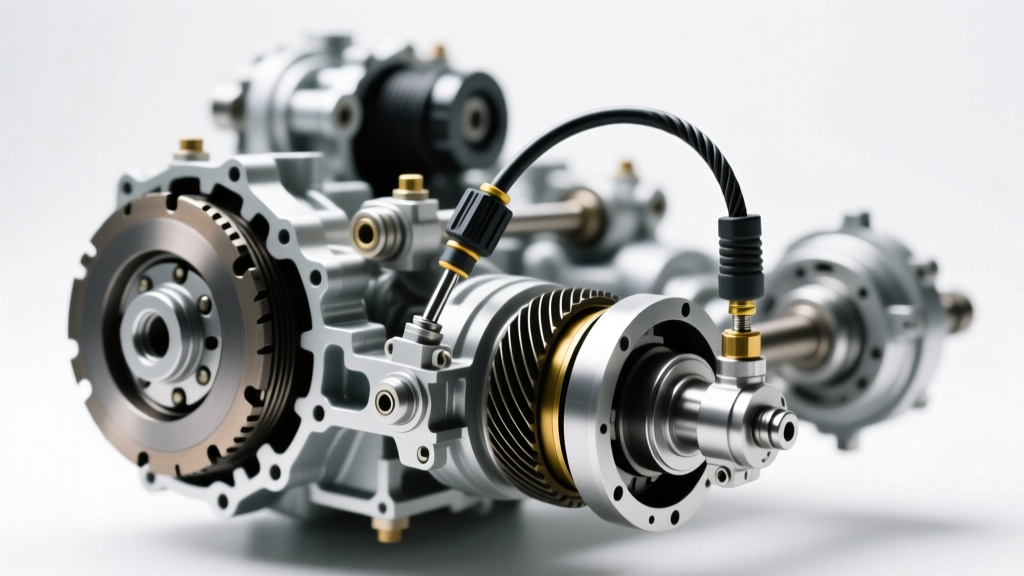
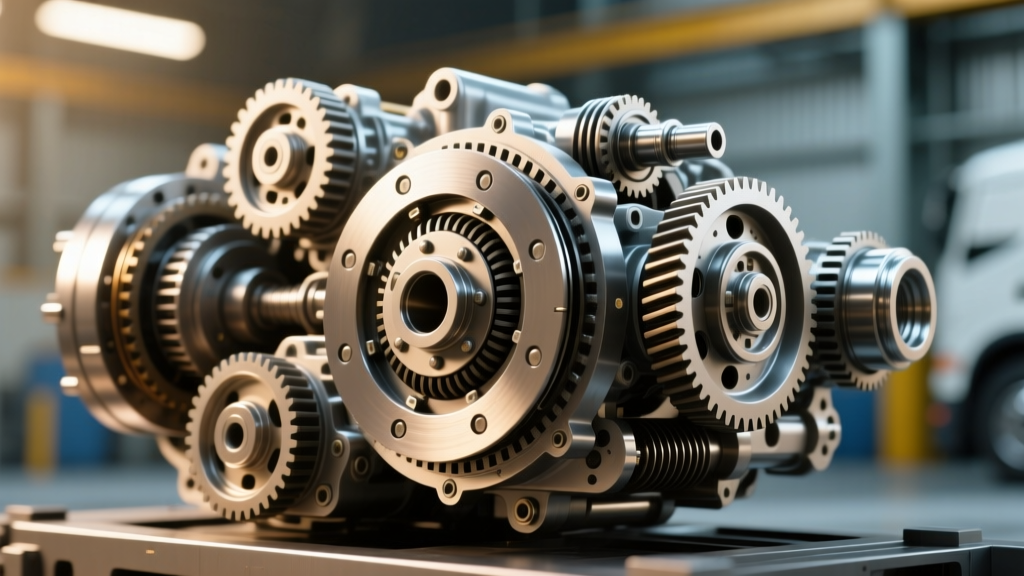
The modern Class 8 trucking landscape has fundamentally shifted. Today, over 90% of new heavy-duty commercial vehicles are spec'd with what drivers colloquially call 'automatics.' However, these predominantly fall into two distinct engineering categories: Automated Manual Transmissions (AMTs) like the Detroit DT12, Volvo I-Shift, and Eaton Endurant HD; and true planetary torque-converter automatics like the Allison 4000 and 4500 series. For commercial drivers, the question of when should you downshift automatic transmissions cdl operators face is no longer about the physical act of double-clutching or matching revs. Instead, it is about managing Transmission Control Unit (TCU) logic, engine brake integration, and mitigating driveline shock.
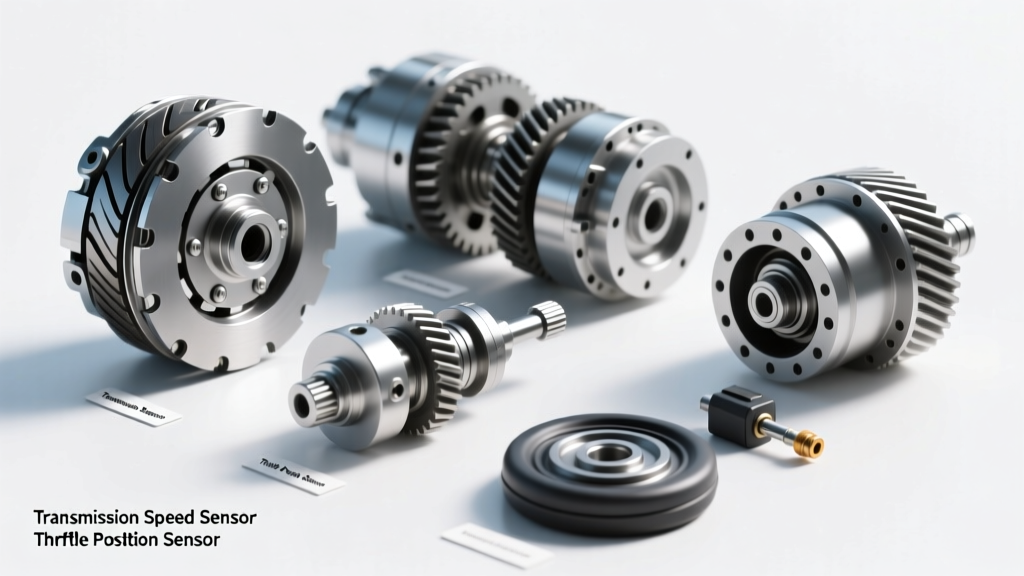
Understanding shift points and performance in a commercial setting requires abandoning the passenger-car mindset. A TCU in a heavy-duty truck calculates shift maps based on throttle position sensor (TPS) input, estimated Gross Combined Weight (GCW), and, in advanced systems like Detroit's Intelligent Powertrain Management (IPM), GPS topography data. Yet, the TCU is not infallible. Knowing exactly when to override the computer and manually command a downshift is the hallmark of an elite CDL holder focused on performance, safety, and mechanical sympathy.
TCU Shift Mapping: Economy vs. Performance vs. Heavy Haul
To understand when to intervene, you must first understand the baseline programming of your transmission. Modern AMTs are heavily biased toward fuel economy to meet stringent EPA and fleet MPG targets. In 'Economy' or 'Normal' mode, the TCU will aggressively upshift to keep engine RPMs low (often below 1,100 RPM) and will delay downshifts until the engine is nearly lugging.
Conversely, selecting 'Performance' or 'Heavy Haul' mode via the dash rocker switch fundamentally alters the shift map. The TCU will hold lower gears longer, allowing the engine to operate in the peak torque band (typically 1,300 to 1,500 RPM for modern 15-liter diesels). However, even in Performance mode, there are specific operational scenarios where manual downshift intervention is mandatory for vehicle control and component preservation.
Shift Point Thresholds by Transmission Model
The following data table illustrates the varying downshift thresholds and mechanical limits of the most common Class 8 automatic and AMT systems currently on the road.
| Transmission Model | Type | Economy Downshift RPM | Performance Downshift RPM | Max Torque Capacity | Fluid Spec / Capacity |
|---|---|---|---|---|---|
| Detroit DT12 | 12-Speed AMT | ~950 - 1,050 RPM | ~1,200 - 1,300 RPM | 1,750 lb-ft | Delo SYN / ~28 Quarts |
| Volvo I-Shift | 12-Speed AMT | ~900 - 1,000 RPM | ~1,150 - 1,250 RPM | 1,750 lb-ft | Volvo Gear Oil / ~24 Quarts |
| Allison 4500 RDS | 6-Speed Torque Converter | ~1,100 - 1,200 RPM | ~1,400 - 1,500 RPM | 1,650 lb-ft | TES 668 / ~19 Quarts (Deep Pan) |
Note: RPM thresholds are approximate and vary based on axle ratio, GCW, and specific OEM calibration. For exact specifications, consult the Detroit Diesel or Allison Transmission operator manuals for your specific model year.
Critical Scenarios for Manual Downshift Intervention
While the TCU handles 95% of daily driving on flat interstate routes, the remaining 5% requires active CDL driver management. Here are the primary scenarios where you must take control of your shift points.
1. Mountain Descents and Engine Brake Latency
When navigating steep downgrades (e.g., Donner Pass on I-80 or Cabbage Hill on I-84), relying solely on the TCU to downshift is a critical safety hazard. The TCU typically waits for the vehicle to exceed a specific speed threshold or for the driver to apply the service brakes before commanding a downshift. By the time the AMT executes the shift—which involves unloading the torque, actuating the clutch, and re-engaging—the truck has already gained dangerous momentum.
The Technique: Before cresting the grade, manually downshift to a gear that keeps your engine RPMs between 1,600 and 1,800. This ensures your engine brake (such as a Cummins X15 compression release brake or Detroit DD15 engine brake) operates at its maximum retarding horsepower (often exceeding 500-600 retarding HP). The TCU cannot anticipate the exact steepness of a downgrade until gravity takes over; your foresight prevents brake fade and runaway scenarios.
2. High-GCW Incline Lugging and Turbo Spool
Pulling 80,000 lbs (or heavier with oversize permits) up a sustained 5% to 7% grade exposes a major flaw in economy-biased AMT mapping. To save fuel, the TCU may attempt to hold a higher gear, allowing engine RPMs to drop to 950 RPM. At this speed, the turbocharger cannot maintain adequate boost pressure (often dropping below 15 psi), leading to severe lugging, high Exhaust Gas Temperatures (EGTs), and excessive stress on the crankshaft bearings and AMT clutch.
The Technique: Monitor your boost gauge and RPMs. If you feel the driveline shudder or notice boost dropping while climbing, manually command a downshift. Holding the engine at 1,250 to 1,350 RPM keeps the variable geometry turbo (VGT) fully spooled (30+ psi of boost), providing the necessary torque to crest the hill efficiently without overstressing the internal components. For more on heavy-duty hauling regulations and safety, refer to the Federal Motor Carrier Safety Administration (FMCSA) guidelines on mountain driving.
3. Traction Management in Low-Mu Environments
When driving in snow, ice, or deep mud, the sudden torque multiplication that occurs during an automatic upshift can instantly break traction, causing the drive axles to spin and the truck to lose momentum or jackknife.
The Technique: In low-traction environments, manually select a gear that allows you to maintain a steady, uninterrupted throttle application. By locking out the higher gears or manually holding 3rd or 4th gear at a low speed, you prevent the TCU from executing an upshift that would momentarily unload and reload the driveline, preserving your fragile traction window.
Driveline Shock, TCU Rejection, and Mechanical Sympathy
Knowing when to downshift also means knowing when not to. Forcing a manual downshift at high road speeds can result in catastrophic over-revving. To prevent this, modern AMTs feature 'Over-Rev Protection.' If you command a downshift that would push the engine past its governed RPM limit (typically around 2,100 to 2,200 RPM for heavy diesels), the TCU will reject the command, and the gear indicator on the dash will flash.
Furthermore, aggressive manual downshifting in an AMT increases clutch slip time during the shift event. While a torque-converter automatic like the Allison 4500 absorbs this shock via fluid coupling, an AMT relies on a physical friction clutch. Prematurely wearing out an AMT clutch due to constant, unnecessary manual overriding can result in replacement costs ranging from $3,000 to $4,500, not including the downtime. Practice mechanical sympathy: use the dash mode selectors (Performance/Heavy Haul) to change the TCU's baseline logic before resorting to sequential manual shifting.
The CDL Driver’s Performance Decision Matrix
To synthesize this technical data into actionable driving habits, use the following decision matrix on the road:
- Flat Interstate (Cruise): Leave in 'Drive' / 'Economy'. Let the TCU manage shift points for optimal fuel mileage.
- Rolling Hills (Moderate Grades): Switch to 'Performance' mode. This raises the downshift RPM threshold, preventing the truck from constantly 'hunting' for gears on undulating terrain.
- Steep Descents (>6% Grade): Manually downshift before the crest. Target 1,600+ RPM for maximum engine brake retarding power. Do not rely on the TCU's reactive logic.
- Steep Ascents (Heavy GCW): Manually downshift if RPMs drop below 1,100 and boost pressure falls. Keep the engine in its peak torque band to prevent lugging and AMT clutch slip.
- Snow/Ice/Mud: Manually select a starting gear (e.g., 3rd or 4th) and hold it to prevent upshift-induced traction loss.
Conclusion
The integration of AMTs and advanced torque-converter automatics in Class 8 vehicles has drastically reduced driver fatigue and optimized fleet fuel economy. However, the TCU is a reactive system, bound by pre-programmed algorithms that prioritize emissions and MPG over extreme environmental edge cases. Mastering when should you downshift automatic transmissions cdl scenarios dictate is what separates a passive steering-wheel holder from a true professional. By understanding your specific transmission's shift maps, respecting mechanical limits, and proactively managing your RPMs for engine braking and turbo spool, you ensure maximum performance, safety, and drivetrain longevity.