The Anatomy of a Burning Clutch in High-Torque BBC Applications
There are few smells more alarming to a manual transmission enthusiast than the acrid, unmistakable stench of vaporized friction material. When diagnosing drivetrain failures in high-horsepower applications, the infamous Carmella clutch BBC setup frequently serves as a benchmark case study. For the uninitiated, 'Carmella' refers to a widely documented, 750-horsepower 572ci Big Block Chevy (BBC) restomod build that became a legendary cautionary tale in the custom car community for rapidly destroying single-disc organic clutches during highway pulls and launch testing.
Big Block Chevys generate massive low-end torque—often exceeding 650 lb-ft at the crank right off idle. When a clutch assembly is not perfectly matched to this torque curve, or when hydraulic and mechanical tolerances are ignored, micro-slippage occurs. This slippage generates extreme kinetic heat, glazing the friction surfaces and producing a burning odor that permeates the cabin. In this comprehensive diagnostic guide, we will break down the exact mechanical failures that cause clutch burning in BBC applications, referencing factory specifications for popular transmissions like the Tremec TKX and Magnum-F, and outline the precise measurements required to fix the issue permanently.
Decoding the Burn: Friction Material Signatures
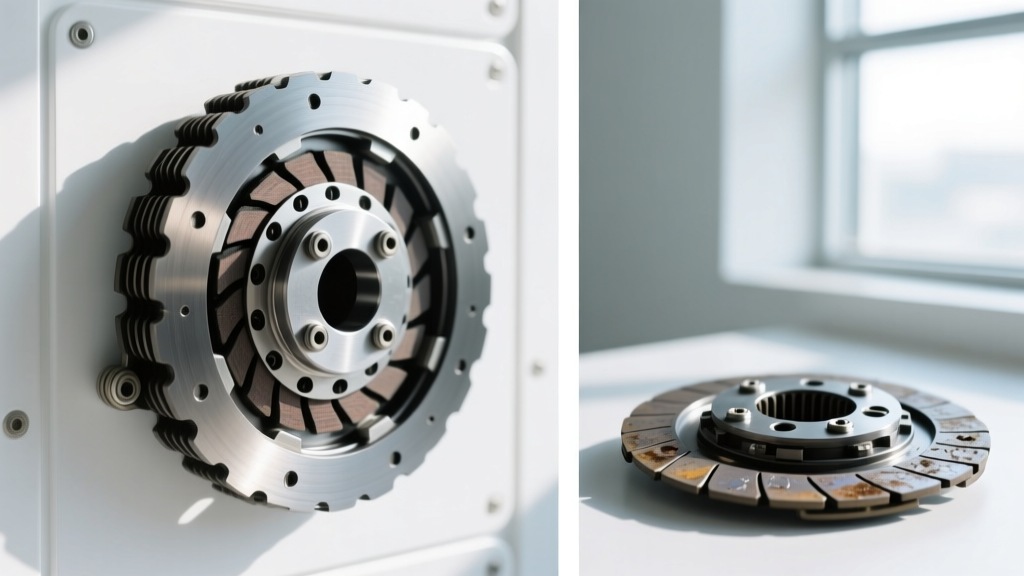
The specific olfactory signature of a burning clutch can immediately tell a seasoned drivetrain technician what type of friction material is failing. Organic, Kevlar, and sintered iron compounds all react differently to thermal overload. Understanding these differences is the first step in diagnosing why your BBC setup is overheating.
| Friction Material | Burn Signature & Smell | Glaze/Flash Temp | BBC Suitability |
|---|---|---|---|
| Organic (Full-Faced) | Sweet, acrid, burning hair/brake dust smell | 400°F - 500°F | Poor (Only for mild 454ci street builds) |
| Kevlar / Carbon | Sharp, chemical, melting plastic odor | 600°F - 700°F | Moderate (Requires high heat to engage properly) |
| Ceramic (Puck Style) | Hot metal, ozone, minimal organic smell | 800°F+ | High (Aggressive engagement, high torque capacity) |
| Sintered Iron | Burning brake pad, heavy metallic dust | 1000°F+ | Extreme (Drag/Track use only, destroys flywheels) |
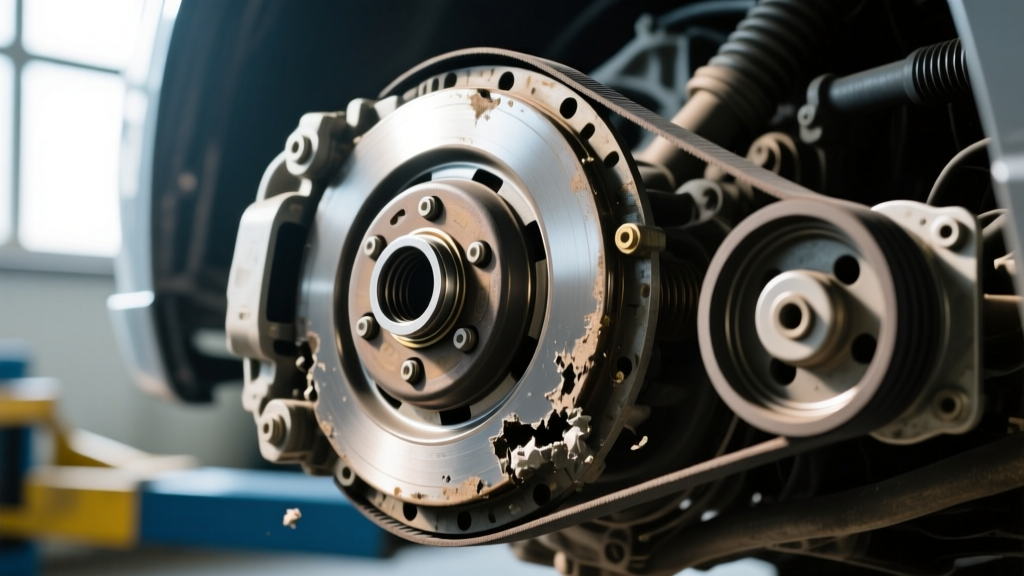
In the original Carmella BBC build, the builder initially utilized a standard organic full-faced disc rated for 550 lb-ft of torque on an engine producing 720 lb-ft. The resulting micro-slip during 3rd and 4th gear pulls instantly pushed the organic material past its 500°F flash point, resulting in severe glazing and the pervasive burning smell.
Diagnostic Step 1: Hydraulic Throwout Bearing (HTOB) Air Gap
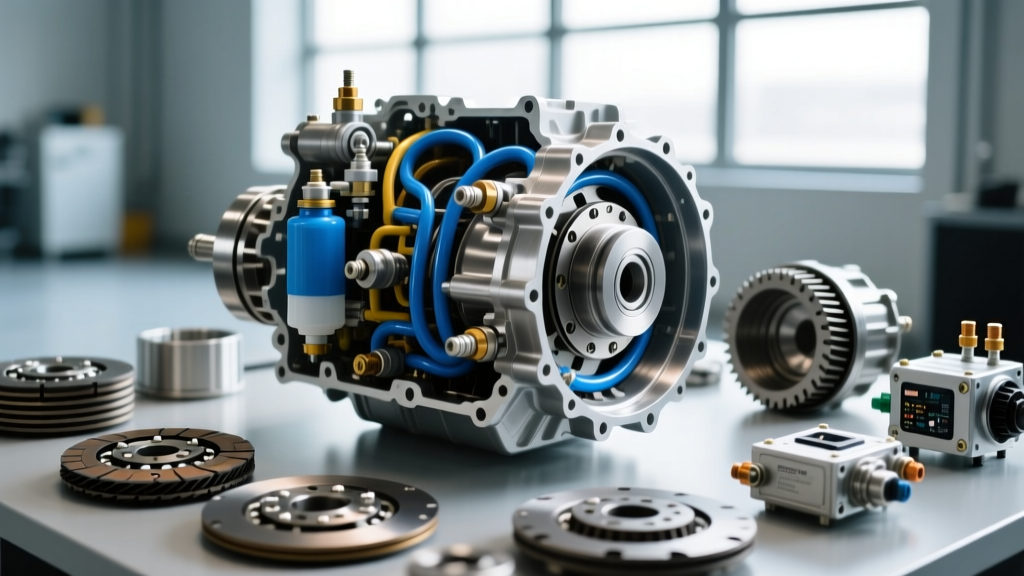
The most common cause of a burning clutch in modern BBC restomods—especially those swapped to a Tremec TKX or Magnum 5-speed—is an improperly adjusted Hydraulic Throwout Bearing (HTOB). If the HTOB is pre-loaded against the pressure plate fingers, the clutch never fully engages, causing continuous slip and rapid thermal degradation.
Measuring the Air Gap
To diagnose HTOB pre-load, you must measure the air gap between the bearing face and the pressure plate fingers. According to Tremec and Wilwood engineering specifications, the ideal air gap is between 0.100" and 0.150".
- Step 1: Remove the inspection cover on the bellhousing.
- Step 2: Use a bent piece of 0.100" feeler gauge wire to check the gap between the HTOB face and the diaphragm fingers.
- Step 3: If the gap is zero, the master cylinder pushrod is too long, or the HTOB shims are incorrectly stacked.
For BBCs utilizing a Wilwood 0.75" bore master cylinder, adjusting the pushrod length to eliminate pedal dead-travel while maintaining the 0.100" air gap at the transmission is critical. Failure to maintain this gap guarantees the bearing will ride the fingers, generating enough heat to boil the DOT 4 fluid and burn the clutch simultaneously.
Diagnostic Step 2: Flywheel Runout and Bellhousing Concentricity
Big Block Chevys are physically massive. The deck height of a Mark IV or Gen V/VI BBC block, combined with the weight of the rotating assembly, places immense stress on the rear main seal and bellhousing alignment. If the bellhousing is not perfectly concentric with the crankshaft, the transmission input shaft will bind, preventing the clutch disc from fully seating against the flywheel.
Dial Indicator Testing Protocol
To rule out mechanical binding as the source of your slipping, burning clutch, you must perform a Total Indicator Runout (TIR) test. This is mandatory when using aftermarket steel or aluminum flywheels and scatter shields like the QuickTime RM-6022 bellhousing.
- Mount a magnetic base dial indicator to the crankshaft flange or flywheel face.
- Measure Flywheel Face Runout. The maximum allowable tolerance is 0.005". If it exceeds this, the flywheel must be resurfaced or replaced, and the crankshaft flange checked for burrs.
- Measure Bellhousing Concentricity by sweeping the inside bore of the bellhousing. Maximum allowable TIR is 0.005".
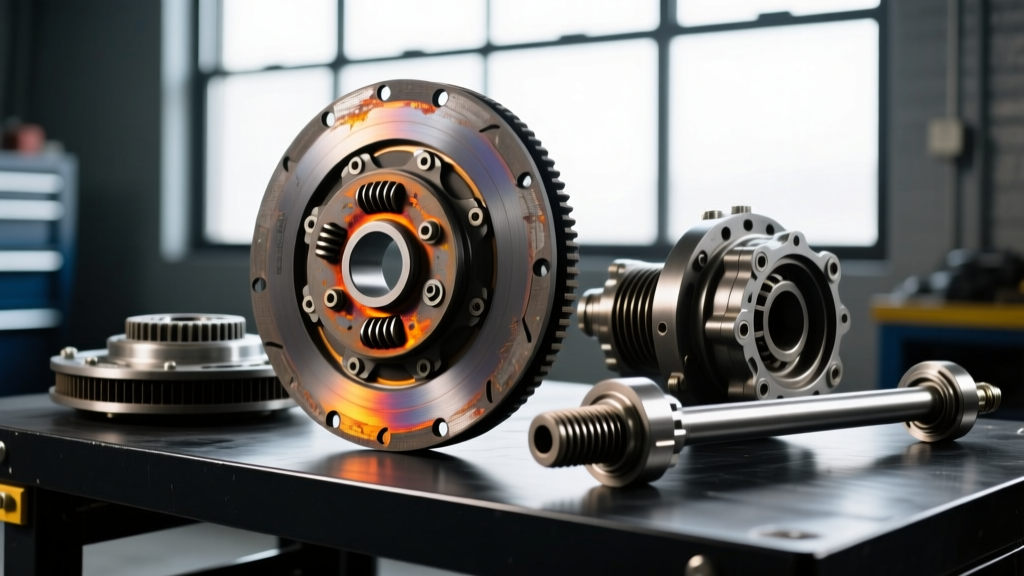
If the bellhousing is offset, the input shaft will act as a lever against the clutch disc hub. This prevents full clamping force, leading to slip under the immense torque of a BBC. Correct this using offset ARP dowel pins (available in 0.007", 0.014", and 0.021" offsets) to perfectly align the housing.
Clamping Force vs. BBC Torque Output: The Math
A burning smell is ultimately a failure of mathematics. The torque capacity of a clutch is determined by the formula: Torque = (Coefficient of Friction) x (Clamping Force) x (Mean Radius) x (Number of Friction Surfaces). Many enthusiasts mistakenly believe that a heavier pedal equals more holding power, but modern metallurgy tells a different story.
| Clutch Upgrade Path | Part Number Example | Clamping Force | Torque Rating | Est. Cost (2026) |
|---|---|---|---|---|
| Centerforce DYMAX (Single) | CFT300031 | 3,200 lbs | 650 lb-ft | $750 - $850 |
| McLeod Street Twin (Dual) | 752071 | 2,400 lbs (x2 discs) | 1,200 lb-ft | $1,100 - $1,300 |
| RAM 3000 Series (Triple) | 88-3000HD | 2,800 lbs (x3 discs) | 1,500+ lb-ft | $1,600 - $1,900 |
When the Carmella BBC project was finally rectified, the builder abandoned the single-disc organic setup in favor of a McLeod Street Twin ceramic/organic hybrid. By utilizing two friction surfaces, the required clamping force on the pressure plate was drastically reduced, resulting in a pedal effort comparable to a stock hydraulic clutch while safely holding the 572ci engine's 720 lb-ft of torque without slipping or generating excess heat.
Installation Torque Specs and Best Practices
If your diagnosis confirms that the clutch is burned and requires replacement, strict adherence to torque specifications is non-negotiable to prevent repeat failures and warping.
- Flywheel to Crankshaft (ARP 2000 Bolts): 75-85 ft-lbs using ARP Ultra-Torque thread lubricant. Do not use standard oil or Loctite on ARP fasteners unless specified, as it alters the torque-to-yield stretch.
- Pressure Plate to Flywheel: 35 ft-lbs in a sequential star pattern. Tightening in a circle will warp the pressure plate cover, causing uneven finger height and localized slipping.
- Bellhousing to Block: 35 ft-lbs. Ensure all dowel pins are fully seated and free of paint or debris.
Final Troubleshooting Checklist
Before tearing into the transmission tunnel of your BBC project, run through this diagnostic checklist to pinpoint the exact cause of the burning smell:
- Check Pedal Free-Play: Ensure 1/8" to 1/4" of free-play at the pedal pad to guarantee the master cylinder piston is fully returning and uncovering the compensation port.
- Inspect for Fluid Leaks: A leaking rear main seal or transmission input shaft seal can coat the friction disc in oil, causing it to slip and burn under load. Look for wetness on the lower bellhousing inspection plate.
- Verify HTOB Air Gap: Confirm the 0.100" - 0.150" gap to rule out hydraulic pre-load.
- Evaluate Torque-to-Clutch Match: If your BBC has been upgraded with a larger camshaft, increased compression, or a supercharger, your current single-disc clutch may simply be mathematically outmatched.
Diagnosing a burning clutch in a high-torque Big Block Chevy requires moving beyond simple 'pedal feel' and relying on precision measurements. By respecting the engineering limits of friction materials, maintaining strict bellhousing concentricity, and upgrading to multi-disc configurations when necessary, you can ensure your drivetrain survives the brutal torque of a BBC without filling your cabin with the smell of vaporized organic compound.