The Architecture of Wet 8-Speed DCT Hydraulics
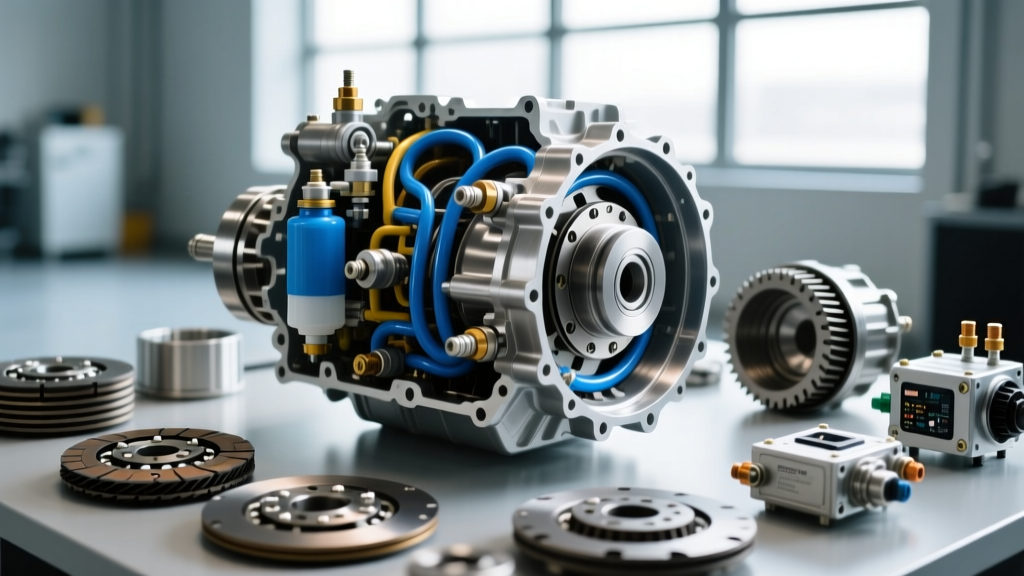
The modern 8 speed dual clutch transmission represents a pinnacle of power transfer efficiency, eliminating the parasitic loss inherent in traditional torque converters. Platforms like the ZF 8DT (found in various Audi and BMW applications) and the Hyundai D8LF1 wet 8DCT rely entirely on high-pressure electrohydraulic circuits to actuate clutch packs and orchestrate gear shifts. Unlike manual transmissions where the driver's foot provides the hydraulic force, an 8 speed dual clutch transmission utilizes a mechatronic unit—a complex marriage of solenoids, accumulators, and valve bodies—to manage clamping forces with millisecond precision.
When diagnosing clutch slip, harsh engagements, or shift shudders, technicians must look beyond the friction materials. Over 70% of perceived 'clutch failures' in these units originate from hydraulic degradation. This preventive maintenance and diagnostic guide will equip you with the exact pressure specifications, fluid protocols, and bi-directional scan tool strategies required to maintain and troubleshoot the hydraulic heart of an 8DCT.
Baseline Hydraulic Pressures and Tolerances
Before connecting a diagnostic scanner, it is critical to understand the baseline hydraulic architecture. An 8DCT typically operates with three distinct hydraulic circuits: the main line pressure (fed by the primary mechanical or electric pump), the clutch actuation circuits (managed by proportional solenoids), and the lube/cooling circuit (for gear and clutch basket cooling).
| Hydraulic Circuit | Target Operating Pressure | Acceptable Tolerance | Primary Failure Symptom |
|---|---|---|---|
| Main Line / Sump | 25.0 - 35.0 bar (362 - 507 psi) | +/- 1.5 bar | Whining pump, delayed engagement |
| Clutch 1 Actuation | 5.0 - 14.0 bar (72 - 203 psi) | +/- 0.5 bar | 1-3-5-7 gear slip or shudder |
| Clutch 2 Actuation | 5.0 - 14.0 bar (72 - 203 psi) | +/- 0.5 bar | 2-4-6-8 gear slip or harsh shifts |
| Lube / Cooling | 2.0 - 4.0 bar (29 - 58 psi) | +/- 0.8 bar | Clutch overheating warnings |
If your bi-directional scan tool reveals that the commanded solenoid pressure deviates from the actual sensor feedback by more than 1.0 bar during a static stall test, you have a localized hydraulic leak—typically a failing piston seal inside the clutch drum or a worn solenoid O-ring.
Preventive Maintenance: Fluid and Filter Realities
The most catastrophic mistake in 8DCT ownership is adhering to the 'lifetime fluid' myth. The specialized friction modifiers and anti-foaming agents in DCT fluids undergo severe shear stress. For example, ZF LifeguardFluid 8 and Hyundai HK DCTF are engineered with specific viscosity profiles to maintain hydraulic valve spool lubrication while providing the exact coefficient of friction required for wet carbon-paper clutch linings.
Fluid Shear and Particulate Contamination
As clutch material wears, microscopic carbon and steel particulates become suspended in the fluid. While the mechatronic sump filter catches larger debris, sub-micron particles act as lapping compound on the precision aluminum valve body bores. This causes cross-leaking between clutch circuits, resulting in the dreaded 'overlapping shift' shudder (where both clutches are momentarily engaged during a 2-3 or 4-5 gear change).
- Service Interval: Strict 60,000 miles (or 48 months) for severe/aggressive driving; 80,000 miles for highway commuting.
- Fill Temperature Protocol: Fluid level MUST be verified with the mechatronic sump temperature between 35°C and 45°C (95°F - 113°F). Checking at ambient room temperature will result in an under-filled transmission, leading to pump cavitation.
- Torque Specifications: ZF 8DT drain plug: 12 Nm; Transmission pan bolts (if applicable for filter access): 10 Nm in a crisscross sequence. Hyundai D8LF1 drain plug: 25 Nm.
Expert Warning: Never substitute Dexron VI or generic CVT fluids in an 8 speed dual clutch transmission. The friction modifiers will cause immediate wet clutch chatter, and the lower viscosity will lead to catastrophic hydraulic pump scoring within 500 miles.
Advanced Electrohydraulic Diagnosis
When preventive maintenance is skipped, or when symptoms arise despite fresh fluid, a systematic electrohydraulic diagnosis is required. This requires an advanced OBD2 scanner capable of reading manufacturer-specific PIDs (Parameter IDs) and performing active actuator tests.
1. Solenoid Duty Cycle and Adaptation Limits
The Transmission Control Module (TCM) continuously monitors clutch slip via input and output shaft speed sensors. If it detects slip, it increases the duty cycle to the clutch pressure solenoid to compensate for friction material wear or hydraulic leaks. Using your scan tool, monitor the Clutch Adaptation Value or Filling Pressure Adaptation PIDs.
- Normal Range: 0.0 to +0.5 bar adaptation.
- Warning Zone: +0.6 to +1.2 bar. This indicates clutch wear or minor fluid degradation. A fluid flush may temporarily restore baseline pressures.
- Critical Failure: > +1.5 bar or 'Limit Reached' status. The solenoid is maxed out. This confirms either severe clutch pack wear or a blown internal hydraulic piston seal. The mechatronic unit or transmission must be removed.
2. Accumulator Bleed-Down Testing
The hydraulic accumulator stores pressurized fluid to ensure immediate clutch engagement during engine stop/start events and rapid downshifts. It relies on a nitrogen-charged bladder. When this bladder ruptures, the system loses its hydraulic reserve.
The Test: With the vehicle idling and the transmission in Park, listen to the electric auxiliary hydraulic pump (if equipped, common in mild-hybrid 8DCT setups) or monitor the main pump duty cycle. If the pump kicks on every 10-15 seconds to maintain main line pressure, the accumulator has failed. This rapid cycling will eventually burn out the pump motor, throwing a 'Clutch Overheating' or 'Hydraulic System Fault' limp-mode code.
Component Replacement Costs and Realities (2026 Estimates)
Diagnosing the exact failure point saves thousands in unnecessary teardowns. Here is a realistic look at component pricing and labor expectations for 8DCT hydraulic repairs:
- Preventive Fluid & Filter Service: $280 - $450. (Includes 6-7 liters of OEM-specific DCTF and sump filter kit).
- Hydraulic Accumulator Replacement: $400 - $650. (Part: $250-$350. Often accessible externally or via the side pan without full transmission removal on select ZF applications).
- Solenoid Pack / Valve Body: $900 - $1,400. (Requires dropping the transmission pan, mechatronic extraction, and extensive adaptation relearn procedures).
- Complete Mechatronic Unit: $2,800 - $4,500. (Required when internal valve body bores are scored beyond reaming limits, or when the integrated TCM suffers fluid intrusion).
Authoritative References
For continued education on dual-clutch hydraulic architectures and OEM service bulletins, consult the following engineering and aftermarket resources:
- ZF Aftermarket Technical Portal - Essential for LifeguardFluid specifications and 8DT mechatronic adaptation reset procedures.
- Bosch Mobility Solutions: Transmission Systems - Deep dives into electrohydraulic solenoid design and duty-cycle mapping.
- SAE International Standards - Reference papers on wet-clutch friction coefficients and hydraulic shear stability testing.