Defining the Car Transmission: The Mechanical Baseline
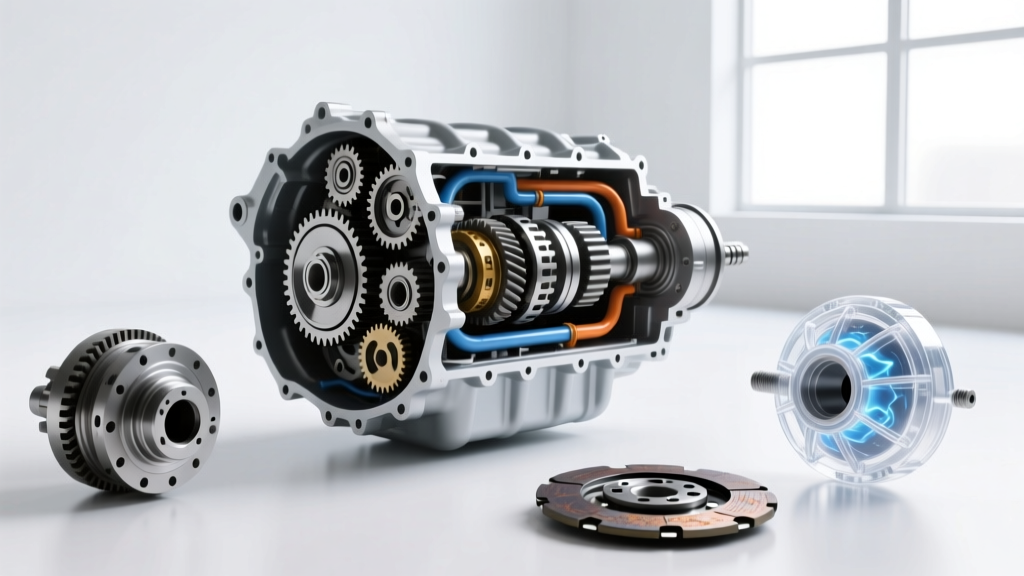
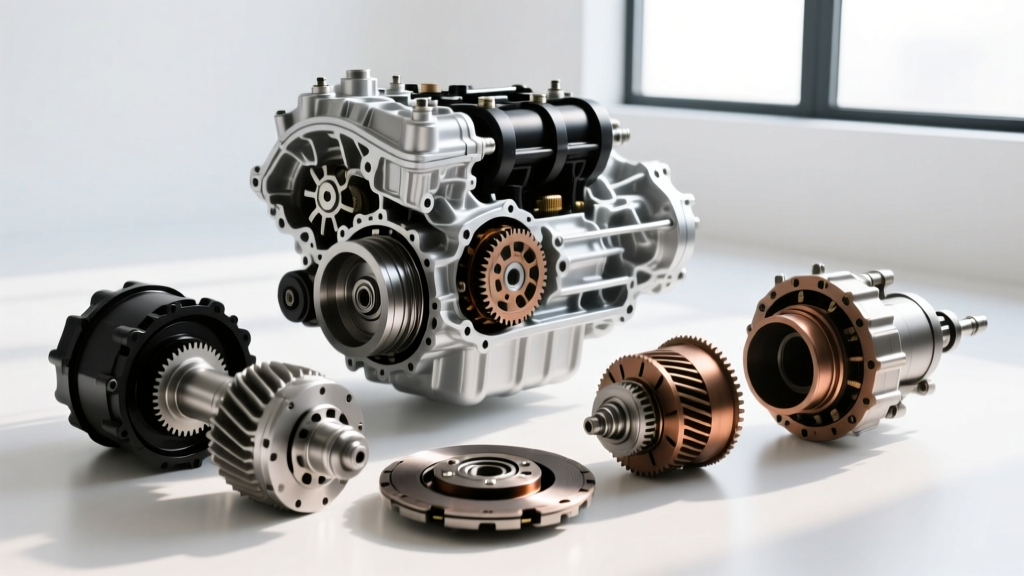
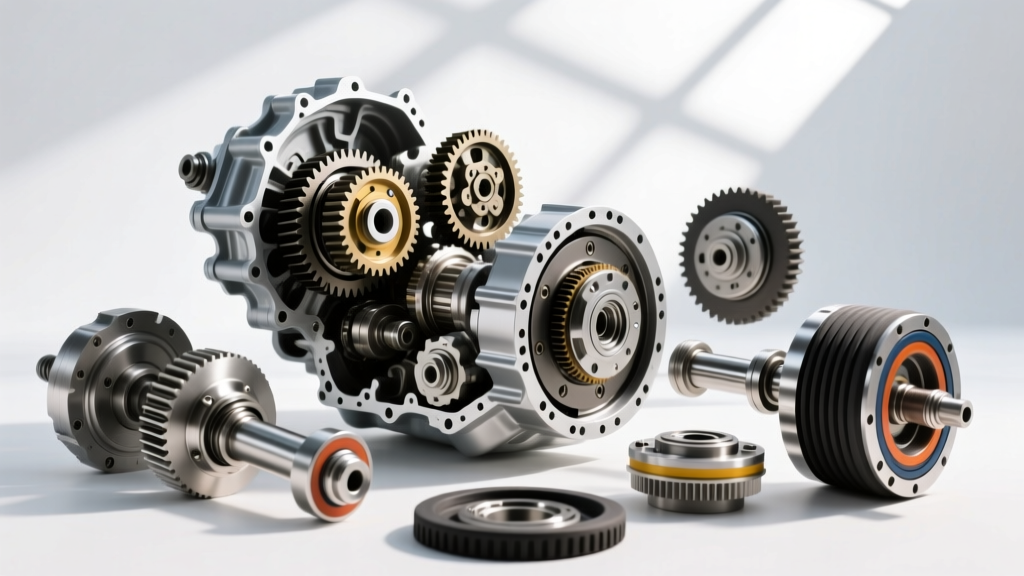
At its most fundamental level, a car transmission is a torque-multiplying, speed-reducing gearbox designed to keep the internal combustion engine operating within its optimal power band. Whether it is a legacy 4-speed 4L60E or a modern 10-speed GM 10L90, the transmission acts as the critical intermediary between the engine's crankshaft and the drive wheels. It utilizes a combination of planetary gearsets, clutch packs, bands, and a torque converter to manage rotational energy.
However, viewing a modern automatic transmission purely as a collection of gears and friction materials is an outdated paradigm. In 2026, the modern automatic transmission is best understood as a cyber-physical system where hydraulic execution meets advanced algorithmic control. To truly grasp what a car transmission is today—and how to maintain it—we must look at the Transmission Control Module (TCM) and the mathematical models it uses to dictate shift quality.
The TCM Logic: Shift Schedules as Piecewise Functions
In calculus and control theory, a piecewise function is a function defined by multiple sub-functions, each applying to a specific interval of the domain. The TCM's shift scheduling and line pressure mapping are textbook examples of piecewise functions. The domain is divided by variables such as throttle position sensor (TPS) voltage, turbine shaft speed, and vehicle speed. The output variables are the duty cycles applied to the pulse-width modulation (PWM) shift solenoids and the torque converter clutch (TCC).
For example, the line pressure required to hold a clutch pack during a wide-open-throttle (WOT) 2-3 upshift in a ZF 8HP70 is governed by a completely different sub-function than the pressure required for a part-throttle 4-5 shift during highway cruising. The TCM seamlessly switches between these sub-functions based on real-time sensor inputs.
Why the Differentiability of a Piecewise Function Matters in Drivetrains
In mathematical analysis, the differentiability of a piecewise function requires that the left-hand and right-hand derivatives match at the boundary points, ensuring a smooth, continuous curve without sharp corners or discontinuities. In drivetrain engineering, this mathematical concept translates directly to shift quality.
The 'boundary point' in a transmission is the shift event itself—the exact millisecond when torque is handed off from the off-going clutch pack to the on-coming clutch pack. If the mechanical and hydraulic systems are perfectly maintained, the torque transition is seamless; the derivative of the torque curve is continuous, and the piecewise function remains differentiable. The driver feels a smooth, linear acceleration. However, if maintenance is neglected, the function loses differentiability. The torque curve experiences a discontinuity, manifesting as a harsh shift, a torque hole (flare), or a binding engagement. Preventive maintenance is entirely about preserving this mechanical differentiability.
Preventive Maintenance: Preserving Mathematical Smoothness
To ensure the TCM's piecewise logic translates into physically differentiable torque curves, the hydraulic and mechanical boundary conditions must be pristine. Here is the 2026 preventive maintenance guide for maintaining shift continuity.
1. Fluid Shear Stability and Friction Modifiers
Automatic Transmission Fluid (ATF) is not merely a lubricant; it is a hydraulic medium and a liquid friction material. Modern ultra-low viscosity (ULV) fluids, like ACDelco ULV or ZF LifeguardFluid 8, rely on complex friction modifier additive packages. Over 60,000 miles, the polymers in the ATF experience mechanical shear, and the friction modifiers deplete due to thermal cycling. When modifiers deplete, the static-to-dynamic friction coefficient ratio changes, causing the clutch packs to 'stick' and then 'slip' microscopically. This creates a non-differentiable spike in the torque transfer curve, resulting in the infamous 'garage shift' clunk when moving from Park to Reverse.
- Preventive Action: Perform a fluid and filter service every 60,000 miles for normal use, or 30,000 miles for severe/towing use. Never use generic 'multi-vehicle' ATF in precision units like the ZF 8HP or Ford 10R80.
2. Thermal Management and the Cooler Bypass Valve
Heat is the enemy of ATF integrity. For every 20°F increase in transmission operating temperature above 200°F, the lifespan of the fluid is halved. Many modern transmissions feature a thermal bypass valve in the cooler lines to allow the fluid to warm up quickly, reducing parasitic drag. If this valve sticks in the bypass position due to varnish buildup, the transmission will run at extreme temperatures, rapidly destroying the fluid's viscosity index.
- Preventive Action: Flush the external transmission cooler lines every 100,000 miles and verify cooler flow rates. A healthy GM 10L90 cooler circuit should flow a minimum of 1.5 gallons per minute (GPM) at operating temperature.
3. Valve Body Bore Wear and Solenoid Health
The TCM's piecewise commands are executed by hydraulic valves moving back and forth in aluminum bores. Over time, the constant oscillation of the steel spool valves wears the softer aluminum valve body, creating microscopic leaks. When line pressure bleeds off internally, the TCM's commanded pressure no longer matches actual pressure, destroying the shift boundary smoothness.
- Preventive Action: If harsh shifts develop, do not immediately replace the entire transmission. Utilize diagnostic scan tools to monitor commanded vs. actual line pressure. If a discrepancy exists, aftermarket solutions like Sonnax Zip Kits can re-sleeve the worn aluminum bores with hardened steel liners, restoring hydraulic integrity for a fraction of the cost of a rebuild.
2026 Transmission Maintenance Cost & Specs Matrix
Below is a reference matrix for the preventive maintenance of three of the most common modern automatic transmissions on the road today. Note that torque specs and fluid capacities are critical; over-torquing an aluminum transmission pan will warp the mating surface and cause chronic leaks.
| Transmission Model | OEM Fluid Spec | Pan Drop Capacity | Pan Bolt Torque Spec | Avg. 2026 Service Cost |
|---|---|---|---|---|
| ZF 8HP70 / 8HP75 | ZF LifeguardFluid 8 | ~8.5 Liters | 10 Nm (89 lb-in) | $350 - $550 |
| GM 10L90 (10-Speed) | ACDelco ULV ATF | ~11.2 Liters | 10 Nm (89 lb-in) | $400 - $650 |
| Toyota U660E (6-Speed) | Toyota WS ATF | ~3.5 Liters | 7.5 Nm (66 lb-in) | $200 - $350 |
Expert Insight: The ZF 8HP series utilizes a plastic transmission pan that integrates the filter and the fluid level check tube. The pan bolts are single-use torque-to-yield fasteners. According to ZF Aftermarket guidelines, you must replace the entire pan assembly and use new fasteners during every fluid service to guarantee the seal against the mechatronic unit.
Diagnosing Non-Differentiable Shifts (Harsh Engagements)
When a vehicle presents with harsh shifts, the diagnostic process involves determining whether the discontinuity is electrical (the TCM is calculating the piecewise function incorrectly) or mechanical (the hardware cannot execute the function smoothly).
Step 1: Adaptation Reset and TCM Calibration
Modern TCMs utilize adaptive learning algorithms. As clutch packs wear and fluid degrades, the TCM alters the solenoid duty cycles to compensate and maintain shift quality. If you perform a fluid service without resetting the TCM adaptions, the computer will apply the 'worn' piecewise parameters to the 'new' fluid, resulting in violently harsh shifts. Always use a bi-directional OBD2 scanner to clear the Fast Adaptive Memory (FAM) and Slow Adaptive Memory (SAM) after a fluid exchange, followed by a manufacturer-specified relearn drive cycle.
Step 2: PWM Solenoid Frequency Testing
If adaptions fail to resolve the boundary discontinuity, the issue likely lies in the PWM solenoids. These solenoids pulse at high frequencies (often between 300 Hz and 1000 Hz) to modulate hydraulic pressure. A failing solenoid may stick at a specific frequency, causing a sudden pressure spike. According to industry data published by Transmission Digest, testing the solenoid's electrical resistance and acoustic frequency response with an oscilloscope can isolate a failing valve before it causes catastrophic friction material glazing.
Step 3: Mechanical Clearances
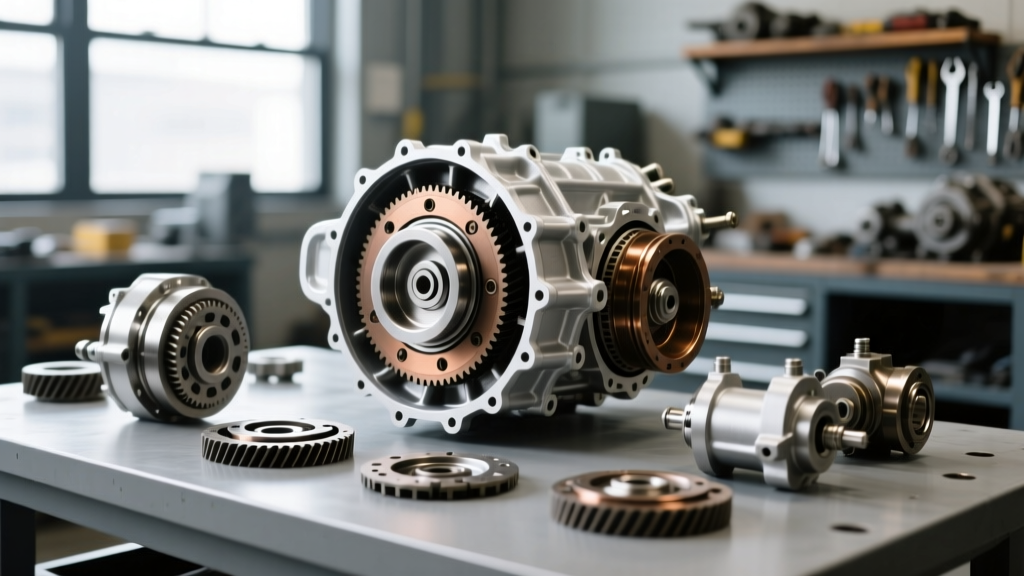
If the hydraulic and electrical domains are verified, the transmission must be removed to inspect the physical clutch pack clearances. For example, in the GM 10L90, the 3-5-R clutch pack requires a precise air-check clearance of 0.040 to 0.060 inches. If the snap rings are incorrectly seated or the backing plates are warped, the mechanical engagement will inherently lack differentiability, regardless of the TCM's mathematical perfection.
Conclusion
Understanding what a car transmission is requires moving beyond the basic concept of gears and recognizing it as a highly calibrated, mathematically governed hydraulic system. The differentiability of a piecewise function is not just an abstract calculus concept; it is the exact engineering principle that defines a smooth, imperceptible gear shift. By adhering to strict preventive maintenance schedules, utilizing exact OEM fluid specifications, and respecting precise torque values, you ensure that your vehicle's drivetrain continues to execute its complex algorithms with flawless, continuous precision.