Fundamentals: What Is a Car Transmission?
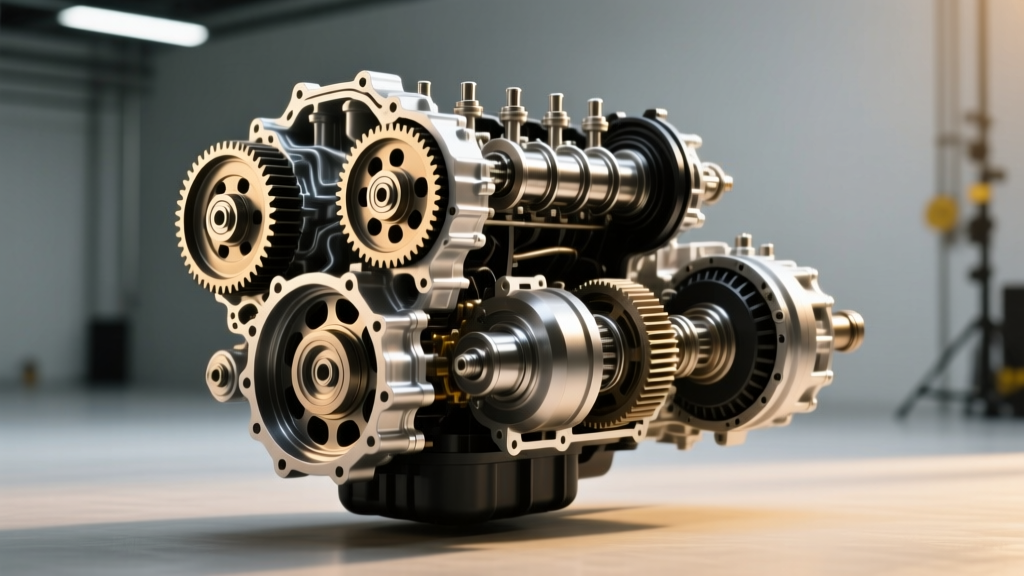
Before diving into modern complexities, we must answer the foundational question: what is a car transmission? At its core, an automotive transmission is a mechanical intermediary designed to manage the torque and rotational speed generated by an internal combustion engine and deliver it to the drive wheels. Because gasoline and diesel engines operate efficiently only within a narrow RPM band (typically between 1,500 and 6,000 RPM), a transmission utilizes varying gear ratios to multiply torque for initial acceleration and reduce engine RPM for high-speed cruising. Without this crucial drivetrain component, a vehicle would either lack the torque to move from a standstill or over-rev and destroy itself at highway speeds.
What Is an 8-Speed Automatic Transmission? The Modern Standard
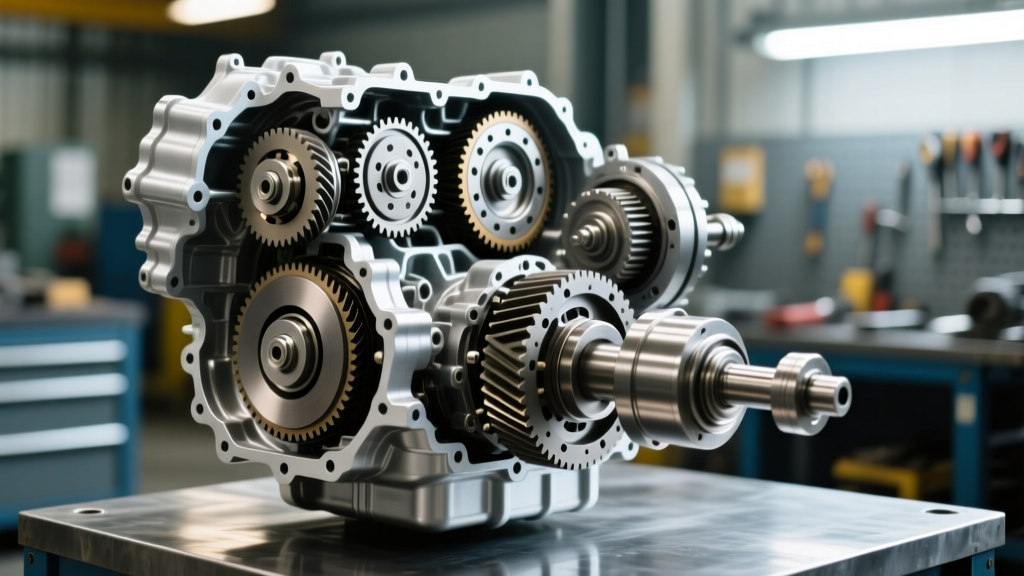
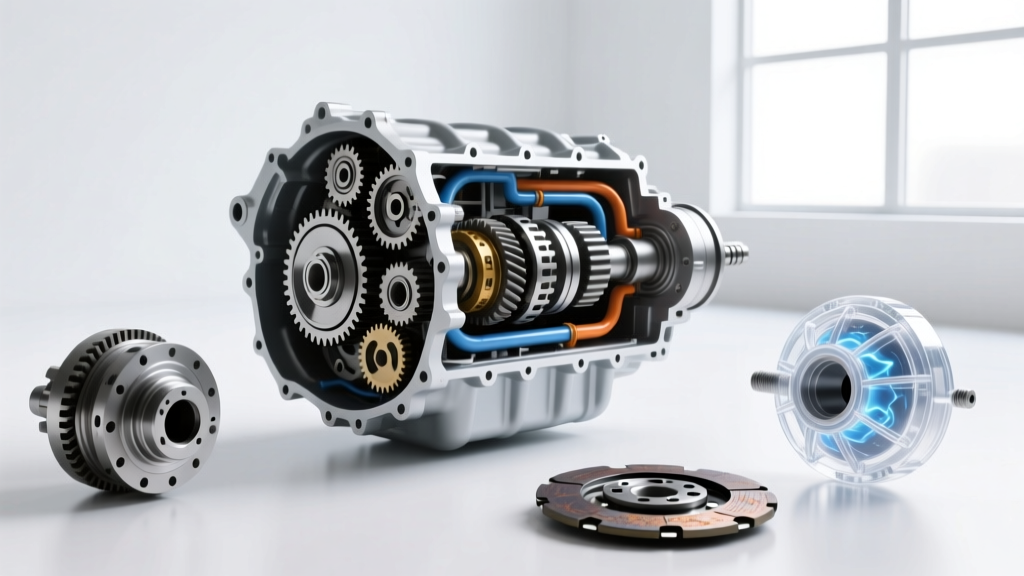
When enthusiasts, daily drivers, and technicians ask, "what is 8 speed automatic transmission" technology, they are inquiring about one of the most successful and widely adopted drivetrain architectures of the 21st century. An 8-speed automatic transmission utilizes eight distinct forward gear ratios, managed by a complex network of planetary gearsets, clutch packs, and a sophisticated electro-hydraulic mechatronic control unit.
The leap from 6-speed to 8-speed transmissions was driven by stringent global emissions regulations and the pursuit of fuel efficiency. By adding two extra gears, engineers can program aggressive ratio spreads. This allows for a very low first gear (improving off-the-line acceleration and towing capability) and exceptionally tall overdrive gears (e.g., 8th gear ratios often exceeding 0.65:1). This keeps the engine squarely in its optimal Brake Specific Fuel Consumption (BSFC) sweet spot during highway cruising, reducing fuel consumption by up to 11% compared to older 6-speed counterparts.
The Lepelletier Gearset Architecture
The genius of the modern 8-speed automatic—most notably the industry-dominating ZF 8HP family—lies in the Lepelletier gearset architecture. Instead of adding massive, heavy gearsets, engineers combined a simple planetary gearset at the input with a Ravigneaux compound planetary gearset. This elegant mathematical solution requires only four planetary gearsets and five shift elements (clutches/brakes) to achieve eight forward gears and one reverse. The result is an 8-speed transmission that is actually lighter and more compact than the 6-speed transmissions it replaced.
Industry Titans: ZF 8HP vs. GM 8L90 vs. Ford 8F
Understanding your specific unit is critical for preventive maintenance. Below is a comparison of the most prevalent 8-speed platforms on the road in 2026.
| Manufacturer | Model Family | Max Torque Capacity | Common Applications | OEM Fluid Specification |
|---|---|---|---|---|
| ZF Friedrichshafen | 8HP (45/55/70/90) | 450 Nm - 1000 Nm | BMW, Audi, Dodge, Ram, Jaguar, Toyota Supra | ZF LifeguardFluid 8 |
| General Motors | 8L90 / 8L45 | 450 Nm - 900 Nm | Chevrolet Corvette, Camaro, Silverado, Cadillac | Dexron ULV (Ultra Low Viscosity) |
| Ford / GM Joint Venture | 8F (8F24/35/57) | 240 Nm - 570 Nm | Ford Escape, Edge, Lincoln Corsair, Cadillac XT4 | Mercon ULV |
The 2026 Preventive Maintenance Protocol
The most pervasive and damaging myth in modern automotive care is the concept of "lifetime transmission fluid." OEMs often label 8-speed units as "filled for life" to appeal to lease-cycle buyers and reduce advertised scheduled maintenance costs. However, fluid shearing, thermal degradation, and clutch material contamination inevitably occur. As of 2026, independent transmission tribologists and aftermarket experts universally recommend a drain-and-fill interval between 50,000 and 65,000 miles for severe duty (which includes stop-and-go traffic, towing, and aggressive driving).
Fluid Specifications, Part Numbers, and Capacities
Using the incorrect fluid in an 8-speed automatic will result in immediate shift-quality degradation and potential mechatronic failure due to improper hydraulic pressure and friction modifier profiles.
- ZF 8HP Series: Requires ZF LifeguardFluid 8 (Part # S671 090 312), as outlined by ZF Aftermarket. Do not substitute with generic multi-vehicle ATFs. Total dry capacity is roughly 8.5 to 9.5 liters, but a standard drain-and-fill yields 5.0 to 6.0 liters depending on the torque converter drain plug availability.
- GM 8L90 / 8L45: Requires ACDelco Dexron ULV (Ultra Low Viscosity) (Part # 19355656). ULV fluids are engineered specifically for the microscopic clearances in modern clutch packs. Total capacity is approximately 11.2 liters; a pan drop yields about 5.5 liters.
Critical Torque Specifications and Fill Procedures
Modern 8-speed transmissions utilize lightweight magnesium or stamped steel pans with integrated plastic filter assemblies. Over-torquing the fasteners will strip the aluminum casing or crack the plastic pan, leading to catastrophic fluid loss.
- ZF 8HP Plastic Pan Bolts: Torque to exactly 10 Nm (89 lb-in). Replace the pan-to-casing O-ring seal if it shows signs of flattening.
- GM 8L90 Pan Bolts: Torque to 9 Nm (80 lb-in) in a crisscross pattern. The gasket is technically reusable, but replacement is recommended at high mileage.
- Fill Temperature Protocol: The fluid level must be checked while the transmission is running. For the ZF 8HP, the fluid temperature (read via an OBD2 bi-directional scanner) must be between 30°C and 50°C (86°F - 122°F). If the fluid is too cold, it will overfill; if too hot, it will underfill, leading to cavitation and pump starvation.
Real-World Failure Modes and Edge Cases
Even with rigorous preventive maintenance, specific design vulnerabilities exist within 8-speed platforms that owners must monitor.
The ZF Mechatronic Adapter Sleeve Leak
A notorious issue on the ZF 8HP (and its predecessor, the 6HP) is the mechatronic adapter sleeve, also known as the bridging sleeve. This plastic cylinder routes electrical signals and hydraulic pressure from the stationary transmission casing to the rotating valve body. Over time, the factory rubber O-rings harden, flatten, and leak fluid down the back of the engine block. This is frequently misdiagnosed by general mechanics as a rear main seal leak. According to Sonnax technical resources, the proper repair involves dropping the valve body and installing an upgraded sleeve kit (Sonnax Part # 10603-01K) featuring Viton O-rings that resist thermal degradation far better than OEM Buna-N rubber.
GM 8L90 Torque Converter Shudder
Early production GM 8L90 units (2015-2019) suffered from a well-documented torque converter shudder, typically felt as a vibration between 25 and 50 mph under light throttle. This was caused by a combination of the aggressive lock-up strategy and the original fluid formulation. GM addressed this via TSBs requiring a flush with the newer Dexron ULV fluid and, in severe cases, a revised torque converter. If you are maintaining an older 8L90 in 2026, ensuring the ULV fluid is flushed entirely via a thermal exchange machine is critical to preventing clutch glazing and shudder recurrence.
Conclusion: Proactive Care for Longevity
Understanding what a car transmission is—and specifically the intricate engineering behind what is an 8-speed automatic transmission—empowers owners to reject the "lifetime fluid" marketing myth. By adhering to strict 60,000-mile drain-and-fill intervals, utilizing exact OEM fluid specifications like ZF Lifeguard 8 or Dexron ULV, and respecting precise torque specs during service, these modern 8-speed marvels can easily surpass 250,000 miles of flawless operation.