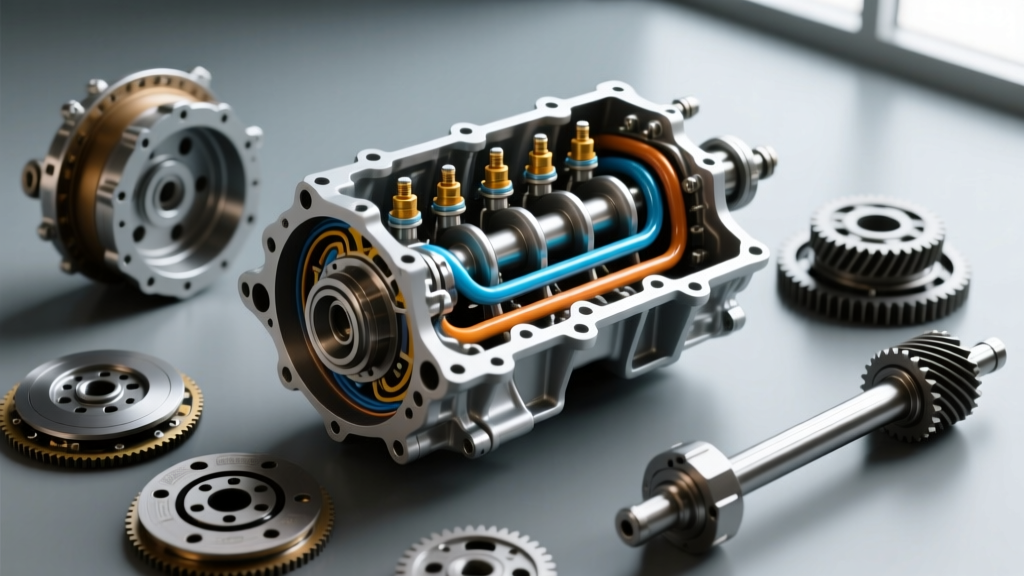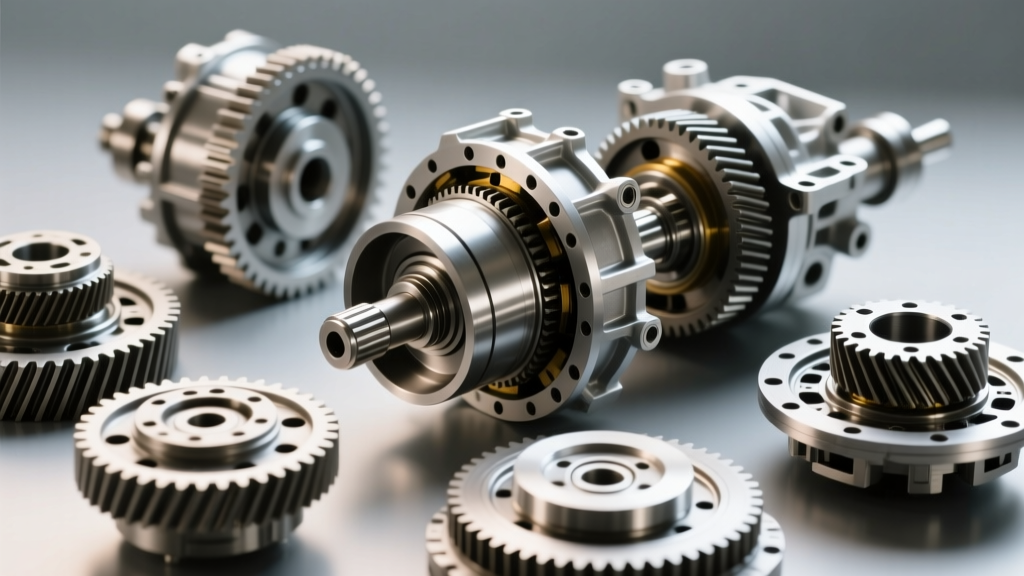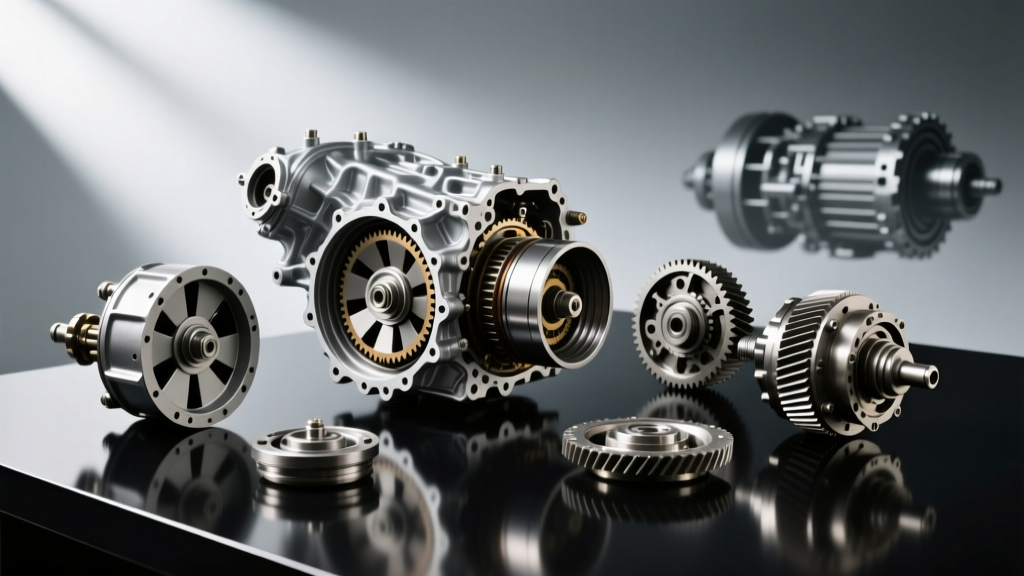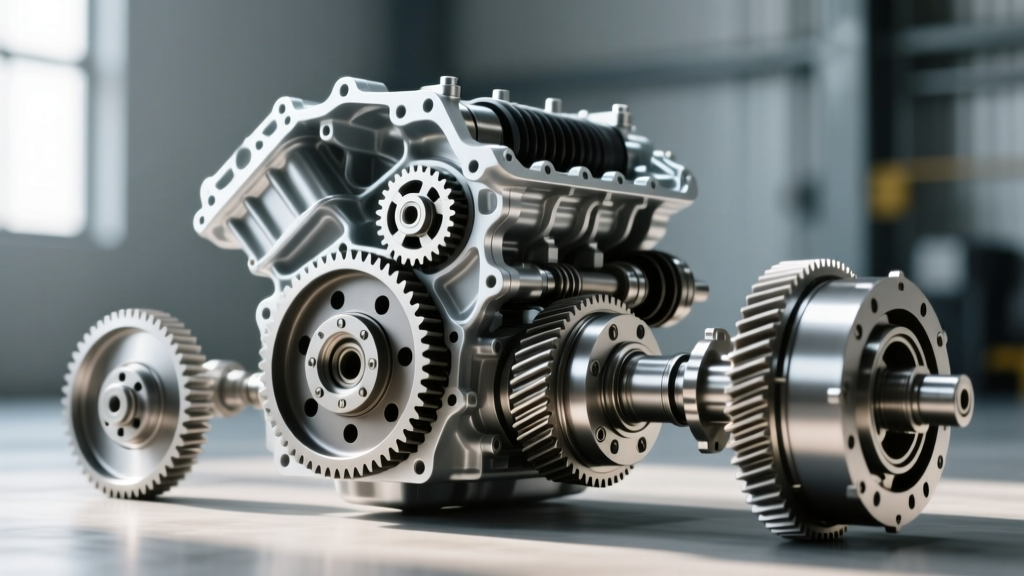
The Core Anatomy: What Is a Car Transmission?
At its most fundamental level, a car transmission is a torque-multiplying and speed-adapting intermediary between the engine and the drive wheels. Internal combustion engines operate efficiently within a narrow RPM band (typically 1,500 to 6,500 RPM). Without a transmission, your vehicle would be limited to a single, impractical top speed, and the engine would stall when coming to a stop. The transmission solves this by providing multiple gear ratios, allowing the engine to stay in its optimal power band whether you are crawling through stop-and-go traffic or cruising at 80 mph on the highway.
Modern automatic transmissions are marvels of hydraulic and electronic engineering. While older units like the ubiquitous GM 4L60E relied heavily on mechanical governors and basic hydraulic valve bodies, contemporary units such as the GM 6L80, ZF 8HP, and Ford 10R80 utilize sophisticated Transmission Electronic Hydraulic Control Modules (TEHCM). These modules monitor input shaft speed, turbine speed, and throttle position hundreds of times per second to command pulse-width modulated (PWM) solenoids, ensuring seamless clutch-to-clutch shifts.
Demystifying the Mechanics: How Does a Gearbox Work in a Car?
To understand preventive maintenance, you must first understand the mechanical forces at play. So, exactly how does a gearbox work in a car? The power flow begins at the torque converter, a fluid coupling that replaces the traditional clutch. Inside the converter, the impeller (driven by the engine) pushes transmission fluid against the turbine (connected to the transmission input shaft). A stator sits between them, redirecting fluid flow to multiply torque during initial acceleration. Once cruising speed is reached, a lock-up clutch mechanically links the engine and transmission to eliminate parasitic fluid slippage and improve fuel economy.
From the turbine, power enters the planetary gearsets. Unlike manual transmissions that use sliding spur gears on parallel shafts, automatics use compound planetary gearsets consisting of a central sun gear, surrounding planet gears held by a carrier, and an outer ring gear. By selectively holding or driving these components using multi-disc clutch packs and band servos, the transmission achieves different gear ratios.
Planetary Gearset Operation Matrix
| Input Component | Held Component | Output Component | Resulting Action |
|---|---|---|---|
| Sun Gear | Ring Gear | Planet Carrier | Maximum Gear Reduction (1st Gear) |
| Planet Carrier | Ring Gear | Sun Gear | Overdrive (Higher Output Speed) |
| Sun Gear & Ring Gear | None (Locked) | Planet Carrier | Direct Drive (1:1 Ratio) |
| Planet Carrier | Sun Gear | Ring Gear | Reverse Gear |
Preventive Maintenance: Protecting Your Drivetrain Investment
The most pervasive myth in modern automotive care is the concept of 'sealed for life' transmission fluid. According to ZF Aftermarket, even their highly engineered 8HP transmissions require fluid and filter service under 'severe' driving conditions—which, in reality, encompasses 90% of daily driving scenarios, including stop-and-go traffic, short trips, and towing. Neglecting this service leads to clutch pack glazing, valve body bore wear, and solenoid screen clogging.
OEM Fluid Specifications, Capacities, and Intervals
Using the exact OEM-specified fluid is non-negotiable. Friction modifiers are uniquely calibrated to the specific clutch lining materials (e.g., carbon-fiber vs. cellulose) used by each manufacturer. Below is a reference guide for three of the most common modern automatic transmissions:
| Transmission Model | OEM Fluid Specification | Total Capacity | Pan Drop Capacity | Service Interval |
|---|---|---|---|---|
| GM 6L80 / 6L90 | ACDelco Dexron VI (10-9395) | 11.2 Quarts | 6.0 Quarts | Every 45k - 60k Miles |
| ZF 8HP45 / 8HP70 | ZF LifeguardFluid 8 (S671 090 312) | 9.5 Liters | 5.5 Liters | Every 50k - 70k Miles |
| Ford 10R80 | Motorcraft Mercon ULV (XT-12-QULV) | 13.1 Quarts | 6.5 Quarts | Every 60k Miles |
Critical Torque Specs and Service Procedures
When performing a preventive drain-and-fill, precision is paramount. Over-torquing fasteners on modern aluminum transmission cases will strip the threads, leading to catastrophic fluid leaks and requiring expensive thread-insert repairs. Always use a calibrated inch-pound torque wrench for pan bolts.
- GM 6L80 Oil Pan Bolts: Torque to 10 Nm (89 lb-in). Note that the 6L80 uses a reusable silicone gasket; ensure the mating surface is completely free of debris before reinstalling.
- ZF 8HP Plastic Oil Pan: The filter is integrated into the plastic pan. Torque the aluminum bolts to 10 Nm (89 lb-in) in a crisscross pattern. Never reuse the old pan, as the plastic deforms under heat and torque.
- Ford 10R80 Oil Pan Bolts: Torque to 11 Nm (97 lb-in). The 10R80 features a separate, reusable filter and a stamped steel pan with a molded cork/rubber gasket.
- Bellhousing to Engine Block (GM LS/LT): If removing the transmission, M10 bellhousing bolts require 50 Nm (37 lb-ft), while M12 bolts require 80 Nm (59 lb-ft).
Failure Modes Linked to Poor Maintenance
Research published via SAE International highlights that over 80% of automatic transmission failures are rooted in thermal degradation of the fluid. When fluid exceeds 220°F (104°C), it begins to oxidize, forming varnish. This varnish coats the intricate spool valves inside the valve body, causing them to stick. In the GM 8L90 and 10L90 families, this often manifests as the notorious 'shift shudder,' which requires not just a fluid exchange, but the installation of a revised torque converter and a specialized Mobil 1 Synthetic ATF flush to dissolve the varnish from the clutch apply circuits.
Furthermore, debris from normal clutch wear circulates through the fluid. If the filter is not replaced (or if the integrated ZF filter is bypassed by simply drilling a drain hole in the plastic pan—a dangerous shortcut some shops use), this abrasive material scores the aluminum valve body bores, leading to permanent pressure loss and slipping gears.
Cost Analysis: Dealership vs. Independent Specialist
Preventive maintenance is significantly cheaper than a rebuild. A complete ZF 8HP mechatronic sleeve and bridge seal repair can exceed $1,200, while a full remanufactured replacement unit ranges from $4,500 to $7,500 installed.
Pro-Tip: Avoid high-pressure machine 'flushes' on high-mileage transmissions that have never been serviced. The aggressive reverse-flow can dislodge large debris chunks, lodging them in narrow solenoid feed orifices. A repeated 'drain-and-fill' procedure (dropping the pan, replacing the filter, and driving for 500 miles before repeating twice more) is the safest method endorsed by master transmission rebuilders.
Expect to pay between $250 and $400 for a proper pan-drop and filter service on a GM or Ford unit at an independent specialist. ZF services are more expensive due to the cost of LifeguardFluid 8 and the integrated plastic pan assembly, typically ranging from $450 to $650. Always verify that the shop uses a thermal scanner to check the fluid temperature via the OBD-II port during the final level-setting procedure, as checking the fluid cold will result in severe under-filling and subsequent pump cavitation.
Final Thoughts on Drivetrain Longevity
Understanding what a car transmission is and how a gearbox works in a car empowers you to make informed maintenance decisions. By adhering to strict OEM fluid specifications, utilizing precise torque values, and rejecting the 'sealed for life' marketing myth, you can easily extend the lifespan of your automatic transmission well past the 200,000-mile mark. For further reading on vehicle safety and drivetrain reliability standards, consult the National Highway Traffic Safety Administration (NHTSA) resources on vehicle maintenance schedules.