The Historical Blueprint: When Were Automatic Transmissions Invented?
To understand how to push modern drivetrains to their absolute limits, we must first look at the genesis of the technology. So, exactly when were automatic transmissions invented? The conceptual foundation dates back to 1921, when Canadian engineer Alfred Horner Munro patented the first automatic transmission. However, Munro's design relied on compressed air rather than hydraulic fluid, resulting in a severe lack of power transfer and commercial viability. The true breakthrough—and the answer most automotive historians cite—occurred in 1939 when General Motors introduced the Hydra-Matic in the 1940 Oldsmobile lineup. This was the world's first mass-produced, fully automatic, hydraulic fluid-coupling transmission.
The 1939 GM Hydra-Matic utilized a fluid coupling and three planetary gearsets to provide four forward speeds, laying the exact mechanical groundwork for the heavy-duty planetary automatics we build for high-horsepower applications today.
According to automotive historians at Hagerty Media, the Hydra-Matic's introduction forever changed the automotive landscape. Fast forward to the modern era, and the basic principles of hydraulic pressure and planetary gear multiplication remain, albeit controlled by advanced solenoids and 32-bit Transmission Control Modules (TCMs). For performance builders in 2026, understanding this evolution is critical when selecting a transmission architecture for high-horsepower swaps, drag builds, or track-day endurance setups.
The Modern Performance Landscape: Transmission Types Overview
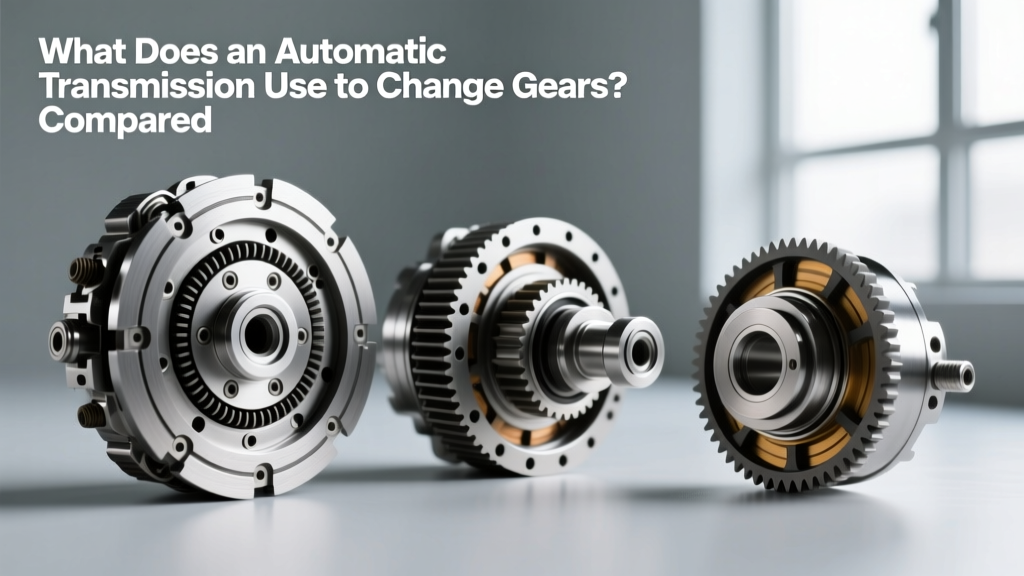
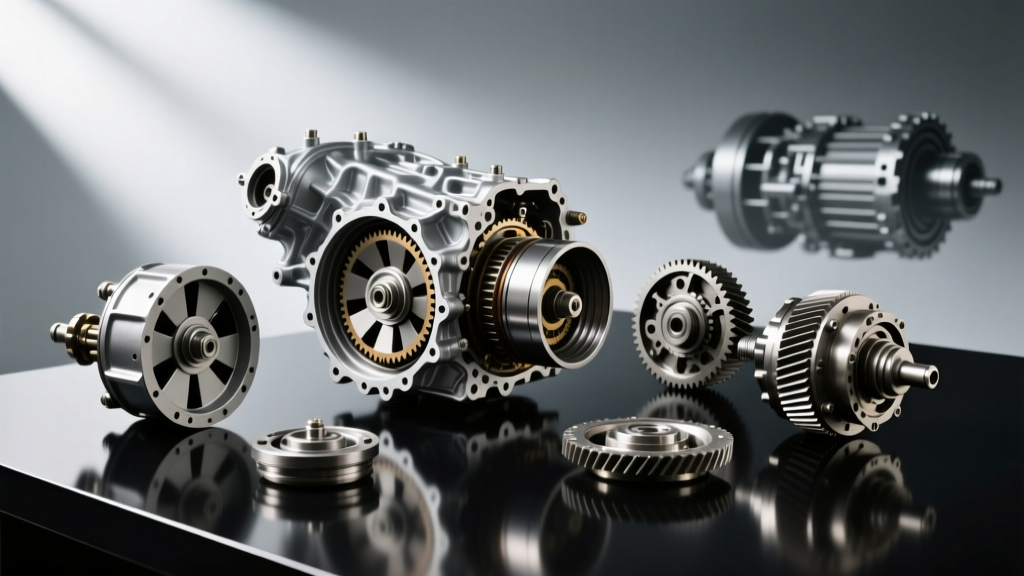
When evaluating types of car transmissions for performance applications, the market is currently dominated by three distinct architectures. Each offers unique torque-handling characteristics, shift dynamics, and upgrade pathways.
1. Planetary Gearsets and Torque Converters (The Heavyweights)
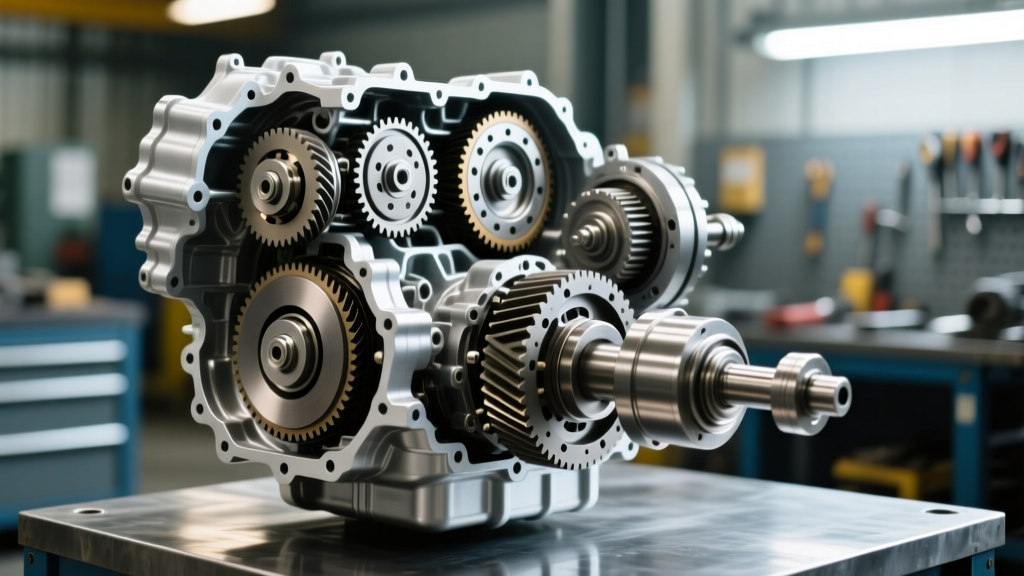
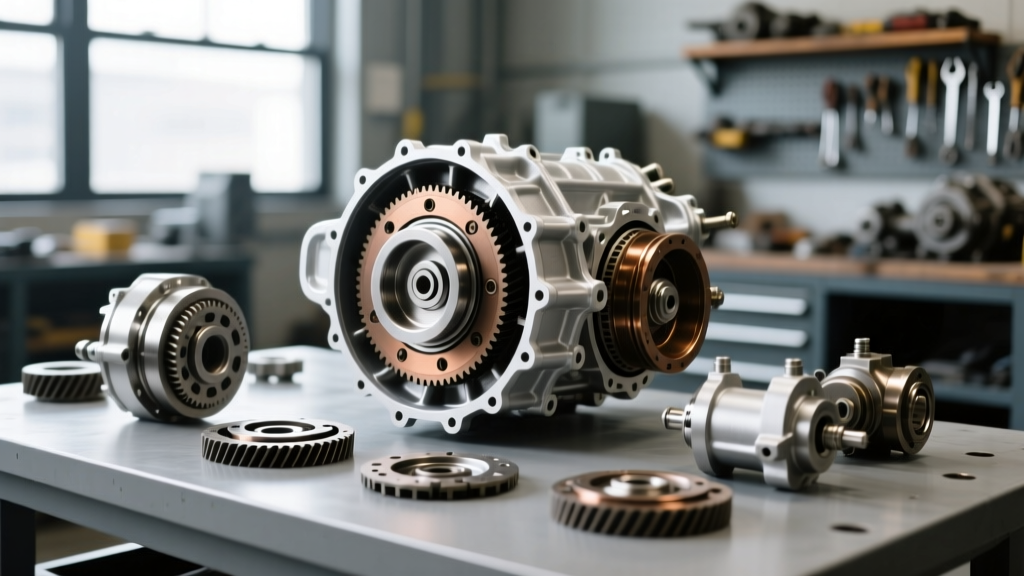
The traditional hydraulic automatic remains the undisputed king of extreme-horsepower street and drag applications. The torque converter acts as a fluid multiplier, absorbing shock loads that would instantly shatter the input shafts of manual or dual-clutch gearboxes. Two platforms dominate the performance space:
- The GM 4L80E: Originally introduced in 1991 for heavy-duty trucks, the 4L80E is a staple in the aftermarket. In stock form, it handles roughly 440 lb-ft of torque. However, when equipped with a Sonnax heavy-duty sprag, Raybestos GPZ friction clutches, and a billet input shaft, a built 4L80E can reliably absorb 1,200 to 1,500 horsepower. Upgrading the valve body with a Sonnax Zip Kit (Part No. 4L80E-ZIP) increases line pressure and improves shift firmness, crucial for preventing clutch pack slip under heavy load.
- The ZF 8HP (8HP70 / 8HP90): The ZF 8-speed is the modern marvel of planetary engineering. Found in everything from the Dodge Challenger Hellcat to BMW M-cars, it features a mechatronic unit that integrates the TCM and valve body directly into the transmission pan. While the 8HP70 is rated for 516 lb-ft stock, aftermarket tuning and upgraded clutch packs (like those from Pure Hellcat or ZF's own upgraded 8HP90 internals) push this limit well past 800 lb-ft. A known weak point is the mechatronic sealing sleeve; replacing it with an updated aluminum-capped sleeve prevents the notorious 'F01' electrical faults during high-G launches.
2. Dual-Clutch Transmissions (DCT)
Dual-clutch transmissions operate using two separate input shafts and clutch packs—one for odd gears, one for even. This allows for pre-selection of the next gear, resulting in shift times measured in milliseconds. The Tremec TTR-9077, found in the C8 Corvette, is a prime example. While DCTs offer unparalleled track performance and shift speed, they are notoriously fragile under extreme shock loads. Upgrading a DCT for performance usually requires specialized twin-disc clutch kits, proprietary high-shear fluids (like ACDelco DCT Fluid, Part # 19434215), and custom TCM calibrations to manage clutch kiss-points and prevent thermal degradation during repeated hard launches.
3. Continuously Variable Transmissions (CVT)
From a strict performance perspective, CVTs are generally avoided. They rely on a steel push-belt or chain running between variable-diameter pulleys. Under high torque (typically beyond 250 lb-ft), the clamping pressure required to prevent belt slip generates immense parasitic drag and heat. While Subaru's Lineartronic CVT has been pushed to handle roughly 350 wheel-horsepower in niche rally applications using specialized valve body tuning and upgraded chains, the architecture inherently lacks the mechanical lock-up and direct power transfer required for serious performance builds.
Comparative Data: Stock vs. Built Torque Thresholds
When planning a drivetrain upgrade, matching the transmission's torque capacity to your engine's output is critical. Below is a comparative breakdown of popular performance platforms as of 2026.
| Transmission Model | Architecture | Stock Torque Limit | Built Torque Limit | Primary Upgrade Path |
|---|---|---|---|---|
| GM 4L80E | 4-Speed Planetary | 440 lb-ft | 1,200+ lb-ft | Billet shafts, GPZ clutches, high-PSI pump |
| ZF 8HP70 | 8-Speed Planetary | 516 lb-ft | 850+ lb-ft | Mechatronic sleeve, Stage 2 clutch packs |
| Ford 10R80 | 10-Speed Planetary | 510 lb-ft | 900+ lb-ft | Valve body upgrade, billet torque converter |
| Tremec TTR-9077 | 8-Speed DCT | 495 lb-ft | 650 lb-ft | Custom TCM tuning, upgraded clutch packs |
| Getrag 7DCT300 | 7-Speed DCT | 221 lb-ft | 300 lb-ft | Limited; primarily fluid and cooling upgrades |
The Economics of Upgrading: Swap Kits and Rebuilds
Understanding the financial commitment of transmission upgrades is just as important as understanding the mechanicals. Here is a realistic look at current market pricing for performance builds and swaps:
- Stage 2 4L80E Rebuild: Expect to pay between $3,800 and $4,500 for a reputable builder to assemble a 4L80E capable of handling 1,000 horsepower. This includes a precision-machined pump, heavy-duty sprag, and a custom-stall billet torque converter (typically $1,200 alone).
- ZF 8HP Swap Kits: Swapping a ZF 8-speed into a classic muscle car or older chassis is a massive trend. A complete swap kit—including the transmission, custom bellhousing adapter, crossmember, and a standalone TCM controller (like the Holley Terminator X or HP Tuners integration)—will cost between $6,500 and $9,000 before installation labor.
- DCT Fluid Services: Unlike traditional automatics where a pan-drop and filter change costs $250, a DCT fluid service requires precise temperature-matching during the fill procedure. Dealerships and specialty shops charge $400 to $600 for a DCT fluid exchange, utilizing 7 to 9 liters of highly specialized synthetic fluid.
Thermal Management: Cooling the Modern Drivetrain
No matter the architecture, heat is the ultimate enemy of transmission longevity. Automatic transmission fluid (ATF) begins to lose its shear stability and oxidize rapidly once temperatures exceed 220°F (104°C). For every 20-degree increase above this threshold, the lifespan of the fluid and the internal clutch linings is effectively halved.
When upgrading to a high-stall torque converter or pushing a ZF 8HP on a road course, the factory heat exchanger is rarely sufficient. Performance builders mandate the installation of auxiliary plate-fin or stacked-plate coolers. Brands like Derale and Earl's offer coolers with integrated thermostatic bypass valves. These valves ensure the fluid bypasses the cooler during cold starts, allowing the transmission to reach its optimal operating temperature of 180°F quickly, before routing fluid through the cooling core under heavy load. According to engineering data from ZF Group, maintaining strict thermal management protocols is the single most effective way to preserve the intricate clearances and mechatronic solenoids within modern 8-speed and 10-speed automatic units.
Whether you are building a 1,500-horsepower drag car using a vintage 4L80E architecture or tracking a modern DCT-equipped supercar, the lineage of the automatic transmission demands respect for hydraulic pressure, clutch material science, and thermal dynamics. By selecting the right architecture and executing precise, data-driven upgrades, you can bridge the gap between a 1939 invention and 2026's cutting-edge performance standards.