The True Cost of an Unknown Final Drive Ratio
Purchasing a used axle assembly from a salvage yard, diagnosing a vehicle with a swapped drivetrain, or inheriting a project car with missing build sheets presents a unique financial risk. If you do not know how to calculate final drive gear ratio accurately before installing or operating the drivetrain, you risk catastrophic mechanical failure. In the modern automotive landscape of 2026, where electronic traction control systems and active torque-vectoring differentials are highly sensitive to rotational speed discrepancies, guessing your gear ratio is a gamble with a very high price tag.
This guide approaches the mathematical identification of unknown gear ratios through the lens of cost analysis. We will evaluate the out-of-pocket expenses for various diagnostic methods, the cost of setup tools, and the severe financial fallout of installing mismatched ring and pinion sets in AWD or 4WD platforms.
Method 1: The Tire Spin Technique (Zero-Cost Identification)
The most accessible way to calculate your final drive ratio without breaking the diff cover seal is the tire spin method. This requires only a floor jack, jack stands, and a marker. While the monetary cost is essentially zero (assuming you already own basic garage tools), the accuracy depends heavily on your differential type.
Execution for Open Differentials
- Step 1: Safely elevate the rear axle so both tires are off the ground.
- Step 2: Mark the bottom of the driver-side tire and the driveshaft with a paint pen or chalk.
- Step 3: Rotate the driver-side tire exactly two full revolutions while counting the driveshaft rotations.
- Step 4: If the driveshaft turns roughly 3.73 times, your ratio is 3.73:1.
Execution for Limited-Slip (Posi/Locking) Differentials
If the axle features a limited-slip differential (LSD) or a locked spool, both tires will rotate together. Therefore, you only need to rotate the tire one full revolution and count the driveshaft turns. The math remains simple: Driveshaft Revolutions / Tire Revolutions = Final Drive Ratio.
Expert Insight: The tire spin method is free but leaves room for human error. Miscounting a quarter-turn on a 4.10 ratio can lead you to believe you have a 3.90. In a part-time 4WD system, this slight miscalculation can cause transfer case binding.
Method 2: Diff Cover Removal & Tooth Counting (Moderate Cost)
When the tire spin method yields ambiguous results, or when the axle is off the vehicle and sitting on a workbench, you must physically count the teeth. This requires opening the differential, which immediately incurs consumable costs.
The Consumable Cost Breakdown
Opening a differential means draining the gear oil. Reusing old fluid, especially if it contains metallic particulate from an unknown break-in period, is a false economy. Here is what it costs to properly identify the ratio via tooth counting on a standard Ford 8.8-inch or Dana 44 axle:
- Gear Oil: 3 quarts of Mobil 1 75W-90 Synthetic ($14.99/qt) = $44.97
- Gasket: Fel-Pro RDS55385 Rubber Axle Cover Gasket = $12.50
- Friction Modifier: 4 oz bottle of Ford XL-3 (for LSD clutches) = $9.99
- Total Consumable Cost: ~$67.46
The Mathematics of Tooth Counting
Once the cover is removed (using a 3/8" drive 10mm or 13mm socket, depending on the axle), rotate the ring gear and count the teeth. Next, count the teeth on the pinion gear. The formula is absolute:
Final Drive Ratio = Ring Gear Teeth ÷ Pinion Gear Teeth
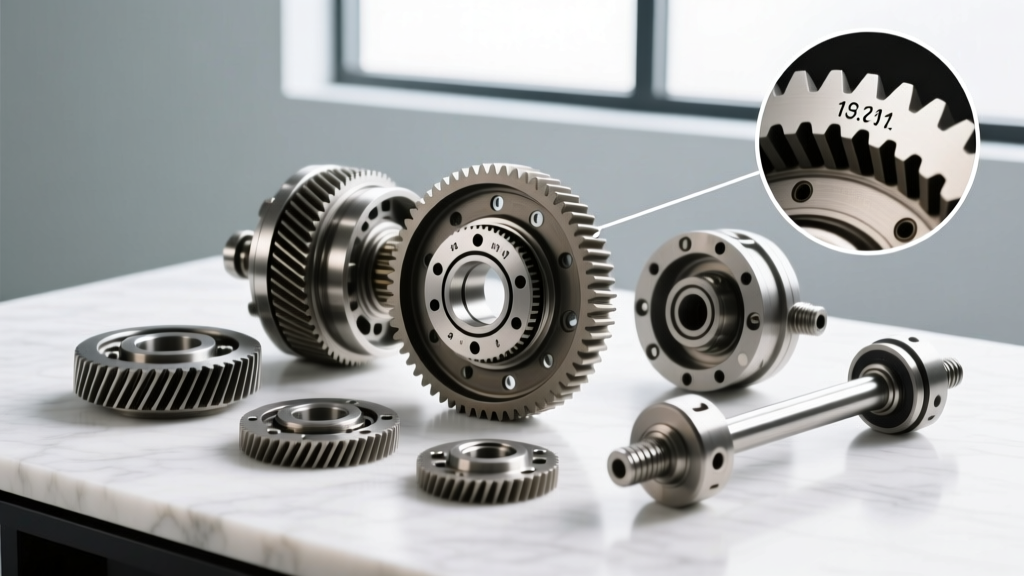
For example, if you count 41 teeth on the ring gear and 11 on the pinion, 41 ÷ 11 = 3.727. This confirms a 3.73:1 final drive ratio. Most OEM ring gears will also have this ratio stamped on the outer edge (e.g., "41 11"), but physical counting guarantees accuracy regardless of stamping wear or aftermarket replacements.
Cost Analysis: Diagnostic Tools vs. Shop Labor
If you are running a shop or frequently flip project vehicles, investing in precision diagnostic tools is more cost-effective than paying hourly labor rates for manual counting. Below is a 2026 cost comparison of identifying unknown ratios in-house versus outsourcing the diagnostic teardown.
| Identification Method | Required Equipment / Service | Estimated Cost | Accuracy & Risk Factor |
|---|---|---|---|
| Tire Spin Method | Floor Jack, Jack Stands, Marker | $0 (Tool ownership assumed) | 85% Accurate. High risk of human counting error. |
| Visual Tooth Count (DIY) | Fluid, Gasket, Basic Hand Tools | $65 - $85 | 100% Accurate. Requires fluid disposal and refill. |
| Shop Diagnostic Teardown | Dealership or Drivetrain Specialist | $140 - $190 (1 hr labor) | 100% Accurate. High cost, but includes professional inspection. |
| Endoscope Inspection | Automotive Borescope (e.g., Teslong) | $45 - $60 (One-time purchase) | 70% Accurate. Difficult to see pinion teeth through fill plug. |
The Financial Fallout: What Happens If You Guess Wrong?
Failing to accurately calculate your final drive gear ratio before mating a transmission or transfer case can result in thousands of dollars in collateral damage. The financial risk scales exponentially depending on the vehicle's drivetrain layout.
Rear-Wheel Drive (RWD) Platforms
If you install a 4.10 rear axle in a RWD Mustang that previously had 3.31 gears, the car will not be destroyed. However, your speedometer calibration will be off by roughly 24%, and your highway RPMs will surge, destroying your fuel economy. Correcting the speedometer via an OBD2 tuner (like an SCT X4, ~$450) masks the issue, but the drivetrain inefficiency remains.
All-Wheel Drive (AWD) and 4WD Platforms
In AWD systems (such as the Subaru Symmetrical AWD or BMW xDrive) and 4WD systems with full-time transfer cases (like the Jeep NV242), the front and rear axle ratios must match exactly. Even a nominal difference—such as pairing a worn 3.73 front axle with a brand-new 3.74 rear axle—creates a rotational speed delta.
This delta forces the center differential or viscous coupler to constantly compensate. The resulting friction generates immense heat, leading to:
- Transfer Case Chain Stretch: Replacement cost: $600 - $900.
- Viscous Coupler Failure: Replacement cost: $800 - $1,200.
- Center Differential Gear Shearing: Total transfer case replacement: $1,500 - $2,800.
According to drivetrain engineering guidelines from Dana Spicer, even a 1% variance in rolling diameter between front and rear axles (caused by mismatched gear ratios or severely uneven tire wear) is enough to initiate premature wear in full-time 4WD transfer cases.
Real-World Pricing: Ring and Pinion Correction Costs
If you discover that your salvaged axle has the wrong ratio, you must swap the ring and pinion. This is not a simple bolt-on job; it requires precision setup, bearing pre-load adjustment, and gear pattern verification using a dial indicator and inch-pound torque beam. Below is the average 2026 market pricing for correcting an unknown or mismatched gear ratio.
| Axle Platform | Ring & Pinion Set (e.g., Yukon Gear) | Master Rebuild Kit (Timken Bearings) | Shop Labor (Setup & Install) | Total Correction Cost |
|---|---|---|---|---|
| Ford 8.8" (Solid Axle) | $280 - $340 | $110 - $140 | $450 - $600 | $840 - $1,080 |
| Dana 44 (JK Wrangler) | $310 - $380 | $150 - $180 | $500 - $700 | $960 - $1,260 |
| GM 14-Bolt (10.5") | $420 - $550 | $180 - $220 | $650 - $850 | $1,250 - $1,620 |
| ZF / BMW IRS Diff | $500 - $750 | $200 - $250 | $800 - $1,100 | $1,500 - $2,100 |
Critical Torque Specs for Reassembly
If you choose the DIY route to save on the $500+ labor costs, you must adhere to strict torque specifications to prevent the ring gear from walking off the carrier under load. For a standard Ford 8.8-inch axle, the ring gear bolts must be torqued to 85 lb-ft using Red Loctite 271. The differential cover bolts require a much lighter touch—typically 28 lb-ft—to prevent crushing the rubber gasket or warping the stamped steel pan, which guarantees a slow, persistent gear oil leak.
Expert Verdict: Spend $65 Now or $2,500 Later
Learning how to calculate final drive gear ratio on an unknown axle is a mandatory step in any drivetrain swap or used vehicle purchase. The cost analysis is stark: spending $65 on fresh synthetic gear oil and a gasket to physically count the teeth provides 100% certainty. Conversely, relying on the tire-spin method or trusting a faded axle tag saves you a few dollars upfront but exposes you to thousands of dollars in potential transfer case and transmission damage.
In the world of drivetrain mechanics, mathematics and precision are your best financial safeguards. Always verify the ratio physically, use high-quality Timken or SKF bearings during reassembly, and never compromise on the setup pattern. Your wallet—and your differentials—will thank you.