The Economics of Rear-Wheel Drive: BRZ Drivetrain Overview
The Subaru BRZ, alongside its Toyota GR86 twin, remains one of the most celebrated front-engine, rear-wheel drive (RWD) platforms on the market. Whether you are piloting a first-generation FA20 model or the torque-rich FA24 second-generation chassis, the fundamental layout remains a purist’s dream. However, maintaining a dedicated RWD sports car requires a clear understanding of the mechanical forces at play and the financial realities of long-term ownership. In this 2026 cost analysis, we dissect the operational mechanics of the BRZ drivetrain, break down real-world maintenance pricing, and provide exact torque specifications to help DIY enthusiasts avoid steep dealership labor rates.
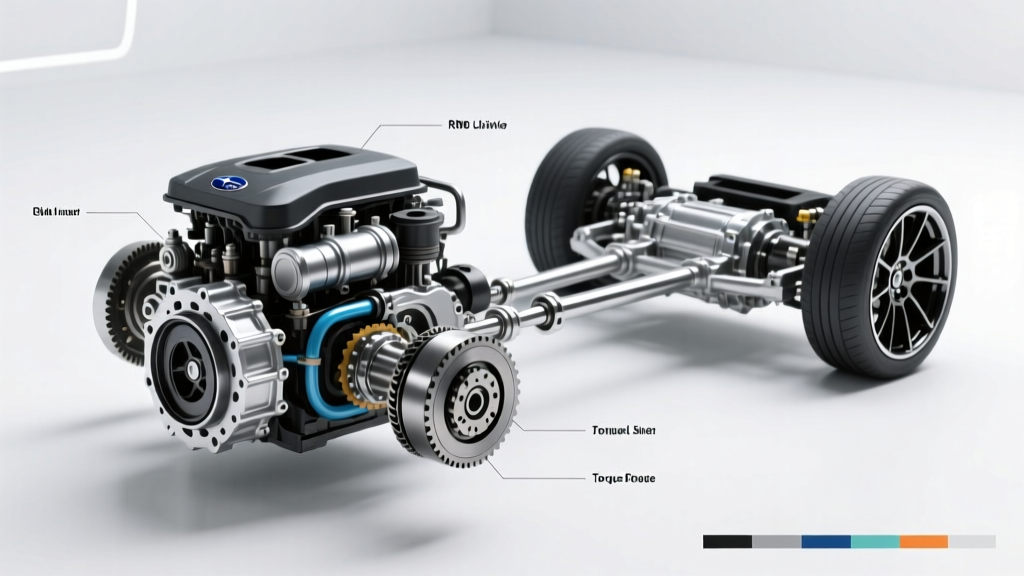
Unlike front-wheel drive or all-wheel drive configurations that package the transmission, differential, and axles into a single transaxle housing, the BRZ utilizes a longitudinal RWD layout. Power is routed from the boxer engine through a bellhousing, into the transmission, down a multi-piece driveshaft, and finally into a standalone rear differential before reaching the wheels. This separation of components increases the number of serviceable wear items—meaning more fluid changes, more U-joints, and more potential failure points. Understanding this operational flow is the first step in mastering your maintenance budget.
Anatomy of the BRZ Rear-Wheel Drive Operation
To accurately forecast repair costs, you must understand how power is transferred to the tarmac. The BRZ RWD system relies on several critical sub-assemblies:
- The Transmission: First-generation models utilize the Subaru TL60 6-speed manual (or the A960E 6-speed automatic). Second-generation FA24 models use an updated TL60 with revised synchros and gear ratios. The manual transmission is renowned for its mechanical notchiness, but it requires precise fluid specifications to prevent synchro wear.
- The Driveshaft: The BRZ uses a three-piece steel driveshaft featuring a center support bearing and multiple U-joints. This design reduces NVH (Noise, Vibration, and Harshness) but introduces rotational mass and notorious spline lash.
- The Rear Differential: Housed in an R180 aluminum casing, the rear differential contains a Torsen limited-slip differential (LSD). Early models used a Type-1 Torsen, while later iterations moved to a Type-2 for improved traction during trail-braking. The final drive ratio is typically 4.3:1 for manual models and 4.1:1 for automatics.
- Half-Shafts (CV Axles): Power exits the differential through inner and outer Constant Velocity (CV) joints, transmitting torque to the rear hubs while accommodating rear suspension articulation.
2026 BRZ Drivetrain Maintenance Cost Breakdown
Routine fluid services are the lifeblood of the BRZ drivetrain. Because the transmission and differential are physically separated, they require distinct service intervals and fluid chemistries. Below is a comprehensive cost comparison for standard dealership service versus a DIY approach using OEM or high-quality aftermarket fluids.
| Service Component | Capacity | Fluid Specification | OEM Part Number | Dealer Cost (Approx.) | DIY Cost (Parts Only) |
|---|---|---|---|---|---|
| Manual Transmission (TL60) | 2.0 Liters | 75W-80 GL-4 | SOA635040 | $160 - $190 | $45 - $60 |
| Automatic Transmission (A960E) | ~1.5L (Drain/Fill) | ATF-WS | SOA651010 | $220 - $260 | $35 - $50 |
| Rear Differential (R180) | 1.3 Liters | 75W-90 GL-5 | SOA635040 (Alt) | $130 - $150 | $30 - $40 |
Note: Never use GL-5 gear oil in the TL60 manual transmission. The high sulfur content in GL-5 additives can corrode the brass synchronizers over time, leading to grinding shifts and a $3,500+ rebuild bill. Always stick to GL-4 for the manual gearbox.
Common RWD Failure Points & Repair Pricing
While the boxer engine often dominates reliability discussions, the BRZ drivetrain has its own unique set of quirks and failure modes. Here is a financial breakdown of the most common RWD issues encountered by owners in 2026.
The Infamous 'Drivetrain Clunk' and Driveshaft Upgrades
Ask any BRZ owner about the '5-mph bump clunk,' and they will immediately know what you are talking about. This metallic knock occurs when transitioning from braking to acceleration at low speeds. Operationally, it is caused by accumulated rotational backlash across three areas: the transmission output shaft, the slip-yoke splines on the three-piece driveshaft, and the ring-and-pinion gear lash inside the rear differential.
Cost to Address:
- DIY Bushing Inserts: Installing polyurethane differential bushing inserts (e.g., Whiteline or Kartboy) restricts differential movement under load. Cost: $80 - $120.
- OEM Driveshaft Replacement: If the center support bearing or U-joints fail, a new OEM driveshaft from Subaru is required, as U-joints are not officially serviceable separately. Cost: $950 - $1,100.
- Aftermarket 1-Piece Aluminum Shaft: Upgrading to a 1-piece shaft from manufacturers like The Driveshaft Shop eliminates the slip-yoke lash and center bearing entirely, reducing rotational mass by over 15 lbs. Cost: $850 - $1,000.
Rear Differential Whine and Torsen LSD Degradation
The R180 rear differential is generally robust, but aggressive track use or neglected fluid changes can lead to premature wear. A howling or whining noise that changes pitch with vehicle speed (not engine RPM) usually indicates ring and pinion gear wear or failing pinion bearings. Furthermore, the Torsen LSD relies on precise gear meshing; if the internal thrust washers wear out, the differential will operate as an open diff, sending all power to the wheel with the least traction.
Repair Economics: Rebuilding a Subaru R180 differential requires specialized machine shop work to set gear backlash and pinion depth using a crush sleeve. Expect to pay $1,200 to $1,800 for a professional rebuild. Alternatively, sourcing a low-mileage unit from an automotive recycler will cost between $400 and $700, though it carries the risk of inheriting someone else's neglected maintenance.
CV Axles and Wheel Bearing Hubs
Rear CV axles are subject to high torsional stress, especially if the car is equipped with sticky 200-treadwear summer tires and sees frequent launch control or hard cornering. Torn inner CV boots are common, leading to grease depletion and joint failure. Furthermore, the rear wheel bearing hubs (which integrate the ABS tone ring) are known to develop play after 80,000 miles of hard driving.
- OEM CV Axle (Subaru Part # 28321CA000): ~$450 per side at the dealer.
- Aftermarket CV Axle (e.g., GSP or TrakMotive via RockAuto): ~$110 - $140 per side.
- Rear Hub/Bearing Assembly: ~$220 OEM, ~$90 Aftermarket.
Expert Torque Specifications for the DIY Mechanic
To capitalize on the massive labor savings of DIY maintenance, you must adhere to factory torque specifications. Over-torquing the aluminum differential casing or under-torquing the driveshaft flange can lead to catastrophic RWD failure. According to data verified via Subaru TechInfo service manuals, here are the critical drivetrain torque specs for the BRZ platform:
- Manual Transmission Drain/Fill Plugs: 45 Nm (33 lb-ft)
- Rear Differential Drain/Fill Plugs: 45 Nm (33 lb-ft)
- Driveshaft Center Support Bearing Bolts: 45 Nm (33 lb-ft)
- Driveshaft to Differential Flange Bolts: 31 Nm (23 lb-ft) - Use new stretch bolts and apply blue Loctite.
- Rear Axle Hub Nut: 191 Nm (141 lb-ft) for Gen 1; 215 Nm (159 lb-ft) for Gen 2 FA24 models.
- Differential Rear Mount Bushing Bracket: 85 Nm (63 lb-ft)
OEM vs. Aftermarket: Strategic Sourcing for 2026
When repairing the BRZ drivetrain, knowing where to spend your money is just as important as knowing how to turn a wrench. Enthusiast communities on platforms like FT86Club have extensively documented the longevity of various parts.
The Golden Rule of BRZ Drivetrain Sourcing: Buy OEM for internal friction surfaces and precision-machined components (synchros, Torsen LSD gears, hub bearings). Buy aftermarket for structural supports, bushings, and non-critical rotating assemblies (driveshafts, differential inserts, exhaust hangers).
For example, while an aftermarket CV axle from a reputable budget brand is perfectly adequate for a daily-driven street car, installing an aftermarket ring-and-pinion gear set for a final-drive ratio change often results in permanent differential whine due to less stringent metallurgical quality control compared to OEM Subaru gears. Always factor in the hidden cost of 'doing the job twice' when opting for the cheapest drivetrain components on the market.
Conclusion: Budgeting for the RWD Experience
Owning a Subaru BRZ means accepting the financial responsibilities of a true longitudinal RWD layout. By budgeting approximately $150 annually for DIY fluid services, setting aside $300 for eventual driveline bushing refreshes, and understanding the operational limits of the TL60 transmission and R180 differential, you can keep your sports car on the road and out of the dealership service bay. The BRZ drivetrain is a mechanical masterpiece, and with the right cost-analysis approach, it remains one of the most affordable and rewarding RWD platforms to maintain in 2026.