The Evolution of EV Drivetrain Configurations
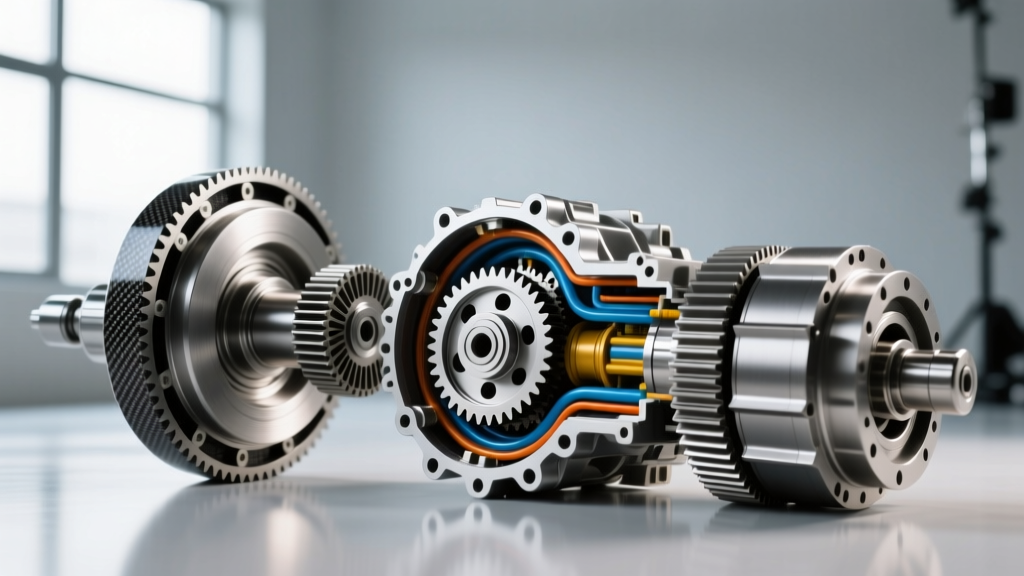
The automotive landscape in 2026 is defined by the rapid proliferation of electric vehicles (EVs). While OEM manufacturers focus on integrated 'skateboard' chassis designs that house the battery pack and dual-motor drivetrains in a single unit, the aftermarket and hot-rodding community has embraced a different approach: the ICE-to-EV conversion. In this space, the term 'engine swap' has evolved. Builders are no longer just dropping in a new V8; they are integrating high-voltage electric motors into legacy drivetrains. This requires a profound understanding of drivetrain layout, torsional damping, and rotational inertia.
Unlike internal combustion engines, which require a clutch and a multi-gear transmission to stay within a narrow power band, EV motors like the NetGain Hyper9 or Cascadia Motion systems deliver maximum torque at 0 RPM. However, retaining the factory manual or automatic transmission is often necessary to utilize the existing driveline, differential, and axle mounting points. This is where the mechanical complexity spikes, and why precision-engineered solutions are mandatory for a reliable build.
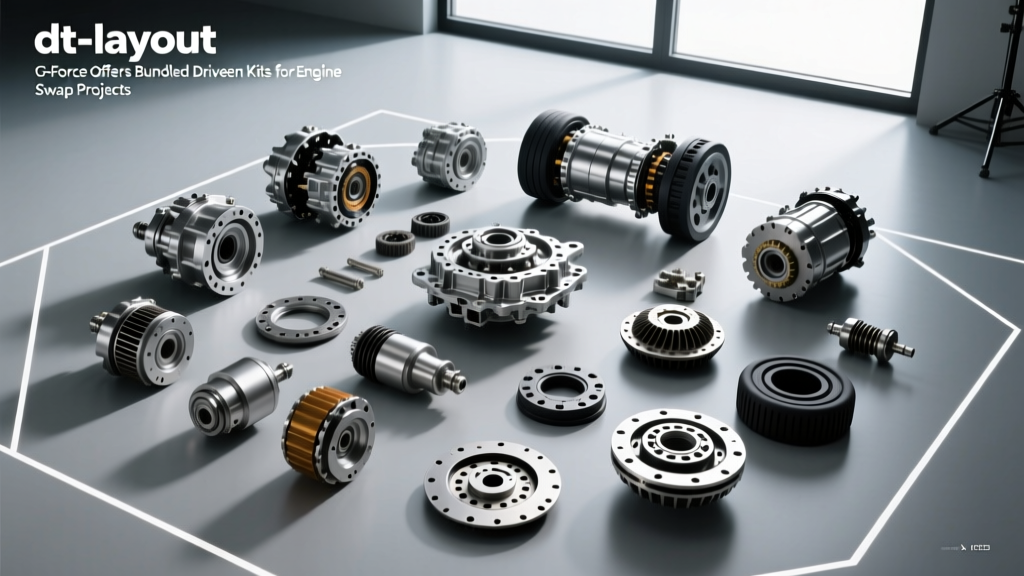
Why G-Force Offers Bundled Drivetrain Kits for Engine Swap Projects
Mating a cylindrical, high-RPM electric motor to a cast-iron or aluminum bellhousing designed for a traditional V8 block is fraught with alignment issues. Even a 0.005-inch deviation in bellhousing runout can destroy motor bearings and transmission input shafts at 8,000 RPM. Recognizing this critical pain point, G-Force Engineering has stepped into the EV conversion market. Specifically, G-Force offers bundled drivetrain kits for engine swap projects that eliminate the guesswork from motor-to-transmission mating.
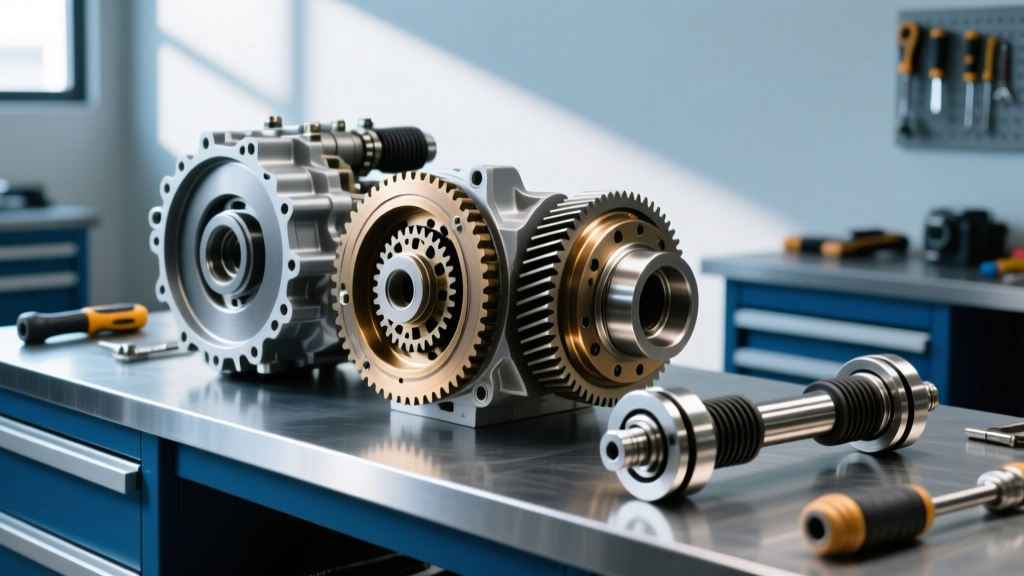
These bundles are not merely flat plates of metal. They are comprehensive drivetrain integration packages that include CNC-machined 6061-T6 billet aluminum adapter plates, custom pilot bearings, spline-matched hub assemblies, and high-torque motor mounts. By bundling these components, builders avoid the catastrophic spline mismatches and harmonic vibrations that plague DIY, piece-meal EV swaps.
Component Comparison: EV Drivetrain Integration Solutions
When planning an EV drivetrain layout, builders generally choose between three routes: a fully integrated OEM crate motor, a generic DIY adapter plate, or a purpose-built aftermarket bundle. Below is a technical comparison of these configurations.
| Feature | G-Force EV Swap Bundle | Generic DIY Adapter Plate | OEM Tesla LDU Retrofit |
|---|---|---|---|
| Adapter Material | 6061-T6 Billet Aluminum (0.75") | Laser-cut mild steel or cast alloy | N/A (Uses OEM casing) |
| Spline Alignment | Custom hub with exact pitch matching | Requires manual lathe work | Proprietary Tesla CV splines |
| Driveshaft Integration | Retains factory ICE yoke/flange | Often requires custom driveline | Requires custom CV axle fabrication |
| Harmonic Damping | Includes elastomeric coupler options | None (Metal-on-metal shock) | Internal to OEM gearbox |
| Estimated Cost (2026) | $2,800 - $4,200 | $400 - $900 | $3,500+ (Motor + Inverter + Axles) |
Technical Deep Dive: Mating the Hyper9 to a Tremec T56
To understand the value of a bundled kit, let us examine one of the most popular 2026 EV swap configurations: mating a NetGain Hyper9 motor to a Tremec T56 Magnum 6-speed manual transmission. The Hyper9 is a powerhouse, capable of pushing 240 lb-ft of continuous torque and peaking much higher for short bursts. The T56 is rated for 700 lb-ft, making it an overbuilt, reliable choice for an EV drivetrain.
The primary challenge is the input shaft. The T56 utilizes a 26-spline, 1.125-inch diameter input shaft. The Hyper9 motor shaft is entirely different. A proper G-Force bundle addresses this via a splined coupling hub that presses onto the motor shaft and slides into a custom pilot bearing housed in the adapter plate. This ensures the motor shaft and transmission input shaft share a perfect concentric centerline.
Critical Torque Specifications and Clearances
When installing a bundled drivetrain kit for an EV swap, adhering to precise torque specifications is non-negotiable. The instant torque of an electric motor will instantly exploit any loose fasteners.
- Adapter Plate to Engine Block/Bellhousing: M10x1.5 or 3/8"-16 hardware must be torqued to 35-45 lb-ft using blue Loctite (242).
- Motor to Adapter Plate: Typically M12x1.75 bolts, torqued to 65 lb-ft. Ensure the motor face is perfectly flush against the machined register of the adapter plate.
- Spline Coupling Hub Set Screws: If the hub utilizes a clamp-style or set-screw design, torque to manufacturer specs (usually 18-22 lb-ft) and secure with safety wire.
- Clutch Delete Flywheel (if applicable):strong> Many EV swaps use a clutch-delete setup with a lightweight aluminum flywheel to carry the resolver ring for motor timing. Torque the flywheel bolts to 70-85 lb-ft in a star pattern.
Driveline Geometry and Axle Upgrades for Instant Torque
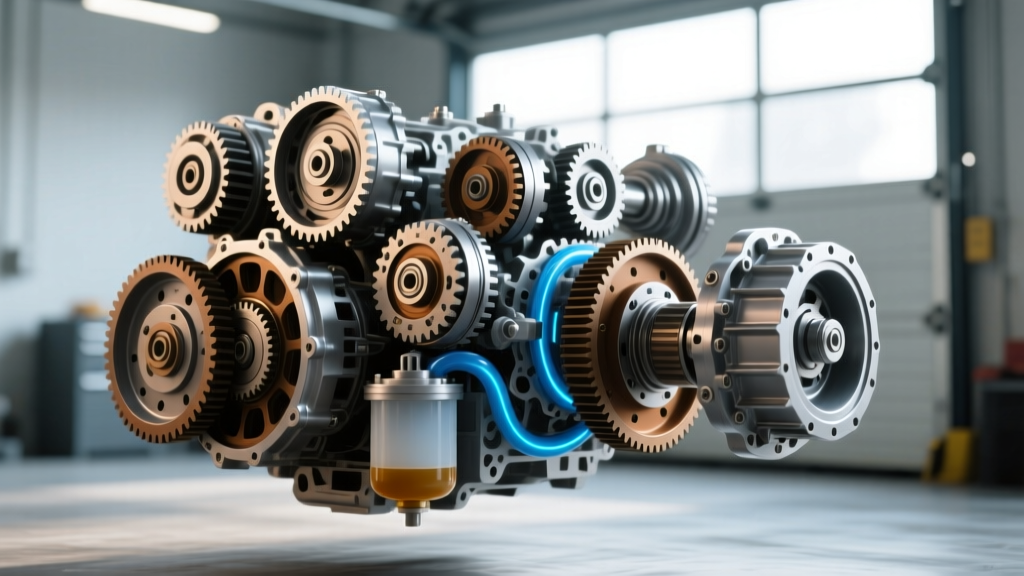
The drivetrain layout does not end at the transmission output shaft. Electric motors deliver 100% of their torque at 0 RPM, which creates a massive shock load through the driveshaft, U-joints, and rear axles. If your EV swap project utilizes a solid rear axle or independent rear suspension (IRS), the factory CV joints and axle shafts are highly susceptible to snapping under hard launches.
This is why comprehensive drivetrain planning is essential. According to EV conversion specialists at EV West, upgrading to 300M steel alloy CV axles is a mandatory step for any EV producing over 400 lb-ft of torque at the wheels. G-Force and similar drivetrain manufacturers offer upgraded 32-spline or 35-spline axle shafts designed specifically to handle the torsional shock of electric motors.
Expert Insight: When setting up the driveshaft for an EV swap, pay meticulous attention to U-joint operating angles. Because EV motors are often mounted at different angles than the original ICE engine, the pinion angle and transmission output angle must be parallel and offset by no more than 2 to 3 degrees. Exceeding this will cause severe driveline harmonics, which can shatter the adapter plate under high-RPM cruising.
2026 Cost Analysis: Building Your EV Drivetrain
Budgeting for an EV drivetrain swap requires looking beyond just the cost of the motor and battery. The mechanical integration components represent a significant portion of the build. Here is a realistic buyer's framework for a rear-wheel-drive EV conversion utilizing a bundled kit approach:
- EV Motor (e.g., Hyper9 or Cascadia iDM): $3,500 - $7,000
- G-Force Bundled Adapter & Mount Kit: $2,800 - $4,200
- Upgraded 300M CV Axles / Driveshaft: $1,200 - $2,500
- Motor Controller & Wiring Harness: $2,500 - $4,500
- High-Voltage Cabling & Safety Disconnects: $800 - $1,200
By opting for a bundled drivetrain kit rather than sourcing adapters, motor mounts, and spline hubs from disparate machine shops, builders typically save 15% to 20% on total drivetrain integration costs while gaining the peace of mind of a unified warranty and guaranteed fitment.
Final Verdict for the EV Builder
The transition from internal combustion to electric propulsion is the most significant shift in drivetrain configuration since the advent of the automatic transmission. While OEM manufacturers have the luxury of designing EV drivetrains from the ground up, the aftermarket builder must bridge the gap between legacy mechanical layouts and modern electric torque. Recognizing this engineering hurdle is exactly why G-Force offers bundled drivetrain kits for engine swap projects. By providing precision-machined adapter plates, spline-matched hubs, and heavy-duty axle solutions, these bundles ensure that your EV conversion is not just a science experiment, but a reliable, road-worthy machine capable of handling the brutal, instant torque of electric propulsion.
For further technical data on EV motor controllers and high-voltage drivetrain safety protocols, builders should consult resources from Cascadia Motion and adhere strictly to NFPA 70E high-voltage safety standards during assembly.