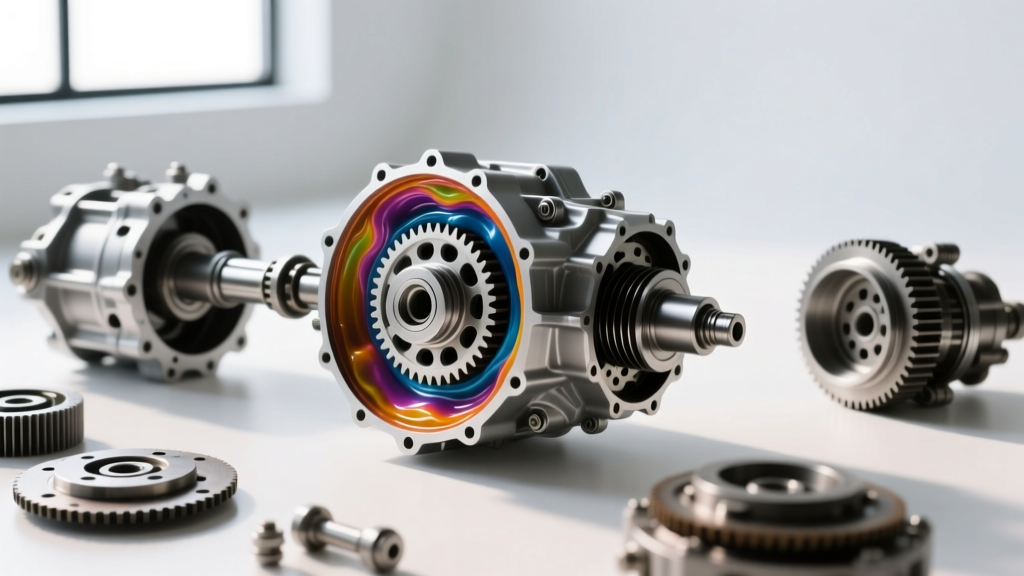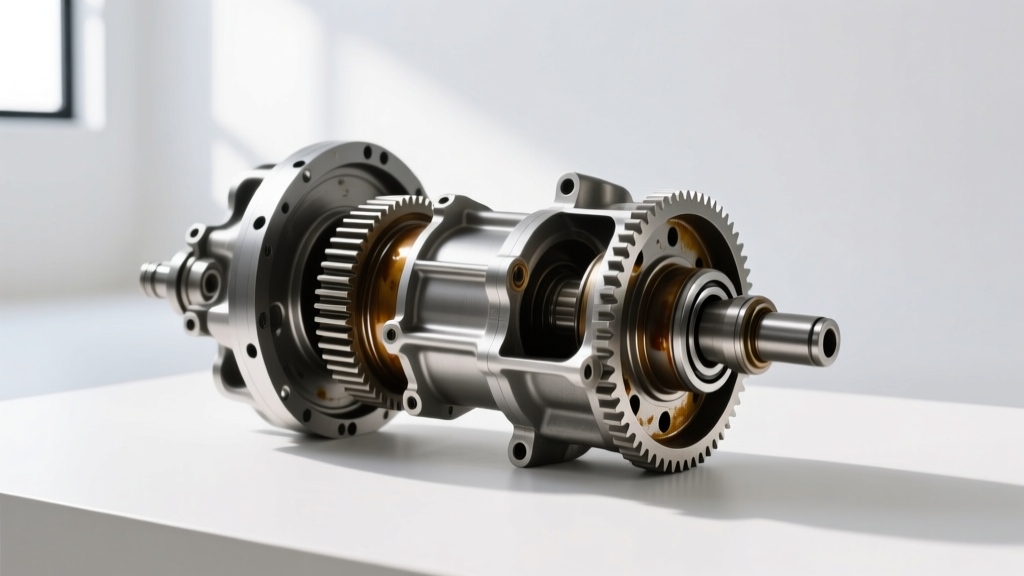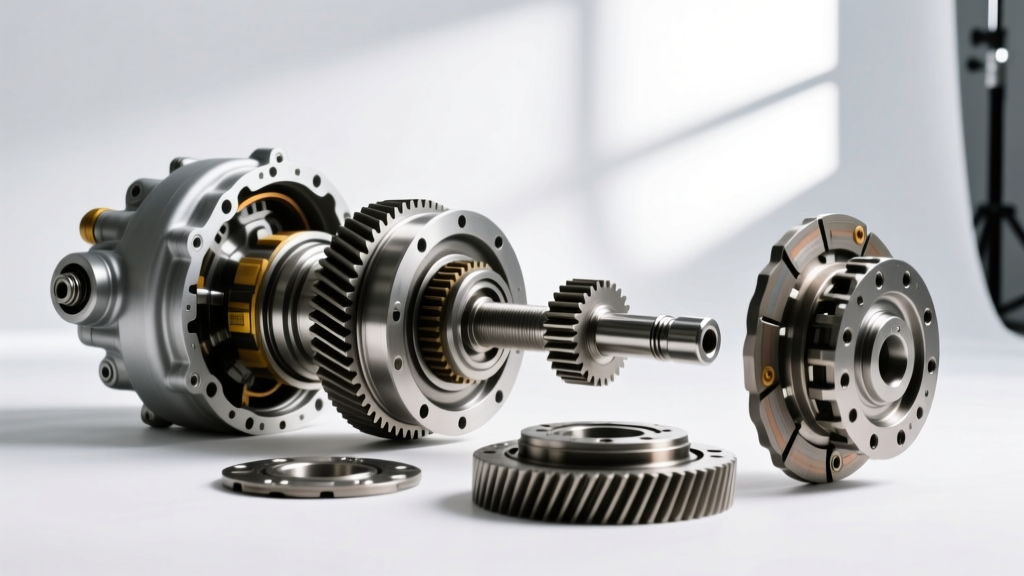
When high-horsepower builds meet the limits of factory drivetrains, a broken rear differential is often the first major casualty. Whether you are pushing 500+ lb-ft of torque through a classic GM 12-bolt or subjecting a Ford 8.8-inch axle to aggressive drag radials at the track, the factory open carrier and standard 28-spline axles are a ticking time bomb. Upgrading a broken rear differential is not just about sweeping up shattered spider gears and replacing a sheared cross-pin; it is a critical opportunity to install a performance locking differential tailored to your specific traction needs. As of 2026, with aftermarket power levels routinely exceeding 700 horsepower on pump gas, selecting the correct differential locker is paramount to putting that power to the pavement without catastrophic failure.
Why Open Carriers Fail Under High Torque
The standard open differential relies on a small steel cross-pin and four spider gears to allow wheels to rotate at different speeds during cornering. Under extreme torque loads—especially when one wheel loses traction and suddenly regains grip (a shock load)—the spider gears can instantly bind and shatter. This fragmentation typically destroys the carrier case windows, scores the ring gear, and sends hardened steel shrapnel into the axle bearings and seals. If you are rebuilding a broken rear differential, retaining an open carrier or a standard clutch-type limited-slip differential (LSD) is a mistake for any vehicle producing over 400 wheel horsepower. You must upgrade to a dedicated performance locker.
Performance Locker Categories: Selecting the Right Upgrade
The aftermarket offers several distinct locking differential architectures. Choosing the right one depends on your vehicle's weight, power output, and whether it sees street duty or is strictly a track weapon.
Helical Torque-Biasing (Torsen / TrueTrac)
Helical lockers, such as the Eaton TrueTrac or Torsen T-2, utilize precision-cut helical gears rather than clutch packs or locking dogs. When one wheel loses traction, the helical gears bind against the carrier case, multiplying torque to the wheel with grip. These units are completely seamless, requiring no electrical connections, air lines, or friction modifiers. They are the ultimate choice for high-horsepower street/strip cars, road course racers, and daily-driven trucks. However, if a wheel is completely off the ground (zero resistance), a helical locker will not lock; applying a slight amount of brake pressure to the spinning wheel is required to trick the gears into engaging.
Automatic Mechanical Lockers (Detroit / Spartan)
Automatic lockers like the Eaton Detroit Locker or the Spartan Locker replace the side gears and cross-pin with a dog-tooth engagement mechanism. Under acceleration, they lock both axles together 100%. When cornering, the ratcheting mechanism allows the outside wheel to overrun the inside wheel. While they offer bombproof durability and are relatively inexpensive, they are notorious for harsh engagement, driveline binding, and a distinct clicking noise during low-speed maneuvers. They are best suited for dedicated off-road rigs, mud trucks, and drag cars that do not see extensive street driving.
Selectable Air and Electric Lockers (ARB / Eaton E-Locker)
Selectable lockers offer the best of both worlds: an open differential for polite street manners and a 100% locked spool-like state when you flip a switch. The ARB Air Locker uses an internal pneumatic piston to engage a locking collar, requiring an onboard 12V air compressor and a copper or synthetic air line routed through the axle housing. The Eaton E-Locker uses an electromagnetic coil to actuate the locking collar, requiring only electrical slip rings. Both are incredibly strong but carry a premium price tag and require meticulous installation to prevent air leaks or electrical shorts.
Spools and Mini-Spools
A full spool completely replaces the differential carrier, locking both axles together permanently. A mini-spool replaces only the internal spider and side gears within the factory carrier. While mini-spools are cheap (often under $60), they are prone to catastrophic failure under high torque and should be avoided in anything but low-horseweight drag cars. Full spools are incredibly robust and mandatory for Pro Mod and Top Sportsman drag cars, but they cause severe tire chirping, axle wind-up, and unpredictable handling on the street.
Locker Selection Matrix: Cost, Application, and Torque Limits
| Locker Type | Streetability | Est. Torque Capacity | Avg. Cost (2026) | Best Application |
|---|---|---|---|---|
| Helical (TrueTrac) | Excellent (Seamless) | 800 - 1,000 lb-ft | $750 - $900 | Street/Strip, Road Course, Autocross |
| Automatic (Detroit) | Poor (Harsh, Noisy) | 1,200+ lb-ft | $650 - $800 | Off-Road, Mud Bogging, Budget Drag |
| Selectable (ARB Air) | Excellent (On-Demand) | 1,000 - 1,500 lb-ft | $950 - $1,200 | Rock Crawling, Heavy Towing, Rally |
| Selectable (E-Locker) | Excellent (On-Demand) | 900 - 1,200 lb-ft | $900 - $1,100 | Trail Riding, Daily Driven Off-Road |
| Full Spool | None (Track Only) | 2,500+ lb-ft | $250 - $450 | Pro Drag Racing, Tractor Pulling |
Rebuild Specifications: Torque, Backlash, and Setup
When installing a new locking differential into a rebuilt housing, precision is non-negotiable. A broken rear differential is often the result of poor setup just as much as excessive power. Always use new carrier and pinion bearings (Timken or SKF) during the swap.
- Ring Gear Bolt Torque: For Ford 8.8 and GM 12-bolt applications, ring gear bolts must be torqued to 70-85 lb-ft. You must apply a medium-strength threadlocker (Loctite 242) to the threads. For Dana 60 applications, torque is typically 55-65 lb-ft depending on the specific gear manufacturer.
- Carrier Bearing Cap Torque: GM 12-bolt carrier caps should be torqued to 45-50 lb-ft. Dana 60 caps require 60-65 lb-ft. Always mark the caps and housing before removal to ensure they are reinstalled in their exact original locations and orientations.
- Backlash Settings: Most performance ring and pinion sets require a backlash between 0.006 and 0.010 inches. Helical lockers like the TrueTrac may require a slightly tighter backlash (0.005 to 0.008) to prevent gear whine under deceleration.
- Bearing Preload: Carrier bearing preload is achieved via shims or threaded adjusters. You should aim for a rotational drag of 15 to 25 inch-pounds on the carrier assembly without the pinion engaged.
Gear Oil and Friction Modifier Protocols
Fluid selection is critical when upgrading a broken rear differential. A common mistake is adding limited-slip friction modifiers to the wrong type of locker. Helical lockers (TrueTrac/Torsen) and Automatic lockers (Detroit/Spartan) DO NOT require friction modifiers. Adding a friction modifier (like GM 1052358) to a Detroit Locker will cause the dog clutches to slip and fail to engage properly. For these units, use a high-quality synthetic GL-5 gear oil such as Red Line 75W-90 or Motul Gear 300 75W-90. Conversely, if you are retaining a clutch-type LSD (like a Ford Traction-Lok or Auburn Gear), you must add 2 to 4 ounces of friction modifier to prevent clutch chatter during low-speed turns. For severe-duty applications or heavy towing with an ARB Air Locker, step up to a 75W-140 viscosity to maintain film strength under extreme heat.
2026 Sourcing and Application Part Numbers
To ensure you are getting genuine components, reference these industry-standard part numbers when sourcing your upgrade. For more detailed application fitments, consult the Eaton Performance Differentials catalog or the ARB 4x4 Air Locker Guide.
- GM 12-Bolt (30-Spline): Eaton TrueTrac Part #19587-010. This is the gold standard for classic muscle cars and modern C10 truck street builds.
- Ford 8.8 (31-Spline): ARB Air Locker Part #RD117. Note that you must upgrade from the factory 28-spline axles to 31-spline alloy axles (like Yukon Chromoly) to handle the stress of the ARB locker.
- Dana 60 (35-Spline): Eaton Detroit Locker Part #225SL-1A. Ideal for heavy-duty off-road applications and high-torque diesel trucks.
- Chrysler 8.75 (489 Case, 30-Spline): Spartan Locker Part #SD-2002-30A. A budget-friendly, high-strength option for classic Mopar drag builds.
Rebuilding a broken rear differential is a rite of passage for performance enthusiasts. By understanding the mechanical differences between helical, automatic, and selectable lockers, and by adhering to strict torque and fluid specifications, you can transform a fragile factory axle into a bulletproof drivetrain component capable of handling modern horsepower levels.