The Core Question: Engine Braking vs. Complete Stops
One of the most frequent queries beginners type into search engines is, "can you break without the clutch motorcycle?" While the typo mixing up "brake" and "break" is common, the underlying mechanical question is one of the most critical concepts for new riders and sport ATV enthusiasts to grasp. The short answer is: Yes, you can use engine braking to slow down without pulling the clutch lever, but you must pull the clutch before coming to a complete stop to prevent stalling and drivetrain shock.
Understanding the boundary between helpful engine braking and destructive drivetrain shock is essential. In this beginner-friendly explainer, we will break down the physics of motorcycle and ATV wet clutches, how improper braking techniques lead to specific clutch symptoms, and how to diagnose and measure clutch wear using factory service manual specifications.
The Mechanics of Engine Braking on Two and Four Wheels
When you roll off the throttle on a manual motorcycle or a sport quad (like the Yamaha YFZ450R), the engine's internal vacuum and mechanical friction create resistance. This resistance transfers backward through the transmission, the clutch basket, the drive chain or belt, and ultimately to the rear contact patch. This is known as engine braking.
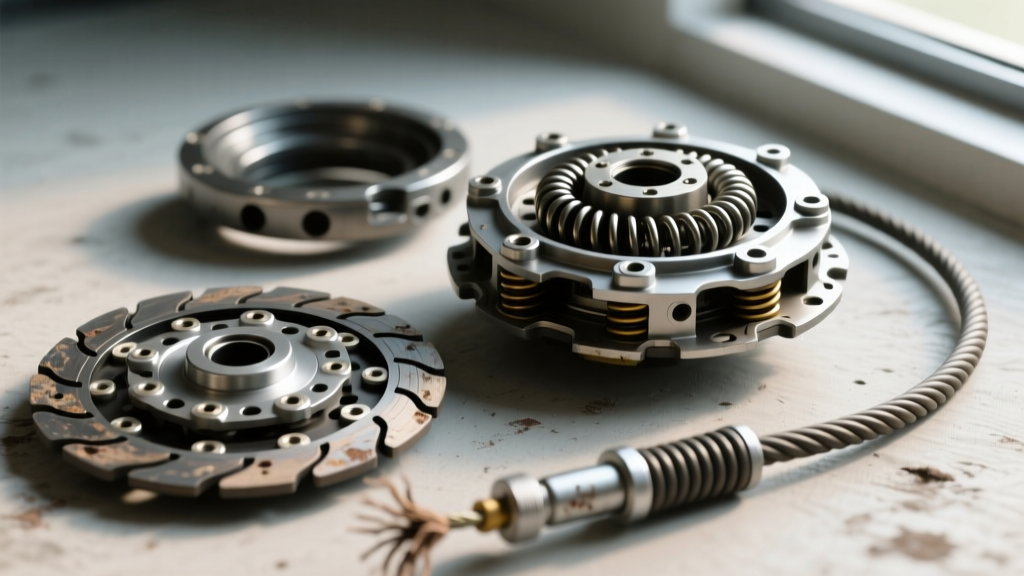
During engine braking, the clutch remains fully engaged. The friction plates and steel plates are locked together by the pressure plate springs. Because there is no slippage between the plates, engine braking alone does not cause clutch wear. However, the moment your RPMs drop near idle (usually around 1,500 to 2,000 RPM depending on the engine), the engine will no longer support the deceleration. If you continue to apply the friction brakes without pulling the clutch lever, the engine will stall.
The Danger of Drivetrain Shock
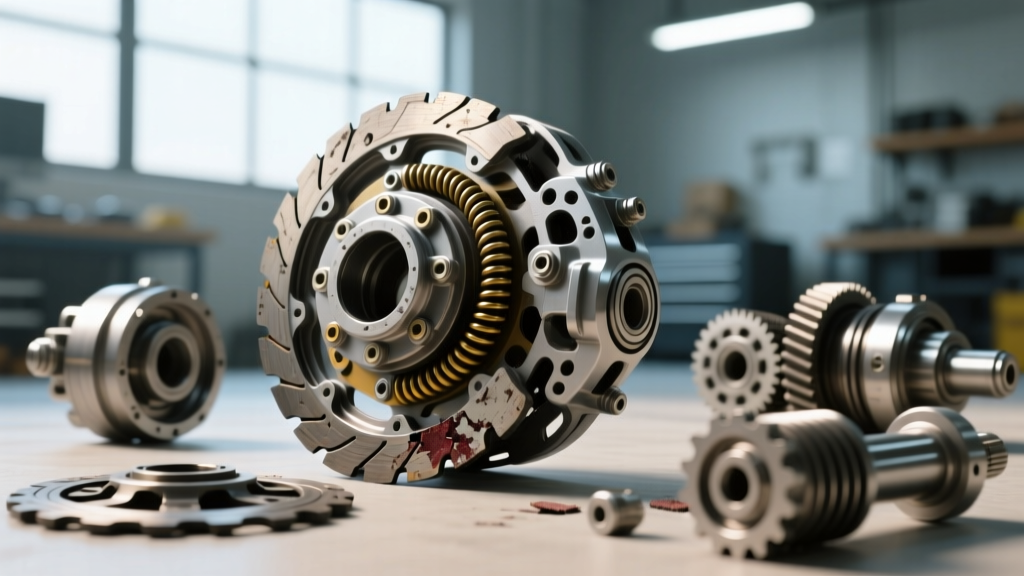
If you brake aggressively to a near-stop without pulling the clutch, the rear wheel's deceleration force violently overrides the engine's rotational inertia. This causes a phenomenon known as drivetrain shock or rear-wheel hop. The sudden reversal of torque loads the clutch basket tangs, the transmission dogs, and the chain. Over time, this specific braking error is a leading cause of notched clutch baskets and bent transmission shift forks.
Modern Defense: The Slipper Clutch Revolution
If you are riding a modern 2026 sportbike or a late-model motocrosser (such as the KTM 450 SX-F or Honda CRF450R), your machine is likely equipped with a slipper clutch (also known as an assist-and-slipper clutch).
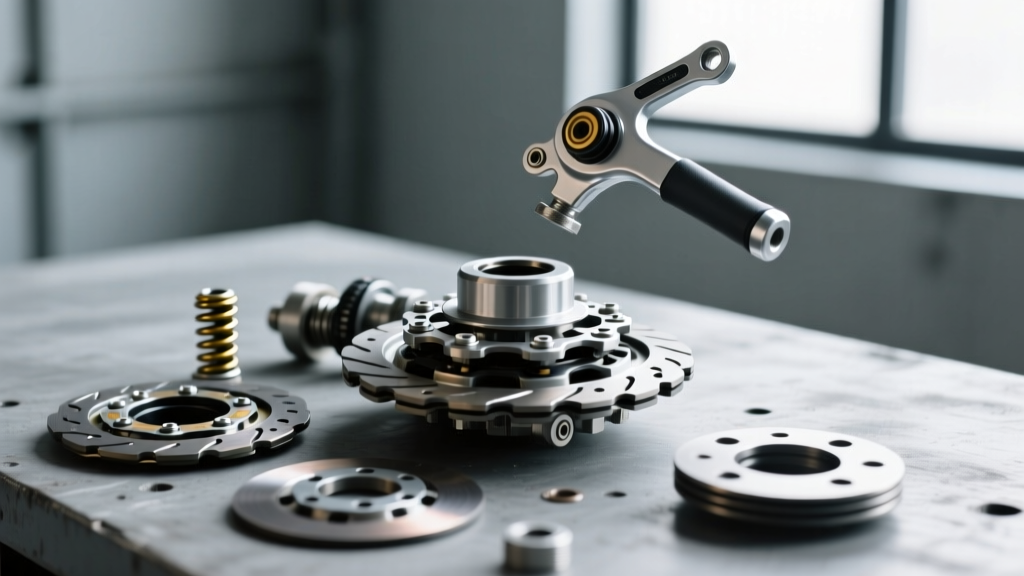
A slipper clutch features angled ramps on the inner hub and pressure plate. Under normal acceleration, the ramps pull the plates tightly together (the "assist" function, allowing for lighter clutch springs). However, during aggressive engine braking without the clutch lever pulled, the rear-wheel torque forces the ramps to slide apart, compressing the springs and allowing the clutch to intentionally slip just enough to prevent rear-wheel hop. While this saves your chassis from hopping, it does generate localized heat and accelerates friction plate wear if you rely on engine braking exclusively instead of using your friction brakes and downshifting properly.
Diagnosing Clutch Damage from Improper Braking
When beginners improperly modulate the clutch and brake simultaneously—often "riding the clutch" while trail-braking into corners—it generates immense heat. This leads to a specific set of clutch symptoms. Below is a diagnostic matrix for common motorcycle and ATV wet clutch failures related to braking habits.
| Symptom | Probable Cause (Braking Related) | Diagnostic Check | Estimated Fix Cost (OEM) |
|---|---|---|---|
| Clutch Slipping Under Load | Glazed friction plates from riding the clutch while braking | Inspect plates for shiny, burnt surfaces; measure thickness | $90 - $140 (Friction Plates) |
| Lever Pulsation / Chatter | Warped steel plates due to extreme heat cycling | Check steel plates on glass with a feeler gauge | $70 - $110 (Steel Plates) |
| Notchy Lever Feel / False Neutral | Notched clutch basket tangs from drivetrain shock (stalling) | Visual inspection of outer basket aluminum fingers | $180 - $350 (Hinson/OEM Basket) |
| Spongy Lever / No Free Play | Clutch cable stretching or hydraulic fluid boiling from heat | Measure lever free play; check brake/clutch fluid boiling point | $25 (Cable) / $15 (DOT 4 Fluid) |
Precision Measurement Guide: Honda CRF450 & Yamaha YZ450F
To properly diagnose a slipping or chattering clutch, you cannot rely on guesswork. You must use digital calipers and a feeler gauge. According to Cycle World's technical archives, wet multi-plate clutches operate on extremely tight tolerances. Here are the standard diagnostic measurements for popular 450cc dirt bikes and sport ATVs:
- Friction Plate Thickness: A brand new OEM friction plate typically measures between 3.0mm and 3.1mm. The absolute service limit is usually 2.6mm. If your plates measure 2.65mm, they are dangerously close to slipping under heavy braking and acceleration loads.
- Steel Plate Warpage: Place the steel drive plates on a perfectly flat piece of tempered glass. Slide a 0.1mm feeler gauge underneath. If the gauge passes under the plate at any point, the plate is warped from heat (often caused by dragging the clutch during braking) and must be replaced.
- Clutch Spring Free Length: Coil springs sag over time due to heat and compression. A standard spring might have a free length of 45.5mm when new. The service limit is typically 42.5mm. If they are shorter, they cannot apply enough clamping force, resulting in slip.
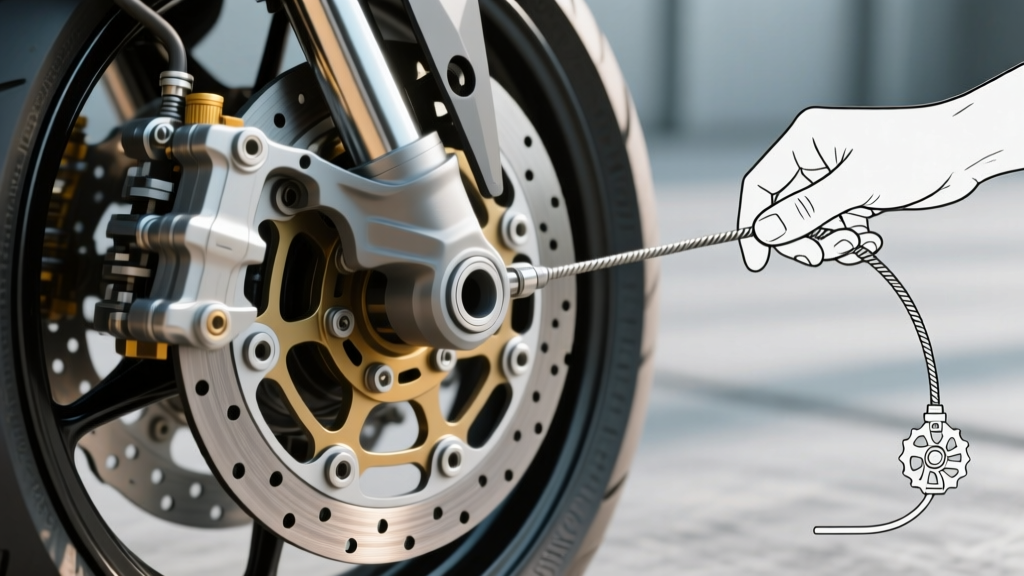
- Clutch Cable Free Play: As noted by RevZilla's Common Tread maintenance guides, you must maintain 10mm to 15mm of free play at the lever. Zero free play means the clutch is perpetually slightly disengaged, causing continuous slipping and glazing every time you touch the brakes and downshift.
The Hidden Culprit: JASO MA2 Oil and Friction Modifiers
Many beginners experience clutch slipping after a long day of riding and incorrectly assume their braking technique destroyed the clutch. In reality, the issue is often the engine oil. Motorcycles and manual sport ATVs use a shared sump system, meaning the engine, transmission, and wet clutch all bathe in the same oil.
Standard automotive oils contain "friction modifiers" designed to improve fuel economy in cars. If you put standard 10W-40 car oil in a motorcycle, those friction modifiers coat the clutch plates, causing immediate and severe slipping, especially when the clutch is hot from engine braking and downshifting. You must only use oils certified with the JASO MA or JASO MA2 standard. JASO MA2 oils are specifically formulated without friction modifiers, ensuring the wet clutch can grip securely even under the high-heat conditions of aggressive trail braking and downshifting.
Reassembly and Torque Specifications
If your diagnostic checks reveal that your braking habits have indeed worn out the clutch pack, replacement requires strict adherence to torque specifications. The inner clutch hub is secured to the transmission main shaft by a center locknut. This nut must be torqued to exact specifications (typically 59 Nm / 43 lb-ft for 450cc class bikes) using a dedicated clutch holding tool to prevent the basket from spinning.
Furthermore, the clutch spring bolts (usually M6 threads) are subjected to intense vibration. They must be torqued to 10 Nm (7.4 lb-ft) and secured with a medium-strength threadlocker like Loctite 243. Failing to use threadlocker on these specific bolts often results in them backing out, dropping into the engine cases, and causing catastrophic engine failure.
Summary: The Proper Braking Technique
So, can you brake without the clutch on a motorcycle? Yes, by utilizing engine braking to shed speed while keeping the clutch fully engaged. However, you must pull the clutch lever smoothly as the RPMs approach idle to disengage the drivetrain, preventing stall-induced shock and preserving your clutch basket. Combine this proper technique with JASO MA2 oil and regular free-play adjustments, and your motorcycle or ATV clutch will easily survive hundreds of hours of aggressive riding.