The 'Bradycardia Differential' Phenomenon Explained
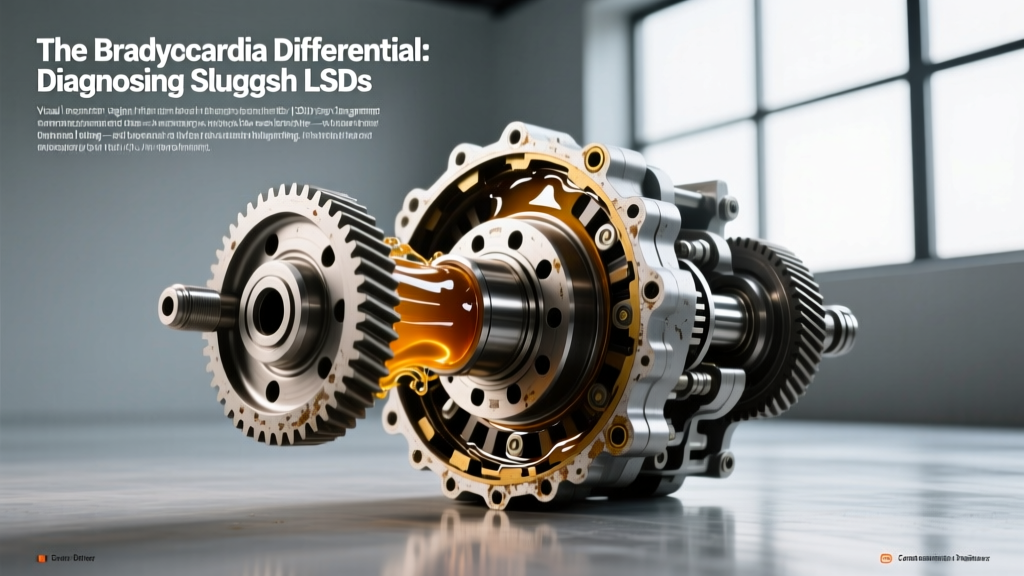
In advanced drivetrain diagnostics, senior transmission and axle technicians occasionally borrow medical terminology to describe anomalous mechanical behaviors. The 'bradycardia differential' effect is a colloquial shop term used to describe a limited-slip differential (LSD) that exhibits sluggish, delayed engagement, low-speed binding, or severe chatter during tight turns. Much like the medical condition of bradycardia—where the heart rate is abnormally slow and fails to respond to immediate physical demands—a 'bradycardia' LSD fails to seamlessly bias torque across the axle shafts when slip is detected. Instead of a smooth, progressive lockup, the clutch packs suffer from stiction, resulting in a delayed, violent release of stored torsional energy that manifests as axle hop, tire chirp, and driveline shudder.
As we move through 2026, modern synthetic gear oils and advanced friction modifiers have drastically reduced the prevalence of this issue in new vehicles. However, in legacy platforms, off-road rigs, and performance builds utilizing clutch-type LSDs (such as the GM Eaton Positraction, Ford Traction-Lok, and Dana Spicer Trac-Lok), the bradycardia effect remains a primary diagnostic hurdle. Curing it requires a deep understanding of wet-clutch tribology, hypoid gear shear loads, and precise maintenance protocols.
Clutch-Pack Mechanics and the Stick-Slip Anomaly
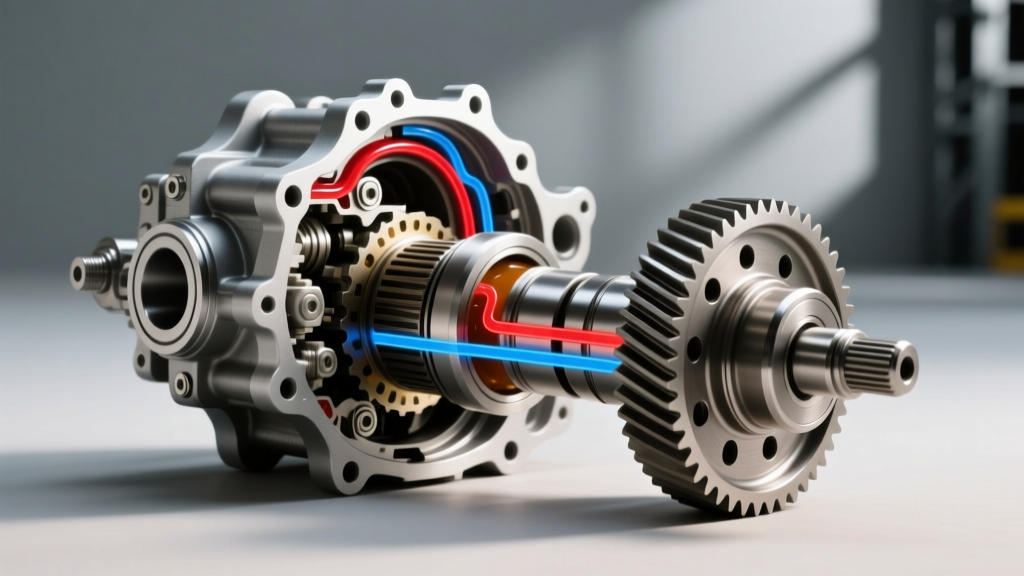
To understand why an LSD becomes sluggish, we must examine the internal architecture of a clutch-type limited-slip differential. Unlike helical gear-biasing differentials (such as the Eaton Truetrac or Torsen) which operate purely on gear geometry and are entirely maintenance-free regarding friction modifiers, clutch-type LSDs rely on alternating packs of friction discs and steel separator plates clamped together by heavy preload springs (often S-springs or coil springs).
When a vehicle corners, the outer wheel must rotate faster than the inner wheel. In an open differential, this happens freely. In an LSD, the clutch packs must allow a controlled amount of slip while maintaining enough clamping force to prevent one wheel from spinning uselessly on ice or mud. The bradycardia effect occurs when the static friction coefficient of the clutch pack exceeds the kinetic friction coefficient by too wide a margin. This is known in tribology as the stick-slip phenomenon. The clutch discs 'stick' during the initial phase of the turn, forcing the tires to scrub and the axle shafts to wind up. Once the torsional stress overcomes the static friction, the clutch pack violently 'slips', causing the chassis to shudder.
Common Mechanical Culprits for Delayed Lockup
- Depleted Friction Modifiers: The additive package has sheared or oxidized, stripping the polar boundary layer from the clutch discs.
- Glazed Friction Discs: Extreme heat from heavy towing or track use has baked the friction material, creating a glassy surface that resists smooth kinetic slip.
- S-Spring Fatigue: In GM 10-bolt and Ford 8.8-inch differentials, the central S-spring can lose its temper over time, reducing the baseline clamping force and causing erratic, delayed engagement.
- Contaminated Gear Oil: Moisture ingress through degraded axle seals or submerged breather tubes leads to emulsified oil, destroying the fluid's load-bearing film.
Fluid Dynamics: Viscosity and Friction Modifiers
The lifeblood of any clutch-type LSD is its gear oil, specifically the friction modifier (FM) additive package. Standard 75W-90 or 80W-90 GL-5 hypoid gear oils contain high levels of sulfur-phosphorus extreme pressure (EP) additives designed to protect the ring and pinion gears under immense sliding loads. However, these EP additives are not optimized for the wet-brake environment of an LSD clutch pack.
Friction modifiers are typically long-chain organic molecules (such as fatty acids or esters) that possess a polar 'head' and a non-polar 'tail'. The polar head bonds to the microscopic asperities on the steel and friction surfaces, while the non-polar tail extends outward, creating a molecular 'carpet' that allows the plates to slide smoothly past one another under kinetic load, while still allowing the clamping force of the preload springs to lock them together under high torque.
| Differential Type | Base Fluid Recommendation | Friction Modifier Requirement | Capacity (Approx.) |
|---|---|---|---|
| GM 8.5" 10-Bolt (Eaton Posi) | AMSOIL Severe Gear 75W-90 | GM EOS (Part #1052358) - 2 oz | 2.1 Quarts |
| Ford 8.8" (Traction-Lok) | Motul Gear 300 75W-90 | Ford XL-3 (Part #C8AZ-19B546-A) - 4 oz | 2.5 Quarts |
| Dana 44 (Trac-Lok) | Red Line 75W90 NS | Requires No Additive (NS Formulation) | 2.0 Quarts |
| Chrysler 8.75" (Sure-Grip) | Valvoline High Performance 80W-90 | Mopar Limited Slip Additive - 4 oz | 2.3 Quarts |
According to drivetrain specialists at Ring & Pinion, using a fluid that already contains a balanced friction modifier package (like Red Line 75W90 NS) is often the most reliable way to cure a bradycardia differential, as it eliminates the guesswork of manually measuring and adding aftermarket FM bottles, which can easily lead to over-treatment and excessive clutch slip.
Step-by-Step Maintenance: Curing Low-Speed Binding
If a customer complains of low-speed chatter, figure-eight binding, or delayed torque transfer, the first diagnostic step is always a complete fluid exchange with a localized friction modifier tune. Here is the exact protocol for servicing a clutch-type LSD to restore instantaneous, smooth biasing.
1. Drain, Flush, and Inspection
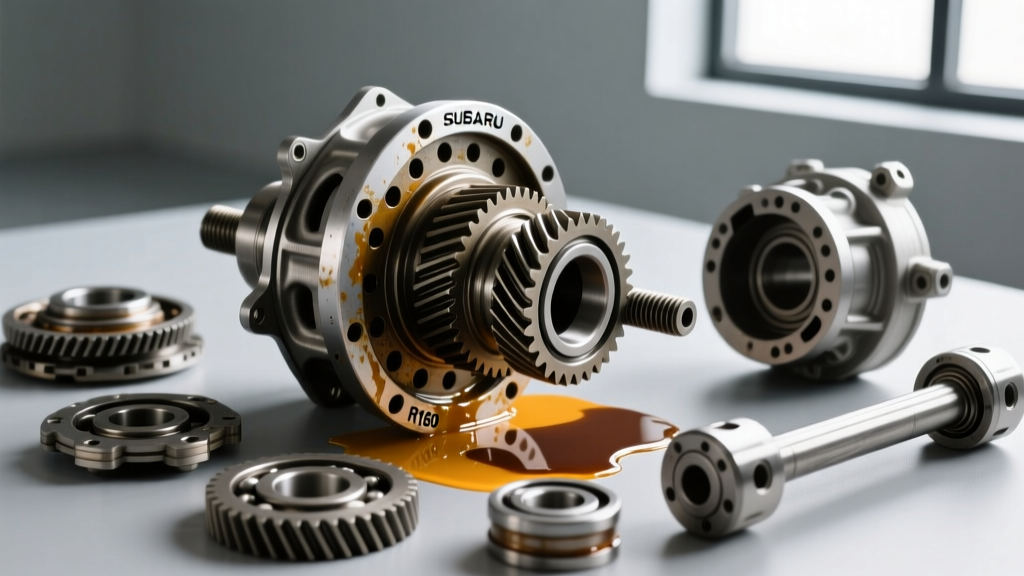
Unlike engine oil, gear oil does not have a filtration system. Over 30,000 miles, the shear forces of the hypoid ring and pinion gears generate microscopic metallic particulate that embeds itself into the porous friction material of the LSD clutch discs.
- Preparation: Remove the differential cover (or drain plug). For a Ford 8.8-inch, the cover bolts require a 10mm socket and are torqued to 28-38 lb-ft. For a GM 10-bolt, use a 10mm socket with a final torque of 25 lb-ft.
- Inspection: Examine the drained fluid. A metallic paste on the magnets is normal. However, if you find chunks of friction material (which looks like dark, fibrous cork) or pieces of the cast-iron S-spring, a fluid change will not fix the bradycardia effect; a complete differential rebuild is required.
- Flushing: Spray the interior of the housing with a dedicated brake parts cleaner or aerosol gear-flush to dislodge suspended particulates from the clutch pack crevices. Allow it to evaporate completely.
2. The Refill and Modifier Protocol
The most common mistake junior technicians make is dumping the entire bottle of friction modifier into the housing before the gear oil. This can cause the modifier to pool and fail to distribute evenly into the tight tolerances of the clutch pack.
- Install a new gasket (RTV silicone is acceptable, but high-quality rubber or cork gaskets from manufacturers like Dana Spicer are preferred for serviceability).
- Torque the cover bolts in a star pattern to the manufacturer's specification.
- Inject half of the required friction modifier dose into the fill hole.
- Pump the base 75W-90 GL-5 gear oil until it reaches the bottom of the fill hole.
- Add the remaining half of the friction modifier, then top off with gear oil until it weeps out of the fill hole.
- Install the fill plug and torque to 25-30 lb-ft (typically a 3/8-inch square drive or 15mm hex).
3. The Figure-Eight Bed-In Procedure
The differential is not fixed until the fluid is mechanically worked into the clutch discs. Drive the vehicle to an empty, paved lot. Perform 10 to 15 tight, continuous figure-eight turns at idle speed (3-5 mph). This forces the clutch packs to slip and engage repeatedly under load, distributing the polar friction modifier molecules evenly across the friction surfaces. If the chatter persists after this procedure, add friction modifier in strict 0.5 oz increments, repeating the figure-eight test after each addition. Warning: Over-adding modifier will cure the chatter but will effectively turn the LSD into an open differential, causing one-wheel spin under hard acceleration.
Advanced Diagnostics: When Fluid Isn't the Cure
If the fluid exchange and bed-in procedure fail to resolve the bradycardia differential effect, the issue has crossed from a chemical deficiency to a mechanical failure. At this stage, the differential cover must be removed, and the carrier must be extracted from the housing for bench inspection.
Clutch Pack Wear Limits
Using a micrometer, measure the thickness of the friction discs and steel separator plates. For a standard Eaton Positraction unit, the factory friction disc thickness is typically around 0.075 inches. If the discs have worn down to 0.060 inches or less, the total pack clearance has exceeded the travel limit of the side-gear thrust washers. The preload springs can no longer exert sufficient clamping force, resulting in delayed, erratic lockup. A complete clutch pack replacement kit (such as Eaton Service Part #19589-01 or equivalent, costing between $150 and $220 in 2026) is mandatory.
S-Spring and Side Gear Thrust Washer Fatigue
In C-clip style axles (common in GM and Ford light trucks), the central S-spring pushes against the side gears to maintain preload on the clutch packs. If the S-spring has taken a 'set' (lost its tension) or if the cast-iron side-gear thrust washers have shattered, the clutch pack will physically collapse inward during cornering. This creates a massive clearance gap, meaning the axle shaft must rotate several degrees before the clutch pack suddenly slams together—perfectly mimicking the delayed, violent response of a bradycardia event. Replacing the S-spring and thrust washers (a $30-$50 parts investment) restores the baseline mechanical preload and instantaneous torque biasing.
Conclusion
The 'bradycardia differential' effect is a highly specific, deeply frustrating drivetrain anomaly that bridges the gap between mechanical engineering and fluid chemistry. By understanding the stick-slip tribology of wet clutches, adhering to strict torque specifications, and utilizing the correct ratio of synthetic hypoid oils to polar friction modifiers, technicians can restore the instantaneous, life-saving traction that limited-slip differentials were designed to provide. For further reading on differential setups and gear ratios, consult the engineering resources provided by Eaton Performance.