The Front Door to Your Drivetrain
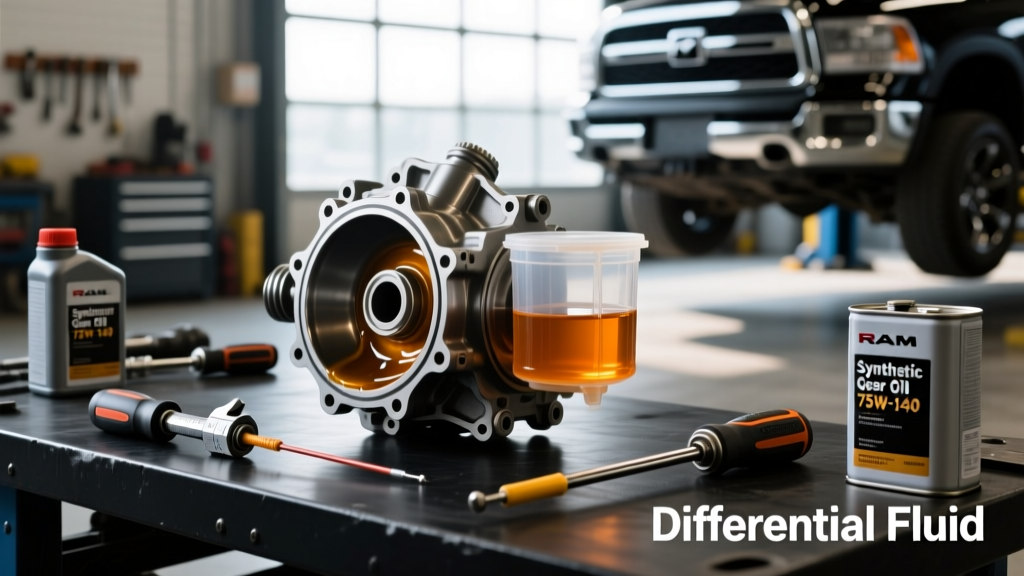
For most automotive enthusiasts and DIY mechanics, the relationship with the rear axle begins and ends with basic maintenance. You slide under the truck, place a drain pan, and carefully remove the differential cover bolts to drain the old, burnt gear oil. You scrape away the crusty RTV sealant, apply a fresh bead, and torque those differential cover bolts back to factory specifications. It is a simple, rewarding task that keeps your axle lubricated and quiet.
But what happens when your differential starts howling on the highway? What if you decide to install 35-inch tires and need to re-gear your rig to restore your highway RPMs? To answer these questions, you must venture past the cover and tackle the most精密 (precision-critical) aspect of axle building: the ring and pinion gear setup. As we navigate the automotive landscape in 2026, understanding the core mechanics of your drivetrain is more empowering than ever. This beginner-friendly explainer will peel back the layers of the axle housing and demystify the dark art of gear setup.
Understanding the Hypoid Gear Design
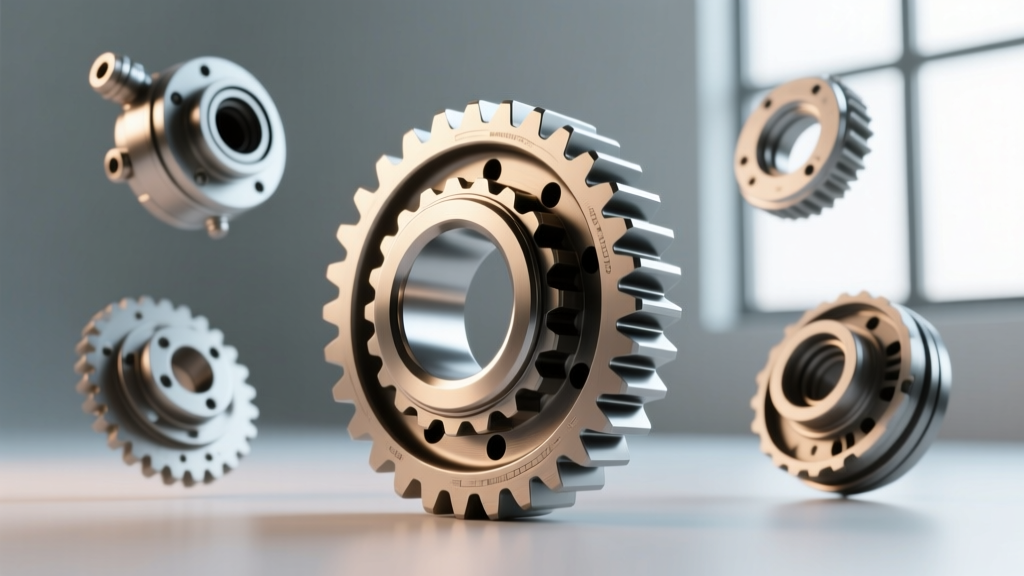
Before turning a single wrench, you must understand what you are looking at when you peer inside the axle housing. Modern cars, trucks, and SUVs utilize a hypoid gear design. Unlike standard spur gears that intersect at their centerlines, a hypoid pinion gear sits significantly below the centerline of the ring gear.
This offset design serves two critical purposes:
- Ground Clearance & Driveshaft Height: By dropping the pinion, the driveshaft sits lower, reducing the transmission tunnel hump in the cabin and increasing ground clearance on off-road vehicles.
- Smooth Engagement: The offset creates a sliding friction motion alongside the rolling friction. This results in a larger contact area between the teeth, allowing the gears to handle immense torque while operating quietly.
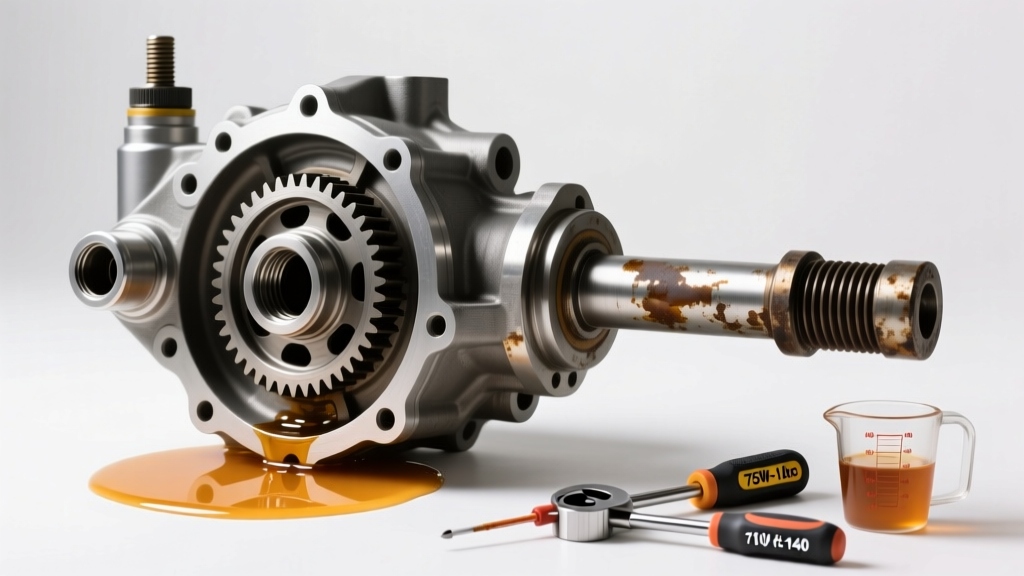
However, this sliding friction is exactly why your differential requires specialized GL-5 gear oil packed with Extreme Pressure (EP) additives. Standard motor oil would instantly fail under the shearing forces of a hypoid gear set.
The Holy Trinity of Gear Setup
Setting up a ring and pinion is not about guessing; it is about measuring. A successful setup relies on balancing three interdependent variables. If you adjust one, you often affect the others.
1. Pinion Depth
Pinion depth dictates how far the pinion gear protrudes into the carrier bore, meshing with the ring gear. Because manufacturing tolerances vary, every quality pinion gear (from brands like Dana Spicer or Yukon Gear) features a laser-etched stamp on the pinion head. This stamp (e.g., +0.002 or -0.001) tells you exactly how many thousandths of an inch to add or subtract from the factory 'nominal' depth setting.
Adjusting depth requires adding or removing hardened steel shims. On a Ford 8.8, these shims sit beneath the inner pinion bearing. On a Dana 44, they often sit in a pack beneath the pinion head. If the pinion is too deep, the gear pattern will push to the heel and root of the ring gear tooth, leading to catastrophic failure under load. If it is too shallow, it rides on the toe and face, causing rapid wear and whining.
2. Backlash
Backlash is the amount of rotational 'slop' or free play between the ring gear and the pinion gear before the teeth make contact. It is measured in thousandths of an inch using a magnetic-base dial indicator mounted to the axle housing.
Why do we need backlash? As gears operate, they generate immense heat and expand. If the gears are set with zero backlash, thermal expansion will cause them to bind, generating even more heat until the gear oil breaks down and the gears weld themselves together. Conversely, too much backlash results in a harsh 'clunk' when shifting from drive to reverse and accelerates wear on the tooth flanks. For most street-driven vehicles, a target backlash between 0.006" and 0.010" is ideal.
3. Bearing Preload
Bearing preload is the rotational resistance applied to the pinion bearings to keep them seated and prevent deflection under heavy torque. Factory setups typically use a 'crush sleeve'—a hollow aluminum spacer that collapses as you torque the pinion nut. Achieving the correct preload (usually 15 to 25 inch-pounds of rotational drag for new bearings) requires applying upwards of 200 ft-lbs of force to crush the sleeve.
Pro-Tip for 2026: Over-crushing a sleeve means you must press the pinion bearing back off and install a new sleeve. Modern builders heavily favor CNC-machined solid pinion spacers with selective shimming. They eliminate the guesswork of the crush sleeve and provide vastly superior pinion stability under high-horsepower loads.
Reference Chart: Common Axle Specifications
When you finally button up your axle and torque the differential cover bolts, you need to ensure everything inside was assembled to spec. Below is a quick-reference table for the most common light-truck and SUV axles.
| Axle Model | Differential Cover Bolt Torque | Ring Gear Bolt Torque | Target Backlash |
|---|---|---|---|
| Ford 8.8 (10-Bolt) | 28 lb-ft | 70 - 85 lb-ft (w/ Loctite 272) | 0.006" - 0.010" |
| Dana 44 (Standard) | 30 - 35 lb-ft | 70 - 85 lb-ft (w/ Loctite 272) | 0.006" - 0.008" |
| GM 8.5 / 8.6 (10-Bolt) | 22 - 25 lb-ft | 70 - 80 lb-ft (w/ Loctite 272) | 0.006" - 0.009" |
| Toyota 8.0" (V6/Tacoma) | N/A (Drop-out 3rd Member) | 75 - 90 lb-ft (w/ Loctite 272) | 0.005" - 0.007" |
Note: Always replace or thoroughly clean ring gear bolts with brake cleaner before applying Red Loctite. Never reuse stretched torque-to-yield fasteners.
Essential Tools and Real-World Costs
You cannot set up a ring and pinion with standard hand tools. The tolerances are simply too tight. If you are planning a driveway build, here is the realistic tooling investment required, based on current 2026 pricing from retailers like Summit Racing and Randy's Ring & Pinion:
- Dial Indicator with Magnetic Base ($35 - $60): A Mitutoyo 2046S or equivalent 0.001" resolution indicator is non-negotiable for measuring backlash and ring gear runout.
- Inch-Pound Torque Wrench ($120 - $180): A 1/4-inch drive beam-style or click-type torque wrench specifically calibrated for inch-pounds. You need this to measure pinion bearing preload accurately.
- Bearing Puller and Press ($200+): You will need a 20-ton hydraulic press and a bearing separator to safely remove and install the inner pinion bearing without damaging the cage. Alternatively, a high-quality clamshell bearing puller (like the OTC 4530) works for removal.
- Gear Marking Compound ($15): Yellow ochre paste is essential for painting the ring gear teeth and verifying the physical contact pattern against the pinion.
- Case Spreaders (For some axles): Dana axles require a case spreader to safely open the housing by a few thousandths of an inch, allowing the carrier to drop in without damaging the bearing bores.
The Crucial Link: Gear Break-In and Fluid Chemistry
Once the ring and pinion are set, the carrier is assembled, and the differential cover bolts are torqued to spec, the job is not entirely finished. The first 500 miles of a new gear set's life are critical. The lapping process generates microscopic metallic particles and intense localized heat.
You must fill the axle with a high-quality, name-brand GL-5 75W-90 or 75W-140 synthetic gear oil. Do not add limited-slip friction modifiers during the initial break-in phase unless explicitly instructed by the differential manufacturer, as modifiers can reduce the friction necessary for the gears to properly mate and lap together. After 500 miles, you must drain this break-in fluid, remove the cover, clean out the metallic sludge from the magnet, and refill with fresh gear oil (and your friction modifier, if running a clutch-type LSD).
Final Thoughts
Transitioning from simply maintaining your axle to rebuilding it is a major milestone for any gearhead. While removing the differential cover bolts to change your fluid is a chore that takes an hour, setting up a ring and pinion is an afternoon-long exercise in patience, measurement, and mechanical sympathy. By respecting the holy trinity of pinion depth, backlash, and bearing preload, you can build an axle that will quietly and reliably transmit power to the pavement for hundreds of thousands of miles.