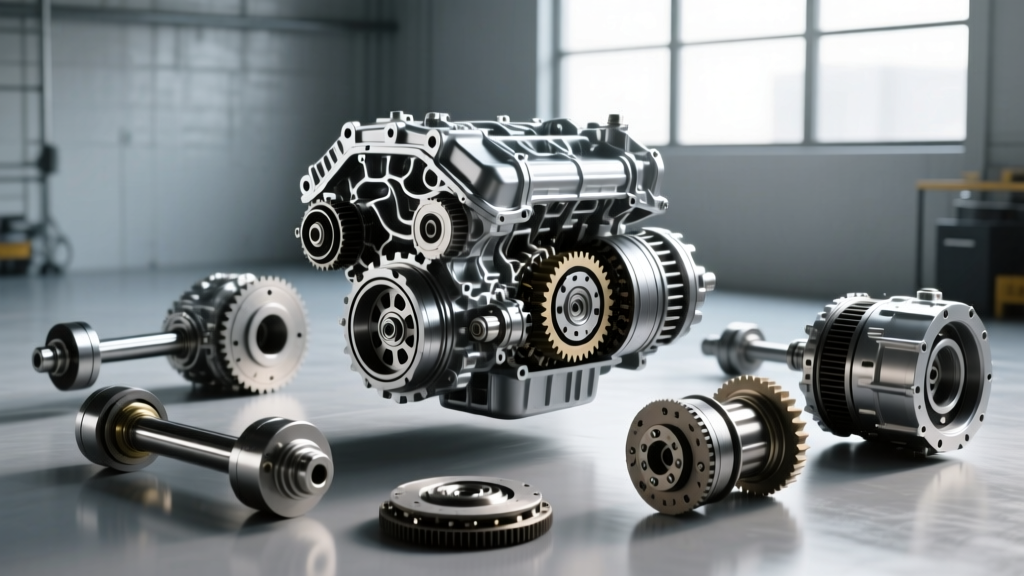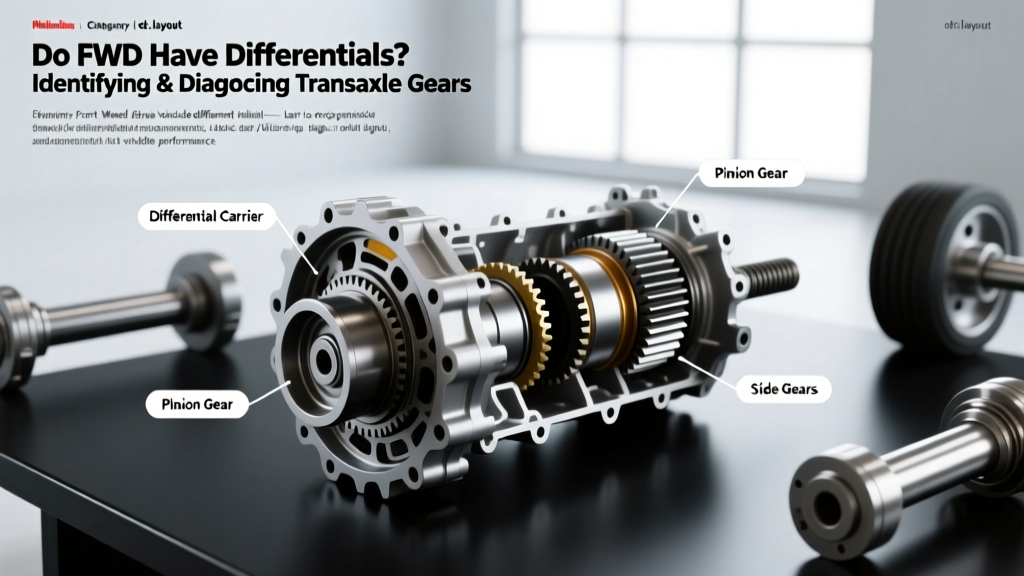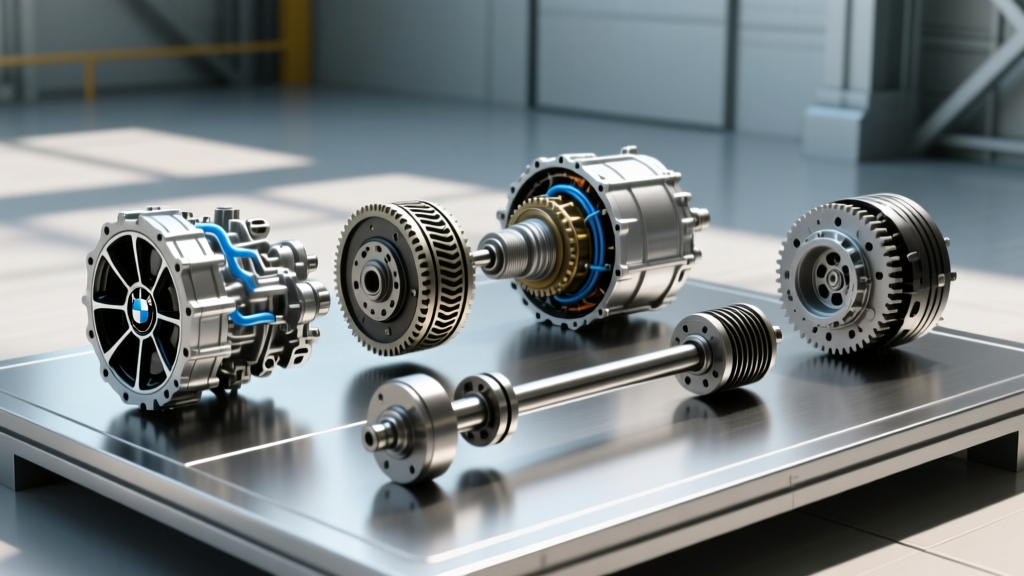
As we navigate the automotive landscape in 2026, the BMW X3 remains one of the most popular luxury compact SUVs globally. However, ownership of the F25 and G01 generations is frequently accompanied by a dreaded iDrive notification: the drivetrain malfunction BMW X3 warning. Unlike a simple check engine light, this alert triggers a protective limp mode, severely limiting throttle response and torque delivery. To properly diagnose and repair this issue, technicians and advanced DIYers must understand not only the specific BMW xDrive architecture but also how it fundamentally differs from other drivetrain types found in competing vehicles.
The Architecture of the xDrive System
BMW's xDrive is an intelligent, clutch-based all-wheel-drive (AWD) system. In the X3, power from the ZF 8HP automatic transmission is routed into a Magna Steyr transfer case (typically the ATC35L for the F25 and ATC45L for the G01). Under normal cruising conditions, xDrive defaults to a 40:60 front-to-rear torque split to preserve BMW's signature rear-biased driving dynamics. When slip is detected, an electric servo motor actuates a ball-and-ramp mechanism, squeezing a wet multi-plate clutch pack to redirect up to 100% of the torque to either axle in milliseconds.
Comparative Analysis: xDrive vs. Global Drivetrain Types
Understanding why the X3 throws electronic 'malfunction' faults requires comparing its drivetrain type to other common configurations. While mechanical systems simply slip or bind when worn, clutch-based AWD systems rely heavily on sensor feedback loops, making them prone to electronic limp modes when physical tolerances degrade.
| Drivetrain Type | Center Coupling / Differential | Default Torque Split | Primary Failure Mode & Symptoms |
|---|---|---|---|
| BMW xDrive (AWD) | Wet Multi-Plate Clutch (Magna Steyr) | 40:60 (F:R) | Servo actuator gear stripping; VTG module faults; 'Drivetrain Malfunction' limp mode. |
| Audi Quattro (Torsen/Crown) | Helical Gear / Crown Gear Mechanical | 40:60 or 50:50 | Center diff fluid starvation; mechanical binding; no electronic limp mode unless ABS/sensor fails. |
| Subaru Symmetrical | Viscous / Multi-Plate (DCCD) | 50:50 or 60:40 | Duty C solenoid failure; viscous coupling hump; AWD warning light flash. |
| Traditional 4WD (Trucks) | Dog-tooth Engagement (No Diff) | 0:100 (RWD in 2Hi) | Shift motor failure; chain stretch; grinding during engagement. |
Anatomy of the Drivetrain Malfunction Warning (F25 & G01)
When the iDrive system displays the drivetrain malfunction BMW X3 warning, the Vehicle Transfer Gear (VTG) control module has detected an anomaly in the torque distribution curve. Below are the three most common mechanical culprits specific to the X3's drivetrain layout.
Failure Mode 1: ATC Servo Motor Gear Stripping
The most frequent cause of the drivetrain malfunction warning is the failure of the transfer case actuator motor (BMW Part #27107597605). Inside the motor housing, a small plastic gear engages with the transfer case's internal ball-and-ramp mechanism. Because xDrive constantly micro-adjusts clutch pressure to maintain stability, this plastic gear is under perpetual load. Over 80,000 to 100,000 miles, the teeth strip. The VTG module commands a clutch engagement, the motor spins freely without moving the ramp, and the module instantly triggers the drivetrain malfunction code (typically 4A82 or 4A87) and initiates limp mode.
Failure Mode 2: Wet Clutch Pack Degradation
Unlike part-time 4WD systems that remain disengaged on dry pavement, the xDrive wet clutch pack is always partially engaged. Over time, the friction material degrades, and the TF 0870 fluid becomes contaminated with metallic and friction particulates. The VTG module adapts to the slipping clutches by increasing servo motor travel. Eventually, the adaptation limits are exceeded, resulting in a 'Clutch Slip' fault and the ensuing dashboard warning.
Failure Mode 3: Guibo Flex Disc & Driveshaft Harmonics
The X3 utilizes a rubber flex disc (Guibo) between the transmission output shaft and the front/rear driveshafts. As the rubber deteriorates and cracks, it introduces severe rotational harmonics into the driveline. The wheel speed sensors and VTG module interpret these vibrations as catastrophic traction loss or internal gear damage, preemptively triggering the drivetrain malfunction warning to protect the transfer case chain and clutch packs.
Workshop Protocol: ATC Actuator Replacement & Calibration
If diagnostic scans via ISTA (Integrated Service Technical Application) point to an internal actuator fault, replacing the servo motor is a highly effective repair that avoids a full transfer case replacement. According to Bimmerfest technical threads and OEM service documentation, follow these exact specifications:
- Vehicle Preparation: Raise the X3 on a two-post lift. Remove the underbody aerodynamic shielding and the rear driveshaft heat shield.
- Driveshaft Removal: Mark the orientation of the rear driveshaft to the transfer case output flange. Unbolt the flex disc (M10 bolts). Torque Spec for reassembly: 56 Nm + 90 degrees of rotation.
- Actuator Extraction: Disconnect the electrical harness from the VTG servo motor. Remove the three M6 mounting bolts securing the actuator to the Magna Steyr housing. Torque Spec for reassembly: 10 Nm.
- Internal Alignment: Before installing the new actuator, manually rotate the transfer case input shaft to ensure the internal ball-and-ramp mechanism is in the neutral (disengaged) position. Align the new actuator gear carefully to prevent immediate binding.
- Transfer Case Mounting: If dropping the entire transfer case is required for access, note that the M10 bolts securing the Magna Steyr unit to the ZF 8HP transmission require 38 Nm of torque.
- Software Calibration: This step is mandatory. The new actuator must be calibrated using BMW ISTA or a capable bi-directional scanner to perform the 'VTG Clutch Adaptation' routine. This teaches the module the exact mechanical stop points of the new gear.
2026 Preventative Maintenance Matrix
Because clutch-based AWD systems are highly sensitive to fluid viscosity and friction coefficients, adhering to a strict maintenance schedule is vital. BMW originally labeled the TF 0870 transfer case fluid as a 'lifetime' fill. However, drivetrain experts and Magna Powertrain engineering guidelines strongly recommend interval servicing to prevent clutch pack glazing and actuator overwork.
| Component | Fluid / Part Specification | Capacity | Recommended Service Interval |
|---|---|---|---|
| Transfer Case (ATC35L/45L) | Shell TF 0870 (BMW P/N 83222446673) | 0.6 Liters | Every 40,000 - 50,000 Miles |
| Front Differential | Hypoid Gear Oil G3 (75W-85) | 0.5 Liters | Every 60,000 Miles |
| Rear Differential | Hypoid Gear Oil G3 (75W-85) | 0.8 Liters | Every 60,000 Miles |
By understanding the mechanical realities of clutch-pack AWD systems versus traditional mechanical differentials, technicians can accurately diagnose the drivetrain malfunction BMW X3 warning. Replacing the stripped servo gear, performing the mandatory ISTA calibration, and adhering to aggressive fluid intervals will restore the X3's dynamic torque vectoring capabilities and ensure the longevity of the Magna Steyr transfer case well past the 150,000-mile mark.