The Anatomy of the BMW Rear-Wheel-Drive Layout
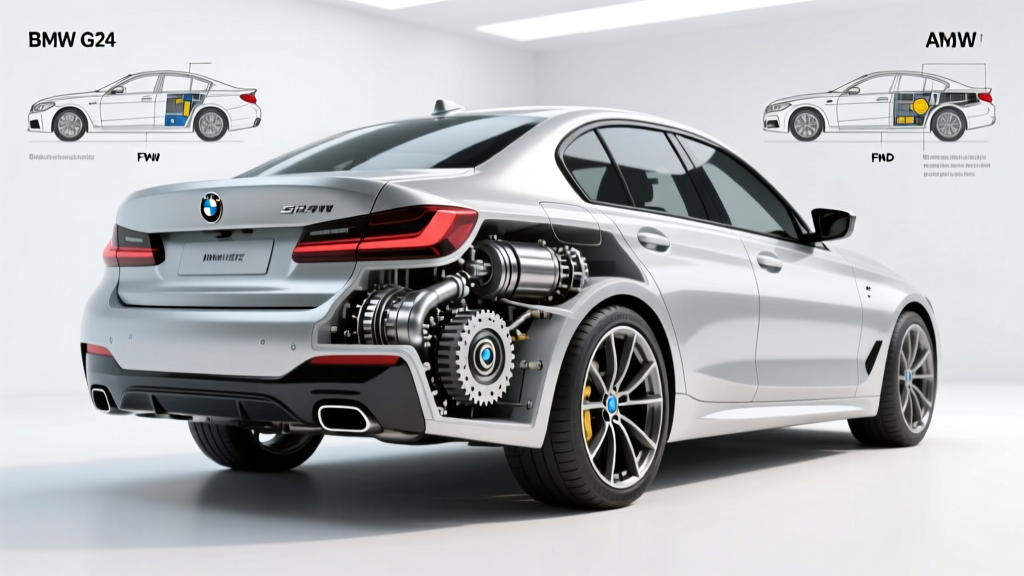
BMW’s legacy is built on the longitudinal front-engine, rear-wheel-drive (RWD) architecture. In modern chassis like the G20 3-Series or G30 5-Series, this layout dictates a straight-line power flow from the engine’s crankshaft, through the bellhousing, into the transmission, down the driveshaft, and finally into the rear differential and half-shafts. While this configuration delivers optimal weight distribution and handling dynamics, it also introduces a complex network of rotating mass and high-torque friction points. When one of these components fails, the vehicle’s Digital Motor Electronics (DME) or Digital Diesel Electronics (DDE) intervenes, often triggering the notorious drivetrain fault bmw warning on the iDrive display.
As we navigate the 2026 automotive repair landscape, labor rates have climbed, and the cost of OEM driveline components has fluctuated due to global supply chain shifts. Understanding exactly where your money goes when a BMW RWD system requires intervention is critical for avoiding unnecessary dealership markups and misdiagnosed catastrophic failures.
Decoding the "Drivetrain Fault" Warning in RWD Models
Before opening your wallet, it is vital to understand what the iDrive warning actually means. In pure RWD BMWs (non-xDrive models), the DME/DDE uses the phrase "Drivetrain Malfunction: Drive Moderately" as a blanket safeguard. It does not exclusively mean your transmission is destroyed.
Mechanical vs. Electronic Triggers
- True Mechanical Driveline Faults: These include slipping clutch packs inside the ZF 8HP transmission, a shattered flex disc (guibo) causing severe harmonic vibration that the DME interprets as misfires, or a failing rear differential that creates rotational drag.
- Electronic & Engine-Related Triggers: Confusingly, BMW maps boost leaks, failing ignition coils, clogged fuel injectors, and even faulty Valvetronic sensors to the "drivetrain fault" message. The ECU detects a discrepancy between requested torque and actual wheel torque, defaulting to the drivetrain warning rather than a standard Check Engine Light.
According to extensive community diagnostics documented on BimmerPost, nearly 40% of "drivetrain fault" warnings in RWD models like the F30 335i are actually caused by cracked plastic charge pipes or failing diverter valves, not internal transmission or driveline damage. A proper ISTA+ (Integrated Service Technical Application) scan is mandatory before authorizing any driveline teardown.
2026 Cost Breakdown: BMW RWD Drivetrain Repairs
When the fault is genuinely rooted in the RWD mechanical layout, the costs vary wildly depending on the failure point. Below is a comprehensive cost matrix based on 2026 average independent European specialist labor rates ($160–$220/hour) and OEM/OEM-equivalent parts pricing.
| Component / Repair | Part Cost (OEM/OEM-Eq) | Labor Hours | Total Est. Cost (2026) |
|---|---|---|---|
| Flex Disc (Guibo) Replacement | $85 - $140 (Lemförder/OEM) | 2.0 - 3.0 | $400 - $800 |
| Driveshaft Center Support Bearing | $60 - $110 | 3.5 - 4.5 | $620 - $1,100 |
| ZF 8HP Mechatronic Adapter Seal | $35 - $60 | 5.0 - 6.0 (Pan Drop) | $835 - $1,380 |
| ZF 8HP Clutch Pack Rebuild (Mech) | $900 - $1,400 | 12.0 - 16.0 | $2,800 - $4,900 |
| Rear Differential (Used/Rebuilt) | $1,200 - $2,500 | 3.0 - 4.5 | $1,680 - $3,490 |
| Rear CV Axle / Half-Shaft (Per Side) | $350 - $600 (GKN) | 1.5 - 2.0 | $590 - $1,000 |
Deep Dive: ZF 8HP Transmission & Driveshaft Maintenance
The heart of the modern BMW RWD layout is the ZF 8HP automatic transmission (variants include the 8HP45, 8HP50, and 8HP70, denoting their maximum Newton-meter torque capacity). While BMW originally labeled the transmission fluid as "lifetime," ZF Aftermarket officially recommends a fluid and filter change every 60,000 to 80,000 miles to prevent mechatronic sleeve leaks and clutch pack wear.
Fluid Specifications and Torque Requirements
If your drivetrain fault is traced to harsh downshifts or transmission slip, a fluid service and adaptation reset is the first line of defense. Using the incorrect fluid or failing to follow the precise temperature-dependent fill procedure will result in immediate driveline shudder and further fault codes.
- Fluid Type: ZF LifeguardFluid 8 (Part # S671 090 255). Do not substitute with generic multi-vehicle ATFs.
- Capacity: Dry fill is approximately 8.5 Liters; a standard drain and fill yields 4.0 to 5.0 Liters depending on the cooler circuit.
- Fill Procedure: Fluid must be checked with the transmission pan temperature between 30°C and 50°C (86°F - 122°F), engine running, and the vehicle perfectly level on a lift.
- Pan Torque Specs: The ZF 8HP uses aluminum pan bolts that are strictly one-time-use. They must be torqued to exactly 10 Nm. Over-torquing will strip the magnesium/aluminum transmission casing, resulting in a $4,000 casing replacement.
The Driveshaft and Flex Disc (Guibo)
Connecting the ZF transmission to the rear differential is a two-piece steel or carbon-fiber driveshaft. The crucial isolation point is the flex disc, or "guibo." In high-torque RWD models like the M340i, the rubber compound degrades over time. When the guibo tears, the driveshaft operates off-center, creating a violent vibration at 45-55 mph. The DME detects this rotational anomaly via the transmission output speed sensor, compares it to the wheel speed sensors, and triggers the drivetrain fault limp mode.
Critical Torque Spec: When replacing the guibo, the M10 driveshaft-to-flange bolts are torque-to-yield. The specification is 100 Nm + 90 degrees of rotation. Furthermore, the guibo must be installed with the arrows pointing toward the mating flanges to prevent premature rubber tearing.
Rear Differential: Open vs. M-Performance LSD
The rear differential is the final torque multiplier in the RWD layout. While standard open differentials are relatively robust, models equipped with the M-Performance Limited Slip Differential (LSD) require meticulous fluid maintenance. A failing differential will emit a distinct whining noise under deceleration or a chattering sound during tight low-speed turns, eventually prompting a drivetrain fault if the internal binding affects wheel speed sensor readings.
Differential Service Costs and Specs
- Standard Open Diff Fluid: SAF-XO 75W-90 (Capacity: ~1.2 Liters).
- M-Performance LSD Fluid: MSP/A Synthetic 75W-140 with friction modifier (Capacity: ~1.5 Liters).
- Drain/Fill Plug Torque: M18 plugs require 60 Nm. Always replace the crush washers to prevent hypoid gear oil leaks onto the exhaust system.
Sourcing replacement differentials from reputable recyclers or specialized rebuilders can save thousands compared to dealership pricing. Platforms like FCP Euro and specialized BMW dismantlers offer verified used units with matching gear ratios (e.g., 3.15:1 or 3.38:1), which is critical because swapping the final drive ratio without flashing the DME/DDE will cause permanent speedometer errors and drivetrain fault codes.
Strategic Repair Advice for BMW Owners
When addressing a drivetrain fault in a BMW RWD system, the golden rule is to verify before you buy. Do not allow a service advisor to sell you a remanufactured ZF 8HP transmission based solely on an iDrive warning message. Demand an ISTA+ diagnostic report showing specific transmission adaptation values, clutch fill times, and solenoid resistance readings.
For mechanical components like the center support bearing, guibo, and CV axles, always insist on OEM-equivalent brands such as Lemförder, GKN, or Febi Bilstein. The price premium over unbranded aftermarket parts is usually less than $100, but the lifespan difference is measured in tens of thousands of miles. By understanding the modular nature of BMW’s RWD layout and the true cost of its components, you can navigate the dreaded drivetrain fault warning with financial confidence and mechanical precision.