Decoding the Architecture of Modern AWD
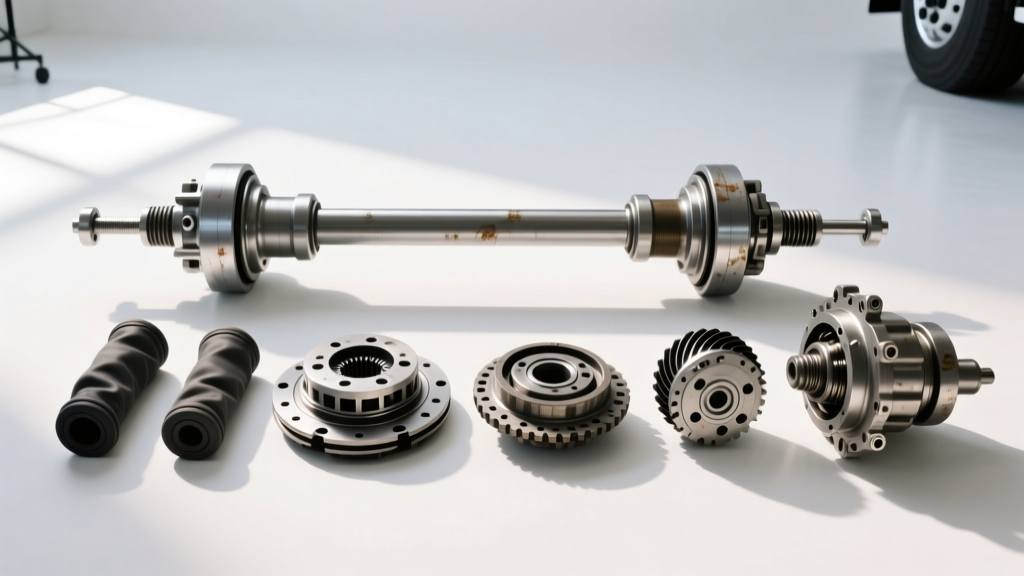
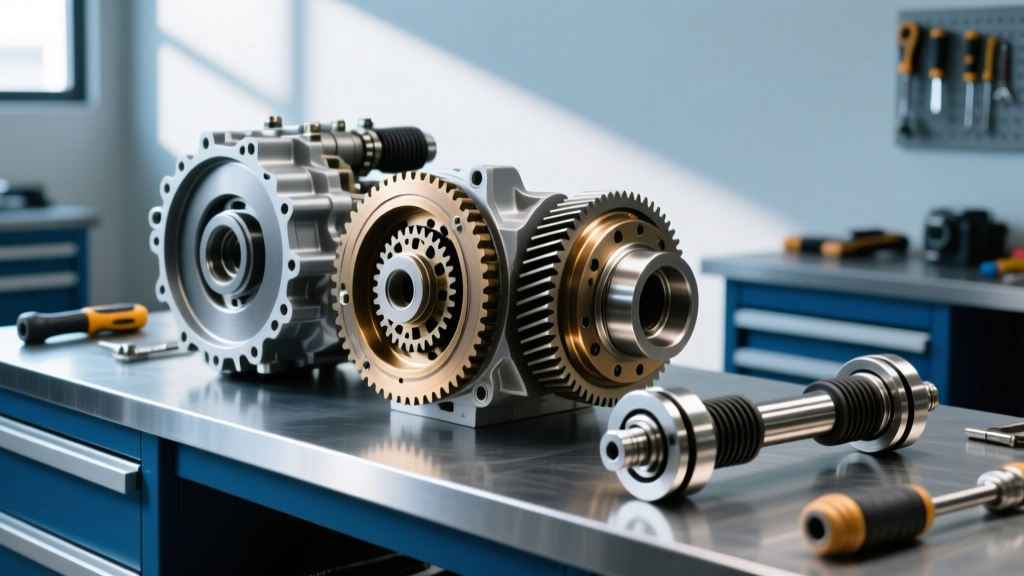
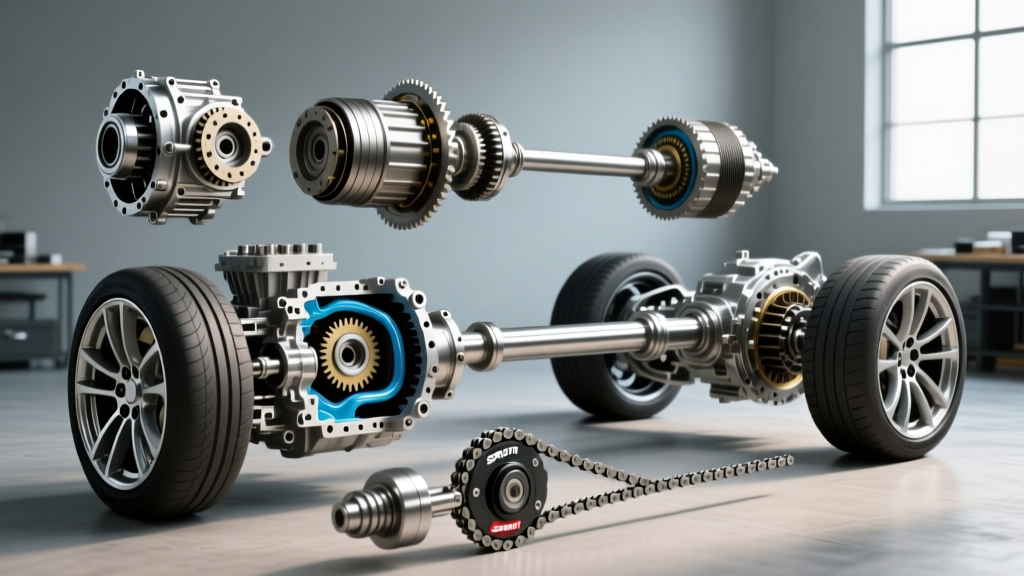
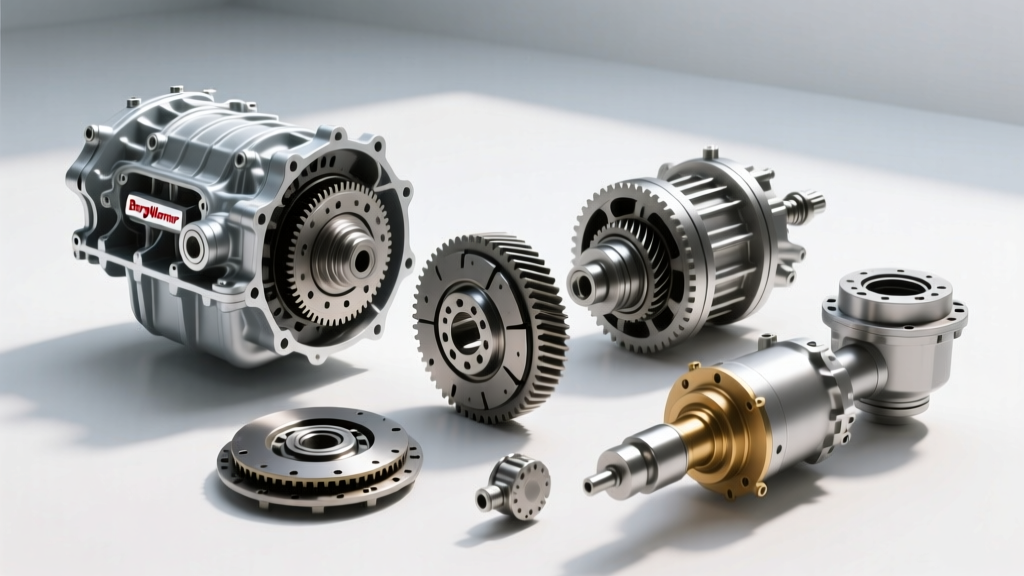
When diagnosing all-wheel-drive (AWD) faults, technicians often face a labyrinth of rotating assemblies. Among the most prevalent in the global market are BorgWarner drivetrain systems, which supply original equipment manufacturers (OEMs) with everything from front-axle Power Transfer Units (PTUs) to complex Torque-On-Demand (TOD) transfer cases. Accurate symptom diagnosis begins with precise component identification. Misidentifying a failing Rear Drive Module (RDM) as a faulty transmission, or a whining PTU as a bad wheel bearing, leads to catastrophic misdiagnosis and wasted labor hours.
This guide breaks down the core components of modern BorgWarner AWD architectures, detailing exact identification markers, failure modes, and actionable diagnostic steps for the 2026 service bay.
1. The Power Transfer Unit (PTU): Front-Axle Multiplier
Component Identification
Found primarily in transverse-engine AWD platforms (such as the Ford Explorer, Edge, and various GM crossovers), the PTU is a right-angle gearset bolted directly to the side of the transaxle housing. It takes input from the differential carrier and routes torque rearward via a short intermediate shaft to the rear driveshaft. BorgWarner manufactures the majority of these units, characterized by their cast aluminum housings, integrated fluid coolers (on newer models), and specific spline counts.
Symptom Diagnosis & Failure Modes
- Bearing Whine (45–70 mph): Often misdiagnosed as a front wheel bearing. A failing PTU input or output bearing will produce a distinct howl that changes pitch under load but does not change when swerving left or right (which typically loads/unloads a wheel bearing).
- Burnt Fluid & Sludge: Early-generation PTUs lacked drain plugs, leading to "lifetime" fluid degradation. Sludge clogs the internal gerotor oil pump, starving the hypoid gears and bearings.
- Vibration at Idle: Worn internal splines on the intermediate shaft can cause a low-frequency shudder when the vehicle is in gear at a stop.
Pro Tip: Before condemning a PTU for whine, use a chassis ear or wireless stethoscope on the PTU housing while the vehicle is on a lift running at 50 mph. Compare the noise signature to the front wheel hubs.
2. Torque-On-Demand (TOD) Transfer Case
Component Identification
In longitudinal, RWD-biased platforms (like the Ford F-150, GM Silverado, or vehicles utilizing the ZF 8HP and GM 10L80 transmissions), the BorgWarner TOD transfer case is bolted to the rear of the transmission. Key identifiers include the external encoder motor (actuator), the rear output shaft seal, and the electronic harness connector. Models like the BorgWarner 4493 or 4494 utilize an electromagnetically actuated clutch pack to vary torque split from 0:100 to 50:50 front-to-rear.
Symptom Diagnosis & Failure Modes
The most common complaint with aging TOD units is driveline bind or shudder during tight, low-speed turns. This occurs when the clutch pack becomes contaminated with friction material debris or the encoder motor loses its positional calibration, causing the clutches to remain partially engaged when they should be fully open.
Diagnostic Action: Connect a bi-directional scan tool (e.g., Ford FDRS or GM GDS2). Monitor the AWD Clutch Duty Cycle and Clutch Pressure PID. Command the clutches to 0% duty cycle. If the shudder persists, the mechanical clutch pack is physically fused or contaminated. If the shudder stops, recalibrate the encoder motor using the OEM routine.
3. Rear Drive Module (RDM) & Axle Disconnect
Component Identification
The RDM is the rear differential assembly. Modern BorgWarner drivetrain systems frequently incorporate an electronic axle disconnect to improve fuel economy by decoupling the rear driveshaft when AWD is not required. Look for an external solenoid or motorized actuator on the rear housing, alongside standard ABS tone rings and CV axle output flanges.
Symptom Diagnosis & Failure Modes
- Delayed Engagement (Clunk): A 1-to-2 second delay followed by a harsh clunk when accelerating from a stop indicates excessive backlash in the RDM ring and pinion, or a failing disconnect collar.
- AWD Disabled Message: Often triggered by a failed position sensor inside the disconnect actuator. The module cannot verify if the axle is locked, defaulting the system to FWD/RWD to prevent driveline shock.
Diagnostic Matrix: Symptom to Component Mapping
| Customer Symptom | Primary Suspect Component | Verification Test | Est. Repair Cost (2026) |
|---|---|---|---|
| Howling/Whine at highway speeds | PTU Bearings / Hypoid Gears | Chassis Ear on PTU housing; check fluid for glitter | $1,200 - $2,800 |
| Shudder/Bind in tight turns | TOD Transfer Case Clutch Pack | Scan tool command (0% duty cycle); fluid analysis | $800 - $1,500 |
| Harsh clunk on acceleration | RDM Backlash / Driveshaft CV | Dial indicator on pinion flange; check CV joint play | $600 - $2,200 |
| "Service AWD" Dash Warning | Encoder Motor / Position Sensor | Read DTCs (e.g., C0000-series); check 5V ref circuit | $350 - $750 |
Critical Fluid & Torque Specifications
Proper servicing of BorgWarner drivetrain systems demands strict adherence to OEM fluid chemistry and torque specs. Using the wrong friction modifier in a TOD transfer case will destroy the clutch pack within 5,000 miles.
PTU Service Specs (Ford/GM Transverse Applications)
- Fluid Type: 75W-140 Synthetic Gear Oil (e.g., Motorcraft XY-75W143-QL or GM ACDelco 75W-140).
- Capacity: Typically 8.5 oz to 12 oz (0.25L - 0.35L). Do not overfill.
- Drain/Fill Plug Torque: 15–20 lb-ft (20–27 Nm). Use caution on aluminum housings to prevent stripping.
TOD Transfer Case Specs (Longitudinal Applications)
- Fluid Type: Specific TOD fluid (e.g., Motorcraft XL-12 or GM AutoTrak II equivalent). Never use standard ATF or GL-5 gear oil.
- Capacity: 1.5L to 2.0L depending on the exact BW model (e.g., 4493 vs. 4484).
- Encoder Motor Mounting Bolts: M6x1.0 typically torqued to 89 lb-in (10 Nm).
- Output Flange Nut: Often staked or requires high torque (e.g., 180-220 lb-ft) plus Loctite.
Advanced Diagnostics: Reading the Data Stream
Modern troubleshooting relies heavily on PID (Parameter Identification) data. When diagnosing BorgWarner drivetrain systems, monitor the Front/Rear Axle Speed Differential. Under normal, dry-pavement driving, the front and rear axle speeds should match within 1-2 RPM. If you observe a constant slip RPM of 10+ while driving straight on dry pavement, the TOD clutch is dragging, or the tire circumferences are mismatched by more than 3/32 of an inch in tread depth—a common killer of AWD transfer cases.
For deeper engineering insights into torque vectoring and clutch actuation strategies, refer to the technical papers published by the Society of Automotive Engineers (SAE) or explore the latest OEM integration guidelines directly from BorgWarner's corporate engineering portal.
Summary
Mastering symptom diagnosis in modern AWD vehicles requires moving beyond generic "drivetrain" assumptions. By accurately identifying whether the fault lies within the PTU, the TOD transfer case, or the RDM, technicians can provide precise, cost-effective repairs. Always verify fluid specifications, utilize bi-directional scan tools to command clutch states, and remember that in BorgWarner systems, mechanical bind is often an electronic calibration issue in disguise.