Why the BMW Rear Differential Demands Precision
When modifying or restoring a classic or modern BMW, the drivetrain is where the rubber meets the road. At the heart of this system is the BMW rear differential, a robust but highly sensitive piece of engineering. Whether you are working on an E36, E46, or an E90 chassis, the ubiquitous 188mm and 210mm differential housings require exact tolerances to operate quietly and efficiently. For beginners, the concept of a ring and pinion gear setup can seem like dark magic. However, by breaking the process down into measurable, repeatable steps, you can master the art of gear setup and ensure your differential survives the rigors of both street driving and track abuse.
Setting up a ring and pinion is not just about bolting parts together; it is about managing microscopic clearances, rotational friction, and fluid dynamics. A poorly setup gear set will whine, overheat, and ultimately catastrophically fail, often taking the entire differential housing with it. This guide will demystify the process, providing you with the exact specifications, torque values, and fluid requirements needed for a successful build.
The Anatomy of the 188mm Medium Differential
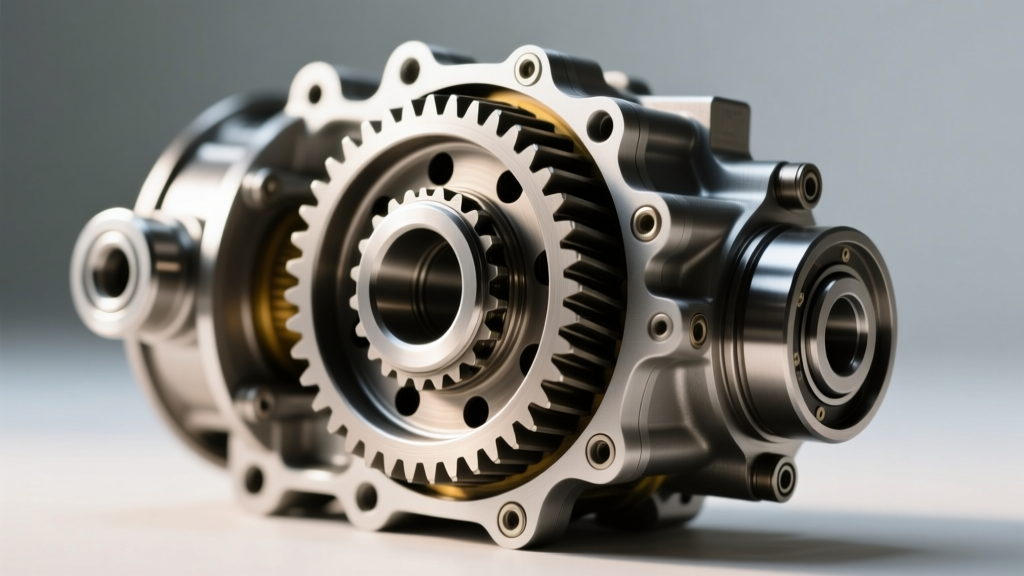
Before turning any wrenches, you must understand the core components involved in the setup. The BMW 188mm 'Medium' differential (commonly found in non-M E46 and E36 models) utilizes a specific arrangement of shims, bearings, and crush sleeves to achieve proper gear mesh.
- Ring Gear: The large, crown-like gear bolted to the differential carrier (or limited-slip clutch pack assembly).
- Pinion Gear: The smaller, tapered gear connected to the driveshaft via the input flange.
- Pinion Depth Shim: A precisely machined shim located under the inner pinion bearing that dictates how deeply the pinion gear sits into the ring gear.
- Side Bearing Shims: Shims located behind the outer differential carrier bearings that adjust the lateral position of the ring gear, controlling backlash.
- Crush Sleeve: A one-time-use aluminum or steel spacer that collapses under torque to establish pinion bearing preload.
Choosing the Right Gear Ratio
Upgrading your ring and pinion is a popular modification for BMW owners looking to improve acceleration. Below is a comparison of common ratios and their ideal applications.
| Gear Ratio | Common Application | Highway RPM Impact (Manual) | Best Use Case |
|---|---|---|---|
| 3.15:1 | E46 325i / 330i (Stock) | Low (approx. 2400 @ 75mph) | Highway cruising, fuel economy |
| 3.38:1 | E46 330i ZHP / E36 M3 | Medium (approx. 2600 @ 75mph) | Perfect street/track balance |
| 3.64:1 | E36 M3 Lightweight / Track Builds | High (approx. 2800 @ 75mph) | Dedicated track cars, autocross |
| 4.10:1 | E30 M3 / Drift Missiles | Very High (approx. 3200 @ 75mph) | Drifting, steep hill climbs, drag |
The Four Pillars of Gear Setup
Every successful BMW rear differential setup relies on four critical measurements. If any one of these is out of spec, the gear pattern will be compromised, leading to premature wear.
1. Pinion Depth
Pinion depth determines how far the pinion gear reaches into the centerline of the ring gear. This is adjusted via a shim under the inner pinion bearing. If the pinion is too deep, the gear pattern will shift toward the heel; if it is too shallow, it will shift toward the toe. Getting this right is the first and most time-consuming step, as it requires pressing the inner bearing on and off to change shims.
2. Backlash
Backlash is the rotational play between the ring and pinion gears when the pinion is held stationary. According to BMW Technical Information System (TIS) guidelines, proper backlash for a street-driven 188mm differential typically falls between 0.08mm and 0.12mm (0.003" - 0.005"). Backlash is adjusted by moving the side bearing shims from one side of the carrier to the other.
3. Bearing Preload
Bearing preload is the amount of rotational friction applied to the pinion and side bearings. For the pinion, this is achieved by tightening the massive pinion flange nut, which crushes the internal crush sleeve. The target rotational torque for new pinion bearings is generally 1.5 to 2.0 Nm (measured with a beam-style inch-pound torque wrench). Side bearing preload is established by the total thickness of the side shims.
4. The Gear Pattern
The final arbiter of a good setup is the physical contact pattern, read using yellow gear marking compound (like Dykem Hi-Spot Blue or yellow lead). You must check both the drive (acceleration) and coast (deceleration) sides of the gear teeth. A perfect pattern is centered vertically on the tooth face and slightly biased toward the toe under load, expanding to fill the flank as torque is applied.
Real-World Specs: BMW 188mm Differential Torque & Setup Data
Keep this data handy during your build. Always verify against your specific chassis year, but these are the baseline specifications for the 188mm medium housing.
- Ring Gear Bolts (M10x1.25): 65 Nm + 90-degree angle turn (Always use new bolts and apply medium-strength threadlocker).
- Pinion Flange Nut (M22): Yield torque (typically 250-320 Nm to achieve target crush sleeve preload). Never reuse the nut or crush sleeve.
- Differential Cover Bolts (M8): 20 Nm.
- Drain/Fill Plugs (M18): 50 Nm (Replace copper crush washers every time).
Break-In Fluid Dynamics and the 500-Mile Rule
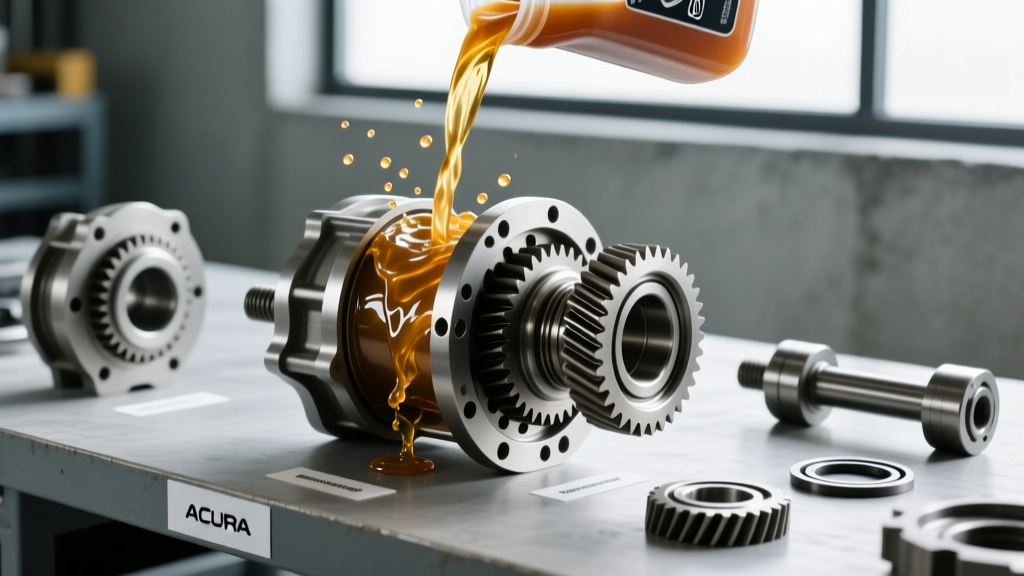
Because this guide falls under differential fluid maintenance, we must address the most critical post-assembly step: the break-in procedure and fluid selection. The friction generated during the first few hundred miles of a new ring and pinion setup is immense. The gears are essentially lapping themselves against one another, creating microscopic metallic particles and intense heat.
Selecting the Right Break-In Oil
Do not use full synthetic gear oil for the initial break-in. Synthetic oils are too slippery and will prevent the gears from properly mating, leading to a lifelong whine and reduced lifespan. Instead, use a dedicated mineral-based break-in oil with high ZDDP (Zinc/Phosphorus) content. Red Line Oil and Driven Racing Oil offer specific break-in gear oils designed exactly for this metallurgical mating process.
The 500-Mile Drain Interval
Once the differential is assembled and filled with 1.2 to 1.5 liters of break-in fluid (depending on your specific cover and cooler setup), you must drive the vehicle carefully. Avoid sustained highway speeds and heavy throttle for the first 500 miles. Vary your speed to allow the gears to heat cycle. At exactly 500 miles, drain the fluid. You will likely notice a metallic, glittery sludge—this is normal and represents the lapping compound and shaved metal from the gear teeth.
Long-Term Fluid Selection
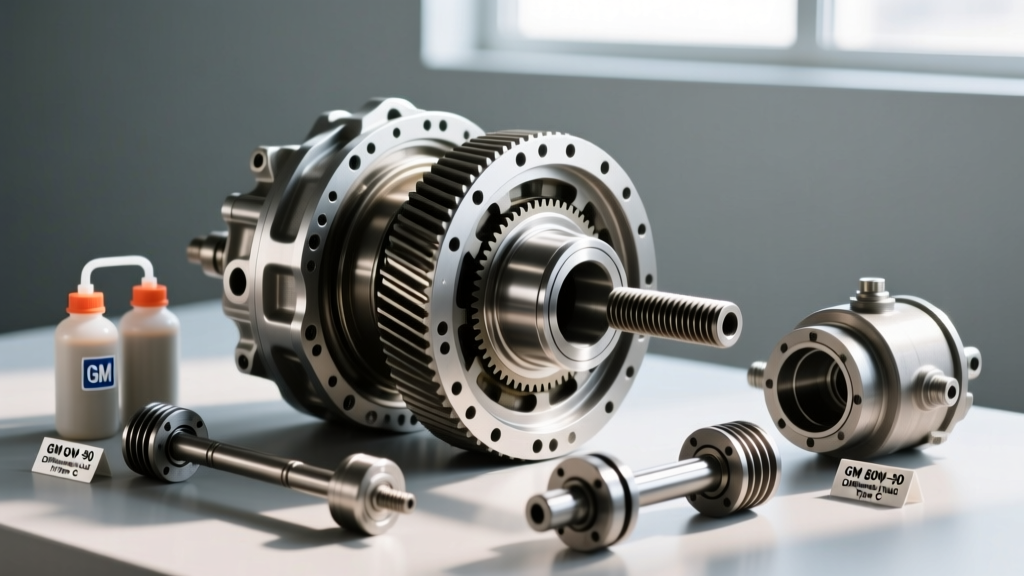
After the 500-mile flush, fill the BMW rear differential with a high-quality synthetic 75W-90 GL-5 gear oil. The OEM BMW SAF-XO 75W-90 (Part # 83222295532) is an excellent choice for street cars. If you are running a limited-slip differential (LSD) with clutch packs, ensure your fluid contains the necessary friction modifiers to prevent chatter during low-speed cornering. For dedicated track cars, a heavier 75W-140 may be warranted to maintain film strength under extreme thermal loads.
Common Beginner Pitfalls to Avoid
Pro Tip: Never use an impact wrench to set pinion preload. The inertia of the impact gun will bypass the crush sleeve's resistance, instantly over-preloading the bearings and destroying them before you even put the car on the ground. Always use a long breaker bar and a torque wrench, checking rotational preload with an inch-pound beam wrench every 10 degrees of nut rotation.
Another frequent mistake is reusing the crush sleeve or the pinion flange nut. These are torque-to-yield, single-use items. Attempting to reuse a crush sleeve will result in a pinion that constantly loosens under load, leading to catastrophic ring gear separation. Furthermore, failing to properly clean the differential housing with brake cleaner and compressed air before assembly will leave metal shavings in the oil galleys, contaminating your fresh break-in fluid immediately.
Setting up a BMW rear differential requires patience, clean tools, and a methodical approach. By respecting the tolerances, adhering to the torque specifications, and following a strict fluid break-in regimen, your new ring and pinion will deliver years of whisper-quiet, bulletproof performance. For more community-driven teardowns and part sourcing, enthusiast hubs like Turner Motorsport's BMW technical archives remain an invaluable resource for cross-referencing part numbers and shim thicknesses.