Understanding the Heart of Acura's SH-AWD System
If you own an Acura equipped with Super Handling All-Wheel Drive (SH-AWD), you are driving one of the most sophisticated rear-axle systems on the road today. Unlike a standard open differential that simply splits power evenly, Acura's rear differential actively vectors torque side-to-side to rotate the vehicle through corners. But beneath this high-tech exterior lies a foundational mechanical component that makes it all possible: the ring and pinion gear setup. For beginners and seasoned DIYers alike, understanding how this gear set operates—and why the correct Acura rear differential fluid is critical to its survival—is the key to avoiding catastrophic drivetrain failures.
In this beginner-friendly explainer, we will break down the mechanics of the ring and pinion gear setup, explore the exact fluid specifications required to keep it lubricated, and provide actionable torque specs and maintenance frameworks for 2026.
The Anatomy of the Ring and Pinion Gear Setup
At its core, the ring and pinion gear setup has a straightforward job: it takes the rotational energy coming from the driveshaft (which spins longitudinally, front-to-back) and turns it 90 degrees to spin the rear axles (laterally, side-to-side). It also acts as the final gear reduction, multiplying torque before it reaches the wheels.
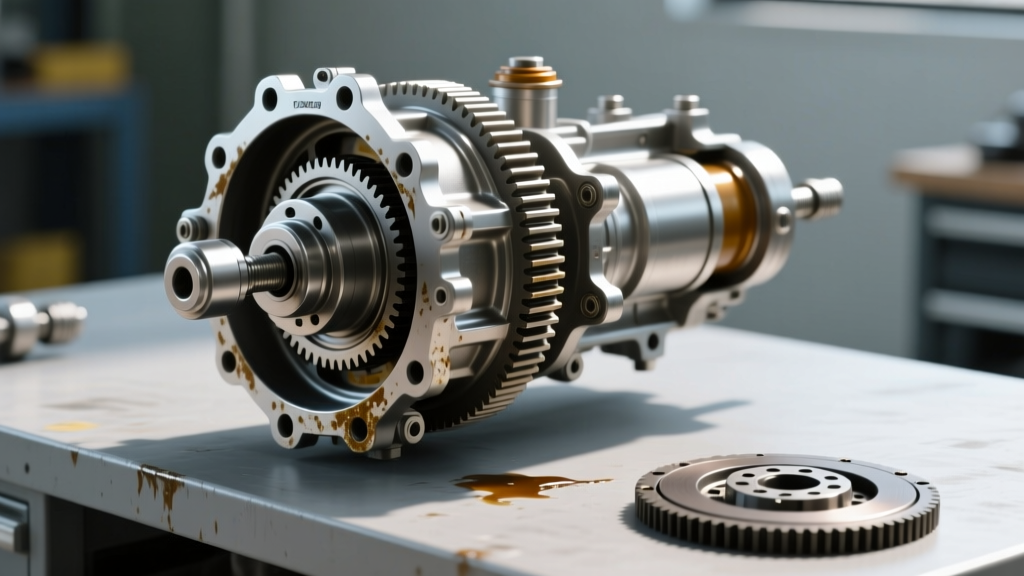
In an Acura SH-AWD rear differential, the pinion gear is a small, spiraled gear attached to the driveshaft input flange. It meshes with the massive ring gear, which is bolted to the differential carrier. However, because the SH-AWD system relies on internal planetary gearsets and electromagnetic clutch packs to overdrive the outside rear wheel during cornering, the ring and pinion gear setup is subjected to immense, dynamic stress loads that standard differentials never experience.
According to drivetrain experts at Yukon Gear & Axle, hypoid gear sets like those found in Acura's rear diffs require extreme-pressure (EP) additives to prevent the gear teeth from wiping off the protective oil film under heavy load. This is where fluid selection becomes a matter of mechanical life and death.
Why Standard Gear Oil Fails: The Need for Specific Acura Rear Differential Fluid
A common beginner mistake is assuming that any 75W-90 GL-5 gear oil will work in an Acura rear differential. This is a critical error. Standard gear oils contain high levels of sulfur-based EP additives that can corrode the yellow metals (like brass and bronze) used in the SH-AWD clutch packs and internal bearings. Furthermore, standard oils lack the specific friction modifiers required for the SH-AWD clutches to engage smoothly.
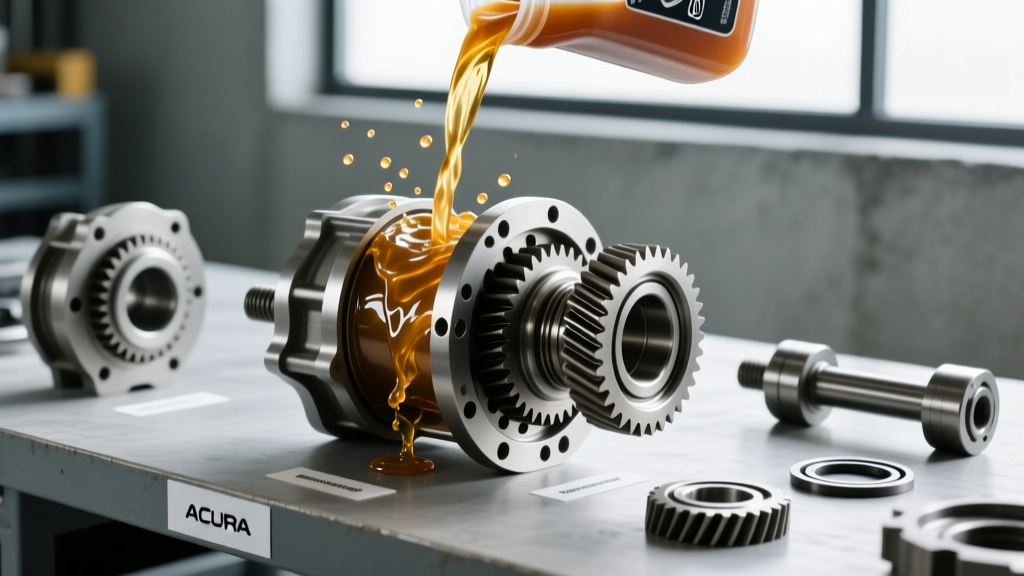
To protect the ring and pinion gear setup and the clutch packs, you must use Acura Dual Pump System Fluid II (DPSF-II).
- OEM Part Number: 08200-9007
- Fluid Type: Synthetic-based specialized hydraulic/differential fluid
- Capacity: Approximately 2.8 to 3.1 quarts (varies slightly between MDX, TLX, and RDX models)
Using the wrong fluid will result in clutch chatter, delayed torque vectoring, and eventually, excessive heat that degrades the gear oil, leading to premature wear on the ring and pinion gear teeth. As noted by Car and Driver, the SH-AWD system's ability to seamlessly transfer torque relies entirely on the precise hydraulic pressure and friction characteristics provided by DPSF-II.
Ring and Pinion Setup Tolerances: What Beginners Need to Know
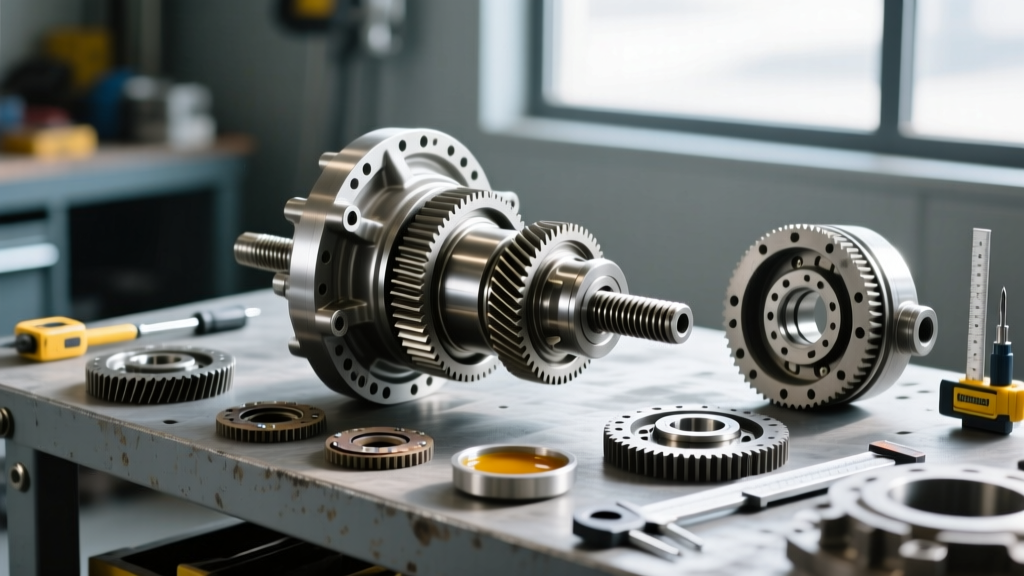
If your Acura's rear differential is whining, howling, or clunking, a simple fluid change will not fix it. Those noises indicate that the ring and pinion gear setup has fallen out of specification. Setting up a ring and pinion is an advanced task, but understanding the parameters helps you diagnose issues or speak intelligently with your drivetrain shop.
1. Pinion Depth and Bearing Preload
The pinion gear must sit at an exact depth relative to the ring gear's centerline. This is adjusted using precision shims behind the inner pinion bearing. Once the depth is set, the pinion bearing preload is established. Acura uses a crush sleeve to achieve this preload. When tightening the pinion nut, the sleeve crushes, creating resistance. The target rotational preload is typically 15 to 25 inch-pounds of drag. If you over-crush the sleeve, you must replace it and start over.
2. Backlash Specifications
Backlash is the microscopic amount of 'slop' or clearance between the ring gear tooth and the pinion gear tooth. If backlash is too tight, the gears will bind and overheat. If it is too wide, the differential will clunk when shifting from drive to reverse. For most Acura rear differentials, the target backlash is between 0.005 and 0.007 inches. This is measured using a dial indicator mounted to the differential housing, checking the ring gear at four equidistant points.
3. Gear Contact Pattern
Mechanics use a yellow gear marking compound (like Permatex 80033) painted on the ring gear teeth to verify the setup. By rotating the gears under light braking pressure, a pattern is left behind. A proper setup will show a centered pattern on both the 'drive' and 'coast' sides of the teeth, avoiding the dangerous 'toe' or 'heel' edges.
Critical Torque Specifications for Reassembly
If you are auditing a rebuild or having a shop perform one, ensure these baseline torque specs are respected (always verify with your specific year's factory service manual):
- Ring Gear to Case Bolts: 72 lb-ft (Must be applied with Red Loctite 271 and tightened in a crisscross star pattern).
- Pinion Nut (Crush Sleeve): 180 to 220 lb-ft (Torque is applied gradually while checking rotational preload; never reuse an old crush sleeve).
- Driveshaft Flange Bolts: 58 lb-ft.
- Differential Mounting Bushings/Brackets: 65 to 85 lb-ft (depending on chassis mounting point).
Maintenance vs. Rebuild: 2026 Cost and Decision Framework
How do you know if you just need an Acura rear differential fluid change, or if the ring and pinion gear setup requires a full rebuild? Use the framework below to guide your decision and budget.
| Service Type | Primary Components Required | Estimated 2026 Cost | Skill Level |
|---|---|---|---|
| Routine Fluid Drain & Fill | 3 Qts DPSF-II (08200-9007), 2 x Crush Washers | $90 - $140 | Beginner DIY |
| Clutch Pack Replacement | SH-AWD Clutch Kit, Seals, DPSF-II | $800 - $1,200 | Advanced DIY / Pro |
| Full Ring & Pinion Rebuild | R&P Gear Set, Master Bearing Kit, Crush Sleeve, Seals | $1,800 - $2,800 | Professional Only |
Step-by-Step: Servicing Your Acura Rear Differential Fluid
If your differential is quiet and you are simply performing scheduled maintenance (recommended every 30,000 to 60,000 miles, or sooner if towing or tracking), follow these steps:
- Level the Vehicle: The car must be perfectly level to ensure an accurate fill. Use a lift or four high-quality jack stands.
- Locate the Plugs: On the rear differential housing, you will find two 10mm hex plugs. The upper plug is the fill hole; the lower plug is the drain.
- Open Fill First: Always remove the fill plug before the drain plug. If the fill plug is seized and you drain the fluid first, you will be stuck with an empty differential and no way to refill it.
- Drain and Inspect: Remove the drain plug and let the fluid empty into a catch pan. Inspect the magnetic plug for metal shavings. Fine, glitter-like paste is normal; chunks or shards indicate internal ring and pinion failure.
- Refill with DPSF-II: Reinstall the drain plug with a new crush washer and torque to 33 lb-ft. Pump in the Acura DPSF-II fluid until it begins to weep out of the fill hole.
- Seal it Up: Reinstall the fill plug with a new crush washer and torque to 33 lb-ft.
Final Thoughts on Drivetrain Longevity
The ring and pinion gear setup in your Acura is a masterpiece of metallurgical engineering, designed to handle the rigorous demands of torque-vectoring all-wheel drive. However, it is entirely dependent on the chemical protection provided by specialized lubricants. By strictly adhering to OEM fluid specifications and understanding the mechanical tolerances at play, you can ensure your SH-AWD system remains whisper-quiet and razor-sharp for hundreds of thousands of miles. For more OEM part references and diagrams, databases like Honda Parts Now are excellent resources for verifying your specific VIN's requirements.