Diagnosing a Nicked BMW Rear Differential: The Role of Gear Oil
When you hear the telltale whine or howl emanating from the rear axle of your BMW, the fear of a damaged ring and pinion set immediately sets in. Discovering a rear differential nicked in BMW service bays is a frequent occurrence, especially in high-torque applications like the F80 M3, G80 M3, and heavy G05 X5 SUVs. A 'nicked' gear tooth—characterized by spalling, pitting, or micro-chipping on the hypoid gear faces—can quickly escalate from a minor acoustic annoyance to catastrophic axle failure. But before you authorize a massive repair bill, you must understand the critical role of differential gear oil specifications in both diagnosing and mitigating this damage.
In this 2026 cost analysis and technical breakdown, we dissect the exact OEM fluid requirements, the metallurgical causes of gear nicking, and the real-world pricing for fluid services versus complete rear differential replacements. Whether you are tracking your M car or daily driving an xDrive SUV, understanding your hypoid gear oil is the first line of defense against drivetrain failure.
The Metallurgy of a Nicked Gearset and Fluid Shear
BMW rear differentials utilize hypoid gearsets, where the pinion gear sits below the centerline of the ring gear. This design allows for smoother operation and higher torque transfer but generates immense sliding friction. When the protective hydrodynamic film of the gear oil breaks down due to extreme heat, shock loading, or incorrect viscosity, metal-on-metal contact occurs. This results in micro-welding and subsequent tearing of the gear surface, commonly referred to as spalling or nicking.
Using an oil that lacks the necessary extreme pressure (EP) additives, specifically sulfur-phosphorus compounds required for API GL-5 specifications, will accelerate this wear. Furthermore, in models equipped with a clutch-type Limited Slip Differential (LSD) or the Active M Differential (AMD), the absence of the correct friction modifiers will cause clutch chatter, generating excessive heat that degrades the base oil and leaves the ring and pinion vulnerable to nicking.
OEM BMW Differential Gear Oil Specifications
BMW does not manufacture its own gear oil; it partners with chemical giants like Castrol and Shell to formulate fluids that meet specific ZF and BMW engineering standards. Below is the definitive 2026 guide to BMW rear differential fluid specifications, sourced from RealOEM and European drivetrain engineering bulletins.
| Fluid Designation | Viscosity | OEM Part Number | Primary Application | Friction Modifier |
|---|---|---|---|---|
| SAF-XO | 75W-90 | 83222413512 | Standard Open Differentials (F30, G20, non-M xDrive) | Not Required |
| SAF-XJ | 75W-140 | 83222295532 | M Performance LSDs, Active M Differential (F80, G80, F82) | Pre-Blended |
| SAF-XO + FM | 75W-90 | 83222295532 (Alt) | Older Clutch-Type LSDs (E46 M3, E90 M3) | Required (Added separately) |
| Hypoid Axle Oil | 75W-85 | 83222413511 | Lightweight EV/Hybrid Rear Drives (i4, iX) | Not Required |
Note: Always verify your specific chassis and differential tag code. Pouring 75W-140 into a modern lightweight aluminum housing designed for 75W-85 can cause parasitic drag, overheating, and accelerated wear on the bearings.
2026 Cost Breakdown: Fluid Service vs. Differential Rebuild
Addressing a suspected nicked gear early can save thousands. However, once the spalling penetrates the hardened surface layer of the ring gear, no fluid additive can reverse the damage. Below is a comprehensive cost analysis for BMW rear differential services in 2026, factoring in current indie shop labor rates ($180–$225/hr) and dealer rates ($260–$340/hr).
| Service Type | Parts Cost (OEM) | Labor Time | Total Cost (Indie Shop) | Total Cost (Dealership) |
|---|---|---|---|---|
| Standard Drain & Fill (Open Diff) | $45 - $65 | 0.5 - 0.8 hrs | $150 - $240 | $280 - $390 |
| AMD Service + Flush (G80 M3) | $85 - $120 | 1.5 - 2.0 hrs | $350 - $560 | $650 - $800 |
| Ring & Pinion Rebuild (Bearings, Seals, R&P) | $1,200 - $1,800 | 8.0 - 12.0 hrs | $2,800 - $4,200 | $4,500 - $6,500 |
| Complete Remanufactured Diff Swap | $2,500 - $4,000 | 3.0 - 5.0 hrs | $3,200 - $5,100 | $4,800 - $6,500 |
As highlighted in extensive drivetrain failure threads on BimmerPOST, many owners attempt to mask gear whine with heavier viscosity oils (e.g., switching from 75W-90 to 75W-140). While this may temporarily dampen the acoustic howl of a nicked gear, it increases operating temperatures in the bearing journals, often leading to premature bearing failure and a much more expensive repair down the line.
Diagnostic Protocol: Analyzing the Magnetic Drain Plug
Before committing to a rebuild, you must perform a physical inspection of the differential fluid. BMW rear differentials are equipped with a magnetic drain plug designed to capture ferrous metals. Here is how to interpret what you find:
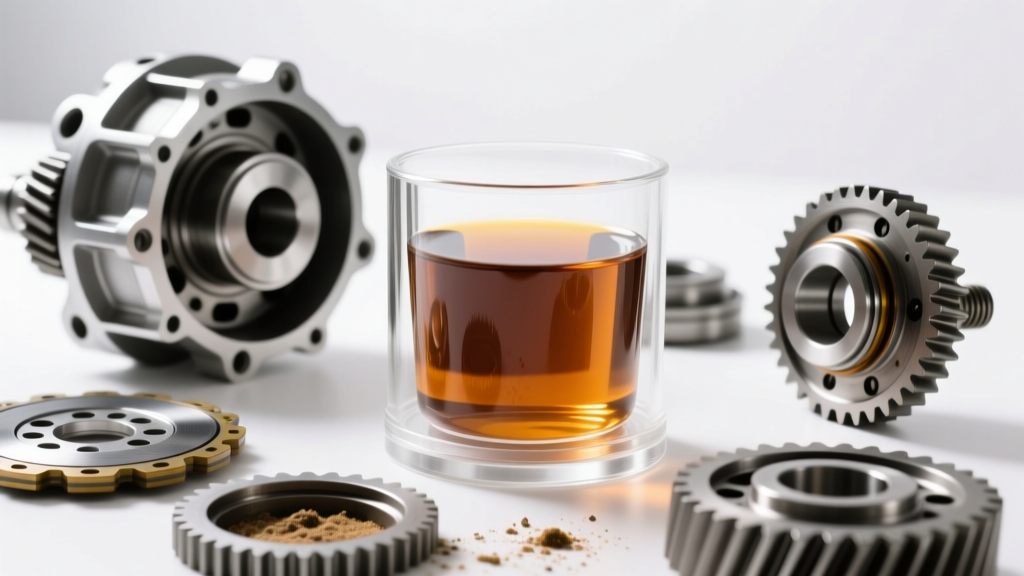
- Fine Metallic Paste (Gray/Black Sludge): Normal wear. The break-in process of hypoid gears naturally sheds microscopic metal particles. This indicates healthy gear meshing.
- Small Flakes (Glitter-like): Early signs of bearing degradation or clutch pack wear in LSDs. A fluid change with OEM-spec oil and a 1,000-mile re-inspection is recommended.
- Chunks or 'Nickel-Sized' Shavings: Catastrophic failure. This confirms a gear tooth has chipped, spalled, or a bearing cage has disintegrated. The differential must be removed and torn down.
- Brass/Gold Flakes: Synchro or thrust washer wear. While less common in the rear diff compared to manual transmissions, it indicates internal bushing failure.
Torque Specifications and Service Procedures
If you are performing a preventative drain and fill to ensure your gear oil is up to spec, adherence to BMW torque specifications is non-negotiable. The rear differential housing, often cast aluminum or stamped steel depending on the generation, is susceptible to thread stripping if over-torqued.
- Drain / Fill Plug (M14x1.5): 60 Nm (44 lb-ft). Always use a new crush washer or replace the integrated O-ring.
- Differential Output Flange Nut (M20x1.5): 280 Nm (206 lb-ft) + stake. If you are removing the flanges to replace output shaft seals, the nut must be torqued to spec and re-staked into the groove.
- Subframe to Diff Mounting Bolts: Typically 100 Nm + 90 degrees (TTY - Torque to Yield). These must be replaced if the differential is dropped for a swap.
Pro-Tip: BMW differentials do not have a traditional 'drain' plug on many older models, only a fill plug. You must use a fluid transfer pump to extract the old oil through the fill hole. Modern M Performance diffs feature a dedicated lower drain plug to facilitate complete fluid evacuation.
The Chemistry of Friction Modifiers
For models equipped with clutch-based limited-slip differentials, the friction modifier (FM) is just as critical as the base oil's viscosity. According to drivetrain additive experts at Lubrizol, FMs alter the coefficient of friction between the clutch plates, allowing for smooth slip during cornering while maintaining lock-up under heavy acceleration. If you use a standard GL-5 75W-140 without the specific BMW-approved FM in an Active M Differential, the clutch packs will grab aggressively, causing severe chatter, localized heat spikes, and eventual welding of the clutch discs to the steel separator plates.
Final Verdict: Is It Worth Saving?
If your rear differential is nicked, gear oil alone will not reverse the physical damage to the hypoid teeth. However, strict adherence to OEM gear oil specifications—specifically utilizing the correct SAF-XJ or SAF-XO formulations with appropriate friction modifiers—is the only way to prevent nicking from occurring in the first place. For daily drivers, a $200 preventative fluid service every 30,000 miles is a fraction of the $4,500 cost of a 2026 dealership differential replacement. Listen to your axle, analyze your magnetic drain plug, and never compromise on hypoid gear chemistry.