Decoding the 2019 F250 Rear Differential Fluid Type and Condition
When performing preventive maintenance on your Super Duty, verifying the correct 2019 F250 rear differential fluid type is only half the battle. Understanding what the fluid's color, texture, and odor reveal about your axle's internal health is where true mechanical expertise lies. The 2019 Ford F-250 is predominantly equipped with the Ford 10.5-inch Sterling rear axle, a massive gearset designed to handle high-torque diesel applications and heavy towing. However, even the most robust hypoid ring and pinion gears are entirely dependent on a thin hydrodynamic film of gear oil to survive the extreme sliding friction inherent in their design.
As we navigate the 2026 service landscape, many owners are pushing their factory fill intervals to the limit. While Ford's official documentation often labels the rear axle fluid as 'filled for life' under normal conditions, any truck used for towing, off-roading, or commercial work requires strict preventive fluid analysis. By learning to read the visual and olfactory clues left behind by your gear oil, you can predict bearing failures, seal leaks, and gear spalling long before they result in a catastrophic axle rebuild.
Factory Baseline: What Should the Fluid Look Like?
Before you can diagnose degraded fluid, you must understand the baseline. The factory-recommended 2019 F250 rear differential fluid type is Motorcraft SAE 75W-85 Premium Synthetic Hypoid Gear Lubricant (Part Number: XY-75W85-QL). This specific viscosity was chosen by Ford engineers to balance extreme-pressure (EP) protection with parasitic drag reduction, aiding in CAFE fuel economy compliance without sacrificing the Sterling 10.5 axle's durability.
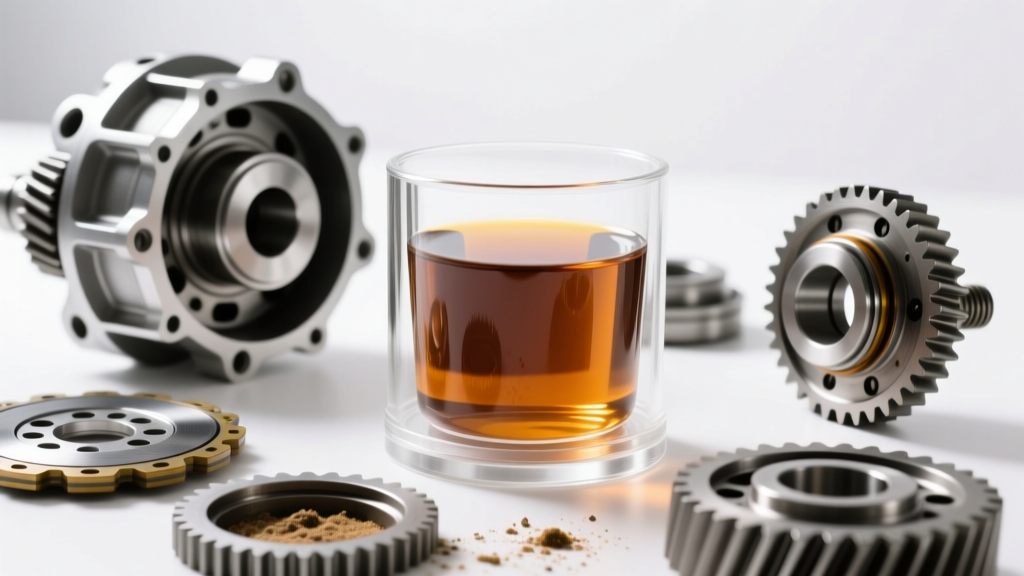
Brand-new 75W-85 synthetic gear oil is naturally translucent, ranging from a light honey-amber to a pale golden hue. It possesses a distinct, pungent sulfur odor due to the sulfur-phosphorus Extreme Pressure (EP) additive package required to meet API GL-5 specifications. These additives are highly reactive by design; they sacrifice themselves under high heat and pressure to form a protective sacrificial film on the hypoid gear teeth, preventing metal-on-metal welding.
Expert Note on Limited-Slip Axles: If your 2019 F-250 is equipped with a factory Limited-Slip Differential (LSD), the baseline fluid must also include Motorcraft XL-3 Friction Modifier Additive (Part Number: ESTCZ19C759). The absence of this modifier will not immediately change the fluid's color, but it will cause clutch pack chatter during low-speed cornering, eventually leading to premature clutch glazing and metallic contamination in the oil.
The Diagnostic Matrix: Fluid Color, Texture, and Odor
Extracting a sample from the differential fill plug is the most effective non-invasive diagnostic tool at your disposal. Below is a comprehensive condition matrix used by drivetrain specialists to evaluate the internal health of the Sterling 10.5 and Dana S110 axles.
| Visual Color | Texture & Debris | Olfactory (Smell) | Mechanical Diagnosis | Required Action |
|---|---|---|---|---|
| Translucent Amber / Honey | Smooth, clean, no particulates | Mild sulfur / petroleum | Fluid is healthy; EP additives are intact. | Reinstall plug; monitor at next interval. |
| Dark Brown / Opaque | Slightly viscous, fine silt on magnet | Strong, sharp sulfur / acidic | Normal thermal oxidation and additive depletion from high-load towing. | Perform full drain and fill; inspect axle vent. |
| Jet Black | Gritty, heavy sludge, large flakes | Acrid, burnt, acrid smoke | Severe thermal breakdown. Potential ring/pinion scoring or bearing cage failure. | Immediate fluid change. Drop cover to inspect gear backlash and bearing play. |
| Milky / Chocolate Froth | Emulsified, watery, separates on rag | Musty, damp, lacks sulfur scent | Water intrusion via submerged axle breather or failed wheel seal. | Urgent flush. Identify water ingress point. Check wheel bearings for rust. |
| Reddish / Copper Tint | Glittering metallic dust (bronze/steel) | Hot metal / burnt oil | Limited-slip clutch pack degradation or thrust washer wear. | Add XL-3 modifier. If chatter persists, rebuild LSD clutch pack. |
Deep Dive: The 'Milky Fluid' Phenomenon
One of the most common issues encountered in preventive maintenance is the 'chocolate milkshake' effect. Gear oil and water do not mix under normal conditions. However, the churning action of the ring gear acts as an emulsifier, whipping intruding water into a thick, milky froth. Water destroys the hydrodynamic boundary layer of the 75W-85 fluid, leading to immediate micropitting on the ring and pinion gears. If you spot milky fluid, check the axle's upper breather tube. On the 2019 F-250, the breather is often routed high onto the frame rail, but if the truck has been modified or the hose has cracked, water can easily siphon into the differential housing during deep puddle crossings or truck washes.
Step-by-Step Preventive Inspection Guide
To accurately assess the condition of your differential fluid, you must pull a representative sample. Do not simply wipe the outside of the fill plug, as external road grime will skew your visual analysis.
- Prepare the Vehicle: Drive the truck for 15-20 minutes to bring the axle up to operating temperature (approx. 140°F - 160°F). Warm fluid is less viscous and will carry suspended metallic particulates out with the sample, providing a more accurate reading.
- Clean the Housing: Use a dedicated brake cleaner and a wire brush to thoroughly clean the area surrounding the 3/8-inch square drive fill plug on the differential cover. Preventing external contamination is critical.
- Extract the Sample: Remove the fill plug using a 3/8-inch drive breaker bar. (Note: Always remove the fill plug before the drain plug or cover bolts to ensure you don't drain the axle only to find the fill plug is seized).
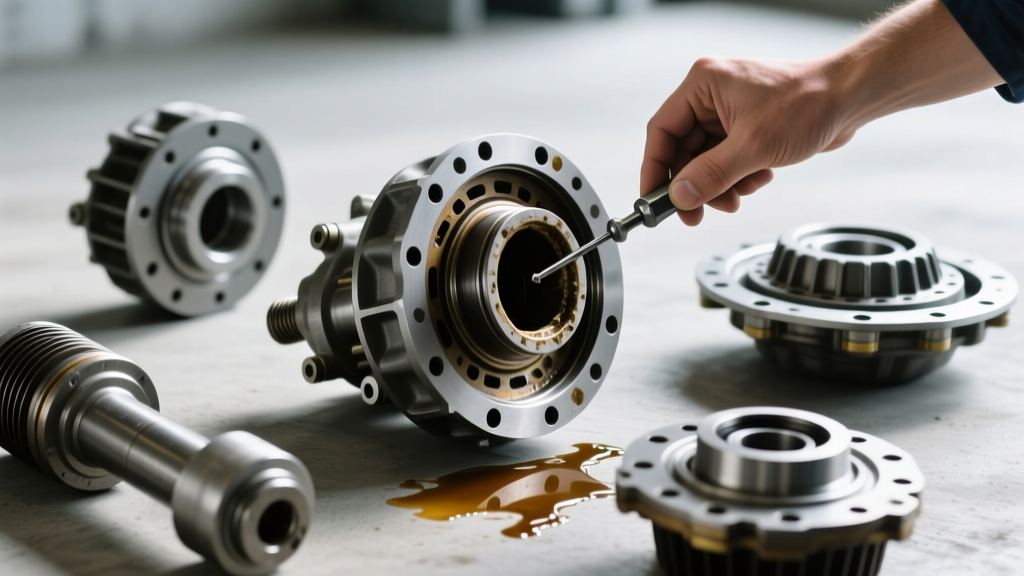
- The Dip Test: Insert a clean, lint-free zip tie or a dedicated fluid extraction syringe into the hole. The fluid level should be exactly flush with the bottom of the fill plug threads. Pull the sample and wipe it onto a bright white paper towel.
- Magnetic Analysis: Inspect the factory magnetic fill plug. A fine, fuzzy grey paste is normal wear from the break-in period of the steel gears. However, if you find distinct metallic shards, chunks, or 'wire-like' spirals, your pinion or carrier bearings are actively disintegrating.
Service Specifications and Re-fill Protocol
If your diagnostic inspection reveals dark brown, burnt, or contaminated fluid, a complete service is required. When sourcing your Motorcraft chemicals and fluids, ensure you are purchasing true API GL-5 rated synthetic hypoid oil. Using standard GL-4 manual transmission fluid will result in catastrophic gear failure within a few hundred miles due to the lack of sulfur-phosphorus EP additives.
Capacity and Torque Specifications
- Axle Model: Ford 10.5-inch Sterling (Standard 2019 F-250 SRW)
- Fluid Capacity: 3.0 to 3.5 Pints (1.42 - 1.65 Liters)
- Fill Plug Torque: 22 lb-ft (30 Nm)
- Cover Bolt Torque (if removed): 33 lb-ft (45 Nm) in a crisscross pattern
- Sealant: Motorcraft TA-32 Silicone Gasket Maker (if removing the cover)
For deep preventive maintenance, we recommend removing the entire rear differential cover rather than using a suction pump through the fill hole. Dropping the cover allows you to clean the internal magnets located at the bottom of the casting and inspect the ring gear teeth for abnormal wear patterns, such as heel-toe bias or flank spalling. For detailed gear pattern analysis, consult drivetrain technical resources to understand how backlash and pinion depth affect gear longevity.
The Friction Modifier Protocol
If your F-250 features a limited-slip differential, the order of operations during the refill is critical. You must add the entire bottle of Motorcraft XL-3 Friction Modifier first, directly into the empty differential housing. Follow this with the 75W-85 gear oil until it reaches the fill plug threads. If you add the modifier last, it will float on top of the dense gear oil and fail to properly saturate the carbon-fiber clutch packs, resulting in immediate binding and chatter.
Conclusion: Proactive Axle Preservation
Understanding the nuances of your 2019 F250 rear differential fluid type and its condition transforms a mundane maintenance chore into a powerful diagnostic opportunity. The Sterling 10.5-inch axle is an incredibly capable piece of engineering, but it is not invincible. By regularly monitoring the color, texture, and smell of your hypoid gear oil, you can catch water intrusion, additive depletion, and bearing wear long before they strand you on the side of the highway. Adhere to the torque specifications, respect the chemistry of GL-5 lubricants, and your Super Duty's drivetrain will reliably deliver power to the pavement for hundreds of thousands of miles.