The xDrive Bottleneck: Why Upgrade the Front Axle?
When extracting maximum performance from BMW's xDrive platforms—whether you are building a dedicated F30 335i track car, an E90 335xi rally cross monster, or an F15 X5 overland rig—the drivetrain's weakest link is often hidden in plain sight. While BMW's transfer cases (NVG and ATC series) are marvels of active torque vectoring, the stock BMW front differential is almost universally an open unit. Under hard cornering, aggressive trail-braking, or when a front wheel unloads over a berm, an open front diff will bleed torque to the wheel with the least resistance. This results in severe understeer on track or a stranded vehicle off-road, completely neutralizing the benefits of the xDrive system.
Upgrading to a true locking or torque-biasing front differential transforms the chassis dynamics of any xDrive BMW. However, selecting the correct locker type—and pairing it with the exact gear oil specifications—is a highly technical process. In this 2026 performance guide, we break down the mechanical realities of front-axle locking differentials, chassis compatibility, and the critical fluid dynamics required to keep your upgraded drivetrain alive.
Locking Differential Types for BMW Front Axles
The front axle of a steering vehicle presents unique challenges for differential lockers. Unlike the rear axle, where aggressive locking can induce predictable oversteer, a front locker that is too aggressive will cause snap understeer and steering wheel kickback. Choosing the right internal mechanism is paramount.
1. Helical Torque-Biasing (ATB) - The Street & Track Sweet Spot
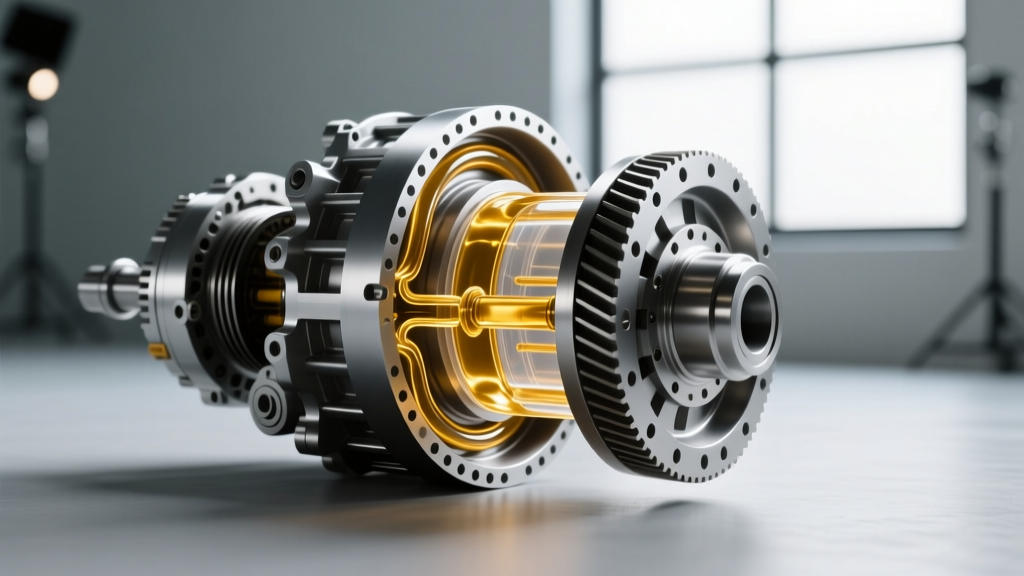
Helical limited-slip differentials, such as those engineered by Quaife and Wavetrac, are the gold standard for 90% of BMW front differential upgrades. They utilize planetary gear sets to mechanically bias torque to the wheel with traction. They operate smoothly, require no special friction modifiers, and do not suffer from the preload wear associated with clutch packs.
- Quaife ATB: Offers a predictable 2.5:1 torque bias ratio. Excellent for street-driven xDrive cars and mild track use. However, if one front wheel lifts completely off the ground (zero load), a standard Quaife can momentarily act like an open diff.
- Wavetrac: Features a patented wave-profile cam device inside the side gears. This internal mechanism physically creates load when a wheel unloads, allowing the differential to maintain torque bias even when a front wheel is in the air. For modified F30 or G20 xDrive cars seeing track time, Wavetrac is generally the superior choice.
2. Clutch-Type LSDs - For Dedicated Time Attack & Drift
Clutch-type differentials (like those from OS Giken or Cusco) use stacks of friction plates and cam rings to lock the axles. They offer adjustable lockup percentages and ramp angles (1-way, 1.5-way, 2-way).
Expert Warning: Installing a 2-way clutch LSD in a BMW front differential is highly discouraged for anything other than a dedicated, trailered drift or time-attack car. A 2-way front locker locks on deceleration, which will cause the front wheels to push (understeer) aggressively when you lift off the throttle to enter a corner. If you must use a clutch-type up front, a 1-way or 1.5-way configuration is mandatory to preserve corner-entry rotation.
3. Selectable Lockers & Spools (Off-Road Only)
For X3 (G01) and X5 (F15/G05) owners building dedicated off-road rigs, pneumatic or electronic selectable lockers (like ARB Air Lockers) or welded spools provide 100% lockup. These should never be engaged on high-traction surfaces, as they will bind the front axle, destroy the CV joints, and shatter the ring and pinion gears due to driveline wind-up.
Front Differential Compatibility & Upgrade Matrix
BMW has utilized several front differential housings across the xDrive lineup. Identifying your specific housing code is required before ordering internal carrier upgrades. Below is a compatibility matrix for popular performance chassis.
| BMW Chassis | Front Diff Code | OEM Ratio Range | Upgrade Availability | Est. Part Cost (2026) |
|---|---|---|---|---|
| E90/E92 335xi | G45 / G46 | 3.07 - 3.15 | Wavetrac, Quaife ATB | $1,250 - $1,450 |
| F30/F32 335i/435i xDrive | G60 / G65 | 2.81 - 3.15 | Wavetrac, Quaife ATB | $1,300 - $1,550 |
| G20 M340i xDrive | G70 | 2.81 | Limited (Custom Ring/Pinion required) | $1,800+ |
| F15/F85 X5 / X5M | AL / G50 | 3.15 - 3.64 | OS Giken, Cusco, ARB | $1,600 - $2,200 |
Gear Oil & Friction Modifiers: The Fluid Dynamics
Because we are deeply focused on drivetrain longevity, understanding the diff-fluid requirements for your upgraded BMW front differential is non-negotiable. The front differential on an xDrive car holds a surprisingly small volume of fluid—typically between 0.45 and 0.65 liters depending on the housing. This low volume means the fluid degrades faster under high thermal loads, making selection and maintenance critical.
OEM vs. Aftermarket Viscosity
BMW's factory fill for most modern xDrive front differentials is SAF-XO 75W-90 (Part #83222410056). This is a high-quality synthetic GL-5 gear oil. However, when upgrading to an aftermarket locker, you must match the fluid to the internal mechanism:
- For Helical / ATB Diffs (Wavetrac, Quaife): These do not require friction modifiers. In fact, heavy friction modifiers can reduce the mechanical bite of the helical gears. A high-quality, GL-5 rated synthetic like Motul Gear 300 75W-90 or Red Line 75W90 Gear Oil is ideal. These offer superior shear stability and film strength compared to OEM SAF-XO when subjected to track-day temperatures.
- For Clutch-Type LSDs: You must use a fluid specifically formulated for limited-slip differentials, or add a dedicated friction modifier (like Red Line Limited Slip Friction Modifier). Without it, the clutch plates will chatter violently during low-speed steering maneuvers, destroying the packs within a few hundred miles.
The Break-In Procedure and First Fluid Change
If you are installing a new helical or clutch-type front differential, the initial break-in period is vital. The gear teeth and thrust washers need to mate and polish.
Expert Protocol: Fill the front diff with a conventional or semi-synthetic 75W-90 GL-5 for the first 500 miles. Drive the car normally, avoiding full-throttle launches and sustained highway speeds over 70 mph. At the 500-mile mark, drain the fluid. You will likely see a fine, glittery metallic paste on the magnetic drain plug—this is normal mating wear. Refill with your chosen premium full-synthetic (e.g., Motul Gear 300) for the life of the service interval, which should be strictly adhered to every 30,000 miles for track cars, or 60,000 miles for street use.
Installation Realities: Torque Specs & Hardware
Upgrading the front differential carrier requires dropping the front subframe or at least unbolting the diff from the subframe and separating the front driveshaft. Precision torque application is required to prevent housing distortion and fluid leaks.
Critical Torque Specifications
While you should always consult the specific BMW TIS (Technical Information System) for your exact chassis year, the following baseline torque specs apply to most G45/G60 aluminum front differential housings:
- Drain and Fill Plugs (M14x1.5 / M16x1.5): 60 Nm (44 lb-ft). Always replace the aluminum crush washers.
- Front Diff to Subframe Mounting Bolts (M10x1.5): 56 Nm (41 lb-ft).
- Front Driveshaft Flex Disc / CV Joint Bolts (M8/M10): 38 Nm to 56 Nm depending on hardware grade. Use new stretch bolts where mandated by BMW.
- Front Output Shaft Flange Nuts: Typically 210 Nm to 280 Nm. These are staked nuts; you must use a new staked nut upon reassembly and stake it into the shaft groove using a blunt punch.
- Ring Gear Bolts (If swapping ratios): 125 Nm (92 lb-ft) + 90 degrees. Apply high-strength thread locker (Loctite 272) and use new stretch bolts.
Managing xDrive Transfer Case Bind
A common pitfall when upgrading the BMW front differential is ignoring the VTG (Variable Torque Gear) transfer case. If your front diff now grips significantly better than the rear, or if you have changed the front gear ratio without matching the rear, the xDrive transfer case will detect a rotational speed mismatch between the front and rear driveshafts. This will cause the transfer case clutch pack to overheat, throw a 4x4 warning code, and eventually destroy the transfer case fluid and clutches.
Always ensure your front and rear gear ratios match exactly (within 0.01 of a ratio point). Furthermore, if you are tracking the car, consider upgrading the transfer case fluid to BMW DTF 1 or a high-performance equivalent, and ensure your xDrive control module software is calibrated to handle the increased front-axle grip without prematurely triggering traction control interventions.
Final Verdict: Sourcing Your Upgrade
Upgrading your BMW front differential from an open unit to a mechanical locker is one of the most transformative modifications you can make to an xDrive vehicle. For the vast majority of performance enthusiasts, a Wavetrac or Quaife helical unit paired with Motul Gear 300 75W-90 fluid offers the perfect blend of street manners, zero-load traction, and maintenance-free reliability. Always source your components from authorized distributors like Turner Motorsport or direct from the manufacturers to avoid counterfeit internals, and never skip the 500-mile break-in fluid drain. Treat your front axle fluid with the same respect as your engine oil, and your xDrive BMW will hook up and rotate exactly as the chassis engineers intended.