The Architecture of the 2018 Escape AWD System
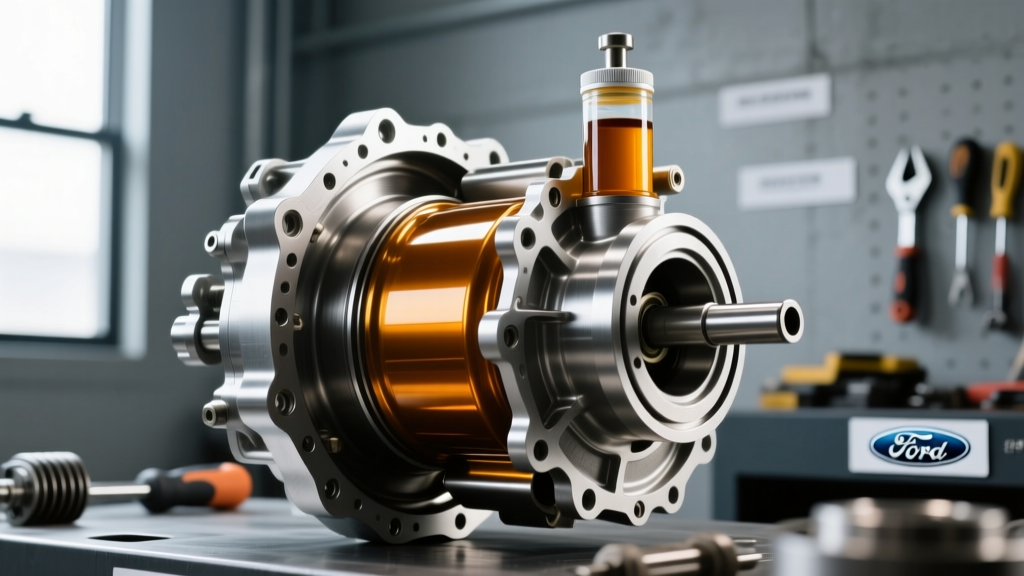
When discussing the all-wheel-drive (AWD) system of the 2018 Ford Escape, enthusiasts and mechanics immediately gravitate toward the notorious Power Transfer Unit (PTU) mounted at the front transaxle. However, the rear half of the equation—the Rear Drive Unit (RDU), commonly referred to as the rear differential—is equally critical to vehicle dynamics and longevity. Unlike traditional solid-axle trucks, the 2018 Escape utilizes an independent rear suspension with a sophisticated, electronically controlled RDU. This unit houses a hypoid ring and pinion gearset alongside a gerotor pump and an electronic clutch pack (Coupling Control Module, or CCM) that actively vectors torque to the rear wheels when slip is detected.
Because the RDU is a 'sealed' unit without a traditional dipstick, many owners mistakenly believe it is filled with lifetime fluid. In reality, the severe thermal cycling of the clutch pack and the shearing forces on the hypoid gears degrade the fluid's friction modifiers and anti-wear additives. As we navigate the 2026 automotive maintenance landscape, understanding the true 2018 Ford Escape rear differential fluid cost and service intervals is vital for preventing catastrophic AWD failure and avoiding thousands in replacement costs.
2026 Service Pricing Breakdown: Dealer vs. Independent vs. DIY
The cost to service the rear differential on a 2018 Ford Escape varies significantly depending on your chosen service channel. Because the RDU requires less than a single quart of fluid and lacks complex gasket surfaces (relying instead on O-rings or crush washers on the drain/fill plugs), the labor time is remarkably low. Below is the 2026 pricing matrix based on national averages and current parts inflation.
| Service Provider | Estimated Labor Cost | Fluid & Parts Cost | Total Estimated Cost | Warranty & Notes |
|---|---|---|---|---|
| Ford Dealership | $65 - $95 (0.4 hrs) | $30 - $45 | $95 - $140 | 12-month/12k mile warranty. Uses OEM Motorcraft fluid. |
| Independent Mechanic | $50 - $80 | $25 - $40 | $75 - $120 | 90-day warranty. May use aftermarket 75W-85 or 75W-90. |
| Quick Lube Chain | $40 - $60 | $35 - $50 | $75 - $110 | Often overcharge for fluid. High risk of cross-threading soft aluminum plugs. |
| DIY (Home Garage) | $0 (30-45 mins) | $18 - $28 | $18 - $28 | Requires 3/8' drive, fluid pump, and torque wrench. |
As the table illustrates, the DIY route offers immense value. A single bottle of premium synthetic gear oil is all that stands between you and a healthy AWD system. However, if you opt for professional service, always verify that the shop is not mistakenly attempting to flush the RDU like an automatic transmission; it is a simple drain-and-fill procedure.
Fluid Specifications: What Goes Into the Escape RDU?
The 2018 Ford Escape RDU requires a specific gear oil viscosity to ensure the internal gerotor pump can adequately lubricate the clutch pack without causing cavitation, while still providing sufficient film strength for the hypoid ring and pinion. Ford's engineering specification for this application is WSS-M2C942-A.
OEM vs. Premium Aftermarket Alternatives
- Motorcraft SAE 75W-85 Premium Synthetic Hypoid Gear Lubricant (Part# XY-75W85-QL): This is the factory-fill and recommended OEM fluid. It contains the exact friction modifier package required to prevent clutch pack chatter during tight, low-speed turns. A standard 1-quart bottle typically retails between $18 and $24 on RockAuto or via local Ford parts counters.
- Amsoil Severe Gear 75W-90: While slightly heavier on the high-temperature viscosity scale, many enthusiasts in the Bob Is The Oil Guy community report excellent Used Oil Analysis (UOA) results using 75W-90 in Ford RDUs, particularly in high-heat environments or when towing small loads. However, sticking to the 75W-85 spec is the safest route for warranty compliance and optimal clutch engagement.
- Red Line 75W85 GL-5 Gear Oil: A premium, ester-based synthetic that offers exceptional shear stability. It is a direct viscosity match for the OEM fluid and provides superior protection against ring and pinion wear under sustained highway speeds.
Preventive Maintenance: Why the RDU Demands Attention
Why change the fluid if Ford doesn't explicitly mandate a strict mileage interval for 'normal' driving? The answer lies in the clutch pack. The Escape's AWD system is front-biased, meaning the rear wheels are only engaged when the ECU detects front slip or during hard acceleration. When the CCM engages the clutch pack, it generates immense localized heat. Over time, this heat oxidizes the gear oil, depleting the friction modifiers.
When friction modifiers are depleted, the clutch plates begin to stick and slip erratically. This manifests as a 'binding' sensation or shudder when turning sharply in a parking lot. If left unaddressed, the clutch pack will glaze or burn out entirely, triggering an 'AWD Off' warning on the dashboard and requiring a complete RDU replacement—a job that easily exceeds $1,500 in parts and labor at a Ford dealership. Changing the fluid every 30,000 to 50,000 miles removes suspended metallic particulates and replenishes the vital friction modifiers.
DIY Service Protocol: Torque Specs and Procedures
For the mechanically inclined, servicing the 2018 Ford Escape rear differential is a straightforward 45-minute job. You will need a fluid extraction pump, a 3/8-inch drive ratchet (the plugs often accept a standard 3/8-inch square drive or a 10mm hex bit), a torque wrench, and nitrile gloves.
- Preparation: Park the Escape on a level surface and secure it on jack stands. Never rely solely on a hydraulic floor jack. Ensure the vehicle is perfectly level, as the RDU fill capacity is highly sensitive to the vehicle's pitch.
- Clean the Plugs: Spray the area around both the upper FILL plug and the lower DRAIN plug with brake cleaner. The RDU is exposed to road grime, and introducing dirt into the unit will accelerate bearing wear.
- Remove the FILL Plug First: This is the golden rule of differential service. If you drain the fluid first and subsequently find that the fill plug is seized or stripped, you will be left with a stranded vehicle. Remove the upper fill plug.
- Drain the Fluid: Place a catch pan beneath the RDU and remove the lower drain plug. Allow the 0.65 Liters (0.69 Quarts) of fluid to drain completely. Inspect the drain plug for excessive metallic fuzz; a light, fine paste on the magnet is normal, but large chips indicate internal gear or bearing failure.
- Reinstall Drain Plug: Clean the threads and reinstall the drain plug. The factory torque specification for the RDU drain and fill plugs is 35 Nm (26 lb-ft). Do not overtighten, as the RDU housing is cast aluminum and the threads strip easily.
- Fill the RDU: Using a hand-pump, feed the new 75W-85 fluid into the fill hole. The exact capacity is 0.65 Liters. Continue pumping until the fluid begins to weep out of the bottom edge of the fill hole. This indicates the unit is perfectly leveled.
- Final Torque: Reinstall the fill plug and torque to 35 Nm (26 lb-ft). Wipe away any spilled gear oil, as the smell is notoriously pungent and can permeate your garage.
Diagnosing Rear Differential Noise Before It Fails
While performing your fluid service, take the opportunity to assess the health of the RDU based on its acoustic signature. A healthy Escape rear differential should be virtually silent. If you have been experiencing noise, use this diagnostic framework:
- Whining at 40-60 MPH: Typically indicative of pinion bearing wear or gear tooth pitting, often caused by running the RDU with low fluid levels due to a leaking axle seal.
- Clunking on Deceleration: Excessive backlash between the ring and pinion gears, or worn internal spider gears. This usually requires a teardown and rebuild rather than just a fluid swap.
- Chatter During Tight Turns: As mentioned, this is the hallmark of degraded friction modifiers in the clutch pack. A drain and fill with fresh OEM Motorcraft 75W-85 usually resolves this issue within 50 miles of driving as the new fluid circulates through the CCM.
Final Verdict: Is the Service Worth the Investment?
The 2018 Ford Escape rear differential fluid cost is remarkably low when viewed through the lens of preventive maintenance. Spending $25 on a bottle of Motorcraft 75W-85 and 30 minutes of your weekend to perform a DIY drain-and-fill is the most cost-effective insurance policy you can buy for your vehicle's AWD system. Whether you choose to turn the wrenches yourself or pay an independent mechanic $100 for the privilege, adhering to a 40,000-mile service interval will preserve the integrity of the RDU clutch pack, ensure seamless torque vectoring, and keep your Escape firmly planted on the pavement for years to come.