Seeing the infamous "Drivetrain Malfunction" message illuminate your iDrive screen is a rite of passage for many BMW owners. While the warning can stem from fuel system or ignition issues, a significant percentage of these alerts—especially in xDrive-equipped models—originate directly from the all-wheel-drive (AWD) transfer case and driveline components. To properly diagnose and prevent these failures, it is critical to understand the mechanical differences between BMW's xDrive AWD system and traditional 4WD setups, and how preventive maintenance protocols differ for each.
AWD vs. 4WD: Core Mechanical Differences
A common misconception in the automotive world is the interchangeable use of "AWD" and "4WD." From a drivetrain engineering perspective, they are vastly different architectures, and treating a BMW xDrive system like a traditional part-time 4WD truck will lead to catastrophic mechanical failure.
| Feature | BMW xDrive (Full-Time AWD) | Traditional Part-Time 4WD |
|---|---|---|
| Torque Split Mechanism | Wet multi-plate clutch pack (Active Torque Coupling) | Dog-clutch or locked gear set (Transfer Case) |
| Center Differential | Simulated via clutch slip (No binding on dry pavement) | None (Causes driveline bind/hop on dry pavement) |
| Typical Transfer Case | BMW ATC 400 / ATC 500 / ATC 35L | New Venture NV241 / NV271 |
| Engagement | ECU-controlled, infinite variability (0-100% front/rear) | Driver-selected, locked 50/50 split |
| Primary Fluid Type | Specialized Friction-Modified Fluid (TF 0870) | ATF+4 or 75W-90 Gear Oil |
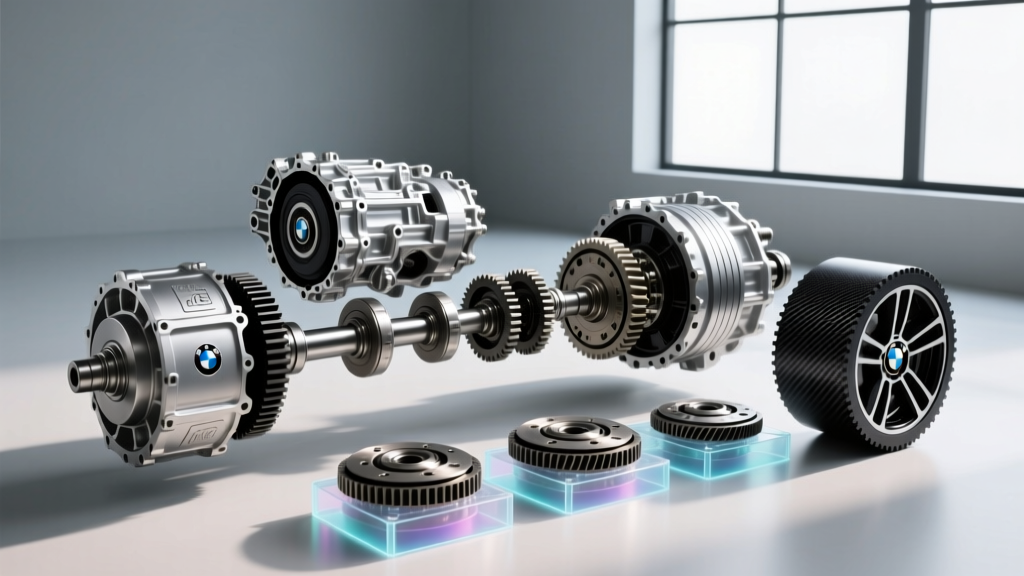
Unlike a traditional 4WD system that physically locks the front and rear driveshafts together via a dog clutch, BMW's xDrive relies on an electronically controlled wet multi-plate clutch pack housed inside the transfer case. This allows the ECU to seamlessly vector torque front-to-rear in milliseconds. However, this reliance on clutch friction makes the xDrive system hyper-sensitive to fluid degradation and rolling circumference mismatches.
The Root Cause of the BMW Drivetrain Warning
When the ECU detects a discrepancy between the commanded torque split and the actual physical position of the transfer case clutch pack, it triggers a failsafe. The iDrive system will display the "BMW Drivetrain Warning," often accompanied by diagnostic trouble codes such as 480A (Transfer case internal fault) or 5F3A (Transfer case actuator motor fault).
The Infamous Plastic Actuator Gear
In the widely used ATC 400 and ATC 500 transfer cases, the electric actuator motor uses a small plastic gear to engage the clutch pack cam. Over time, and exacerbated by degraded fluid or mismatched tires, the resistance on the clutch pack increases. The electric motor strains, and the plastic teeth strip. The motor spins, but the clutch pack doesn't move. The ECU registers a position mismatch and throws the drivetrain warning, defaulting the car to rear-wheel drive to protect the driveline.
Tire Circumference Mismatch
Because xDrive lacks a traditional locking center differential, it relies on the clutch pack to absorb speed differences between the front and rear axles. If your front tires are worn down to 4/32" of tread while your rear tires are brand new, the rolling circumference difference forces the transfer case clutches to continuously slip. This generates immense heat, glazes the clutch friction material, and eventually triggers the drivetrain malfunction warning.
Preventive Maintenance Protocol: Beating the Malfunction
As of 2026, BMW's newer G-chassis and electrified xDrive variants utilize even more complex torque-vectoring differentials. However, the foundational preventive maintenance for the mechanical transfer case remains strict. Follow this protocol to keep the drivetrain warning off your dash.
1. Transfer Case Fluid Service (The 30,000-Mile Rule)
BMW often labels the transfer case fluid as "lifetime." In the real world, "lifetime" simply means the lifetime of the warranty. To prevent clutch glazing and actuator gear wear, the fluid must be serviced every 30,000 to 40,000 miles.
- Fluid Specification: BMW TF 0870 (Part# 83222446673). Do not substitute with standard ATF; the friction modifiers are specific to the xDrive clutch pack.
- Capacity: Approximately 0.6 Liters (ATC 35L) to 0.8 Liters (ATC 500).
- Drain/Fill Plug Torque: 30 Nm (22 lb-ft). Use a new aluminum crush washer on the fill plug to prevent weeping.
- Procedure: The vehicle must be perfectly level. Remove the fill plug first, then the drain plug. Use a fluid transfer pump to inject the TF 0870 until it weeps out of the fill hole.
2. Strict Tire Circumference Matching
When replacing tires on an xDrive vehicle, you cannot simply match the size on the sidewall. You must match the rolling circumference. BMW officially requires that the circumference difference between the front and rear axles does not exceed 1% to 2%. Always look for BMW Star-rated tires (marked with a ★ on the sidewall), as these are manufactured to exacting tolerances specifically for xDrive systems. If a single tire is damaged and must be replaced, utilize a tire-shaving service to match the tread depth of the remaining three tires.
3. Driveshaft and Guibo (Flex Disc) Inspection
The drivetrain warning can also be triggered by excessive driveline vibration, which confuses the transfer case output speed sensors. Inspect the Guibo (flex disc) located between the transmission output shaft and the front half of the driveshaft.
- Inspection: Look for radial cracks, missing chunks of rubber, or separation from the metal sleeve. A failed Guibo introduces harmonic vibrations that the ECU may interpret as clutch slip.
- Part Number: OEM Guibo (Part# 26117527475 for many F/G-chassis models).
- Torque Spec: M10 driveshaft-to-flex disc bolts must be torqued to 56 Nm plus an additional 90-degree turn. Always use new stretch bolts.
Real-World Repair Costs vs. Preventive Care
Ignoring preventive maintenance on an AWD system is a fast track to massive repair bills. Here is a realistic look at the costs associated with xDrive negligence versus proactive care, based on current 2026 independent specialist labor rates.
| Service / Repair | Estimated Cost (Parts + Labor) | Frequency |
|---|---|---|
| Transfer Case Fluid Service (TF 0870) | $150 - $250 | Every 30k - 40k Miles |
| Actuator Gear Upgrade (Brass/CNC Aluminum) | $400 - $700 | As Needed (Preventive Fix) |
| OEM Transfer Case Actuator Motor Assembly | $800 - $1,200 | Upon Failure |
| Complete OEM Transfer Case Replacement | $2,800 - $4,500+ | Upon Catastrophic Failure |
Expert Insight: If your BMW throws a Drivetrain Malfunction code related to the transfer case actuator, do not immediately condemn the entire transfer case. Independent BMW specialists can often drop the transfer case, split the actuator housing, and replace the stripped plastic gear with an aftermarket brass or billet aluminum gear for a fraction of the cost of a dealer replacement. Always verify the mechanical integrity of the internal cam before authorizing a $4,000 part replacement.
Final Thoughts on Drivetrain Longevity
The "BMW Drivetrain Warning" is not a death sentence, but it is a highly sensitive indicator of mechanical distress. By understanding that your xDrive AWD system relies on precise friction modifiers and tight rolling tolerances—unlike the brute-force locking mechanisms of traditional 4WD trucks—you can tailor your maintenance approach. Stick to the 30,000-mile TF 0870 fluid intervals, measure your tires with a pi tape, and inspect your flex discs. For more deep-dive technical specifications on BMW drivetrains, consult resources like BimmerPost's technical sub-forums or your local independent European auto specialist.