Recognizing High-Torque Symptoms in Stock Converters
When enthusiasts push factory powertrains beyond their original engineering limits, the torque converter is often the first component to exhibit catastrophic symptoms. As of 2026, modern platforms like the GM 6L80, Ford 10R80, and ZF 8HP are frequently subjected to aggressive ECU tuning, larger turbochargers, and increased boost pressures. While the transmission's internal clutches might survive initial tuning, the stock torque converter quickly reveals its mechanical ceiling.
The most common symptoms of a stock torque converter failing under high-torque applications include severe TCC (Torque Converter Clutch) shudder, uncommanded RPM flaring during lockup, and physical ballooning. Ballooning occurs when the hydraulic pressure and engine torque exceed the yield strength of the stamped steel cover, causing it to expand outward. This expansion pushes the converter against the flexplate, which in turn thrusts the flexplate against the crankshaft thrust bearing, leading to catastrophic engine failure. According to Sonnax technical resources, ballooning is a primary indicator that a stock stamped-steel cover can no longer contain the torsional forces of a modified engine.
The Global Builder's Metric: Torque Converter Foot Pounds to Newton Meter
In the North American aftermarket, torque capacity is almost exclusively discussed in pound-feet (lb-ft). However, the global tuning landscape relies heavily on the metric system. For international builders, or domestic tuners adapting European transmissions like the ZF 8HP to American V8s, translating torque converter foot pounds to newton meter ratings is a critical step in ensuring the lockup clutch can handle the applied load without slipping.
Modern transmission control modules (TCMs), especially when tuned via software like HP Tuners or Bosch Motorsport tools, often require TCC slip limits and torque capacity thresholds to be input in Newton Meters (Nm). If you misinterpret these values, you risk commanding a TCC apply pressure that exceeds the physical friction limit of the converter's clutch material, resulting in immediate glazing and failure.
Performance Torque Capacity Conversion Matrix
| Application Tier | Engine Torque (lb-ft) | Engine Torque (Nm) | Recommended TCC Friction Type |
|---|---|---|---|
| Street / Mild Towing | 450 - 550 | 610 - 745 | OEM Carbon-Fiber Composite |
| Street/Strip / Supercharged | 600 - 850 | 813 - 1152 | Sintered Bronze / Multi-Disc Carbon |
| Dedicated Drag / Sled Pulling | 1,000+ | 1,355+ | Lockup Bypass / Solid Billet Coupling |
Note: Always size your converter's TCC clutch capacity at least 20% higher than your engine's peak crank torque to account for heat-induced fluid degradation and transient torque spikes.
Selecting Stall Speed and K-Factor for Modified Engines
Upgrading to a performance torque converter isn't just about surviving high torque; it's about optimizing the torque multiplication curve. The industry standard for matching a converter to an engine is the K-Factor. The formula is straightforward: K = RPM / √Torque.
Let's look at a real-world scenario for a supercharged GM 4L60E build producing 550 lb-ft of torque at a peak stall RPM of 3,200. The square root of 550 is approximately 23.45. Dividing 3,200 by 23.45 yields a K-Factor of 136. A converter with a K-Factor of 136 will perfectly flash to your engine's peak torque RPM, keeping the engine in its optimal powerband during launch. If you install a generic '3200 stall' converter without verifying the K-Factor against your specific torque curve, the converter will either flash past the powerband (causing excessive heat and tire spin) or fall short (bogging the engine).
For heavier vehicles utilizing the 6L80 or 10R80, a lower K-Factor (typically 90-110) is required to manage low-end street manners and towing thermals, even if the peak stall speed remains relatively high due to the engine's massive low-end torque output.
Billet Components and TCC Friction Materials
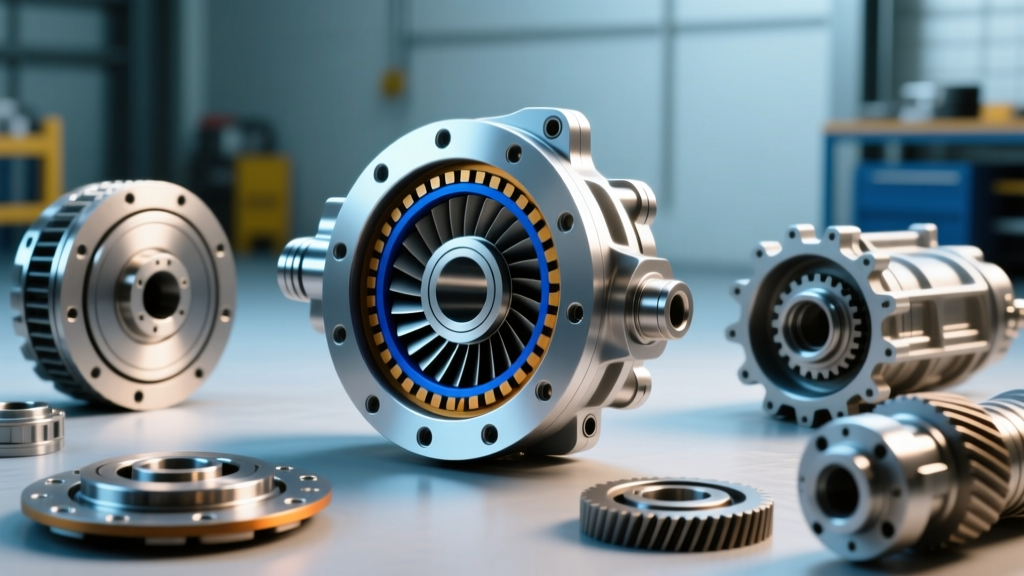
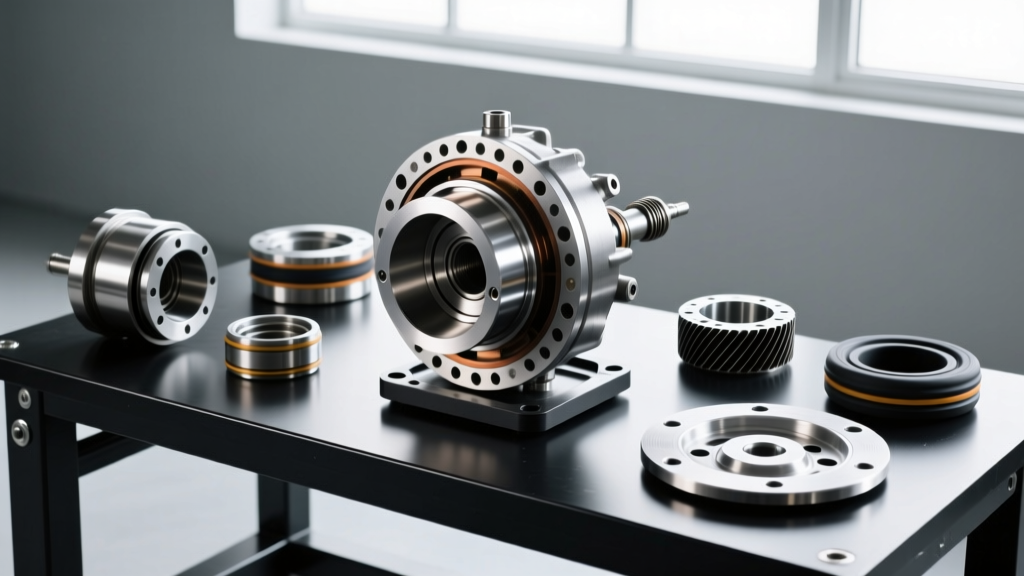
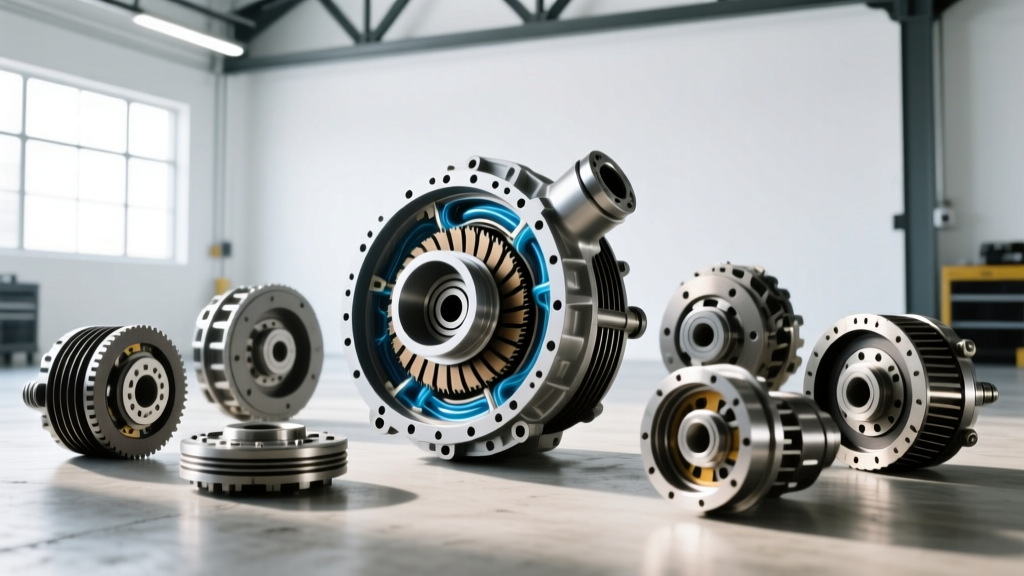
To eliminate the symptoms of flex, shudder, and ballooning, premium performance converters replace stamped steel internals with CNC-machined billet components. When evaluating upgrades from manufacturers like TCI Automotive or Precision Industries, look for the following hardware specifications:
- Billet Steel Covers: Machined from a single block of steel, these covers completely eliminate ballooning, maintaining exact endplay clearances and protecting the crankshaft thrust bearing.
- Billet Stator Supports: Prevents the stator from warping under high hydraulic pressure, ensuring consistent torque multiplication and preventing internal fluid cavitation.
- Multi-Disc TCC Clutches: Instead of a single, thin carbon-fiber ring, high-Nm performance converters utilize multi-disc setups (similar to a transmission clutch pack) to distribute the torque load across a larger surface area, eliminating highway-speed shudder.
- Finned Billet Impellers: Optimized blade angles that move higher volumes of fluid, directly increasing torque multiplication ratios for heavy vehicles or drag applications.
Critical Installation Clearances and Torque Specs
A high-dollar billet torque converter will fail prematurely if installed incorrectly. The most common installation error is improper flexplate-to-converter bolt torque and failure to verify pump engagement. When mating a new performance converter to your transmission, adhere strictly to these parameters:
1. Pump Gear Seating
Before bolting the transmission to the engine block, you must feel the converter drop into the transmission pump gear. You should feel three distinct drops: the input shaft splines, the stator support shaft, and finally, the pump drive gear. If the converter is not fully seated, tightening the bellhousing bolts will crush the transmission pump, resulting in immediate zero-pressure failure upon startup.
2. Flexplate-to-Converter Bolt Torque
Most GM and Ford performance applications utilize M10x1.5 flexplate bolts. While factory manuals may suggest lower torque settings for stock hardware, aftermarket billet covers and heavy-duty flexplates require precise clamping force to prevent harmonic loosening.
- Fastener: ARP Flexplate Bolts (e.g., ARP 200-2902 or equivalent)
- Lubricant: ARP Ultra-Torque Fastener Assembly Lubricant
- Target Torque (Newton Meters): 65 Nm
- Target Torque (Pound-Feet): 48 lb-ft
- Threadlocker: Do NOT use Loctite if using ARP lube; the hydraulic tension is sufficient. If using OEM bolts, apply Medium (Blue) threadlocker and torque to 46 Nm (34 lb-ft).
3. Endplay and Pilot Clearance
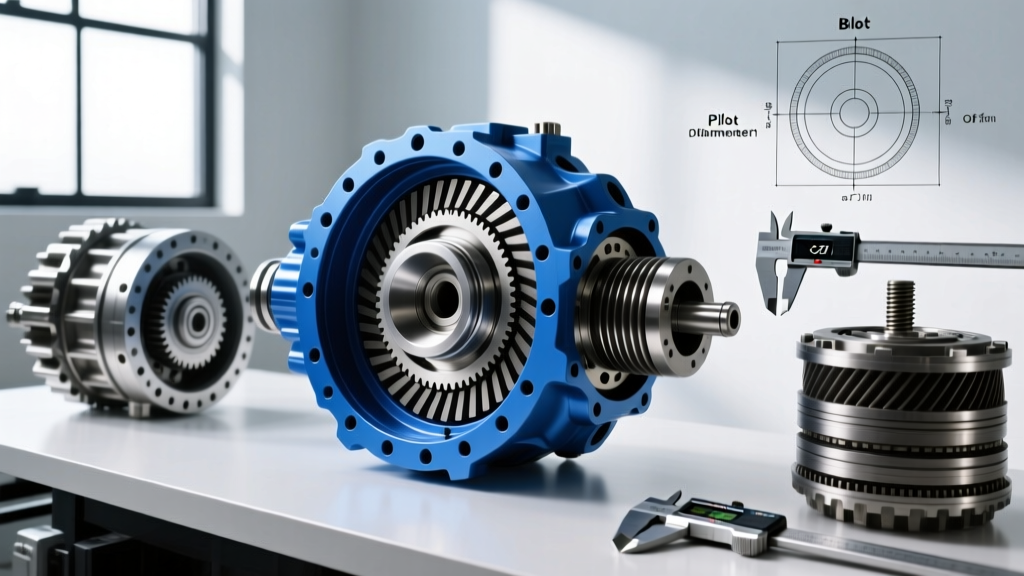
Once the transmission is mated to the engine block, verify the clearance between the converter pilot and the crankshaft bore. There must be a minimum of 0.125 inches (3.17 mm) of clearance to account for thermal expansion and crankshaft thrust movement. Shimming the converter is mandatory if clearance exceeds 0.250 inches (6.35 mm) to prevent the converter from walking forward and destroying the pump seal during high-RPM operation.
Performance Upgrade Cost vs. Capacity Matrix
Investing in a performance torque converter is a matter of matching your budget to your mechanical requirements. Below is a comparative analysis of current market pricing and capacity thresholds for popular RWD/AWD platforms.
| Converter Class | Typical Cost (USD) | Torque Capacity | Best Application |
|---|---|---|---|
| OEM Replacement (Stamped) | $250 - $450 | ~400 lb-ft (542 Nm) | Stock daily drivers, basic towing |
| Stage 1 Billet Cover (Single Disc TCC) | $650 - $950 | ~650 lb-ft (881 Nm) | Tuned street trucks, mild supercharged cars |
| Stage 2 Billet (Multi-Disc / Sintered) | $1,100 - $1,600 | ~1,000 lb-ft (1355 Nm) | Street/Strip, heavy sled pulling, high-boost |
| Race / Non-Lockup (Solid Coupling) | $800 - $1,200 | Unlimited (Mechanical) | Dedicated drag cars, no street driving |
Final Diagnostics and Tuning Integration
Upgrading the physical hardware is only half the battle. To fully eliminate TCC shudder and slip symptoms, the TCM must be recalibrated to match the new converter's characteristics. A performance converter with a higher stall speed and stiffer TCC apply springs requires revised transmission line pressure tables. Failing to increase the TCC apply pressure (often measured in PSI or kPa within the TCM) will result in the clutch slipping under heavy throttle, generating massive amounts of heat and ultimately destroying the new friction materials.
By understanding the relationship between K-Factors, physical hardware limitations, and accurately converting torque converter foot pounds to newton meter ratings for your tuning software, you can build a drivetrain that not only survives high-horsepower abuse but actively multiplies it to the pavement with surgical precision.