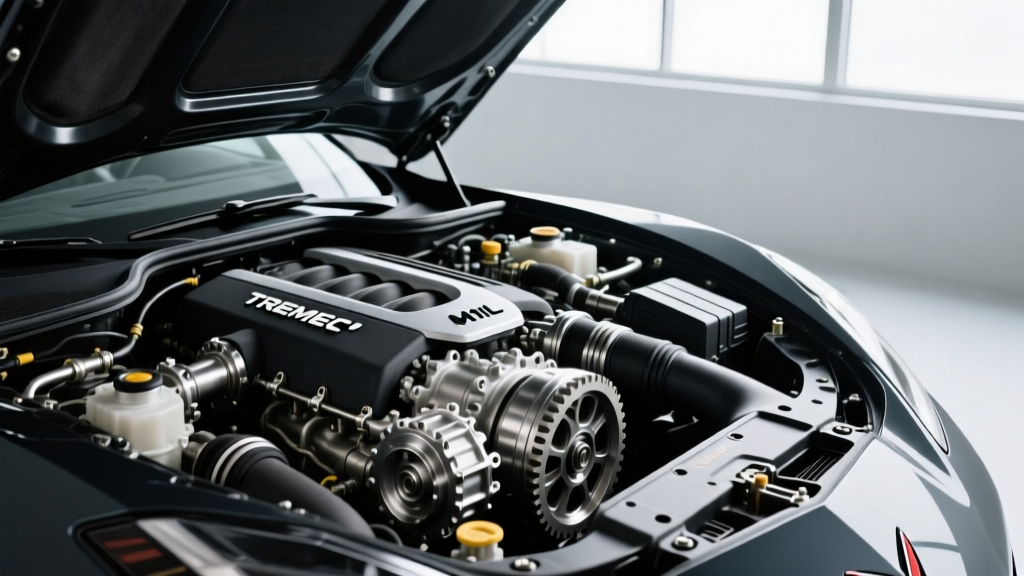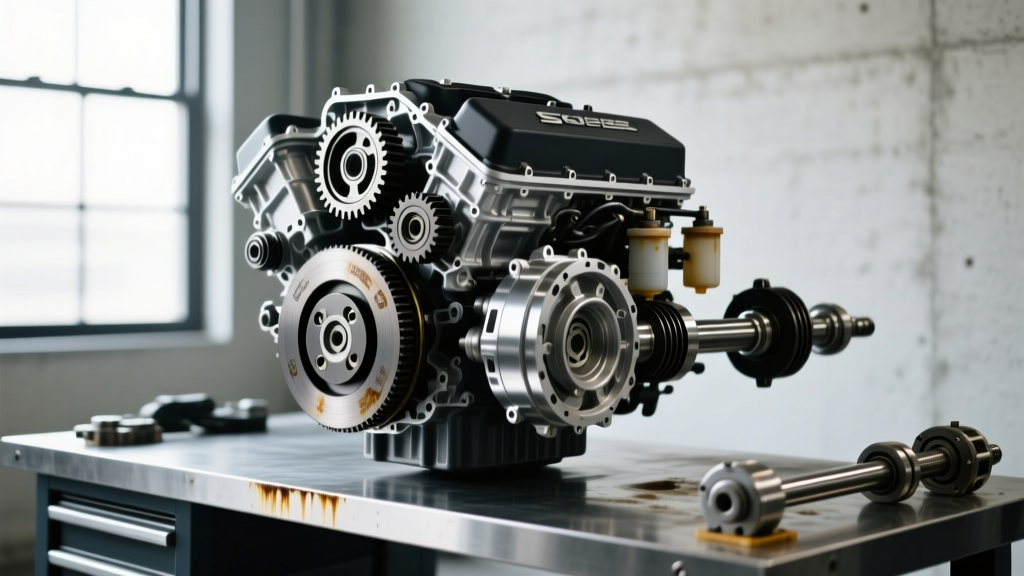
The 2026 Landscape: Analog Drivetrains in a Digital Era
As we navigate the 2026 model year, the automotive industry's pivot toward electrification and multi-speed automatic transmissions has severely bottlenecked the production of manual gearboxes. However, the analog driving experience is far from extinct. When new drivers and enthusiasts research what manual transmission cars are available, they are often met with a curated list of performance-oriented machines. But not all stick-shifts are created equal, especially for those just learning the friction zone.
Choosing the right manual transmission for beginners requires looking past peak horsepower and focusing on mechanical forgiveness. Factors like clutch pedal effort, flywheel mass, synchronizer friction materials, and hydraulic assist ratios dictate whether a novice driver will build confidence or stall out in frustration. This technical deep-dive explores the engineering behind the most accessible manual platforms on the market today.
The Engineering of Forgiveness: Synchros, Flywells, and Hydraulics
Before evaluating specific chassis, it is critical to understand the internal components that separate a beginner-friendly manual from a track-focused, unforgiving unit.
Carbon vs. Brass Synchronizers
Synchronizers match the speed of the gear and the shaft before the dog teeth engage. Traditional brass synchros are durable but require precise rev-matching to avoid gear clash (the dreaded 'manual transmission grind'). Modern beginner-friendly manuals, such as the Aisin RC60 found in the Toyota GR86, utilize carbon-coated synchronizer rings on the 1st, 2nd, and 3rd gears. Carbon offers a higher coefficient of friction, allowing the synchro to absorb speed differentials much faster. This means a beginner executing a clumsy 2-3 upshift without perfect throttle blipping will still achieve a smooth engagement without damaging the dog teeth.
Flywheel Mass and Stall Characteristics
The flywheel stores rotational kinetic energy. A heavy Dual-Mass Flywheel (DMF) dampens engine NVH (Noise, Vibration, and Harshness) and provides a wide friction zone, making it harder for a novice to stall the car at a stoplight. Conversely, a lightweight Single-Mass Flywheel (SMF) offers rapid throttle response and easier rev-matching but requires quicker, more precise clutch modulation. Understanding this distinction is vital when selecting a first manual car.
Top Chassis for the Novice Driver
Based on drivetrain layout, hydraulic tuning, and internal gearbox architecture, here is a technical breakdown of the best platforms for learning.
2026 Honda Civic Si (FWD Platform)
The front-wheel-drive layout inherently forgives trailing-throttle oversteer, allowing beginners to focus entirely on left-foot modulation. The Civic Si utilizes a highly refined 6-speed manual (Part # 20021-5BF-A00) paired with a helical limited-slip differential.
- Flywheel: Dual-Mass Flywheel (DMF). The DMF's internal spring pack absorbs the torsional vibrations of the 1.5L turbocharged engine, resulting in an incredibly wide, forgiving friction zone.
- Hydraulics: Honda's clutch master cylinder is tuned for a linear, predictable engagement point, with a pedal effort peaking at roughly 32 lbs.
- Fluid Spec: Genuine Honda MTF (Manual Transmission Fluid). Capacity: 1.6L.
2026 Toyota GR86 (RWD Platform)
For those wanting to learn rear-wheel-drive weight transfer, the GR86 is the benchmark. It uses the Aisin RC60 6-speed transmission. According to technical discussions on the FT86Club Technical Forums, the RC60's carbon synchros are a game-changer for novices learning to downshift.
- Flywheel: Single-Mass Flywheel (SMF). While slightly easier to stall than the Civic Si, the SMF provides direct feedback, teaching beginners the exact RPM required to match road speed.
- Shifter Feel: Direct-linkage feel with short throws, reducing the chance of 'money shifts' (accidentally engaging a lower gear than intended).
- Fluid Spec: API GL-5 75W-90 (Toyota Genuine). Capacity: 2.2L.
2026 Mazda MX-5 Miata (RWD Platform)
The Miata remains the quintessential learning tool. Its 6-speed gearbox (derived from the Mazda M6 architecture) is renowned for its rifle-bolt shift action. As documented in the Miata.net Technical Garage, the ND2 generation features optimized clutch hydraulics that virtually eliminate the 'dead pedal' feel found in older models.
- Clutch Effort: Exceptionally light at roughly 25 lbs, reducing left-leg fatigue during stop-and-go traffic learning sessions.
- Fluid Spec: API GL-4 75W-80. Capacity: 2.0L. (Note: Using GL-5 in this specific Mazda gearbox can degrade the yellow metals in the synchros over time).
Comparative Technical Specifications
The table below contrasts the mechanical attributes that directly impact the learning curve for a novice driver.
| Vehicle (2026) | Transmission Model | Flywheel Type | Clutch Pedal Effort | Synchro Material (1-3) | Stall Forgiveness |
|---|---|---|---|---|---|
| Honda Civic Si | Honda 6-Speed (Helical LSD) | Dual-Mass (DMF) | ~32 lbs | Carbon/Brass Hybrid | High |
| Toyota GR86 | Aisin RC60 | Single-Mass (SMF) | ~28 lbs | Carbon-Coated | Medium |
| Mazda MX-5 Miata | Mazda M6-Derived | Single-Mass (SMF) | ~25 lbs | Carbon/Brass Hybrid | Medium-High |
Data compiled from manufacturer service manuals and Car and Driver's Manual Transmission Roundup.
Maintenance Protocols and Torque Specs
Beginners must also learn the fundamentals of manual transmission maintenance. Neglecting fluid intervals leads to synchro degradation, making the gearbox feel 'notchy' and increasing the likelihood of grinding. Here are the critical service specifications for the beginner's garage:
Honda Civic Si Service Data
- Drain Plug Torque: 29 lb-ft (39 Nm)
- Fill Plug Torque: 29 lb-ft (39 Nm)
- Interval: 60,000 miles under severe conditions (which includes frequent stop-and-go learning).
Toyota GR86 Service Data
- Drain Plug Torque: 33 lb-ft (44 Nm)
- Fill Plug Torque: 33 lb-ft (44 Nm)
- Interval: 30,000 miles for initial break-in fluid change, then every 45,000 miles.
Expert Tech Tip: Always remove the fill plug before the drain plug. If the fill plug is seized and you have already drained the fluid, the vehicle is immobilized until the plug is extracted. This is a common, costly mistake for DIY beginners.
Mechanical Consequences of Novice Errors
Understanding the physical damage caused by improper technique reinforces good habits. When learning on a manual transmission, beginners frequently make two critical errors that have direct mechanical consequences:
1. Riding the Clutch (Slipping)
Resting the left foot on the clutch pedal while driving applies slight pressure to the release bearing, which in turn presses the diaphragm spring. This reduces the clamping force of the pressure plate against the friction disc. The resulting micro-slippage generates immense heat, glazing the friction material and potentially warping the flywheel surface. Replacement of a clutch kit and flywheel resurfacing on a 2026 Civic Si will cost between $1,200 and $1,800 at an independent shop.
2. Lugging the Engine
Attempting to accelerate from 1,500 RPM in 4th or 5th gear places extreme low-speed, high-load stress on the engine internals and the transmission's main shaft bearings. In vehicles equipped with a Dual-Mass Flywheel (like the Civic Si), lugging causes violent torsional vibrations that can prematurely destroy the DMF's internal damping springs, leading to a metallic rattling noise at idle and a $900+ parts replacement cost.
Final Synthesis
The answer to what manual transmission cars are available in 2026 is a short but highly capable list. For the absolute beginner prioritizing mechanical forgiveness and stall resistance, the FWD Honda Civic Si with its DMF and linear hydraulics is unparalleled. For the novice eager to learn RWD dynamics and advanced rev-matching, the carbon-synchro-equipped Toyota GR86 and the lightweight Mazda MX-5 Miata offer the most transparent, communicative drivetrains on the market. By respecting the torque specs, fluid requirements, and friction limits of these machines, new drivers can master the manual transmission while preserving the engineering integrity of the gearbox.