The Physics of the Shift: Answering the Ultimate Drivetrain Question
When enthusiasts and daily commuters alike ask, is manual transmission faster than automatic, the objective answer requires separating emotion from telemetry. In the 2026 automotive landscape, modern dual-clutch automatics (DCTs) have unequivocally won the pure acceleration war. However, when we pivot the lens to manual transmission in daily driving—navigating stop-and-go traffic, managing thermal loads, and calculating long-term repair costs—the narrative shifts dramatically.
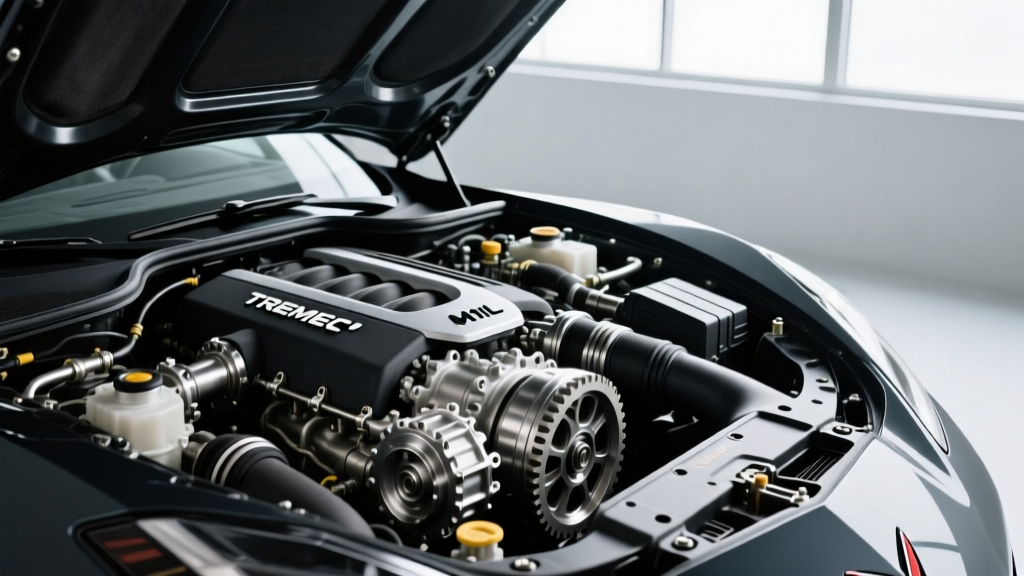
To provide a definitive, model-specific repair perspective, we are analyzing the Chevrolet Corvette C8 platform. Specifically, we are comparing the Tremec M1L 8-speed manual (RPO MM7) against the Tremec TR-9088 8-speed DCT. By examining shift speeds, daily commuting wear patterns, and exact workshop repair specifications, we can determine which transmission truly conquers the daily grind.
Shift Speeds vs. Daily Drivability
If we strictly measure shift times, the automatic DCT is vastly superior. According to instrumented testing by Car and Driver, the Tremec TR-9088 DCT executes upshifts in approximately 80 to 100 milliseconds. By contrast, even a highly skilled driver operating the Tremec M1L manual will average 450 to 600 milliseconds per shift. The DCT's pre-selected gear architecture eliminates torque interruption, resulting in a 0-60 mph advantage of roughly 0.3 seconds in favor of the automatic.
Yet, daily driving rarely involves wide-open-throttle 0-60 sprints. In urban environments, the manual transmission offers distinct mechanical advantages in low-speed maneuverability, provided the driver understands clutch modulation. The M1L utilizes a dual-disc clutch assembly that offers a progressive bite point, but in heavy 2026 gridlock, this requires constant mechanical slip, generating immense localized heat.
"In daily traffic, a DCT is essentially two manual transmissions sharing one brain. When that brain gets confused by low-speed creeping, it overheats the clutch packs. A human with a left foot can often manage low-speed thermal loads better than early-generation DCT programming, though modern 2026 calibrations have largely bridged this gap." — Drivetrain Engineering Consensus
Daily Driving Wear: Clutch Pedals vs. Mechatronic Units
The true cost of daily driving a manual versus an automatic reveals itself on the lift. Stop-and-go traffic is the natural enemy of friction materials, but the failure modes differ wildly between the M1L manual and the TR-9088 DCT.
Tremec M1L Manual: The Dual-Mass Flywheel Reality
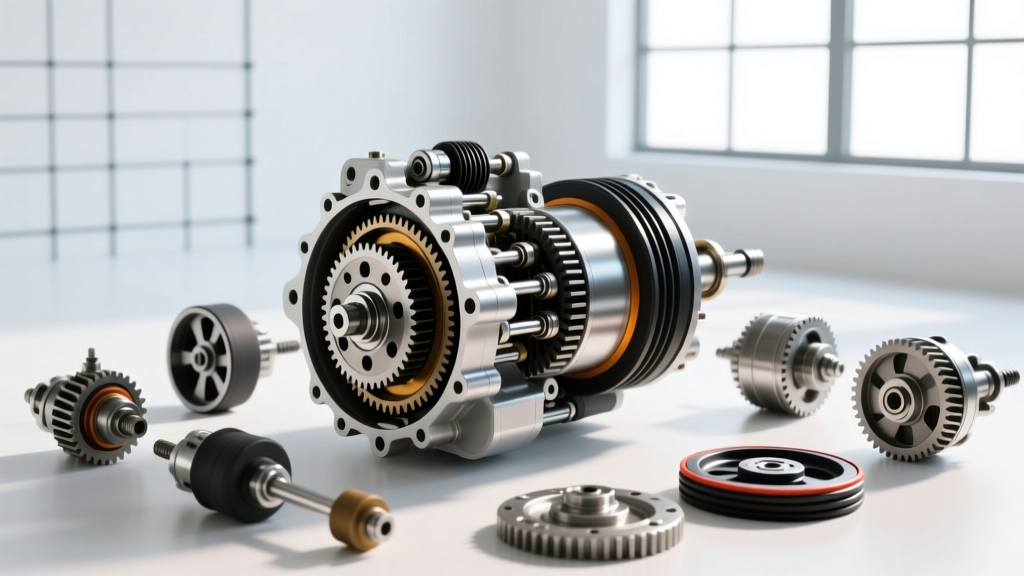
In daily driving, the M1L's twin-disc clutch system absorbs immense abuse. When you slip the clutch to inch forward in traffic, you are not just wearing the friction discs; you are stressing the Dual-Mass Flywheel (DMF). The DMF uses internal arc springs to dampen torsional vibrations from the V8 engine. Prolonged lugging (driving in 4th gear at 1,200 RPM in city traffic) or excessive slipping will overheat these springs, leading to a characteristic 'clunk' upon engine shutdown and a shudder during 1st-gear engagement.
- Friction Disc Wear Limit: Replace when lining thickness reaches 0.040 inches (1.0 mm).
- DMF Runout Specification: Maximum allowable lateral runout is 0.020 inches (0.5 mm) measured at the friction surface.
- Daily Driving Symptom: Chatter during 1st-gear release indicates DMF spring fatigue or oil contamination from a failing input shaft seal.
Tremec TR-9088 DCT: Fluid Degradation and Valve Body Wear
The DCT eliminates the driver's left foot but introduces complex hydraulics. In daily driving, the TR-9088 relies on its mechatronic unit to modulate clutch pack pressure. Stop-and-go traffic forces the transmission to constantly slip the odd or even clutch pack to simulate a torque converter's creep function. This slipping shears the specialized DCT fluid, degrading its friction modifiers and thermal stability. If the fluid is not serviced, the mechatronic solenoids begin to stick, resulting in harsh 2-1 downshifts and low-speed shudder.
Model-Specific Repair & Maintenance Matrix
Below is a comparative breakdown of the real-world maintenance and repair data for both transmissions when subjected to rigorous daily driving cycles.
| Specification / Metric | Tremec M1L (8-Speed Manual) | Tremec TR-9088 (8-Speed DCT) |
|---|---|---|
| Shift Time (Upshift) | ~500 ms (Driver Dependent) | ~85 ms (Automated) |
| Fluid Type & Part Number | ACDelco Manual Trans Fluid (P/N 88865466) | ACDelco DCT Fluid (P/N 19352824) |
| Fluid Capacity | 2.5 Liters (2.64 Quarts) | 7.5 Liters (7.92 Quarts) |
| Daily Traffic Failure Point | Dual-Mass Flywheel / Throwout Bearing | Mechatronic Sleeve / Clutch Pack Glazing |
| Avg. Clutch/Module Repair Cost | $2,800 - $3,500 | $6,500 - $9,200 |
| Drain Plug Torque Spec | 25 Nm (18 lb-ft) | N/A (Pan Removal Required) |
Workshop Guide: Servicing the Tremec M1L for Daily Commuters
For owners committed to the manual transmission in daily driving, proactive maintenance is the only way to preserve shift quality and prevent catastrophic synchro wear. The M1L does not have a traditional filter; it relies on a magnetic drain plug and splash lubrication.
Fluid Exchange Procedure
- Ensure the transmission is at operating temperature (approx. 140°F / 60°C) to suspend metallic particulates.
- Remove the fill plug first (located on the passenger side of the case). Crucial: Never remove the drain plug before verifying the fill plug is loose.
- Remove the magnetic drain plug. Torque spec for reinstallation is 25 Nm (18 lb-ft).
- Inspect the magnet. Fine metallic paste is normal for the first 5,000 miles; chunky debris indicates synchro ring or bearing failure.
- Fill with exactly 2.5L of ACDelco Manual Transmission Fluid until it weeps from the fill hole. Torque fill plug to 25 Nm (18 lb-ft).
Bellhousing and Clutch Replacement Specs
When the daily commute finally destroys the twin-disc clutch, the transmission must be dropped. The M1L is mated to the engine block via 10 bellhousing bolts.
- Bellhousing to Engine Block Torque: 50 Nm (37 lb-ft).
- Pressure Plate to Flywheel Torque: 28 Nm (21 lb-ft) in a star pattern.
- Input Shaft Alignment: Use the official Tremec alignment tool (Part # T-1001) to prevent binding the pilot bearing, a common cause of 1st-gear grinding in heavy traffic.
Workshop Guide: Servicing the TR-9088 DCT
If you opt for the automatic DCT for your daily commute, you are trading clutch-pedal fatigue for hydraulic complexity. The TR-9088 requires meticulous fluid hygiene. Unlike the manual, the DCT features an internal suction filter and an external spin-on cartridge that must be addressed during service.
According to Tremec's engineering guidelines and GM service bulletins, severe daily driving (defined as more than 50% stop-and-go traffic) mandates a DCT fluid and filter service every 22,500 miles, drastically shorter than the standard highway interval.
- Pan Bolt Torque: The stamped steel transmission pan is secured by 18 bolts. These are torque-to-yield and must be replaced. Torque to 10 Nm (89 lb-in).
- Mechatronic Sealing Sleeve: A known wear item in daily-driven DCTs is the mechatronic sealing sleeve (where the wiring harness enters the case). If you spot fluid weeping near the bellhousing inspection cover, replace the sleeve (Part # 24285941) immediately to prevent low-fluid-pressure clutch slip.
The Verdict: Which Belongs in Your Daily Driver?
So, is manual transmission faster than automatic? On a drag strip or a canyon road, the 8-speed DCT will consistently outrun and out-shift the manual. The mathematics of pre-loaded clutch packs simply cannot be beaten by human biology.
However, for manual transmission in daily driving, 'faster' is the wrong metric. The manual transmission offers a vastly superior long-term repairability profile. A complete M1L clutch and flywheel overhaul costs roughly $3,200 at an independent specialist and requires no software recalibration. Conversely, a TR-9088 DCT mechatronic failure or clutch pack replacement requires proprietary GM dealership software for clutch volume point (CVP) relearning, pushing repair bills well past $7,500.
If your daily commute consists of open highways and predictable traffic, the DCT is a mechanical marvel that reduces driver fatigue. But if your daily driving involves unpredictable gridlock, steep inclines, and a desire for predictable, user-serviceable mechanical longevity, the Tremec M1L manual remains the undisputed champion of the daily grind.