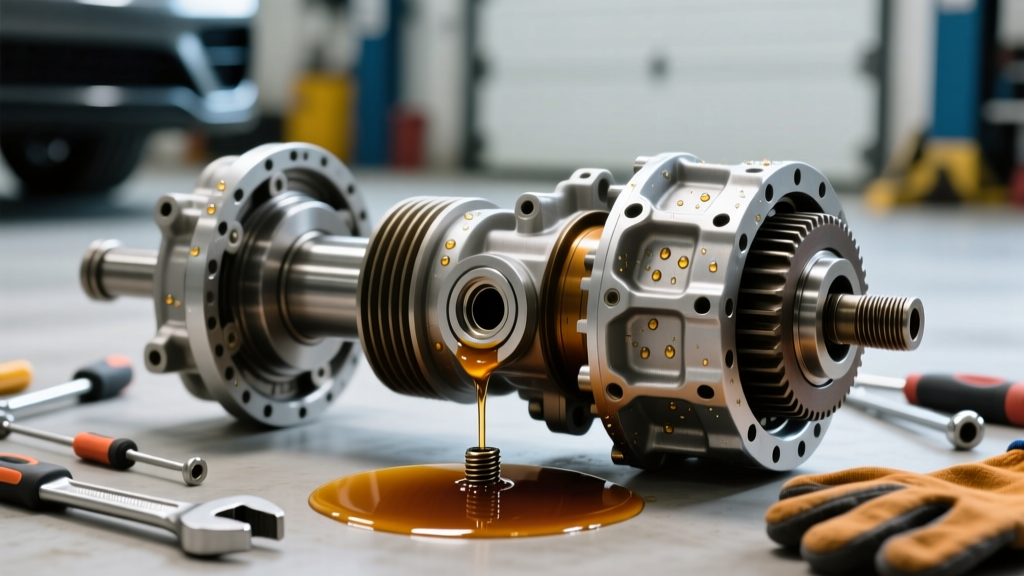
The Forgotten Axle: Why Front Differential Service Matters
When enthusiasts and daily drivers alike begin planning a drivetrain service, the rear differential usually steals the spotlight. It is larger, easier to access, and often associated with high-torque applications. However, the front differential in 4WD and AWD vehicles operates under severe, unique stressors. It must manage torque transfer while accommodating steering geometry, CV axle articulation, and brutal exposure to road debris and water. As of 2026, with modern trucks and SUVs pushing heavier curb weights and more complex disconnecting front-axle systems, ignoring the front diff is a fast track to a $2,500 ring-and-pinion replacement.
The most common question we receive in the shop is: how many quarts of differential fluid does the front axle actually hold? The answer is almost always less than you think, but the cost implications of neglecting it are massive. Below, we break down the exact capacities, fluid specifications, and a comprehensive cost analysis for front differential service.
Capacity Data: How Many Quarts of Differential Fluid for the Front Axle?
Unlike rear axles, which can hold anywhere from 2.5 to 4.0 quarts of gear oil depending on the ring gear size (e.g., a Dana 60 vs. a Dana 44), front differentials are typically compact. They are designed to minimize unsprung weight and maximize ground clearance. Consequently, most light-duty and mid-size truck front differentials require between 1.2 and 1.8 quarts.
Below is a reference table for some of the most common 4WD platforms on the road today. Always verify with your specific year's factory service manual, as integrated transaxle AWD systems (like the Subaru Symmetrical AWD) share front-diff fluid with the transmission case, whereas solid-front-axle or independent front suspension (IFS) trucks use a standalone sump.
| Vehicle Platform (4WD/AWD) | Front Diff Capacity | OEM Fluid Spec | Drain/Fill Plug Torque |
|---|---|---|---|
| Ford F-150 4x4 (IFS, 2015-2025) | 1.7 - 2.0 Quarts | SAE 75W-85 Premium Synthetic | 35 lb-ft (47 Nm) |
| Toyota Tacoma 4x4 (Front Diff) | 1.6 Quarts | SAE 75W-85 GL-5 | 29 lb-ft (39 Nm) |
| Jeep Wrangler JL (Dana 30 / M210) | 1.3 - 1.5 Quarts | SAE 75W-85 API GL-5 | 25 lb-ft (34 Nm) |
| Ram 1500 4x4 (Front Axle) | 1.7 Quarts | SAE 75W-85 Synthetic | 35 lb-ft (47 Nm) |
Front Differential Service Cost Breakdown: DIY vs. Professional
Because the front differential holds significantly less fluid than the rear, the raw material cost for a drain-and-fill is lower. However, labor rates and shop minimums can skew the final invoice. Here is a realistic cost analysis for 2026.
The DIY Cost Profile
Performing the service in your driveway is highly cost-effective, provided you have the correct socket sizes (often 3/8" or 1/2" drive hex, or specific Torx bits on European AWD systems) and a fluid transfer pump.
- Synthetic Gear Oil (75W-85 or 75W-90): $14.00 - $22.00 per quart. (Brands like Motul, Red Line, or Amsoil). For a 1.6-quart capacity, you must purchase 2 quarts. Cost: ~$35.00
- Crush Washers / Gaskets: Never reuse aluminum or copper crush washers. Sourcing OEM washers via RockAuto or a local dealer typically costs $2.00 to $5.00 per washer. You need two (one for drain, one for fill). Cost: ~$6.00
- Fluid Transfer Pump: A standard manual pump is a one-time purchase. Cost: ~$12.00
- Total DIY Cost: $41.00 - $53.00
The Dealership and Independent Shop Profile
Shops generally charge a flat "drivetrain service" rate or bill by the factory book time. The front diff is usually billed at 0.4 to 0.6 hours of labor.
- Fluid (Shop Markup): Shops buy in bulk but mark up per-quart pricing. Expect to pay $25 - $35 per quart installed.
- Labor (0.5 hrs @ $140-$190/hr): $70.00 - $95.00
- Shop Supplies / Hazardous Waste Fee: $5.00 - $15.00
- Total Professional Cost: $120.00 - $185.00
Hidden Costs: Water Intrusion and Emulsification
The front differential sits at the lowest point of the vehicle's drivetrain, often directly behind the front bumper and skid plate. This makes it highly susceptible to water ingestion. When a truck crosses a deep puddle or snowbank, the hot differential housing rapidly cools, creating a vacuum that pulls moisture past the axle seals or the breather tube if it is submerged or clogged.
When water mixes with GL-5 gear oil, it emulsifies, turning into a thick, chocolate-milk-like paste. This emulsion destroys the hydrodynamic boundary layer required to protect the hypoid ring and pinion gears. According to tribology data discussed extensively on Bob Is The Oil Guy's Gear Oil forums, even a 2% water contamination by volume can reduce the load-bearing capacity of gear oil by over 40%.
The Cost of Ignorance: If you skip a $45 DIY fluid change and the emulsified fluid causes catastrophic bearing and gear scoring, a front differential rebuild (new ring, pinion, master bearing kit, and seals) will cost between $1,400 and $2,800 in parts and labor. Replacing a complete front axle assembly from the OEM dealer can exceed $3,500.
Technical Specifications: Friction Modifiers and API Ratings
A critical mistake DIYers make is blindly adding Limited Slip Differential (LSD) friction modifiers to the front axle. While clutch-type LSDs in the rear axle require these additives (like Ford XL-3 or GM EOS) to prevent chatter during cornering, the vast majority of front differentials are open or utilize electronic locking mechanisms.
Adding a friction modifier to an open front differential or an electronic locker (like the Toyota e-Locker or Jeep's electronic actuator) can cause gear slip, delayed engagement, and accelerated wear. Always consult the factory manual. If the front diff is an open design, a standard API GL-5 synthetic without modifiers is required.
Pro-Tip: The "Fill-First" Rule
Before you ever put a wrench on the drain plug, always break loose the fill plug first. Front differential fill plugs are notorious for seizing due to their exposure to road salt and debris. If you drain the fluid and then discover the fill plug is stripped or welded shut by corrosion, your vehicle is immobilized. Penetrating oil and a 6-point socket are mandatory. For severe corrosion, an induction heater is the safest way to free the plug without cracking the aluminum or cast-iron housing.
Step-by-Step Front Diff Service Best Practices
- Warm the Fluid: Drive the vehicle for 10-15 minutes. Gear oil is highly viscous; warming it ensures suspended metallic particulates flow out of the sump rather than settling at the bottom.
- Remove Fill Plug, Then Drain Plug: Clean the area around both plugs with a wire brush and brake cleaner before opening to prevent dirt from entering the housing.
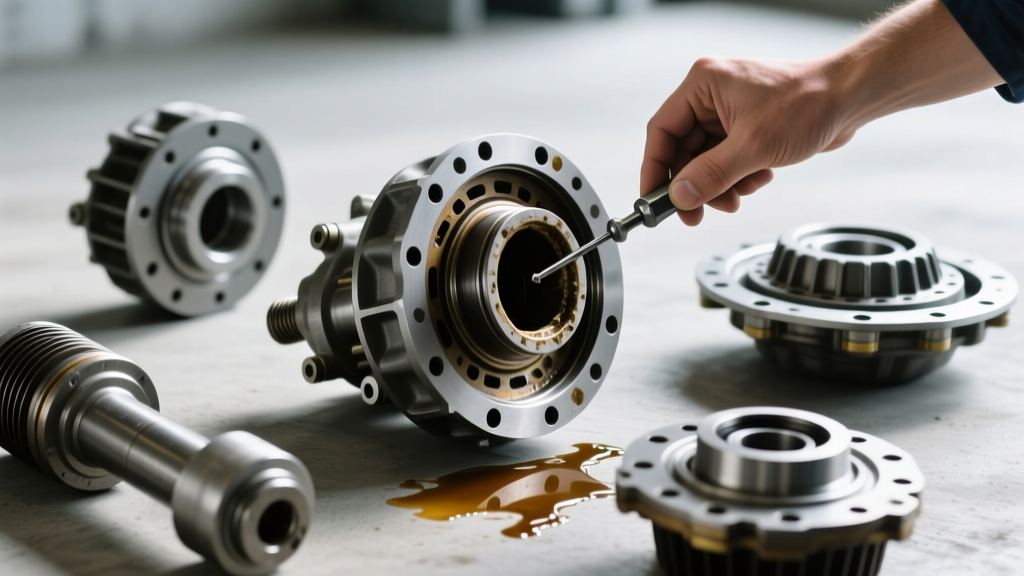
- Inspect the Drain Plug Magnet: Most front diff drain plugs feature a magnetic tip. A fine, glitter-like metallic paste is normal wear. If you find distinct metal chips, flakes, or chunks larger than a grain of rice, internal bearing or gear failure has begun, and a teardown inspection is required.
- Reinstall Drain Plug: Install a fresh OEM crush washer. Torque to factory spec (e.g., 29 lb-ft for Toyota, 35 lb-ft for Ford). Do not over-torque, as stripping the threads on an aluminum diff housing requires a costly helicoil repair or housing replacement.
- Pump in New Fluid: Use a high-quality transfer pump. Fill until the fluid reaches the bottom edge of the fill hole and begins to weep out. Reinstall the fill plug with a new crush washer and torque to spec.
Final Verdict: The ROI of Front Axle Maintenance
Understanding exactly how many quarts of differential fluid your front axle requires demystifies the service and highlights its affordability. Spending $45 and 30 minutes in your driveway every 30,000 to 50,000 miles (or immediately after any deep water crossing) yields an incredible return on investment. By ensuring the hypoid gears and pinion bearings are bathed in clean, water-free synthetic GL-5 fluid, you guarantee the longevity of your 4WD system and avoid the devastating costs of a front-axle rebuild. For more technical deep-dives into gear oil chemistry and OEM part cross-referencing, industry resources like Red Line Oil's Technical Data Sheets remain an invaluable reference for drivetrain preservation.