The Semantic Divide: Mechanical Axles vs. Navigational DGPS
In the realm of advanced automotive engineering and search semantics, few terms cause as much cross-disciplinary confusion as the word 'differential.' For drivetrain engineers, a differential is the complex hypoid gear assembly that splits torque between the left and right axle shafts. For surveyors, agronomists, and autonomous vehicle developers, the term refers to the Differential Global Positioning System (DGPS). While one manages mechanical torque and thermal loads, the other manages spatial telemetry and satellite correction data.
However, in 2026, these two distinct engineering domains collide in the testing and validation of heavy-duty axle cooling systems. Automotive OEMs and premium aftermarket manufacturers now rely on DGPS telemetry to map exact topographical loads, correlating centimeter-level spatial data with CAN-bus differential fluid temperature sensors. This technical deep-dive explores the thermodynamics of mechanical differential covers, the necessity of upgraded cooling solutions for heavy-duty axles, and how DGPS track testing validates these thermal management upgrades in real-world scenarios.
The Physics of Hypoid Gear Heat Generation
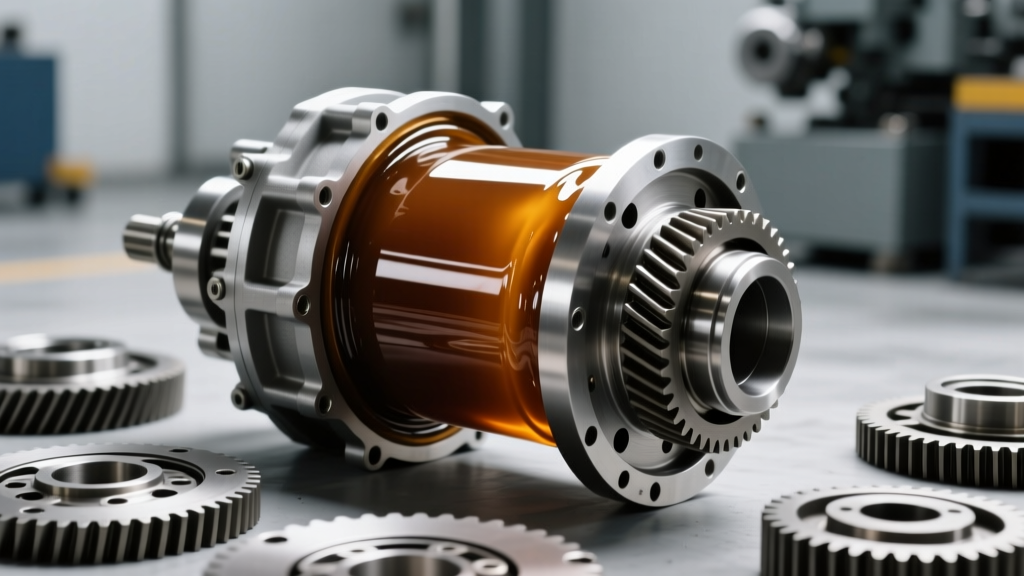
To understand why differential cooling covers are critical, we must first examine the thermodynamics of the hypoid gear set. Unlike standard spur gears, hypoid ring and pinion gears operate with a significant amount of sliding friction alongside rolling friction. The pinion gear is mounted below the centerline of the ring gear, allowing for a lower driveshaft and reduced vehicle floor hump, but this geometry inherently generates massive shear forces.
Under heavy load—such as towing a 12,000-pound trailer up a 6% grade—the sliding friction between the gear teeth shears the 75W-90 or 75W-140 synthetic gear oil. This mechanical shear, combined with churning losses as the ring gear acts like a paddlewheel whipping the fluid into an aerated froth, converts kinetic energy into thermal energy. In a stock setup, it is common to see differential fluid temperatures exceed 240°F (115°C) during sustained heavy hauling. At these temperatures, standard petroleum-based gear oils suffer from thermal breakdown, leading to accelerated wear on the spider gears, clutch packs (in limited-slip differentials), and bearing journals.
Material Science: Stamped Steel vs. Cast Aluminum
The factory-installed differential cover on most heavy-duty trucks (such as the GM AAM 11.5-inch or the Ford Dana Super 60) is typically made of stamped steel. Stamped steel is inexpensive to manufacture and provides adequate protection against road debris, but it is a terrible thermal conductor. Steel has a thermal conductivity of approximately 50 W/(m·K), meaning it traps heat inside the axle housing.
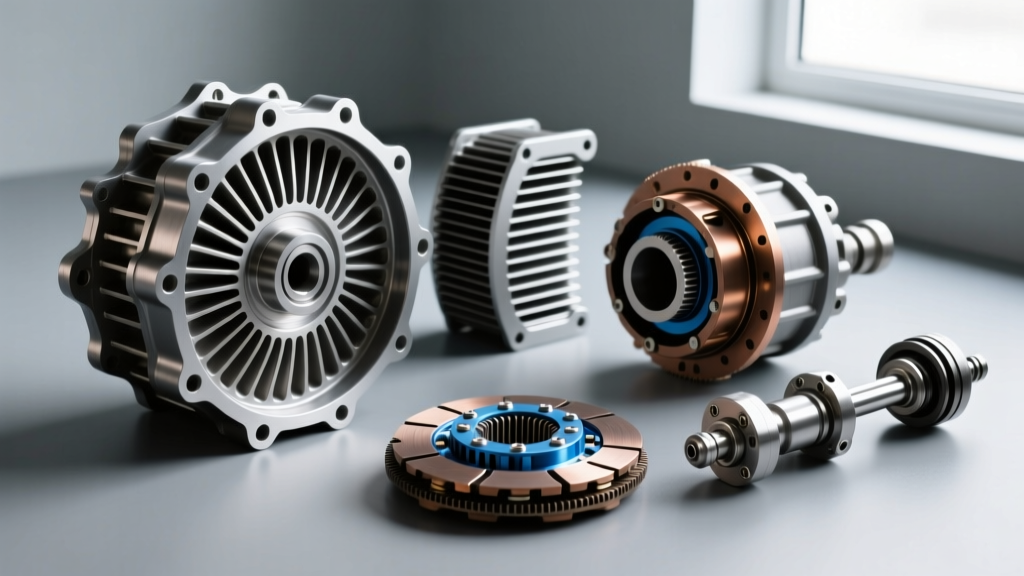
Upgrading to a finned, cast aluminum differential cover fundamentally alters the thermal dynamics of the axle. Aluminum boasts a thermal conductivity of roughly 205 W/(m·K)—four times that of steel. When engineered with external cooling fins, the cover acts as a massive heat sink. As ambient air flows under the vehicle, the fins create turbulent airflow, stripping heat away from the gear oil and dissipating it into the atmosphere. Premium covers from manufacturers like Mag-Hytec and Pacific Performance Engineering (PPE) also feature internal baffles that direct the churning gear oil against the coolest parts of the casting, maximizing thermal transfer.
2026 Track Testing: How DGPS Maps Axle Thermal Loads
How do engineers prove that a finned aluminum cover actually reduces operating temperatures? In 2026, they use the Differential Global Positioning System (DGPS). Unlike standard GPS, which can have a margin of error of several meters, DGPS utilizes fixed ground-based reference stations to broadcast correction signals, achieving sub-meter or even centimeter-level accuracy.
During thermal validation testing on off-road trails or mountain grades, test vehicles are equipped with DGPS receivers and submerged differential fluid temperature probes. The DGPS data allows engineers to map the exact incline angle, surface rolling resistance, and vehicle speed at any given second. By overlaying the DGPS spatial map with the thermal CAN-bus data, engineers can isolate specific variables. For example, they can prove that on an exact 8.5% grade at 45 mph, a vehicle equipped with a stock stamped steel cover hits 245°F, while the identical vehicle equipped with a deep-sump cast aluminum cover peaks at 195°F. This precise correlation is vital for validating warranty claims and engineering heavy-duty cooling packages for modern autonomous and commercial rigs.
Deep Sump Covers and Fluid Volume Dynamics
Beyond surface area and material conductivity, aftermarket differential covers often increase the total fluid capacity of the axle. A larger fluid volume acts as a greater thermal sink, requiring more energy (heat) to raise the overall temperature of the system.
| Axle Model | Stock Cover Capacity | Mag-Hytec Cover Capacity | Thermal Delta (Under Load) |
|---|---|---|---|
| GM AAM 11.5' | 3.8 Quarts | 5.5 Quarts | -35°F to -45°F |
| Dana 60 (Front) | 3.0 Quarts | 4.2 Quarts | -25°F to -30°F |
| Ford 10.5' Sterling | 3.5 Quarts | 4.8 Quarts | -30°F to -40°F |
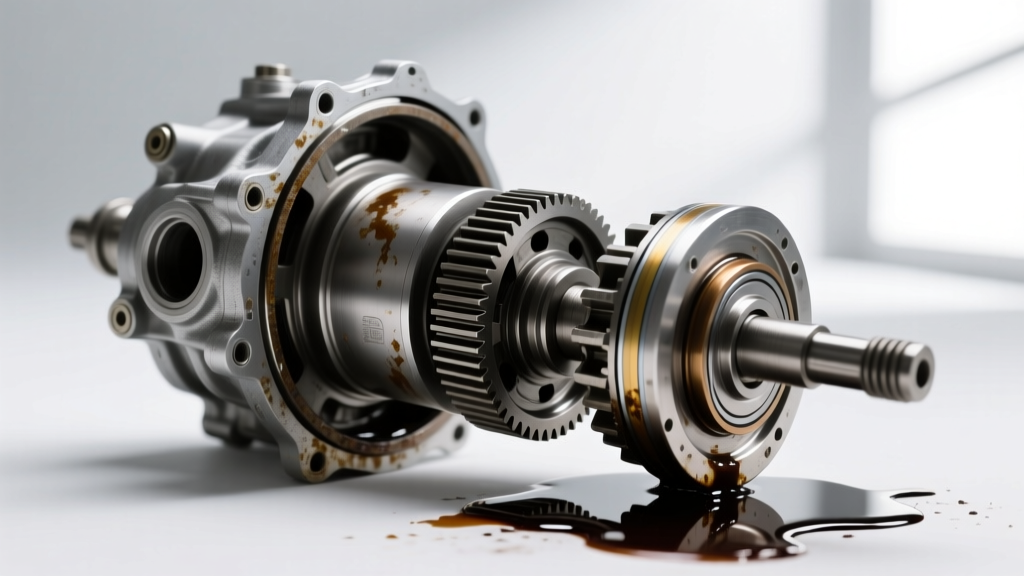
While increasing fluid capacity is beneficial, it is crucial to note that the fluid level must be maintained correctly. Overfilling a differential past the fill plug can lead to excessive churning, which paradoxically generates more heat and can blow out the axle tube seals due to internal pressure spikes.
Installation Protocol and Torque Specifications
Installing an upgraded differential cover requires meticulous attention to sealing surfaces and torque sequences. A leaking differential cover will rapidly lead to fluid starvation, catastrophic gear failure, and an expensive rebuild. Below is the professional protocol for installing a cast aluminum cover on a standard heavy-duty axle.
1. Surface Preparation
Drain the existing gear oil and remove the stock cover. Use a plastic gasket scraper to remove all factory RTV or cork gasket material from the axle housing mating surface. Follow up with a lint-free rag and aerosol brake cleaner. The surface must be entirely free of oil, grease, and debris.
2. Gasket vs. RTV Selection
Many premium aftermarket covers (such as those from Mag-Hytec) utilize a reusable, high-density O-ring or molded rubber gasket. If using an O-ring, apply a light dab of petroleum jelly to hold it in the groove during installation. If the cover requires RTV silicone, use a sensor-safe, high-temperature formula like Permatex Ultra Black (Part # 85084). Apply a continuous 3mm bead, ensuring you circle all bolt holes to prevent oil from wicking out via capillary action.
3. Torque Sequences and Specifications
Aluminum covers are softer than the steel axle housing. Over-torquing the bolts will strip the threads or warp the cover flange, causing immediate leaks. Always use a calibrated torque wrench and follow a crisscross star pattern to ensure even clamping force.
- GM AAM 11.5-inch (M8 x 1.25 Bolts): Torque to 20-25 lb-ft (27-34 Nm).
- Dana 60 / Super 60 (3/8'-16 Bolts): Torque to 30-35 lb-ft (40-47 Nm).
- Ford 10.5-inch Sterling (3/8'-16 Bolts): Torque to 30-35 lb-ft (40-47 Nm).
Allow RTV to cure for a minimum of 12 hours (preferably 24 hours) before filling with gear oil and putting the vehicle under load.
Gear Oil Viscosity and Thermal Breakdown
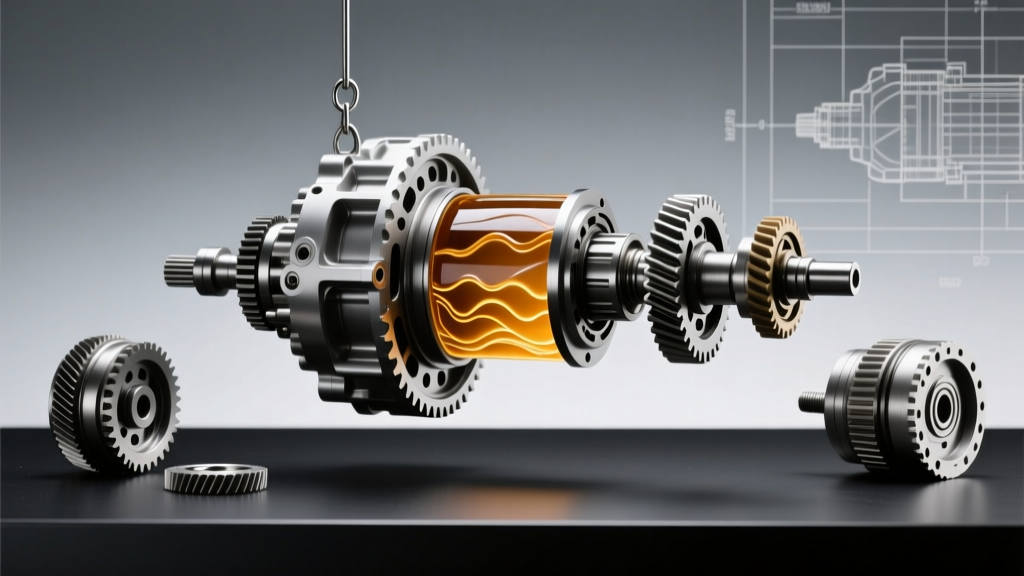
An upgraded cooling cover is only half of the thermal management equation; the fluid itself must be matched to the application. For daily driving and light towing, a full synthetic 75W-90 gear oil (such as Amsoil Severe Gear or Mobil 1 Synthetic) provides excellent cold-weather flow and adequate high-temperature protection. However, for vehicles consistently subjected to heavy towing, off-road crawling, or DGPS-mapped high-load testing environments, stepping up to a 75W-140 viscosity is highly recommended.
The '140' rating indicates the oil's kinematic viscosity at 100°C. Thicker fluid maintains a more robust hydrodynamic lubrication film between the hypoid gear teeth under extreme pressure, preventing metal-on-metal contact even when the differential cover is subjected to maximum radiant heat. Always remember to add the manufacturer-specified limited-slip friction modifier if your axle is equipped with a clutch-type positraction unit, ensuring smooth operation and preventing chatter during low-speed cornering.
Conclusion: Bridging the Gap
While the mechanical differential and the Differential Global Positioning System (DGPS) belong to entirely different branches of science, their intersection in modern automotive testing highlights the extreme rigor required to validate heavy-duty drivetrain components. Upgrading to a finned, cast aluminum differential cover is one of the most cost-effective and mechanically sound modifications a truck owner can make. By leveraging the superior thermal conductivity of aluminum, increasing fluid volume, and pairing it with high-quality synthetic gear oil, you ensure that your ring and pinion gears survive the most punishing grades and payloads that the map can throw at them.