The Architecture of All-Wheel Drive System Operation
Understanding modern all-wheel drive (AWD) system operation requires looking far beyond the basic premise of sending power to all four wheels. While off-road enthusiasts frequently debate the merits of a locking differential vs 4WD part-time setups for rock crawling and deep mud, AWD systems are engineered for an entirely different paradigm: continuous, variable torque distribution, high-speed yaw control, and seamless pavement traction. In 2026, with the proliferation of high-torque electrified powertrains and advanced torque-vectoring algorithms, the mechanical and hydraulic realities of AWD operation have never been more complex or more critical to maintain.
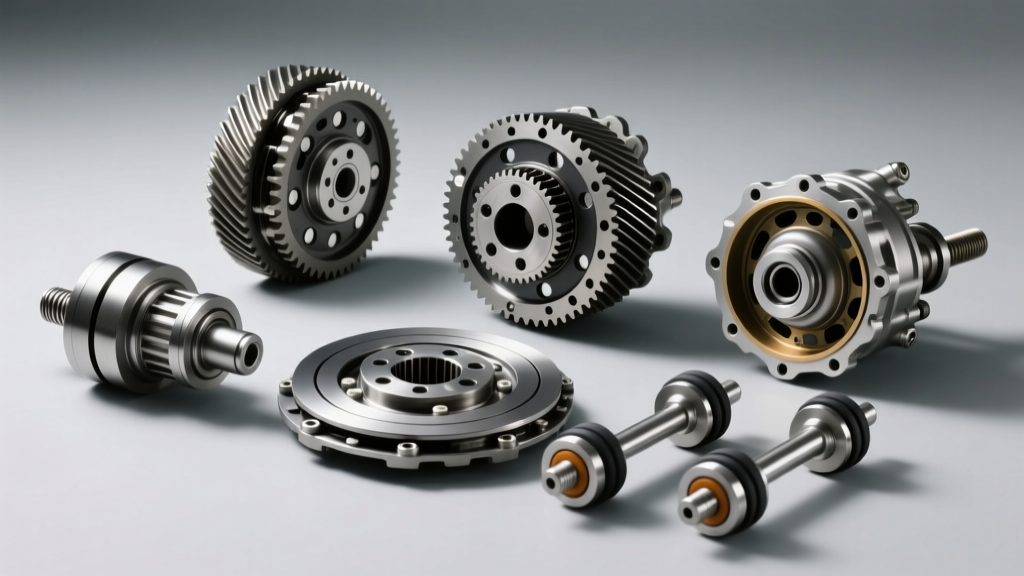
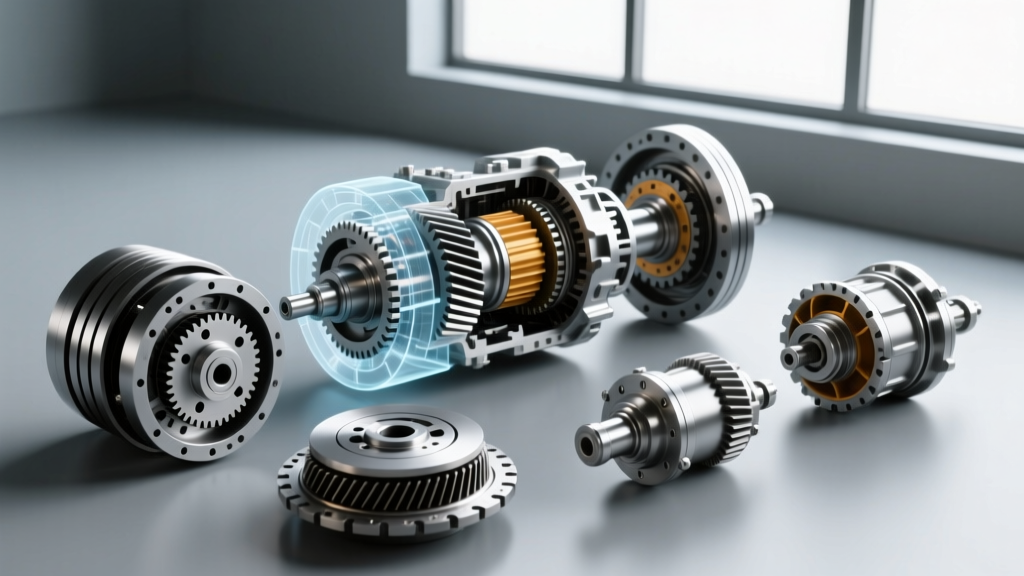
At the core of any AWD system is the center differential or the coupling device that manages the speed differential between the front and rear axles. Unlike a traditional part-time 4WD system that mechanically locks the front and rear driveshafts together via a dog clutch or chain-driven transfer case, an AWD system must allow for slip during cornering to prevent driveline binding and tire scrubbing. This is achieved through viscous couplings, multi-plate wet clutches, or complex planetary gearsets.
Transverse vs. Longitudinal AWD Configurations
The physical layout of the powertrain dictates the mechanical hardware used to achieve AWD operation. We categorize these into two primary architectures:
1. Transverse FWD-Biased Systems (PTU-Based)
Common in vehicles like the Ford Explorer, Toyota RAV4, and Volvo XC90, these systems utilize a transaxle where the Power Transfer Unit (PTU) is bolted directly to the side of the transmission. The PTU uses a helical gearset to redirect rotational force 90 degrees to a rear driveshaft. Because the PTU is often positioned in close proximity to the catalytic converter and exhaust manifold, thermal degradation of the gear oil is a primary failure mode. The rear axle utilizes a Rear Drive Module (RDM) with an electronically controlled clutch pack to engage the rear wheels only when front slip is detected.
2. Longitudinal RWD-Biased Systems (Integrated Transfer Cases)
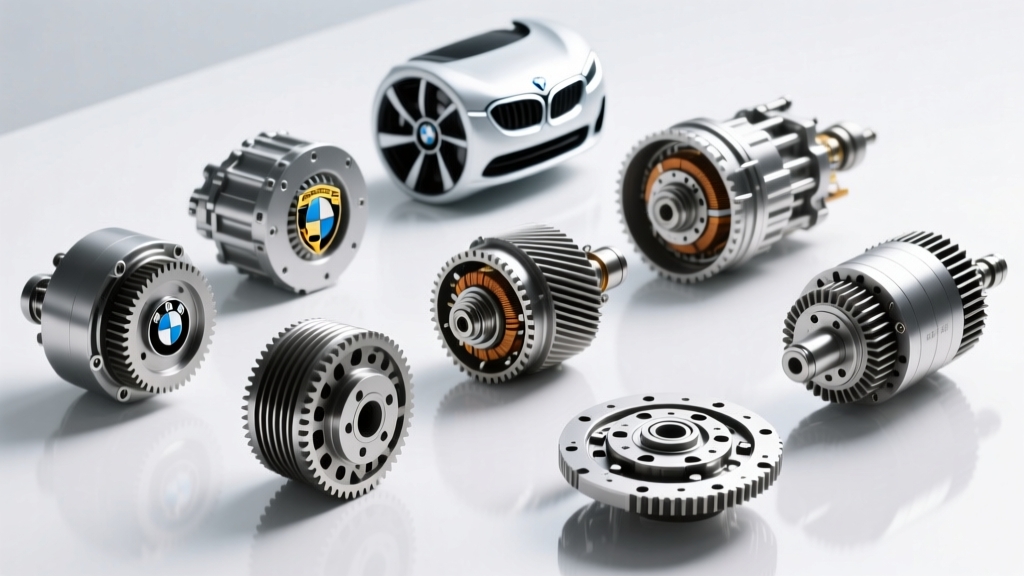
Found in vehicles utilizing the ZF 8HP transmission or BMW's xDrive (ATC series transfer cases), the AWD coupling is integrated directly into the transmission bell housing or mounted immediately behind it. These systems typically use a chain-driven, multi-plate wet clutch actuated by a high-pressure electric motor or a dedicated hydraulic pump. Because they are RWD-biased, they can send up to 100% of torque to the rear axle, offering superior dynamic handling characteristics compared to FWD-biased architectures.
Locking Differential vs 4WD: Why AWD Takes a Different Path
When analyzing a locking differential vs 4WD systems, the fundamental difference lies in slip management. A mechanical locking differential (such as an ARB Air Locker, Detroit Locker, or Eaton E-Locker) physically pins the left and right axleshafts—or the front and rear driveshafts in a locked transfer case—together, forcing them to rotate at the exact same RPM. This provides maximum traction off-road but causes catastrophic driveline bind, axle hop, and transfer case chain stretch if driven on high-grip surfaces.
AWD system operation relies on torque biasing rather than mechanical locking. Let us examine the two dominant technologies that make this possible:
Haldex Multi-Plate Clutch Systems
Utilized heavily by Volkswagen Group (4Motion), Volvo, and early Land Rover models, the Haldex coupling (now in its 5th and 6th generations) uses a stack of friction discs bathed in specialized fluid. An electrically driven radial piston pump creates hydraulic pressure that clamps the friction discs together. By modulating the PWM (Pulse Width Modulation) duty cycle of the pump motor, the AWD control module can infinitely vary the torque sent to the rear axle from 0% to 100% in milliseconds, reacting to steering angle, throttle position, and wheel speed sensors.
Torsen (Torque-Sensing) Gear-Driven Differentials
Historically the backbone of Audi's Quattro system, the Torsen Type C center differential utilizes a planetary gearset combined with worm gears. The beauty of the Torsen in AWD operation is its purely mechanical, instantaneous torque biasing. If the front wheels lose traction, the worm gear geometry prevents the differential from spinning freely, automatically biasing up to 80% of the torque to the rear axle without the need for electronic sensors, hydraulic pumps, or clutch packs.
Comparative Matrix: AWD Couplings vs. 4WD Lockers
| Feature | Haldex Gen 5 (Clutch AWD) | Torsen Type C (Gear AWD) | Manual Locking Diff (4WD) |
|---|---|---|---|
| Engagement Mechanism | Electro-Hydraulic Clutch Pack | Mechanical Worm/Planetary Gears | Pneumatic/Electric Dog Clutch |
| Response Time | ~80-100 milliseconds | Instantaneous (Mechanical) | Requires stopped/low-speed engagement |
| High-Grip Surface Use | Safe (Allows slip) | Safe (Allows slip) | Dangerous (Causes driveline bind) |
| Maintenance Requirement | High (Fluid & Filter Service) | Low (Standard Gear Oil) | Moderate (Air lines, seals, gear oil) |
| Typical Torque Bias Ratio | 100:0 to 0:100 (Variable) | Up to 80:20 (Fixed Bias Ratio) | 50:50 (Locked) |
Critical Maintenance: PTU and Center Diff Service Intervals
The most common point of failure in modern AWD system operation is not the transmission itself, but the neglected auxiliary drivetrain components. Because manufacturers often label PTU and Haldex fluids as 'lifetime,' many owners face catastrophic failures just outside the powertrain warranty window.
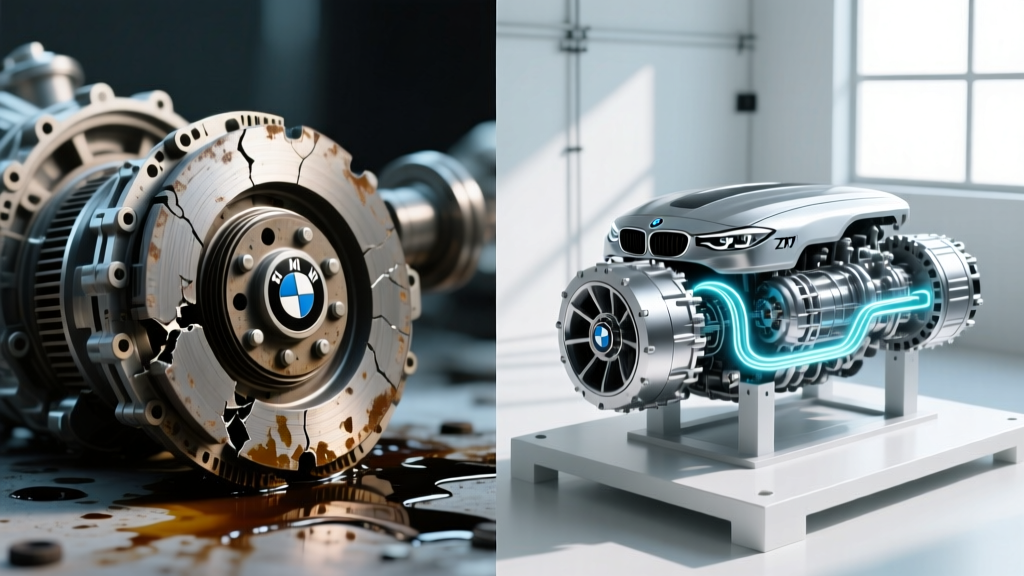
Expert Diagnostic Note: If you are servicing a Ford Explorer or Edge equipped with the 6F50/6F55 transaxle, the PTU is notorious for running 50°F to 80°F hotter than the main transmission due to exhaust proximity. 'Lifetime' fluid in this context is a myth. The gear oil shears, loses its extreme pressure (EP) additives, and turns to sludge, ultimately destroying the helical gears and bearings. A complete PTU replacement costs between $1,800 and $2,800, whereas a fluid extraction service is under $100.
Real-World Torque Specs, Fluids, and Capacities
Proper servicing of AWD components requires adherence to strict torque specifications and the use of exact OEM friction-modified fluids. Using standard 75W-90 gear oil in a clutch-based AWD system will cause immediate shudder and clutch pack destruction due to the absence of necessary friction modifiers.
- Haldex Gen 5 (VW/Audi/Volvo):
- Fluid: OEM Part # G060175A2 (Do NOT use generic GL-5 gear oil).
- Capacity: ~650ml to 700ml (Fill until it overflows from the check plug).
- Filter/Screen: Must be cleaned every 20,000 miles. The Gen 5 lacks a traditional replaceable cartridge filter, relying on a suction screen that clogs with clutch material.
- Pump Motor Bolts: 8 Nm (71 lb-in).
- Ford PTU (6F35/6F50/6F55 Transaxles):
- Fluid: Motorcraft SAE 75W-140 Synthetic (Part # XW7Z-19A329-AA).
- Capacity: ~0.5 to 0.7 Quarts (Extracted via top fill plug using a pneumatic vacuum tool).
- Fill/Drain Plug Torque: 25 Nm (18 lb-ft).
- Service Interval: Every 30,000 miles for severe duty/towing.
- BMW xDrive (ATC 35L / ATC 45L Transfer Cases):
- Fluid: BMW TF 0870 (Part # 83222446673).
- Capacity: ~400ml to 600ml depending on exact ATC model.
- Fill Plug Torque: 30 Nm (22 lb-ft).
- Calibration: Post-fluid change, the VTG (Transfer Box) adaptation values must be reset via ISTA or a capable bi-directional scan tool to recalibrate the clutch pack clamping force.
The Future of AWD: Electrification and Torque Vectoring
As we navigate the 2026 automotive landscape, traditional mechanical AWD system operation is being supplemented—and in some cases replaced—by electrified torque vectoring. Vehicles utilizing dual-motor or tri-motor EV architectures eliminate the need for a mechanical center differential, PTU, or driveshaft entirely. Instead, software dictates the torque split between the front and rear axles at a rate of thousands of calculations per second.
However, for internal combustion and hybrid platforms, the mechanical coupling remains essential. Understanding the distinct engineering philosophies that separate a traditional locking differential vs 4WD systems and modern, variable AWD setups is crucial for both enthusiasts and technicians. Whether you are diagnosing a shuddering Haldex coupling, extracting degraded sludge from a Ford PTU, or simply selecting the right drivetrain for your next vehicle build, respecting the precise hydraulic and mechanical tolerances of these systems is the key to long-term reliability.
For further engineering data on drivetrain layouts and torque biasing algorithms, refer to technical publications from SAE International Standards, or consult manufacturer-specific drivetrain whitepapers provided by BorgWarner AWD Technologies and ZF All-Wheel Drive Systems.