The Structural Role of the AWD Center Differential Housing
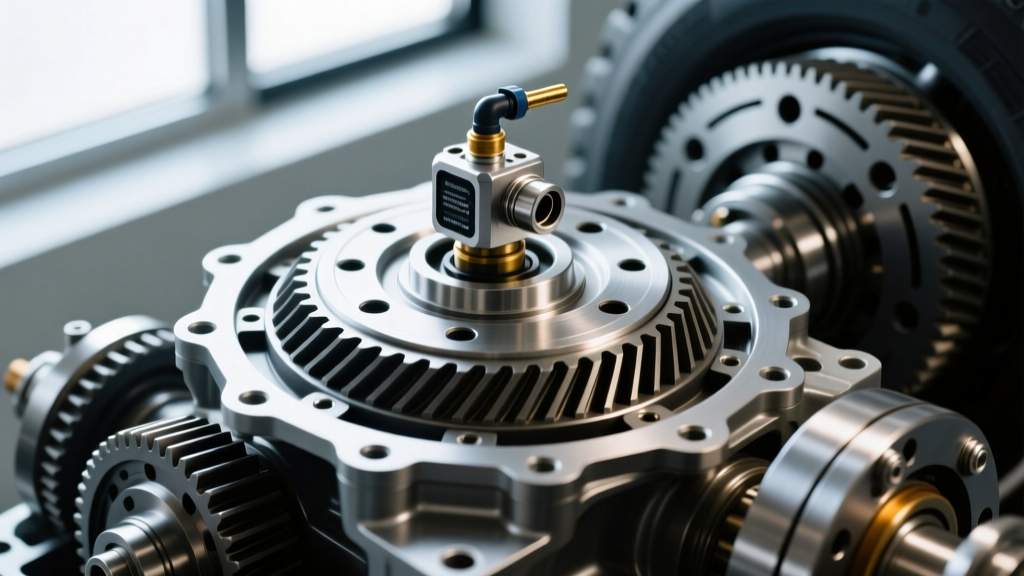
In modern all-wheel-drive (AWD) architectures, the center differential is the critical nexus that manages front-to-rear torque distribution. Whether your vehicle utilizes a mechanical Torsen gearset (common in Audi Quattro systems), a Variable Torque Distribution (VTD) planetary setup (found in Subaru WRX STI models), or an electronically controlled multi-plate clutch (like the Haldex Gen 5), the differential housing is far more than a simple fluid reservoir. It is a precision-machined structural member that maintains gear alignment under extreme torsional loads.
Most center differential housings are cast from A380 aluminum alloy or, in high-performance applications, AZ91D magnesium to reduce rotational mass. However, these materials are subject to severe thermal cycling. The housing must dissipate heat generated by viscous couplings and clutch packs while maintaining microscopic tolerances at the split-lines and bearing bores. When the differential housing begins to degrade, the symptoms often mimic internal gear failure, leading to misdiagnosis and unnecessary teardowns. This guide provides a definitive, expert-level troubleshooting protocol for AWD center differential housing anomalies.
Four Primary Symptoms of Housing Degradation
1. Split-Line Seepage vs. Output Shaft Seal Failure
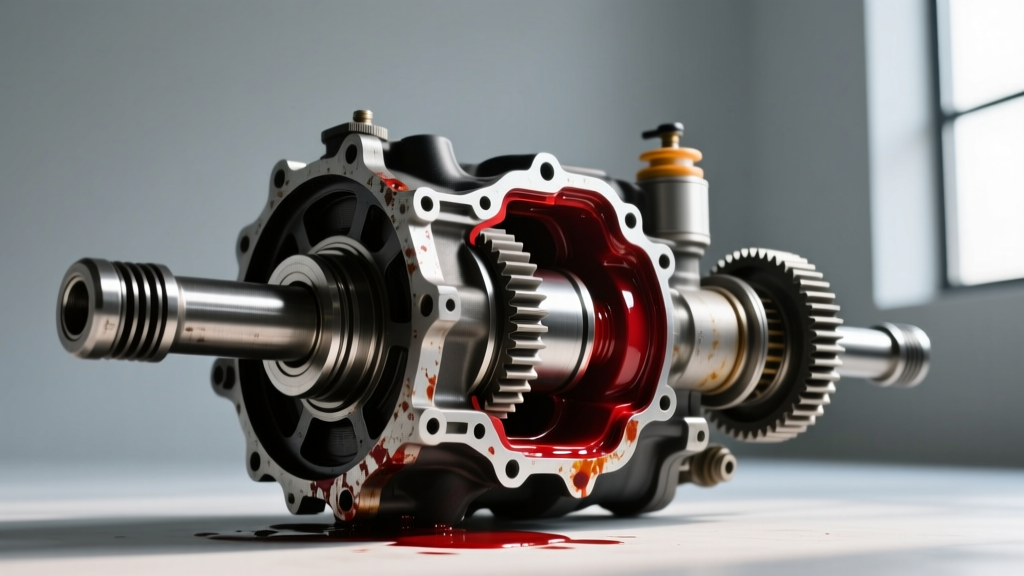
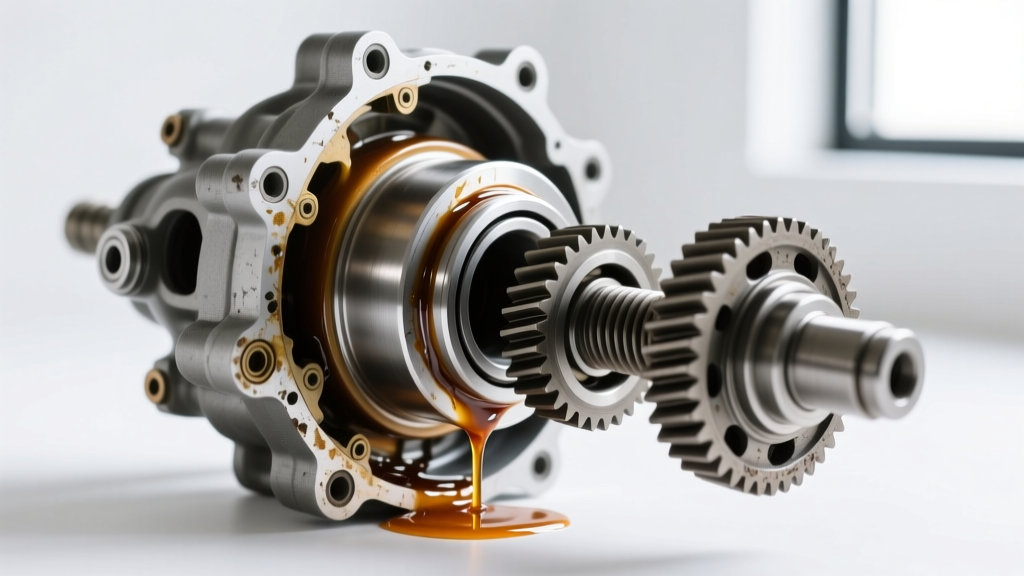
The most common complaint is fluid seepage at the junction where the transmission mates to the center differential, or along the housing's horizontal split-line. Technicians frequently misdiagnose this as a failed front output shaft seal. However, true split-line seepage occurs due to micro-movements between the upper and lower housing halves. Over time, the constant torsional twisting of the drivetrain fatigues the factory RTV (Room Temperature Vulcanizing) silicone or the cut-paper gasket. If you find gear oil weeping precisely along the parting line, the housing halves are experiencing deflection, or the fasteners have yielded below their minimum clamp load.
2. Bearing Bore Deflection and Load-Dependent Whine
The center differential relies on heavy-duty tapered roller bearings (such as Timken Set 10 or SKF equivalents) to support the pinion and planetary carriers. According to SKF bearing tolerance guidelines, the housing bore must maintain strict geometric tolerances to prevent bearing bind. When the aluminum housing bore wears out-of-round—often due to cavitation from degraded gear oil or improper installation techniques—the gear lash changes dynamically under load. This manifests as a distinct, load-dependent whine that shifts in pitch during throttle tip-in and coast-down, a symptom often wrongly attributed to a worn ring and pinion.
3. Thermal Cracking Near the Viscous Coupling
In AWD systems that utilize a viscous coupling or a multi-plate clutch pack inside the center differential (such as Subaru's DCCD or older BMW xDrive transfer cases), extreme localized heat is generated during slip events. If the factory 75W-85 or 75W-90 GL-5 fluid is not changed at the prescribed 30,000-mile interval, the fluid's thermal conductivity drops. This causes the housing walls surrounding the clutch drum to exceed 250°F (121°C), leading to micro-fractures and thermal cracking in the cast aluminum, particularly around the rear output shaft bearing support.
4. Porosity Leaks in Cast Magnesium Housings
High-end performance vehicles sometimes employ magnesium differential housings to save weight. Magnesium is notoriously susceptible to galvanic corrosion and casting porosity. A slow, untraceable misting of gear oil on the underside of the vehicle, with no visible seal or gasket failure, is a hallmark of housing porosity. The oil literally weeps through the microscopic voids in the metal casting under high internal crankcase pressure.
Diagnostic Matrix: Housing vs. Internal Gear Failure
Use this matrix to isolate whether the root cause lies within the differential housing structure or the internal gearset.
| Symptom | Root Cause: Differential Housing | Root Cause: Internal Gears/Clutches | Diagnostic Verification Test |
|---|---|---|---|
| Load-Dependent Whine | Bearing bore out-of-round causing gear misalignment. | Worn planetary gears or pitted Torsen worm gears. | Measure housing bore with a dial bore gauge; check for >0.0015" deviation. |
| Fluid Seepage at Junction | Split-line deflection or warped mating surface. | Overfilled fluid or clogged breather valve causing pressure blowout. | Clean housing, apply UV dye, and cycle drivetrain under load on a dyno. |
| Clunk on Direction Reversal | Housing flex allowing excessive carrier end-play. | Worn spider gears or excessive backlash in the ring gear. | Mount a dial indicator on the output flange; measure rotational backlash. |
Precision Measurement and Troubleshooting Protocol
When a center differential is removed from the vehicle, a thorough inspection of the housing is mandatory before authorizing the purchase of expensive internal rebuild kits. As detailed in ZF's axle and drivetrain documentation, housing integrity is the foundation of drivetrain longevity.
Bore Out-of-Round Tolerances
Using a precision dial bore gauge, measure the internal diameter of the bearing bores at three different axes (X, Y, and 45-degree). The maximum allowable out-of-round tolerance for most OEM AWD center differential housings is 0.0015 inches (0.038 mm). If the bore is egg-shaped, the tapered roller bearings will not seat correctly, leading to premature failure and gear whine. Out-of-spec bores require line-boring and the installation of precision steel sleeves.
Split-Line Sealing and Torque Specifications
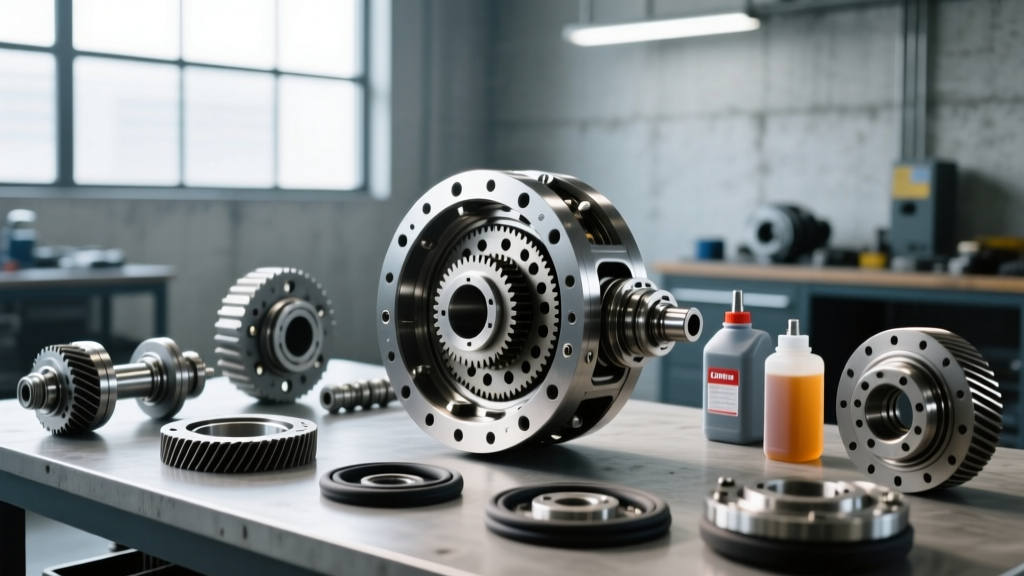
If the housing halves are being separated for a rebuild, the mating surfaces must be cleaned with a non-abrasive plastic scraper and brake cleaner. Do not use a metal razor blade, as gouging the soft aluminum will create permanent leak paths.
- Gasket vs. RTV: If the OEM design calls for a formed paper or steel-laminate gasket (e.g., Subaru VTD center diffs), use the OEM gasket (Part # 31375AA020) and a thin bead of ThreeBond 1215 on the corners. Do not use thick, high-tack RTV, which will cause the housing halves to sit proud, altering internal gear backlash.
- Torque Specs: M8x1.25 split-line flange bolts must be torqued to 25 Nm (18.4 lb-ft) in a crisscross pattern starting from the center and working outward. For Torque-To-Yield (TTY) bolts found in some Audi Torsen housings, the spec is typically 20 Nm plus a 90-degree turn.
Repair Economics: Sleeving vs. OEM Replacement
When a center differential housing is found to be defective, shops and owners face a critical economic decision.
- OEM Replacement: Purchasing a brand-new OEM center differential housing (e.g., Audi Quattro Torsen Type C housing, Part # 0B5301121 or Subaru equivalent) typically costs between $650 and $1,200. This guarantees perfect tolerances but carries a high parts cost and potential supply chain delays.
- Machine Shop Sleeving: A specialized drivetrain machine shop can line-bore the worn bearing bores and press in custom steel or bronze sleeves for $250 to $400. This is highly cost-effective for heavy-duty truck applications (like the NP205 or BW4401 center diffs) but requires a shop with precision CNC or line-boring capabilities.
- Used/Salvage Housings: While cheap ($150-$300), used housings are a gamble. Unless you have the tools to verify the bearing bores and split-line flatness, a used housing may introduce the exact same whine and leak issues you are trying to fix.
Fluid Chemistry and Housing Preservation
The longevity of the differential housing is directly tied to the shear stability and thermal limits of the gear oil. In AWD center differentials, the fluid must lubricate hypoid gears while also providing the correct friction modifier profile for limited-slip clutch packs. Using a standard, off-the-shelf 75W-90 GL-5 gear oil in a system designed for a specialized 75W-85 (like Subaru's Extra-XT) can lead to improper clutch engagement, generating excess heat that warps the aluminum housing. Furthermore, as gear oil ages, the sulfur-phosphorus EP (Extreme Pressure) additives deplete, and the fluid's viscosity breaks down. This leads to micro-pitting on the gears, which sheds metallic debris into the oil. This debris acts as a lapping compound, accelerating the wear of the housing's bearing bores. Strict adherence to 30,000-mile fluid change intervals using OEM-specified or high-tier synthetic equivalents (such as Motul Gear 300 or Red Line ShockProof) is the single most effective way to preserve the structural integrity of your AWD center differential housing.