The Hydraulics of Active Center Differentials
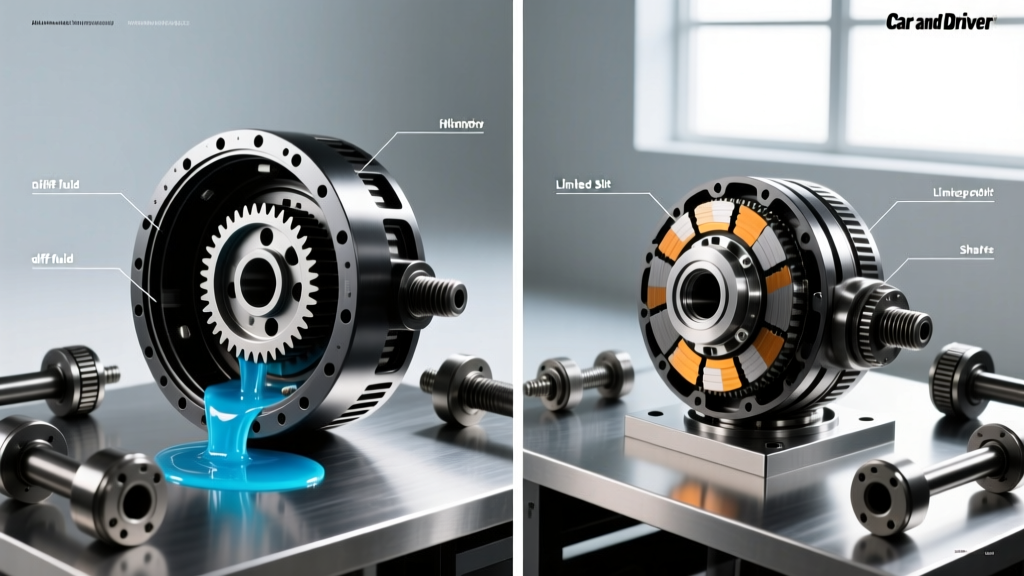
Modern All-Wheel Drive (AWD) systems rely heavily on active center differentials to distribute torque between the front and rear axles. Unlike traditional open or mechanical limited-slip differentials, active systems—such as the Haldex-based couplings found in VW, Audi, and Volvo vehicles, or the electronically controlled wet-clutch center diffs in Subaru's DCCD and BMW's xDrive transfer cases—utilize complex hydraulic circuits. These circuits modulate clutch pack engagement via a gerotor pump, proportional solenoid valves, and specialized friction-modified fluids.
When an AWD system experiences binding, shudder, or defaults to a FWD-only limp mode, the root cause is often hidden within the hydraulic pressure dynamics. While OBD2 scanners can pull generic solenoid circuit codes, they cannot measure the physical hydraulic delta across the system. This is where differential pressure transmitters become an indispensable diagnostic tool for drivetrain specialists in 2026.
Why Use Differential Pressure Transmitters for Diagnosis?
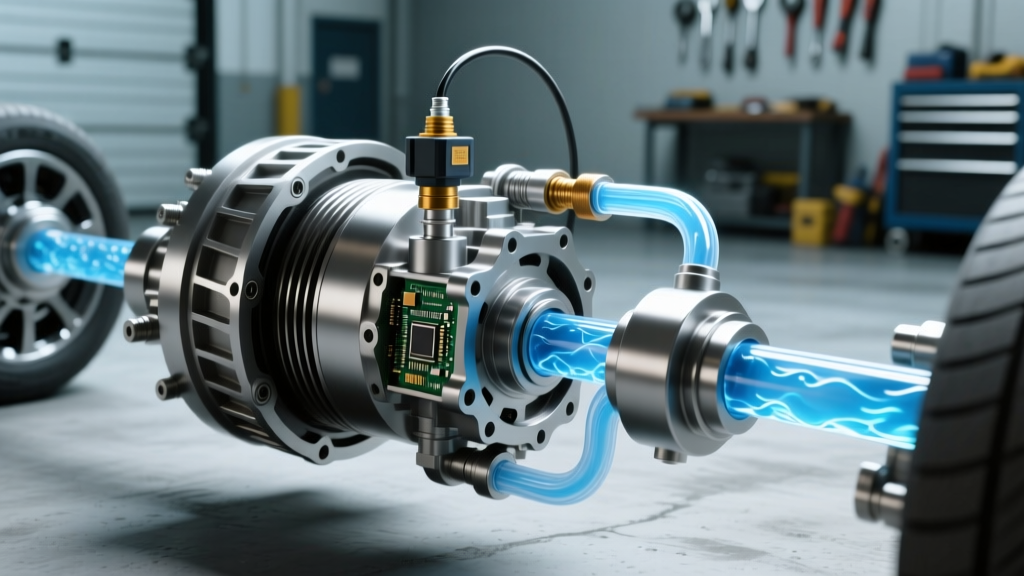
In industrial and advanced automotive diagnostics, differential pressure transmitters are sensors designed to measure the difference in pressure between two points in a fluid system. When adapted for AWD center differential troubleshooting, these transmitters are connected to the hydraulic test ports before and after the clutch pack filter, or across the accumulator and return lines.
By measuring the Delta-P (ΔP), technicians can isolate whether a fault is caused by:
- Fluid Degradation: Sheared fluid losing viscosity, leading to pump cavitation and low ΔP.
- Filter Restriction: A clogged sump strainer or inline filter causing a massive pressure spike (high ΔP) before the clutch pack.
- Solenoid or Pump Failure: Inability to generate baseline line pressure, resulting in a flat ΔP curve during clutch engagement commands.
According to BorgWarner's AWD technology documentation, precise hydraulic pressure is critical; even a 1.5 bar deviation in clutch application pressure can result in noticeable driveline shudder or premature friction disc wear.
Understanding Delta-P (ΔP) in AWD Clutch Packs
Under normal operation, a Haldex Gen 5 or equivalent active center diff will generate a baseline pump pressure of roughly 5 to 7 bar (72-101 psi) at idle, spiking to 15-20 bar (217-290 psi) during maximum torque transfer events. The differential pressure across a clean hydraulic filter should remain under 0.5 bar. If your differential pressure transmitters register a ΔP exceeding 2.5 bar across the filter housing during a stall test, the fluid is either heavily contaminated with clutch material, or the filter mesh is obstructed.
Symptom Diagnosis: Fluid Degradation vs. Mechanical Failure
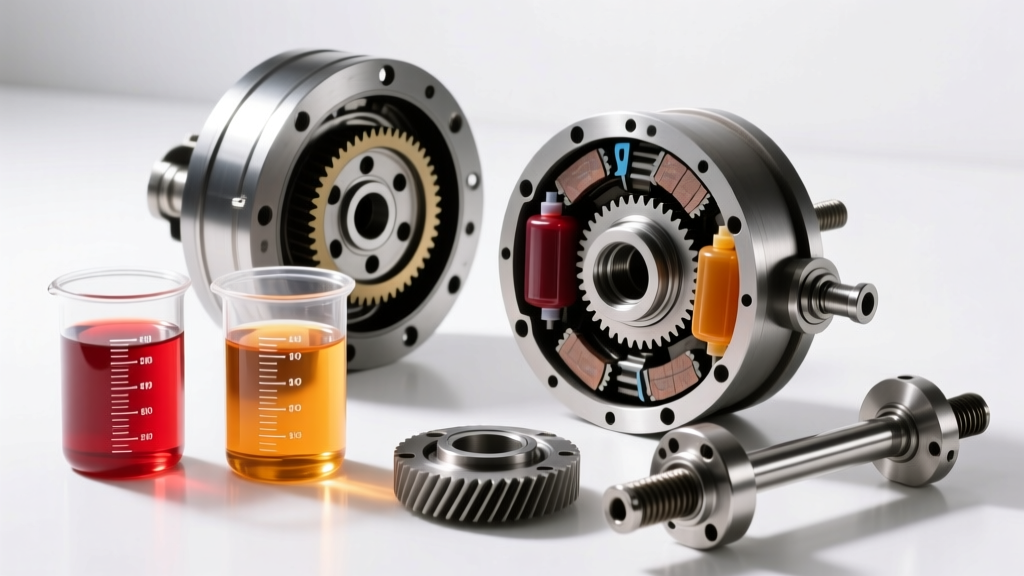
The type of fluid used in an active center differential is vastly different from standard 75W-90 gear oil used in open rear axles. Active diffs require specialized hydraulic fluids with specific friction modifiers (e.g., VAG G 055 175 A2 or equivalent synthetic equivalents). When this fluid is subjected to extreme shear forces and thermal cycling, the polymers break down.
Below is a diagnostic matrix correlating OBD2 symptoms, physical driveline feel, and the readings you will capture using differential pressure transmitters.
| Driveline Symptom | Probable Root Cause | Transmitter ΔP Reading | Corrective Action |
|---|---|---|---|
| AWD Binding on tight turns | Fluid friction modifiers depleted; clutches dragging | Erratic ΔP; slow pressure bleed-off | Perform 3x drain/fill with OEM-spec fluid |
| FWD-only Limp Mode (Code 02248) | Clogged pump strainer or inline filter | High ΔP across filter (>3.0 bar) | Drop pump, clean strainer, replace filter |
| Rear axle slip under hard acceleration | Severely sheared fluid / Pump cavitation | Low baseline ΔP; failure to reach 15 bar | Fluid service; test pump gerotor gears |
| Whining noise from center console | Accumulator failure or solenoid stuck open | Constant high ΔP; no modulation | Replace hydraulic control unit / accumulator |
Step-by-Step Troubleshooting & Fluid Service
Diagnosing an active center differential requires a methodical approach. Before condemning a $1,200 hydraulic control module, you must verify the fluid condition and mechanical integrity of the hydraulic circuit using your transmitters and basic hand tools.
1. Haldex Gen 4 / Gen 5 Service Specs & Strainer Cleaning
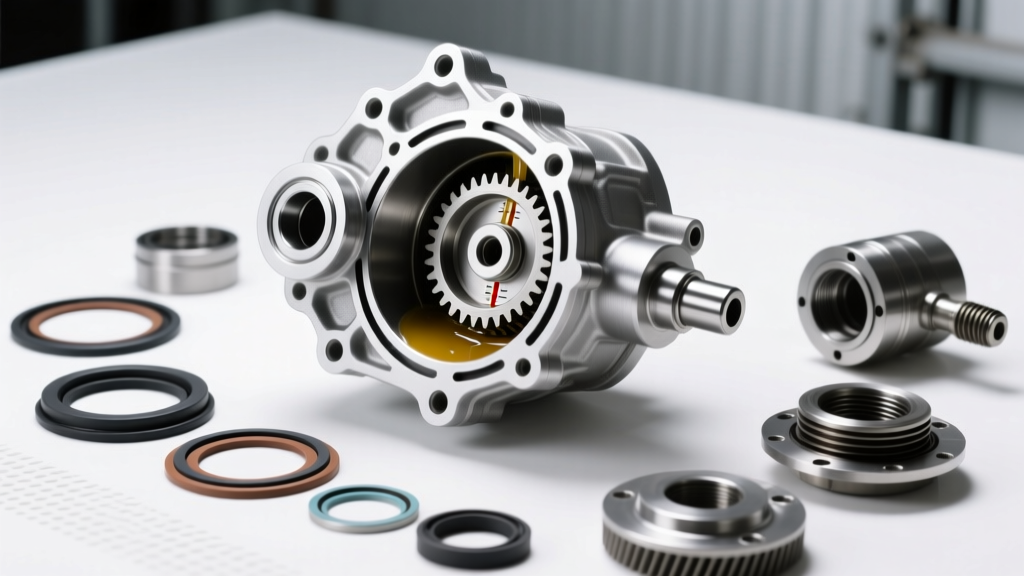
A notorious issue in the VW/Audi community is the Haldex Gen 5 pump strainer. Unlike Gen 4, which features a replaceable inline filter (Part # 02D598549A), Gen 5 integrates a coarse mesh strainer directly onto the pump motor. Over 30,000 miles, clutch friction material forms a hardened sludge on this mesh. The differential pressure transmitters will show a severe restriction, yet many quick-lube shops miss it because there is no 'cartridge' to swap.
- Drain Plug Torque: 25 Nm (18.5 lb-ft)
- Fill Plug Torque: 25 Nm (18.5 lb-ft)
- Pump Mounting Bolts: 10 Nm (7.4 lb-ft) - Do not overtighten; the aluminum housing strips easily.
- Fluid Capacity: ~0.85 Liters (Use only G 055 175 A2 or certified equivalent)
2. Subaru DCCD & BorgWarner Torque Specs
For Subaru models equipped with the Driver Controlled Center Differential (DCCD), the hydraulic fluid is often shared with or closely related to the automatic transmission fluid (ATF) depending on the year, but the clutch pack hydraulics require meticulous cleanliness. When testing the line pressure solenoids, connect your differential pressure transmitters to the test ports on the valve body extension housing.
- Extension Housing Bolts: 24 Nm (17.7 lb-ft)
- Pressure Sensor Thread: 15 Nm with liquid thread sealant
- Diagnostic Target: DCCD clutch pressure should modulate smoothly from 0 to 250 psi based on the DC% commanded by the TCM. A jagged graph on your scan tool, paired with a fluctuating ΔP on your transmitters, indicates a sticking proportional valve, not necessarily a bad solenoid coil.
The True Cost of Ignoring Fluid Shear
Many vehicle owners mistakenly believe that because a center differential is 'sealed' or labeled 'lifetime fluid' by the manufacturer, it requires no maintenance. From a 2026 diagnostic perspective, 'lifetime' simply means the fluid will last until the clutch pack physically fails. Replacing a destroyed wet-clutch center differential assembly can cost between $2,500 and $4,500 in parts and labor. Conversely, a preventative fluid service using a vacuum extractor or manual pump costs roughly $80 to $120 in materials.
When fluid shears, its kinematic viscosity drops. A fluid that started at 32 cSt (centistokes) at 40°C may drop below 18 cSt after 50,000 miles of aggressive driving. The gerotor pump relies on this viscosity to maintain internal clearances. As viscosity drops, internal pump slip increases. Your differential pressure transmitters will reveal this as an inability to hit peak target pressure during a WOT (Wide Open Throttle) ramp test, even if the solenoid is commanding 100% duty cycle.
2026 Outlook: EV AWD Systems and Fluid Evolution
As the automotive industry shifts toward electric and hybrid platforms, the architecture of the center differential is evolving. Vehicles like the VW ID.4 GTX or Tesla dual-motor setups utilize independent e-axles rather than a mechanical driveshaft and center diff. However, for the millions of ICE and Hybrid AWD vehicles on the road, and for heavy-duty hybrid trucks utilizing active transfer cases (like the BorgWarner 44-11), hydraulic clutch modulation remains the standard.
Furthermore, diagnostic tools are becoming more sophisticated. Modern high-end scan tools now feature integrated digital manifolds that act as virtual differential pressure transmitters, correlating OBD2 PID data with physical pressure sensors installed on the drivetrain. For the independent shop or DIY enthusiast, investing in a set of mechanical hydraulic gauges or digital transmitters ($300-$500) is the only way to confidently separate a $40 fluid issue from a $2,000 mechanical failure.
Conclusion
Troubleshooting active AWD center differentials requires moving beyond simple code reading. By understanding the hydraulic principles of wet-clutch systems and utilizing differential pressure transmitters to measure the Delta-P across filters and clutch packs, technicians can accurately diagnose fluid shear, filter clogs, and pump failures. Adhering to strict torque specifications and utilizing the correct friction-modified fluids will ensure the longevity of the drivetrain, keeping power flowing seamlessly to all four wheels.
For further reading on drivetrain hydraulic standards, refer to the SAE International Standards database for automotive fluid viscosity and clutch actuation protocols.