The Hidden Complexity of AWD Center Differentials
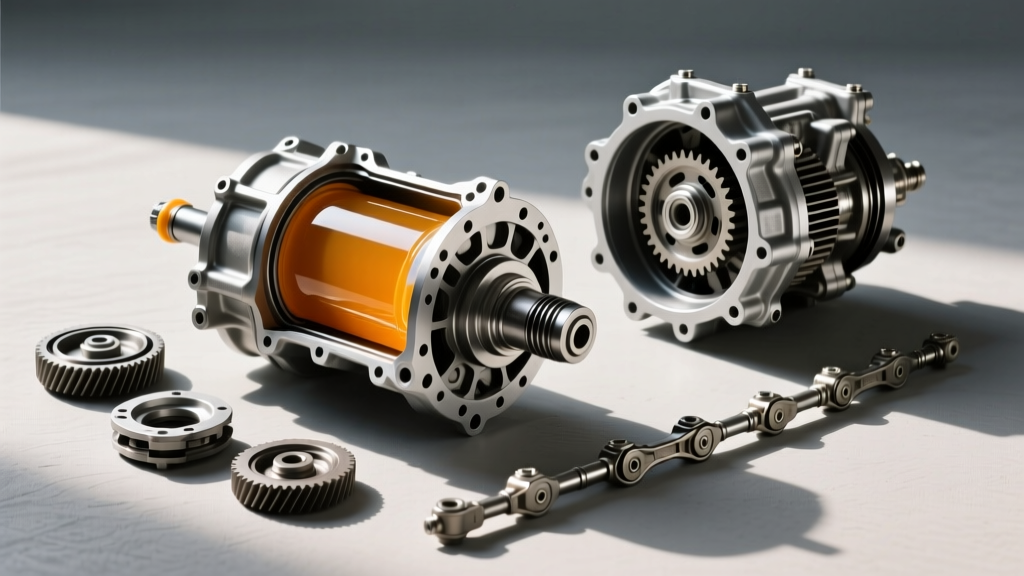
When an All-Wheel-Drive (AWD) vehicle begins to exhibit binding during tight turns, low-speed chatter, or a pronounced whine from the center console area, the immediate suspect is often the center differential. Unlike the front or rear axles that manage left-to-right wheel speed variance, the center differential manages the front-to-rear torque split. In modern AWD architectures—ranging from Subaru’s Symmetrical AWD to Audi’s Quattro Torsen systems and Haldex-based active torque couplings—the center differential operates under immense thermal and mechanical stress.
As drivetrain technicians, we frequently encounter DIYers and fleet managers asking if a pour-in solution, specifically the Lucas differential oil additive, can cure these complex AWD driveline symptoms. To answer this, we must separate fluid degradation from mechanical failure, and understand the precise chemical requirements of modern AWD torque-transfer systems.
Common Symptoms of Center Differential Distress
Before reaching for an additive, it is critical to accurately diagnose the symptom profile. Center differential failures rarely happen without warning. Look for these primary indicators:
- Torque Bind on Tight Turns: The vehicle feels as though the brakes are lightly applied or the tires are skipping across the pavement during low-speed, full-lock steering maneuvers.
- Driveline Chatter or Clunking: A rhythmic metallic knocking originating from beneath the center shifter or transmission tunnel, particularly when transitioning from coasting to acceleration.
- Highway Whining: A high-pitched gear whine that scales with vehicle speed (not RPM), indicating worn hypoid gear bearings or starved planetary sets.
- AWD Warning Illumination: Modern systems (like Toyota’s Dynamic Torque Vectoring or Subaru’s X-Mode integrated diffs) will trigger a dash warning and default to FWD if center diff clutch pack slip exceeds OEM thresholds.
The Tire Mismatch Variable: AWD’s Silent Killer
According to Tire Review’s technical analysis on AWD systems, the most common cause of center differential binding is not internal failure, but rolling circumference mismatch. AWD center differentials are designed to handle minor speed deltas. However, if one tire has 5/32" more tread depth than the others, or if a replacement tire is a different brand/model, the constant speed differential forces the center diff’s viscous fluid or clutch packs to remain continuously engaged. This generates massive heat, boiling the fluid and glazing internal clutch plates. Always measure tire circumference with a tailor’s tape measure before condemning the center differential; Subaru mandates a maximum circumference variance of just 1/4 inch across all four tires.
Analyzing the Lucas Differential Oil Additive for AWD Systems
The keyword Lucas differential oil additive generally refers to one of two popular aftermarket products: the Lucas Limited Slip Additive (a friction modifier) and the Lucas Heavy Duty Oil Stabilizer (a viscosity enhancer). Applying these to an AWD center differential requires extreme caution, as the wrong chemistry can cause catastrophic torque-transfer failure.
1. Lucas Limited Slip Additive (Friction Modifiers)
This product relies on long-chain organic esters designed to alter the coefficient of friction in clutch-type limited-slip differentials (LSDs), such as the Ford 8.8 Trac-Lok. Verdict for AWD Center Diffs: If your vehicle utilizes a gear-driven Torsen center differential (e.g., older Audi Quattro), friction modifiers do absolutely nothing, as Torsen units rely on gear binding angles, not clutch friction. If your vehicle uses an electronically controlled multi-plate clutch center diff (e.g., Haldex Gen 5 or Subaru Active Torque Split), adding an aftermarket friction modifier will alter the OEM slip-point calibration. This can cause the AWD system to slip excessively under load or engage erratically, triggering ECU fault codes.
2. Lucas Heavy Duty Oil Stabilizer (Viscosity Modifiers)
Marketed to quiet noisy gears by thickening the fluid film, this product is highly detrimental to AWD center differentials. Verdict for AWD Center Diffs: Active AWD systems rely on precise hydraulic fluid dynamics to actuate clutch packs and gerotor pumps. Thickening the fluid with a high-viscosity stabilizer delays hydraulic response times, leading to delayed AWD engagement, overheating, and potential pump cavitation. Furthermore, in viscous coupling center diffs, altering the fluid viscosity destroys the carefully engineered shear-thickening properties of the factory silicone-based fluids.
Expert Insight: Pour-in additives are designed for traditional, high-friction hypoid axle differentials. Modern AWD center differentials are essentially precision hydraulic actuators and planetary gearsets. Treat them with OEM-specified synthetic fluids, not universal thickeners.
Diagnostic Matrix: AWD Center Diff Symptoms vs. Solutions
| Observed Symptom | Probable Root Cause | Corrective Action | Additive Efficacy |
|---|---|---|---|
| Low-speed binding / tire skip | Tire circumference mismatch or glazed viscous coupler | Match tires; flush center diff fluid or replace coupler | None (Do Not Use) |
| Whining at 60+ MPH | Worn center diff carrier bearings or planetary gear wear | Teardown, bearing replacement (e.g., SKF or Koyo), gear inspection | Zero (Mechanical failure) |
| Clunk on throttle tip-in | Excessive backlash in center diff spider gears or worn splines | Center diff rebuild kit installation, check transfer gear backlash | Zero (Mechanical failure) |
| AWD Warning Light / Slip | Glazed multi-plate clutches or degraded dielectric fluid | Drain, flush with OEM friction-modified fluid (e.g., Subaru D-ATF) | Negative (Causes erratic slip) |
Step-by-Step Troubleshooting and Service Procedures
If you have ruled out tire mismatch (referencing Motor Trend’s comprehensive AWD vs 4WD guide for driveline binding basics), proceed with mechanical and fluid diagnosis.
Step 1: The Figure-8 Wet Test
Locate a wet, smooth asphalt surface. Drive the vehicle in a tight figure-8 pattern at 5-10 MPH with the windows down. Listen for chirping tires or feel for driveline hop. If binding occurs, the center differential is locked or heavily restricted. Proceed to fluid inspection.
Step 2: Drain, Inspect, and Measure
Drain the center differential fluid. Note that on many transverse-engine AWD platforms (like the PTU on Ford/GM crossovers), the center diff is integrated into the transfer case. On longitudinal platforms (Subaru 5MT, Audi ZF-based Quattro), it has a dedicated housing.
- Subaru 5MT Center Diff: Drain plug torque spec is 42 Nm (31 lb-ft). Capacity is approximately 0.8L. Inspect the drain plug magnet. Fine grey paste is normal clutch wear; brass flakes indicate spider gear cage failure; steel chunks require an immediate rebuild.
- Audi Torsen (Type C / Crown Gear): Requires specific fluid like G 055 145 A2. Do not substitute with standard 75W-90 GL-5, as the sulfur-phosphorus EP additives can corrode the yellow metals in the Torsen worm gear assembly.
Step 3: Fluid Replacement vs. Rebuild
If the drained fluid smells burnt (like scorched toast) but contains no hard particulates, perform three consecutive drain-and-fills using the exact OEM-specified fluid. For clutch-based systems, this means fluids with proprietary friction modifiers, such as Subaru’s D-ATF or Toyota’s WS with LSD additive. Do not add Lucas or any aftermarket modifier to these fluids; the factory formulation already contains the precise friction coefficient required for the ECU’s torque maps.
If the fluid contains metallic debris, an additive is entirely useless. You must source a rebuild kit. For example, a genuine Subaru center differential rebuild kit (Part #38325AA030 for various WRX/STI applications) retails between $180 and $250. This includes the spider gears, side gears, thrust washers, and clutch plates. Labor for a center diff R&R typically ranges from $400 to $800 depending on whether the transmission must be dropped to access the rear extension housing.
Final Verdict on Additives for AWD Drivetrains
While the Lucas differential oil additive has a rightful place in traditional solid-axle, clutch-type rear differentials (like those found in older Mustangs or heavy-duty trucks), it is fundamentally incompatible with the精密 (precision) engineering of modern AWD center differentials. Chatter and binding in an AWD system are almost exclusively the result of tire mismatches, thermal degradation of OEM friction-modified fluids, or hard mechanical wear. Save your money on pour-in thickeners, invest in a quality set of matched tires, and stick strictly to OEM fluid specifications to preserve your AWD system’s torque-vectoring capabilities.