The 4WD Drivetrain Chain: From Transmission to Tires
For beginners, understanding a four-wheel-drive (4WD) truck can feel like decoding an alien language. However, the concept is remarkably straightforward once you visualize the path of power. In a modern pickup, rotational force begins at the engine and is multiplied by the transmission—specifically, the highly regarded ZF 8HP75 8-speed automatic found in the 2018 Ram 1500. From the transmission's output shaft, power travels directly into the transfer case.
The transfer case acts as the master splitter. Depending on whether you are in 2WD, 4HI, or 4LO, it either sends 100% of the torque to the rear driveshaft or splits it (typically 50/50) between the front and rear axles. Finally, the differentials at the ends of these axles take that rotational energy, turn it 90 degrees, and distribute it to the left and right wheels while allowing them to spin at different speeds during cornering. Because these components are physically linked by steel driveshafts, a failure or fluid degradation in one area inevitably places stress on the others.
Transfer Case vs. Differential: What is the Difference?
Before diving into the specific maintenance requirements, it is crucial to understand the distinct roles these two components play. Many beginners mistakenly use the terms interchangeably, but they serve entirely different mechanical purposes.
| Component | Primary Function | 2018 Ram 1500 Fluid Spec | Approx. Capacity |
|---|---|---|---|
| Transfer Case (BorgWarner) | Splits torque between front and rear axles; provides low-range gearing. | Mopar ATF+4 | 1.9 - 2.1 Quarts |
| Front Differential (AAM 9.25) | Transfers power 90 degrees to front wheels; allows cornering speed variance. | 75W-85 Synthetic GL-5 | 1.7 - 1.9 Quarts |
| Rear Differential (Chrysler 9.25 or AAM 10.5) | Transfers power 90 degrees to rear wheels; handles primary towing load. | 75W-85 or 75W-140 GL-5 | 2.2 - 2.4 Quarts |
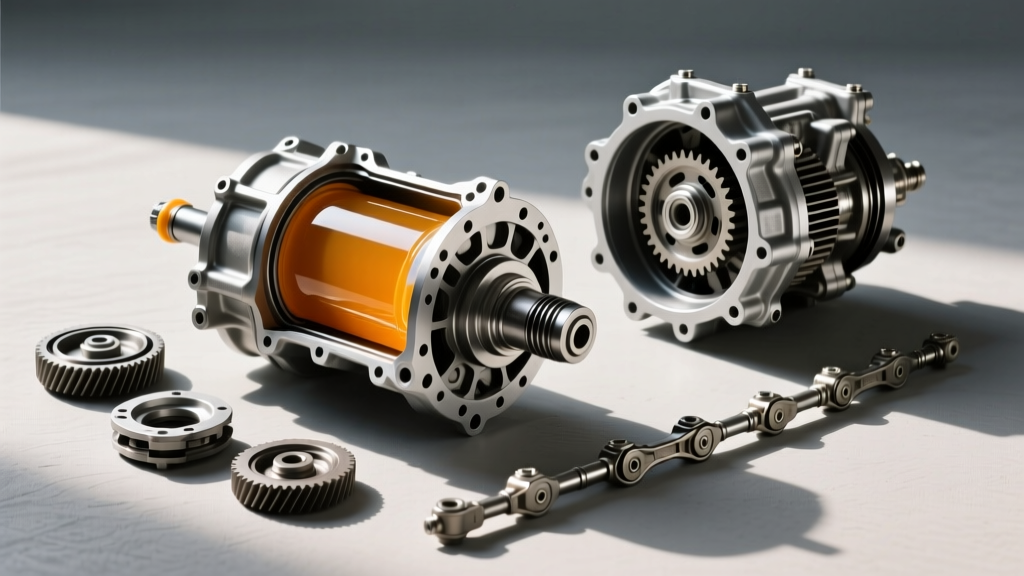
As outlined in the Ram Body Builder guides, the transfer case relies on automatic transmission fluid (ATF) for hydraulic actuation and chain lubrication, whereas the differentials require thick, high-pressure gear oil to protect the hypoid ring and pinion gears.
Deep Dive: 2018 Ram 1500 Rear Differential Fluid
When it comes to sourcing the correct 2018 Ram 1500 rear differential fluid, you must match the API GL-5 specification to protect the extreme-pressure sliding surfaces of the hypoid gears. The 2018 model year typically features either the standard Chrysler 9.25-inch rear axle or the heavy-duty American Axle & Manufacturing (AAM) 10.5-inch axle, depending on your payload package and engine configuration.
Fluid Specifications and Part Numbers
For standard driving and light towing, Mopar recommends a 75W-85 Synthetic Gear Lubricant. According to Mopar's official parts catalog, the OEM part number is typically 68218655AA. If you frequently tow heavy trailers (over 6,000 lbs) or operate in extreme desert heat, stepping up to a 75W-140 Synthetic is highly advised to maintain film strength and prevent gear whine.
It is also critical to address friction modifiers. If your 2018 Ram 1500 is equipped with the anti-spin (limited-slip) rear differential, you must add a specific friction modifier additive (Mopar Part # 04318060AD) unless your chosen synthetic gear oil explicitly states it is formulated for limited-slip axles. Failing to do so will result in aggressive clutch-pack chatter during low-speed cornering, which sends destructive harmonic vibrations straight back up the driveshaft and into the transfer case output bearing.
Crucial Torque Specs and Hardware
One of the most common beginner mistakes is over-tightening the differential fill and drain plugs, which can strip the aluminum or cast-iron housing threads. The factory torque specification for the rear differential fill and drain plugs is 25 lb-ft. If your truck is equipped with a differential cover that uses bolts (common on the AAM 10.5 axle with the anti-spin locking differential), those cover bolts must be torqued to 35 lb-ft in a crisscross pattern to ensure a proper RTV silicone or gasket seal.
The Transfer Case and Differential Relationship
Why does the transfer case care about your rear axle? The transfer case and differential relationship is rooted in mechanical resistance and rotational binding. In a part-time 4WD system like the BorgWarner unit equipped in the 2018 Ram 1500, the front and rear driveshafts are locked together when 4HI or 4LO is engaged. They must spin at the exact same RPM.
The "Binding" Phenomenon and Fluid Drag
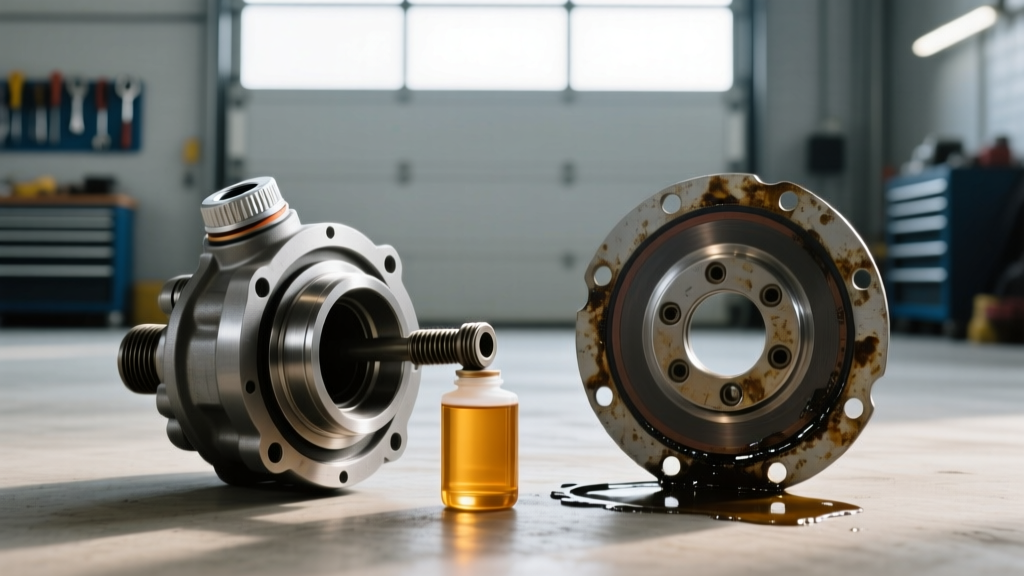
If your 2018 Ram 1500 rear differential fluid is severely degraded, contaminated with water, or the wrong viscosity, the internal friction inside the rear axle increases. This creates rotational drag. Because the transfer case is mechanically linked to the rear axle via the driveshaft, the transfer case's internal chain and output bearings must work harder to overcome this rear-axle drag. Over time, this parasitic loss generates excess heat inside the transfer case, accelerating the degradation of the ATF+4 fluid and stretching the internal drive chain.
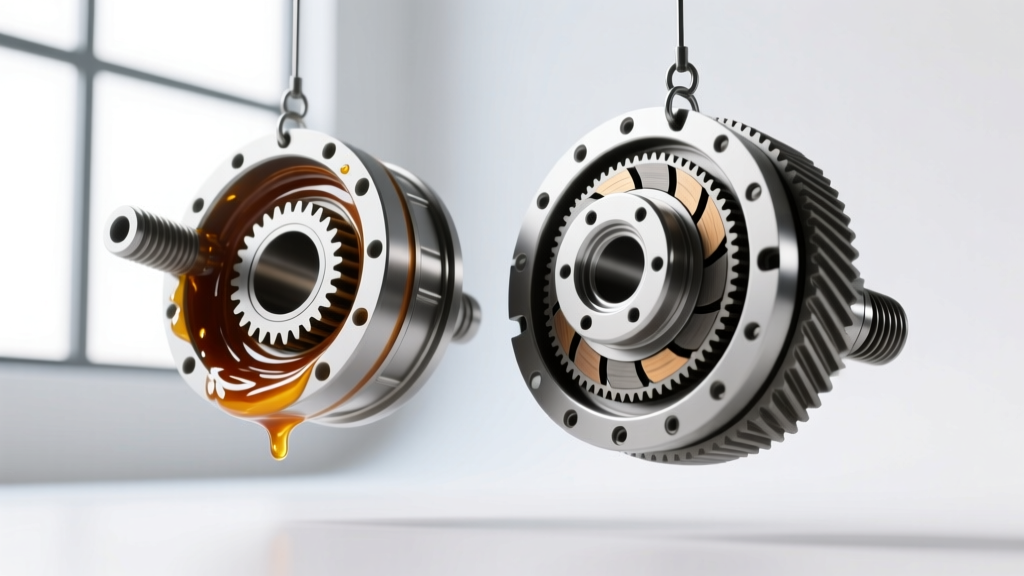
According to engineering documentation from American Axle & Manufacturing (AAM), the hypoid gear sets in modern truck differentials operate under immense sliding pressure. When gear oil loses its extreme-pressure (EP) additives due to thermal breakdown, the microscopic metal shavings generated by gear wear circulate through the differential housing. While the transfer case is sealed separately, the physical vibration caused by pitted or worn rear differential gears travels through the steel driveshaft, tricking the transfer case's internal sensors and causing premature wear to the BorgWarner unit's internal chain and sprockets.
Furthermore, if you engage 4WD on dry pavement, the lack of a center differential causes "drivetrain wind-up." The tires fight for traction, and the resulting torque is stored as physical tension in the driveshafts, transfer case chain, and differential ring gears. Proper, fresh fluid in both the transfer case and the differentials acts as the final line of defense against the extreme sheer forces generated during this binding event.
Symptoms of Neglected Drivetrain Fluids
Because the drivetrain operates as a closed-loop system, symptoms of fluid failure often overlap. Here is what to look out for:
- Highway Whine: A howling noise from the rear of the truck that changes pitch with vehicle speed (not engine RPM) indicates worn ring and pinion gears or severely sheared rear differential fluid.
- 4WD Engagement Clunk: If shifting into 4HI results in a violent clunk, the transfer case shift motor may be failing, or the internal fluid is too degraded to lubricate the synchronizers and shift forks.
- Chatter on Turns: If you have a limited-slip rear differential and hear a clunking or chattering sound during slow, tight turns, the friction modifier additive in your gear oil has broken down, causing the clutch packs to grab and release abruptly.
2026 Maintenance Costs: DIY vs. Dealer Service
As of 2026, the cost of synthetic drivetrain fluids has stabilized, but dealership labor rates have continued to climb. A complete 4WD drivetrain fluid service (Transfer Case, Front Diff, Rear Diff) at a Ram dealership will typically cost between $350 and $450, largely due to the 2+ hours of shop labor billed at $150+ per hour.
For the DIY beginner, the investment is significantly lower. A high-quality 75W-85 synthetic gear oil costs around $14 per quart, and a gallon of licensed ATF+4 for the transfer case runs about $35. You can complete the entire 4WD system service in your driveway for under $120 in materials. All you need is a set of metric sockets, a 3/8-inch torque wrench, a fluid transfer pump, and a safe set of jack stands. By understanding the vital relationship between your transfer case and axles, and by strictly adhering to the factory fill and torque specifications, you will easily extend the life of your Ram's drivetrain well past the 200,000-mile mark.