The Drivetrain Duo: Transfer Case and Differentials Explained
For beginners diving into the world of four-wheel-drive (4WD) and all-wheel-drive (AWD) vehicles, the undercarriage can look like a confusing maze of metal housings and spinning shafts. At the heart of any Ford truck or SUV—whether it is a rugged F-150, a revival Bronco, or an Explorer—lies a critical partnership between the transfer case and the front and rear differentials. Understanding how these components interact is the first step toward proper maintenance, and more importantly, understanding why selecting the correct Ford differential fluid is entirely different from servicing your transfer case.
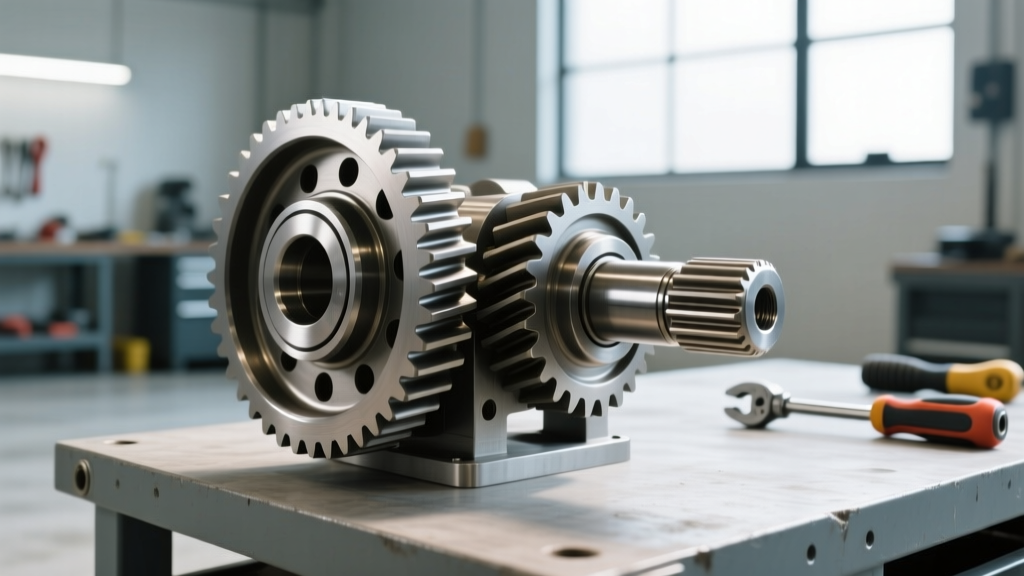
In a traditional rear-wheel-drive vehicle, power flows straight from the transmission to the rear differential. However, in a 4WD Ford, the transmission sends power into the transfer case. The transfer case acts as a secondary gearbox that splits torque between the front and rear driveshafts. From there, the driveshafts deliver that rotational force to the front and rear differentials, which finally route the power out to the wheels while allowing them to rotate at different speeds during cornering. If one component in this chain is neglected, the resulting stress cascades through the entire drivetrain.
The Great Fluid Confusion: Why Gear Oil Doesn't Belong in Your Transfer Case
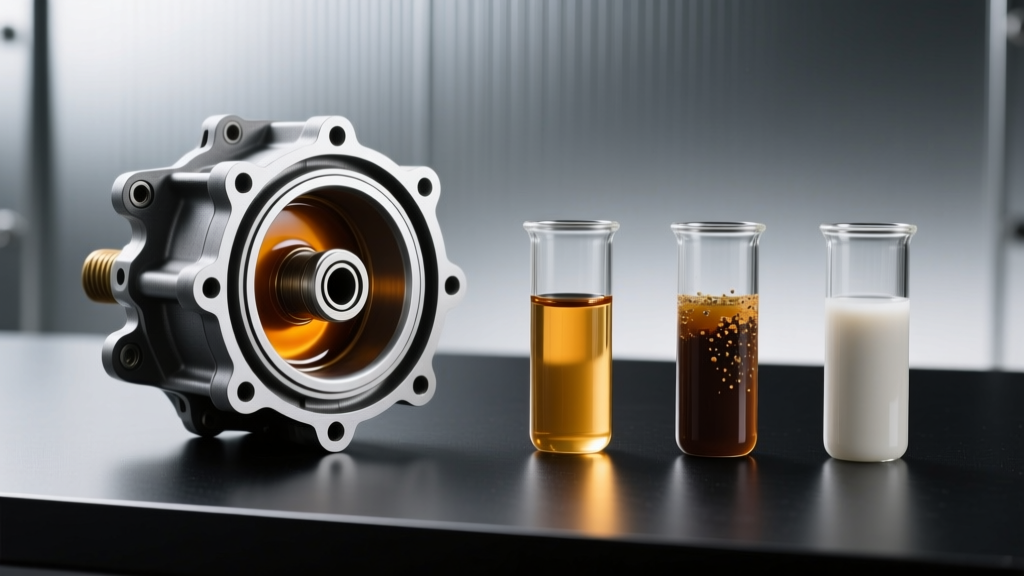
One of the most common and costly mistakes beginners make is assuming that because the transfer case and the differentials are both gear-driven 4WD components, they share the same lubricant. This is categorically false. The internal architecture of a modern Ford transfer case requires vastly different chemical properties than a heavy-duty axle differential.
Transfer Case Fluid Chemistry
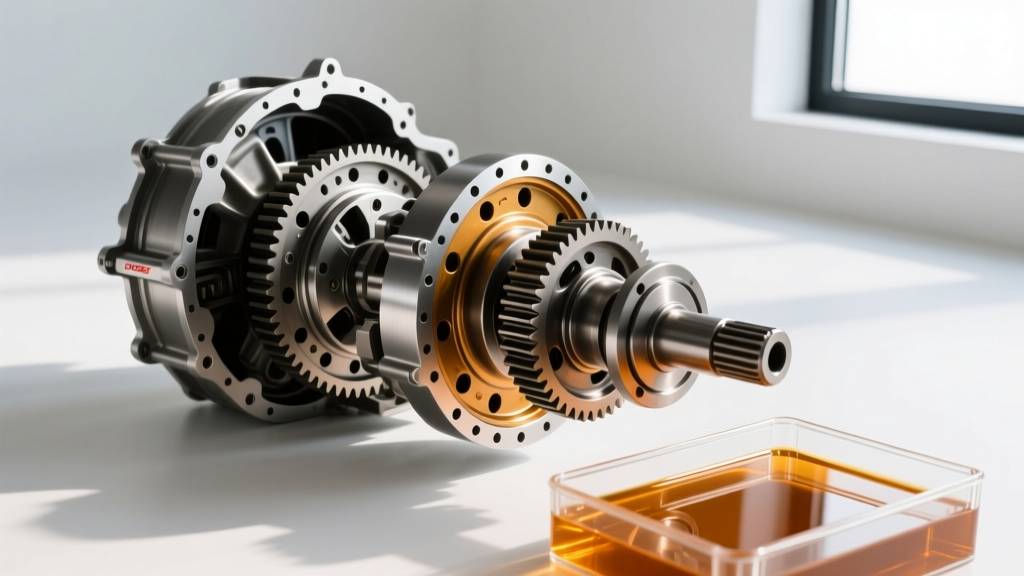
Modern Ford transfer cases, such as the BorgWarner 4417 or 4412 found in late-model F-150s, rely on complex internal clutch packs, chains, and planetary gearsets to manage torque vectoring and mode shifting (e.g., 2H, 4A, 4H, 4L). These clutch packs require a low-viscosity, highly specialized fluid with specific friction modifiers. Motorcraft XL-12 Transfer Case Fluid is engineered specifically for this. It is closer in chemistry to an Automatic Transmission Fluid (ATF) than a gear oil.
Differential Fluid Chemistry
Conversely, the front and rear differentials house massive ring and pinion gears that operate under extreme sliding pressure and sheer force. To prevent the gear teeth from wiping or galling, differentials require an API GL-5 rated gear oil, such as a 75W-140 or 80W-90 synthetic. According to the SAE J2360 standard for axle lubricants, GL-5 fluids contain high levels of extreme-pressure (EP) additives, usually sulfur-phosphorus compounds. If you mistakenly pour thick 75W-140 GL-5 gear oil into your BorgWarner transfer case, the EP additives and high viscosity will cause the internal clutch packs to slip, overheat, and rapidly destroy the transfer case internals.
2024-2026 Ford Drivetrain Fluid Specification Matrix
To help you navigate your next service interval, refer to the matrix below. Always verify with your specific owner's manual, as axle ratios and tow packages can alter capacity requirements.
| Component | Typical Ford Model (e.g., F-150/Bronco) | Fluid Specification | Approx. Capacity | Motorcraft Part Number |
|---|---|---|---|---|
| Transfer Case (BorgWarner 4417) | F-150 4x4 (2021-2026) | XL-12 Transfer Case Fluid | 1.5 - 1.9 Quarts | C6OZ-19590-A |
| Rear Differential (Sterling 10.5) | F-150 Heavy Duty Payload | 75W-140 Synthetic GL-5 | 2.3 - 2.6 Quarts | XO-75W140-QFS |
| Front Differential (Dana 35 / M210) | F-150 / Bronco IFS | 80W-90 or 75W-85 GL-5 | 1.3 - 1.5 Quarts | XO-80W90-QSP |
| Limited-Slip Additive | All Ford LSD Axles | Friction Modifier | 4 oz (if required) | XL-3 |
Drivetrain Wind-Up: When the Transfer Case and Differentials Fight
Understanding the relationship between the transfer case and the differentials also requires understanding a phenomenon known as 'drivetrain wind-up' or 'binding.' In a part-time 4WD system (locked 4H or 4L), the transfer case locks the front and rear driveshafts together, forcing them to spin at the exact same speed. However, when you turn a corner, the front wheels travel a wider arc than the rear wheels, meaning the front differential needs to spin the front driveshaft faster than the rear differential spins the rear driveshaft.
If you drive in locked 4H on dry, high-traction pavement, the tires cannot slip to compensate for this difference in rotational speed. The resulting kinetic energy has nowhere to go, so it twists the driveshafts and binds the transfer case chain and planetary gears. This immense stress transfers directly to the ring and pinion gears inside your axles. Over time, driving in the wrong 4WD mode on dry pavement will cause premature gear wear, chipped teeth, and catastrophic differential failure. This is why modern Ford AWD and '4A' (4-Auto) modes utilize a center differential or an electronically controlled clutch pack inside the transfer case to allow for front-to-rear speed differentiation, protecting your axles and your Ford differential fluid from extreme heat degradation.
Diagnosing Noise: Transfer Case vs. Differential
Beginners often struggle to pinpoint the source of a drivetrain whine or clunk. Because the components are linked, a noise can easily be misdiagnosed. Here is a quick troubleshooting framework:
- Deceleration Howl (Rear): If the vehicle howls like a distant jet engine specifically when you let off the throttle between 40-60 mph, the issue is almost certainly the rear differential's ring and pinion gear wear, not the transfer case. This indicates the gear lash is out of spec or the fluid has broken down.
- Cyclic Clicking or Chain Slap (Center): A rhythmic clicking or metallic slapping noise originating from beneath the center console or driver's seat usually points to a stretched transfer case chain or worn sprocket bearings inside the BorgWarner unit.
- Chatter During Tight Turns (Front/Rear): If the vehicle shudders or 'hops' during tight, low-speed turns in 2WD or AWD, the limited-slip clutch packs inside the differential are grabbing and releasing. This is often cured by draining the Ford differential fluid and adding a fresh bottle of Motorcraft XL-3 Friction Modifier.
Step-by-Step: Servicing the Ford Sterling 10.5 Rear Axle
Servicing your differential is a highly rewarding DIY task that saves hundreds of dollars in dealership labor fees. The Sterling 10.5-inch rear axle, common in heavy-duty payload F-150s and Super Duties, is relatively straightforward to service. For comprehensive maintenance schedules, you can always refer to the official Ford maintenance portal.
- Preparation: Drive the vehicle for 10-15 minutes to warm up the gear oil. Warm fluid flows faster and suspends metallic particulates better. Park on a level surface and safely support the rear axle on jack stands.
- Extraction vs. Drain Plug: Some Ford differentials feature a traditional 3/8-inch square drain plug at the bottom of the housing. If equipped, place a catch pan below and remove it. If your axle lacks a drain plug (common on lighter-duty 8.8-inch axles), you must remove the 10mm rear cover bolts, drop the pan, and scrape off the old RTV sealant. Alternatively, use a manual fluid extractor pump inserted through the fill hole.
- Inspection: Check the drained fluid or the inside of the differential cover. A fine, dark gray metallic paste on the magnetic drain plug is normal wear. However, large metal shards or chunks of bronze indicate bearing or gear failure requiring a rebuild.
- Refilling: Reinstall the drain plug or cover. Torque the 3/8-inch square drain/fill plugs to exactly 33 lb-ft (45 Nm). Over-torquing can crack the aluminum or cast-iron housing. Pump in the new 75W-140 synthetic gear oil until it reaches the bottom edge of the fill hole.
- Friction Modifier: If your axle is equipped with a Torsen or traditional clutch-type limited-slip differential, add the required 4 oz of XL-3 friction modifier before topping off with the base gear oil.
The Cost Breakdown: DIY vs. Dealership Service
Maintaining the relationship between your transfer case and axles doesn't have to break the bank. Here is what you can expect to pay for a complete 4WD drivetrain fluid service in 2026:
- Dealership 4WD Service Package: $450 - $750 (Includes flush and fill of TC, front diff, and rear diff using OEM Motorcraft fluids).
- Independent 4x4 Shop: $300 - $500 (Often willing to use high-quality aftermarket equivalents like Amsoil or Red Line).
- DIY Driveway Service: $110 - $160 (Cost of 3 quarts XL-12, 5 quarts 75W-140, 2 quarts 80W-90, and one bottle of XL-3 modifier).
Final Thoughts on Drivetrain Harmony
Your Ford's 4WD system is a symphony of mechanical precision. The transfer case dictates the distribution of power, while the differentials manage the delivery to the pavement. By respecting the distinct fluid requirements of each component and adhering to strict torque specifications during service, you ensure that your truck remains capable, quiet, and reliable for hundreds of thousands of miles.