The Kinematics of AWD Driveline Wind-Up
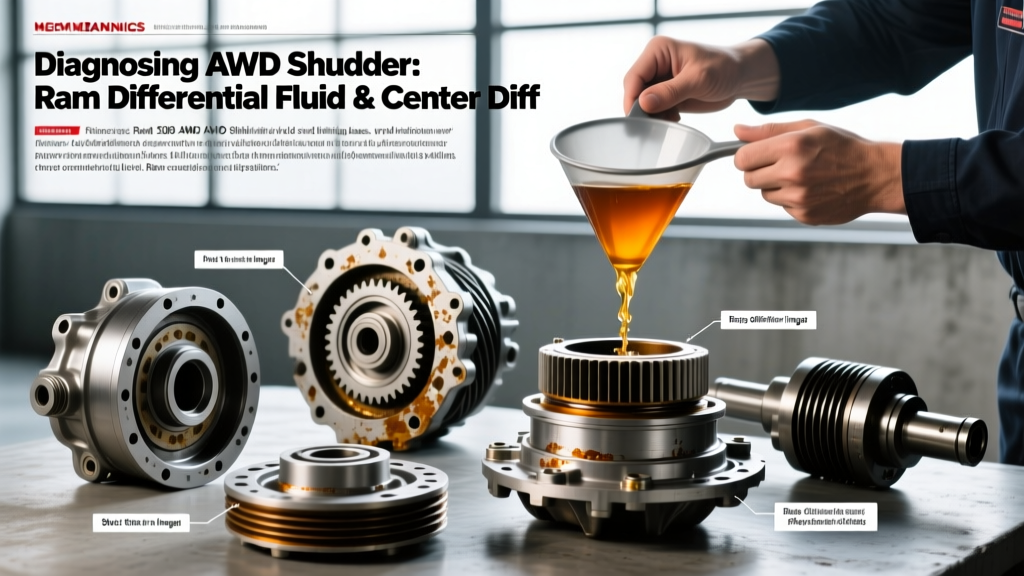
When an All-Wheel Drive (AWD) vehicle exhibits severe shudder, tire chirping, or "hopping" during low-speed, tight-radius cornering, the immediate suspect is often the center differential. However, as diagnostic protocols have evolved through 2026, drivetrain specialists increasingly recognize a secondary, frequently misdiagnosed culprit: the automatic locking rear differential.
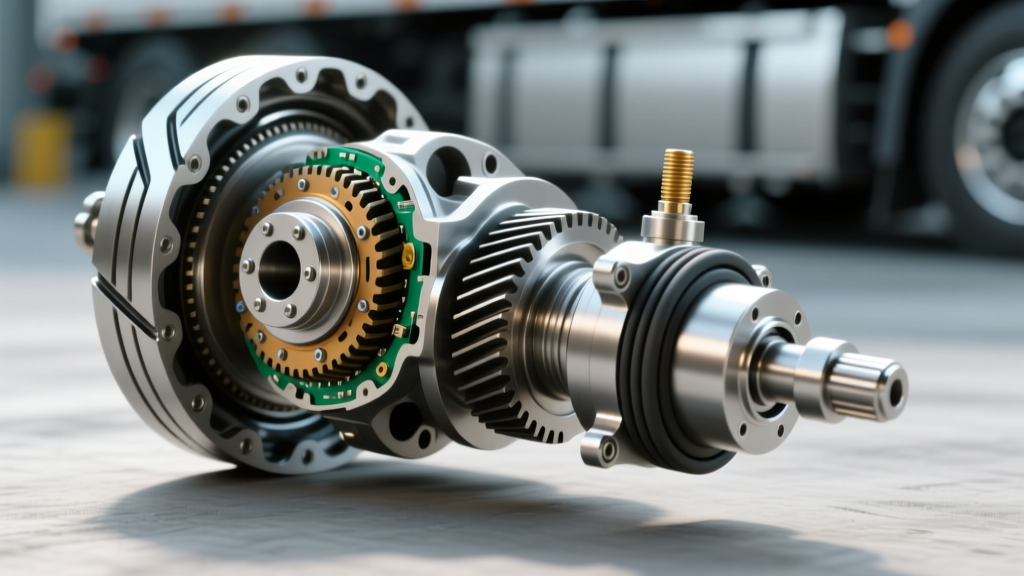
In a fully functional AWD system, the center differential (whether a viscous coupling, Torsen gearset, or active clutch-pack transfer case) manages the rotational speed delta between the front and rear driveshafts. Simultaneously, the rear differential manages the left-to-right wheel speed variance. When an automatic locking rear differential—such as the ubiquitous Eaton G80 Gov-Lok—fails to disengage or falsely engages due to fluid degradation, it locks the rear axle shafts together. This forces the center differential to absorb 100% of the axle speed deviation during a turn, resulting in catastrophic driveline wind-up, transfer case overheating, and the dreaded "AWD hop."
Symptom Matrix: Center Diff vs. Rear Locker Faults
Isolating the root cause requires a systematic breakdown of symptoms. Use the following diagnostic matrix to differentiate between a failing center differential and a malfunctioning automatic locking rear differential.
| Diagnostic Symptom | Center Differential Fault | Automatic Locking Rear Diff Fault |
|---|---|---|
| Low-Speed Cornering Bind | Continuous shudder; feels like dragging an anchor. Usually linked to sheared viscous fluid or burnt clutch packs. | Sharp, rhythmic "hopping" or popping. Rear tires physically skip across dry pavement. |
| Engagement Noise | Whining or clunking from the center console/transfer case area during load reversals. | Metallic "bang" or ratcheting click from the rear axle housing during initial takeoff or deceleration. |
| High-Speed Vibration | Driveline harmonic vibration above 45 mph, often due to failing center diff support bearings. | Rarely causes high-speed vibration unless a locker flyweight has shattered and damaged the ring gear. |
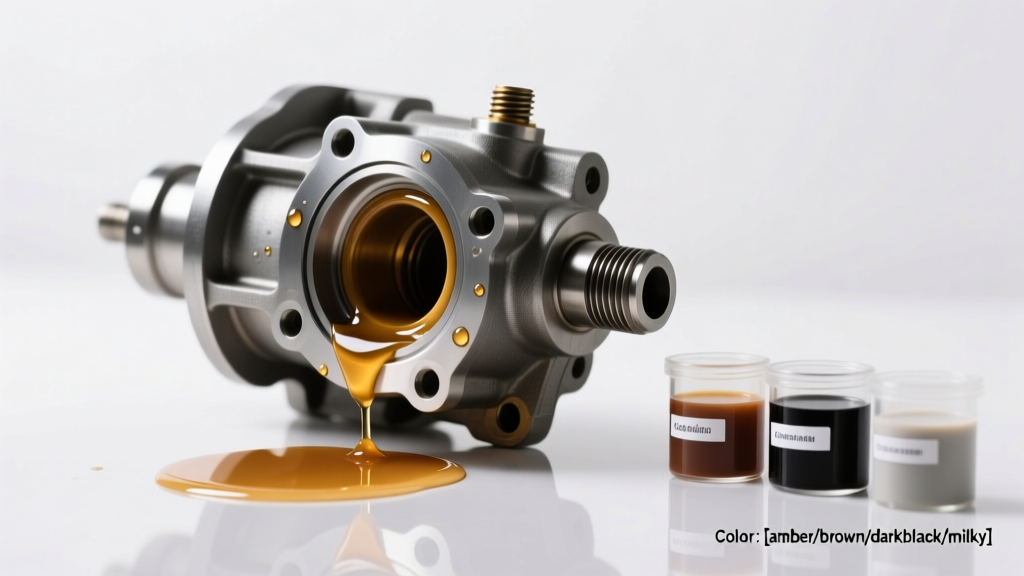
| Fluid Condition | Center diff/transfer case fluid smells burnt (clutch packs) or contains metallic glitter (gear wear). | Rear diff fluid contains yellow brass shavings (locker actuator wear) or incorrect friction modifiers. |
The Fluid Variable: Viscosity and the Friction Modifier Trap
The most common cause of false engagement in an automatic locking rear differential is improper fluid selection. Unlike clutch-type limited-slip differentials (LSDs) that require specialized friction modifiers to prevent chatter, mechanical automatic lockers rely on the precise coefficient of friction of standard GL-5 gear oil to operate their internal flyweights and locking mechanisms.
The DIY Friction Modifier Mistake
Many well-meaning enthusiasts and generalist mechanics mistakenly add limited-slip friction modifiers (like GM P/N 88900338) to the rear axle of a vehicle equipped with an Eaton G80 automatic locker. This reduces the fluid's friction coefficient. As a result, the internal flyweights slip against the housing rather than engaging the locking teeth. Conversely, if the fluid is heavily degraded or the wrong viscosity (e.g., using a 75W-140 instead of the specified 75W-90), the hydraulic damping effect can delay the locker's disengagement. The rear axle remains locked well into the cornering phase, fighting the center differential and causing severe AWD bind.
According to the Ring & Pinion Differential Tech Library, maintaining the exact shear stability of the gear oil is paramount for mechanical lockers. Always verify the RPO code or axle tag before introducing any additives.
Step-by-Step Isolation Protocol
To definitively prove whether the center diff or the automatic locking rear differential is causing the AWD hop, perform the following sequence:
- The Surface-Variable Figure-8 Test: Drive the vehicle in tight figure-8 patterns on dry pavement, then repeat on loose gravel. If the hopping persists on gravel (where tires can easily slip to relieve wind-up), the mechanical disengagement of the rear locker is highly suspect. If it only binds on pavement, the center diff clutch pack may be fused.
- The Driveline Lift Test: Place the vehicle on a four-post lift or jack stands (all four wheels off the ground). With the transmission in neutral, manually rotate the front driveshaft. The rear driveshaft should rotate smoothly via the center diff. Now, hold one rear wheel stationary and rotate the opposite rear wheel. If the rear driveshaft turns but the opposite wheel does not reverse direction smoothly, the automatic locking rear differential is mechanically jammed.
- Fluid Tribology Extraction: Pull the fill plug on the rear differential. Extract a 10ml sample. If the fluid is milky, water intrusion has rusted the locker mechanism. If it smells like burnt toast, the center differential clutches are likely the source of the heat, transferring thermal load through the driveline.
Real-World Case Study: GM AWD Silverado (BorgWarner 4493 + Eaton G80)
To illustrate the interaction between these components, let us examine the GM AWD full-size truck platform (Silverado/Sierra AWD). These vehicles utilize a BorgWarner 4493 transfer case acting as a center differential, paired with a 9.5-inch 10-bolt rear axle featuring the Eaton G80 automatic locking rear differential.
Specifications and Torque Data
- Center Diff (BW 4493) Fluid: GM Auto-Trak II (P/N 88900402). Capacity: 2.0 Quarts.
- Rear Axle Fluid: Synthetic 75W-90 GL-5 (P/N 88900401). Capacity: 2.75 Quarts.
- Crucial Note: DO NOT add friction modifier to the G80 rear axle.
- Rear Diff Cover Torque: 25 lb-ft (M10 bolts).
- Rear Fill/Drain Plug Torque: 30 lb-ft.
- Transfer Case Plug Torque: 18 lb-ft.
When diagnosing a hopping complaint on this platform, technicians must first verify the Auto-Trak II fluid level and condition. The Eaton G80 Automatic Locker operates via a flyweight governor that engages a locking ring when wheel speed disparity exceeds 100 RPM. If the 75W-90 rear fluid is contaminated with friction modifier, the 100 RPM threshold is bypassed, the locker slips, and the BW 4493 center diff is forced to compensate for erratic rear axle speed variations, resulting in violent shudder.
Cost Analysis: Rebuild vs. Replace (2026 Pricing)
When troubleshooting confirms a hard failure, understanding the financial impact is critical for repair planning.
- Center Differential Clutch Pack Rebuild: If the BW transfer case clutches are burnt, a rebuild kit costs between $150 and $300. However, labor and bench time typically push the total shop invoice to $800 – $1,200.
- Automatic Locker Replacement: If the Eaton G80 internal governor is shattered or the locking teeth are sheared, rebuilding is rarely cost-effective. A new OEM replacement locker assembly (e.g., P/N 22940944) ranges from $450 to $750. Add 2.5 hours of labor for axle disassembly, gear backlash verification, and fluid refill, bringing the total to roughly $900 – $1,300.
- Fluid Service Preventative Cost: A complete drain and fill of both the center diff and rear locker with correct OEM fluids costs approximately $120 – $180, a fraction of the repair costs.
Final Diagnostic Takeaways
AWD binding is rarely a simple tire-mismatch issue. It is a complex negotiation between the center differential and the rear axle. By understanding the mechanical realities of the automatic locking rear differential, respecting fluid viscosity requirements, and utilizing isolation protocols like the surface-variable figure-8 test, technicians and enthusiasts can accurately pinpoint the fault. Never assume the center differential is guilty until the rear locker's fluid and mechanical integrity have been definitively cleared.