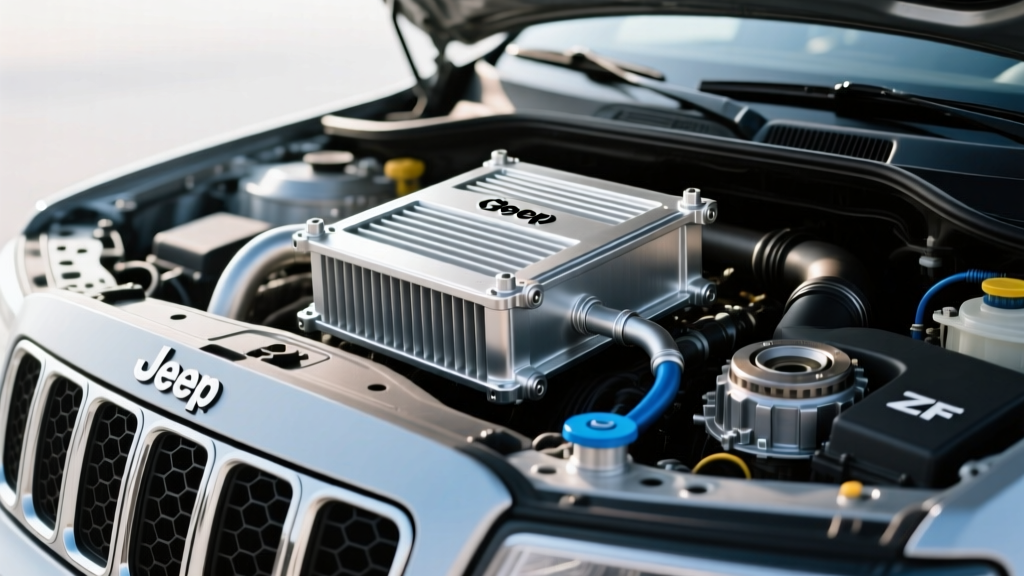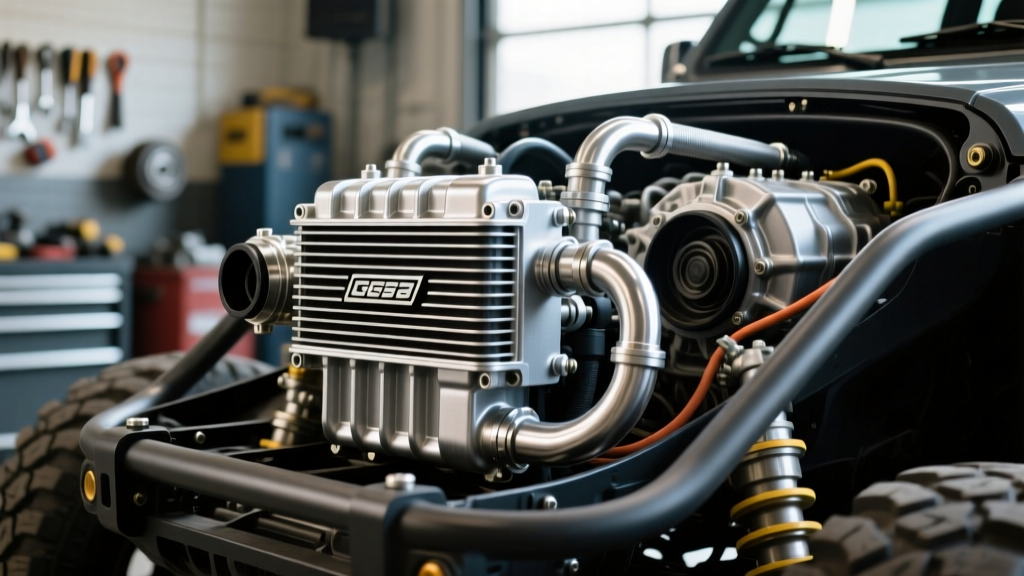
The Thermal Threat to Modern Transmission Electronics
As we navigate the 2026 landscape of heavy-duty towing and high-performance daily driving, automatic transmissions are operating under unprecedented thermal loads. Modern units like the GM 6L80, ZF 8HP70, and Ford 6R80 rely heavily on precise hydraulic pressure controlled by electronic solenoids. The linchpin of this entire electronic strategy is the Transmission Fluid Temperature (TFT) sensor. When transmission fluid overheats, it does not merely lose its lubricating properties; it actively destroys the internal electronics, leading to a catastrophic failure of the TFT thermistor.
Many fleet managers and DIY enthusiasts focus solely on clutch pack wear or torque converter degradation when discussing heat. However, the transmission temperature sensor replacement cost is a hidden financial landmine. Because manufacturers have integrated the TFT sensor directly into complex valve bodies and electro-hydraulic control modules, you rarely replace just a $20 sensor. You are forced to replace the entire assembly. Understanding the auxiliary transmission cooler benefits is the ultimate preventive maintenance strategy to protect these highly sensitive, deeply buried components.
Calculating the True Transmission Temperature Sensor Replacement Cost
To understand the return on investment (ROI) of an auxiliary cooler, we must first break down the actual repair costs associated with thermal sensor failure. When a TFT sensor fails due to thermal cycling and fluid oxidation, the repair involves dropping the transmission pan, removing the valve body, and often performing complex software recalibrations.
| Transmission Model | Sensor Location / Assembly | Part Cost (OEM) | Labor & Programming | Estimated Total Cost |
|---|---|---|---|---|
| GM 6L80 / 6L90 | TEHCM (Electro-Hydraulic Control Module) | $450 - $650 | $350 - $550 (Includes Flash) | $800 - $1,200 |
| ZF 8HP70 / 8HP90 | Mechatronic Unit (Integrated Valve Body) | $1,200 - $1,800 | $600 - $1,000 (Includes Adaptation) | $1,800 - $2,800 |
| Ford 6R80 / 10R80 | Solenoid Strategy Body / Lead Frame | $250 - $450 | $400 - $600 | $650 - $1,050 |
According to data aggregated by the Automatic Transmission Rebuilders Association (ATRA), thermal-related electronic failures account for nearly 35% of all modern transmission warranty claims. The cost to replace a TEHCM on a GM 6L80 isn't just the $500 part; it requires a J2534 pass-through programming tool to flash the new module with the vehicle's specific VIN and calibration files, driving up shop time significantly.
Diagnostic Codes: The Warning Signs of Thermal Damage
Before the sensor fails completely, the Powertrain Control Module (PCM) will usually detect erratic resistance values caused by heat-damaged wiring harnesses or degraded thermistor epoxy. Watch for these critical OBD-II codes:
- P0711: TFT Sensor Circuit Range/Performance (Often caused by fluid temperatures exceeding the sensor's logical threshold, typically over 300°F).
- P0712: TFT Sensor Circuit Low Input (Indicates a short to ground, common when ATF dielectric properties break down and fluid becomes conductive).
- P0713: TFT Sensor Circuit High Input (Indicates an open circuit, often resulting from micro-fractures in the sensor solder joints due to extreme thermal expansion and contraction).
Auxiliary Transmission Cooler Benefits for Sensor Longevity
Installing an auxiliary transmission cooler is not just about keeping the fluid cold; it is about preserving the chemical and electrical environment inside the transmission case. Here is how an auxiliary cooler directly prevents the need for a massive transmission temperature sensor replacement cost.
1. Halting ATF Oxidation and Dielectric Breakdown
Modern synthetic fluids like Dexron VI, Mercon LV, and ZF Lifeguard 8 are engineered with specific dielectric properties. They act as insulators for the internal wiring harnesses and sensor circuits. However, when ATF exceeds 220°F (104°C), it begins to oxidize rapidly. Oxidized fluid turns acidic, forms varnish, and loses its dielectric resistance. This conductive sludge bridges the gaps in the TFT sensor circuit, causing the P0712 short-to-ground codes. By maintaining fluid temperatures between 160°F and 190°F, an auxiliary cooler preserves the fluid's electrical insulation properties.
2. Eliminating Destructive Thermal Cycling
The TFT sensor is typically housed in a plastic or composite valve body cover, submerged in fluid that can swing from 70°F at startup to 240°F under heavy towing loads. This extreme thermal cycling causes the sensor's internal solder joints and the surrounding wire harness connectors to expand and contract at different rates. Over time, this leads to micro-fractures. An auxiliary cooler flattens the thermal curve, keeping the operating temperature stable and vastly extending the physical lifespan of the sensor's soldered connections.
3. Preventing Varnish Buildup on the Thermistor
When fluid burns, it leaves behind a hard, insulating layer of carbon varnish. If this varnish coats the TFT thermistor, the sensor becomes sluggish. It will read temperatures lower than reality, causing the PCM to command higher line pressures and firmer shifts, which in turn generates even more heat. This runaway thermal event guarantees sensor and clutch failure. Auxiliary coolers prevent the baseline temperatures required for varnish formation.
Preventive Maintenance: Sizing and Installing the Right Cooler
To actually realize these auxiliary transmission cooler benefits, you must select the correct cooler type and install it to OEM engineering standards. The old-school 'tube-and-fin' coolers are largely obsolete for modern 8-speed and 10-speed transmissions due to their poor thermal transfer efficiency and high flow restriction.
Choosing the Right Core Design
For vehicles equipped with a ZF 8HP or GM 10L80, you must use a Stacked-Plate or Plate-and-Fin cooler. These designs offer superior heat dissipation while maintaining the high flow rates (often exceeding 1.5 gallons per minute) required by modern variable-displacement transmission pumps. Brands like Derale (Hyper-Cool series) and Mishimoto offer stacked-plate designs that minimize pressure drop. A restricted cooler will starve the torque converter of charge pressure, leading to immediate slip and heat generation.
GVWR Sizing Framework
Do not guess your cooler size based on physical dimensions. Use the Gross Vehicle Weight Rating (GVWR) framework:
- Light Duty (Class 1/2, up to 8,500 lbs GVWR): 15,000 - 20,000 GVWR rated cooler.
- Heavy Towing (Class 3, 10,000+ lbs GVWR): 24,000 - 30,000 GVWR rated cooler.
- Severe Duty (Class 4/5, Commercial): 40,000+ GVWR rated cooler with an integrated bypass thermostat.
Expert Tip: Always install an auxiliary cooler with a thermostatic bypass valve (like the Derale 10000 series with bypass). Modern transmissions require fluid to reach 160°F quickly to clear condensation and achieve optimal hydraulic viscosity. A bypass valve routes fluid back to the transmission until it reaches operating temperature, preventing 'over-cooling' which is just as damaging to the valve body as overheating.
Routing and Torque Specifications
Improper installation is the leading cause of auxiliary cooler failure. When tapping into the factory transmission cooling lines, follow these precise specifications to prevent leaks and pressure drops:
- Line Routing: Always install the auxiliary cooler after the factory radiator cooler (on the return line to the transmission). This ensures the fluid is pre-cooled by the radiator before hitting the auxiliary core, maximizing the delta-T (temperature differential) for the auxiliary unit.
- Hose Selection: Never use standard fuel or oil line hose. Transmission fluid under pressure will degrade standard rubber. Use only SAE J1532-rated synthetic transmission cooler hose.
- Fitting Torque: When installing brass or aluminum AN-6 adapter fittings into the cooler ports, apply a maximum of 15 to 18 lb-ft of torque. Over-torquing will crack the aluminum end-tanks, resulting in a total loss of fluid and immediate transmission destruction.
- Quick Disconnects: If your vehicle uses OEM plastic quick-disconnect fittings (common on Ford and GM), always replace the factory retaining clips with new OEM-style Dorman or Motorcraft clips (e.g., Dorman 800-015) during reassembly. Reusing fatigued plastic clips is a primary cause of highway line blowouts.
Final ROI Analysis: Prevention vs. Repair
The math behind preventive maintenance is undeniable. A high-quality stacked-plate auxiliary cooler kit, complete with thermostatic bypass, synthetic hoses, and CNC-machined AN fittings, typically costs between $250 and $450. Installation takes a competent DIYer roughly 2 to 3 hours, or a shop about 1.5 hours of billed labor.
Compare this upfront investment of under $600 to the reality of a thermal-induced TEHCM failure on a GM 6L80, where the transmission temperature sensor replacement cost easily eclipses $1,000, not including the cost of 12 quarts of new Dexron VI fluid and a transmission flush. For ZF 8HP owners, the Mechatronic unit replacement can approach $3,000. By managing thermal loads and preserving the dielectric integrity of your ATF, an auxiliary cooler doesn't just protect your clutch packs—it safeguards the delicate electronic nervous system of your modern drivetrain.
For further reading on hydraulic strategies and thermal management, consult the engineering whitepapers available at Sonnax Technical Resources and the Transmission Digest archives.