The Thermal Bottleneck in Performance Grand Cherokees
As we move through 2026, the aftermarket tuning landscape for the Jeep Grand Cherokee (WK1, WK2, and early WL platforms) has evolved dramatically. With HP Tuners and custom TCM mapping unlocking aggressive shift profiles and higher torque limits, the drivetrain is under more stress than ever. Whether you are tracking a 475-horsepower SRT, towing 7,200 lbs with a modified 3.0L EcoDiesel, or running a supercharged 6.4L V8, the factory cooling system is the first component to surrender. Upgrading your Jeep Grand Cherokee transmission cooler is no longer just a heavy-duty towing modification; it is a mandatory reliability step for any performance-oriented build.
The Grand Cherokee has utilized several legendary transmissions over the years, most notably the Mercedes-derived NAG1 (W5A580) in early SRT8 models, the robust 545RFE/65RFE in V8 and diesel applications, and the ZF 8HP70 and 8HP75 8-speed automatics in modern WK2 and WL platforms. While the ZF 8HP series is an engineering marvel capable of handling immense torque, it is acutely sensitive to thermal degradation. When transmission fluid temperatures spike, the TCM initiates torque reduction and limp modes to save the clutch packs, instantly ruining your lap times or stranding you on a steep grade.
OEM vs. Aftermarket: Why the Stock Cooler Falls Short
The factory transmission cooling setup in most Grand Cherokees relies on a heat-exchanger integrated into the bottom tank of the engine radiator. While this design is excellent for bringing cold fluid up to operating temperature quickly in freezing climates, it lacks the thermal mass and surface area required to shed heat under sustained high-RPM or high-load conditions. Furthermore, the OEM cooler lines utilize restrictive plastic quick-disconnect fittings that limit fluid flow and are prone to catastrophic failure when fluid pressures surge during aggressive 1-2 or 2-3 shifts.
Transmission Heat Thresholds: The Danger Zone
Understanding the thermal limits of your specific transmission is critical for setting up your auxiliary cooling loop. According to ZF Group engineering documentation and aftermarket dyno testing, here is how the popular Grand Cherokee transmissions react to heat:
- Ideal Operating Range: 160°F to 190°F (71°C - 88°C). This ensures optimal clutch pack friction and valve body hydraulic pressure.
- Degradation Threshold: 230°F (110°C). At this point, automatic transmission fluid (ATF) begins to oxidize rapidly, losing its shear stability and anti-wear properties.
- TCM Intervention (Limp Mode): 266°F (130°C). The ZF 8HP70/8HP75 TCM will aggressively limit engine torque and lock the torque converter to prevent internal welding of the clutch plates.
Choosing the Right Jeep Grand Cherokee Transmission Cooler
When shopping for a performance cooler, you will encounter three primary designs. For high-horsepower Grand Cherokees, the choice is clear, but understanding the engineering differences helps justify the investment.
| Cooler Technology | Flow Rate & Pressure Drop | Cooling Efficiency | Best Application |
|---|---|---|---|
| Stacked-Plate | Highest flow, lowest pressure drop (<3 PSI) | Superior (Turbulent flow design) | Track SRTs, Trackhawks, Heavy Towing |
| Plate-and-Fin | Moderate flow, medium pressure drop (5-8 PSI) | Good (Internal turbulators) | Street/Strip builds, Moderate Towing |
| Tube-and-Fin | Lowest flow, highest restriction | Fair (Basic conduction) | Light-duty, older budget replacements |
For any WK2 SRT or Trackhawk pushing beyond 500 wheel-horsepower, a stacked-plate cooler is mandatory. The stacked-plate design forces fluid through horizontal channels that create turbulent flow, maximizing heat transfer to the ambient air without creating the hydraulic restriction that can starve the ZF 8HP's lubrication circuits.
Top Performance Cooler Brands & Part Numbers
Based on 2026 market availability and proven track records in the Grand Cherokee community, here are the top-tier options:
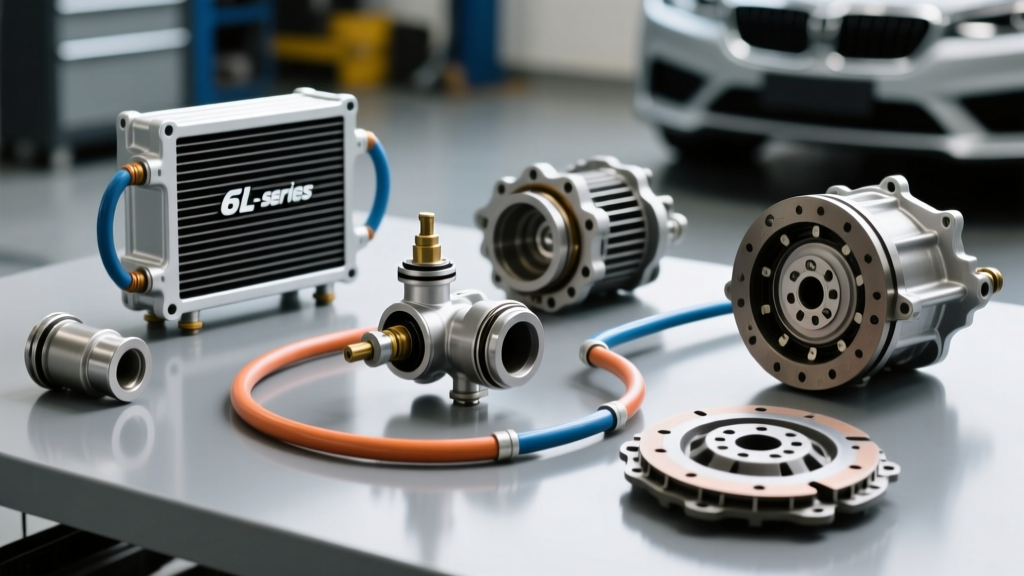
- Derale Performance 10000 Series (e.g., Part #10603): A premium stacked-plate cooler rated for up to 30,000 GVW. It features -6 AN or -8 AN female O-ring boss ports, making it easy to adapt to custom braided lines. Retailing around $220-$260, it is the gold standard for custom WK2 builds.
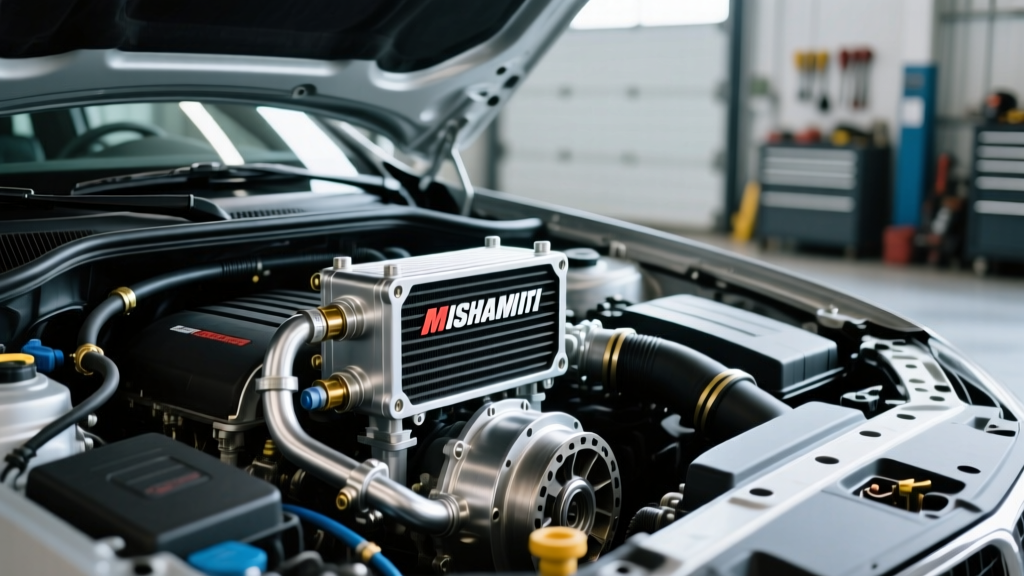
- Mishimoto Heavy-Duty Transmission Cooler: Mishimoto offers vehicle-specific kits that often include CNC-machined brackets designed to mount behind the Grand Cherokee's front fascia without requiring permanent modification. Expect to pay between $300 and $380.
- Hayden Automotive Rapid-Cool (e.g., Part #678): An excellent plate-and-fin alternative for budget-conscious builders who still need a massive upgrade over the OEM radiator loop. Priced around $110-$140, it offers great value for weekend trail rig builds.
Installation Guide: Routing, Fittings, and Line Specs
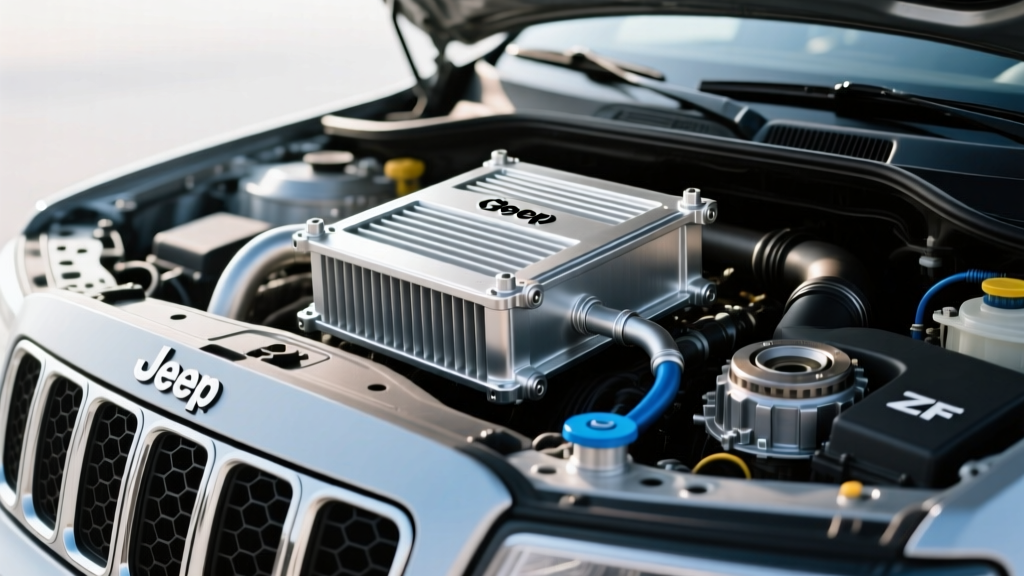
Installing an auxiliary Jeep Grand Cherokee transmission cooler on a ZF 8HP-equipped model requires precision. The ZF 8HP70 and 8HP75 utilize specific fluid routing: fluid exits the transmission hot, goes to the OEM radiator cooler, and returns to the transmission. For maximum efficiency, your aftermarket stacked-plate cooler should be plumbed in series after the OEM radiator cooler, or you must install a dedicated bypass kit if you are deleting the factory heat exchanger for a dedicated race build.
Critical Torque Specs and Line Adapters
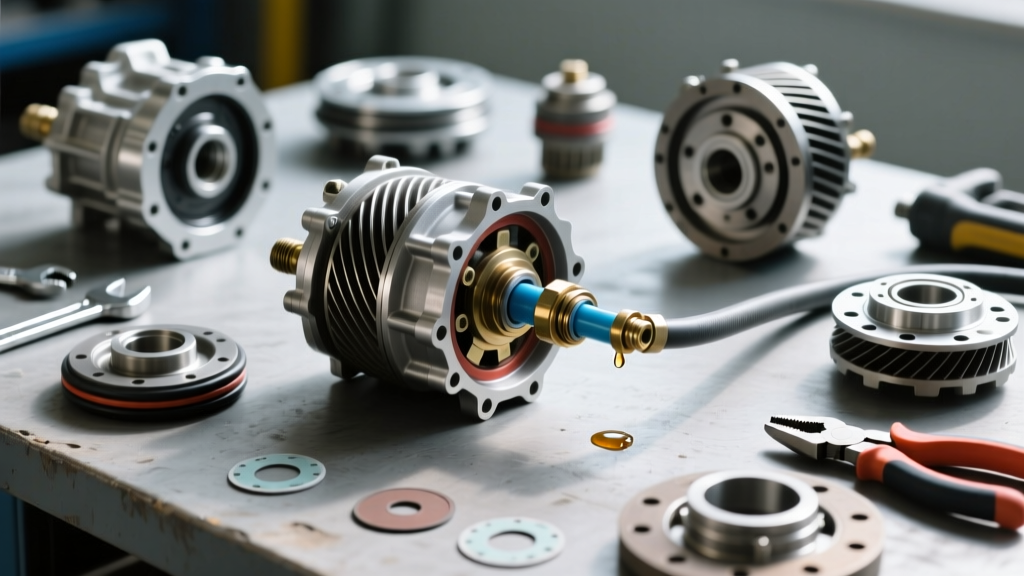
The most common failure point in DIY cooler installs is destroying the aluminum threads on the transmission case or cooler housing. When adapting the OEM lines to AN-fittings:
Expert Warning: Never use Teflon tape on AN flare fittings or O-ring boss (ORB) adapters. Teflon tape shreds and will instantly clog the ZF 8HP's sensitive mechatronic valve body solenoids, resulting in $4,000+ in internal damage. Use only high-temperature synthetic ATF on the threads and O-rings.
- Line Size: The ZF 8HP uses 5/8-inch OD cooler lines. Step up to -8 AN braided stainless lines to prevent flow restriction and pressure drop across the length of the vehicle.
- Adapter Torque: When threading M22x1.5 or 5/8-18 UNF adapters into billet aluminum blocks, torque to 18 lb-ft (24 Nm). Always use a backup wrench on the adapter body to prevent twisting.
- Mounting Hardware: If drilling into the front bumper support or radiator shroud, use stainless steel rivet nuts (M6 thread) and torque the cooler mounting bolts to 7 lb-ft (10 Nm) with blue Loctite to prevent vibration-induced fatigue.
Bypass Valves and Thermal Management
A common mistake in performance builds is overcooling the transmission. The ZF 8HP relies on specific fluid viscosities to calculate clutch apply times. If the fluid temperature drops below 120°F during a winter commute or between track passes, the shifts will become harsh, and the torque converter clutch (TCC) will refuse to lock, generating even more heat.
To solve this, integrate an inline thermostat, such as the Derale Performance Fluid Control Thermostat (Part #10641). This valve routes fluid directly back to the transmission when cold, and only opens the circuit to the front-mounted stacked-plate cooler once the fluid reaches 180°F. This ensures your Grand Cherokee operates in the perfect thermal sweet spot year-round, whether you are idling in the staging lanes or crawling through snow.
Fluid Selection for High-Heat Environments
Your upgraded cooler is only half the battle; the fluid inside it must withstand the shear forces of a 5,000-lb performance SUV. For the ZF 8HP70 and 8HP75, you must use ZF LifeguardFluid 8 or a licensed equivalent (like Shell Spirax S6 ATF X). The ZF 8HP requires approximately 9.2 liters (9.7 quarts) for a dry fill, but a standard pan-drop and cooler-line flush will require about 6 to 7 liters. At roughly $35 to $45 per liter from the dealer or specialized importers, budget $250-$300 for fluid alone. For NAG1 (W5A580) owners, stick to Mopar ATF+4, which remains one of the most robust and cost-effective synthetic fluids on the market for older Chrysler-derived valve bodies.
Final Thoughts on Drivetrain Longevity
Upgrading your Jeep Grand Cherokee transmission cooler is an exercise in preventative engineering. By replacing restrictive OEM quick-connects with -8 AN fittings, mounting a high-flow stacked-plate cooler behind the front grille, and utilizing an inline thermal bypass valve, you effectively bulletproof the ZF 8HP and NAG1 transmissions against the brutal realities of track use and heavy towing. As power levels continue to climb in the 2026 tuning scene, thermal management remains the ultimate separator between a Grand Cherokee that dominates the track and one that gets towed home.