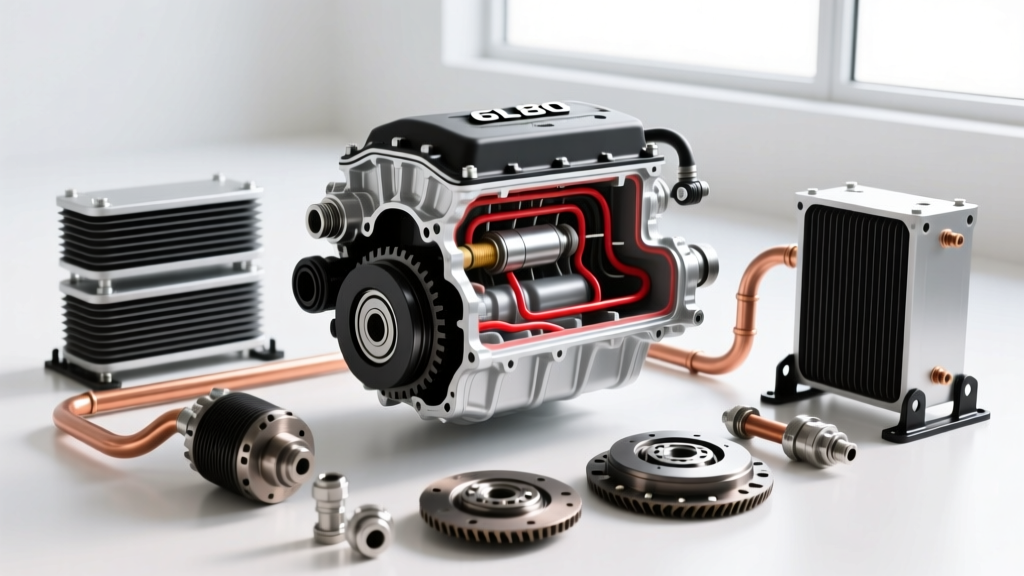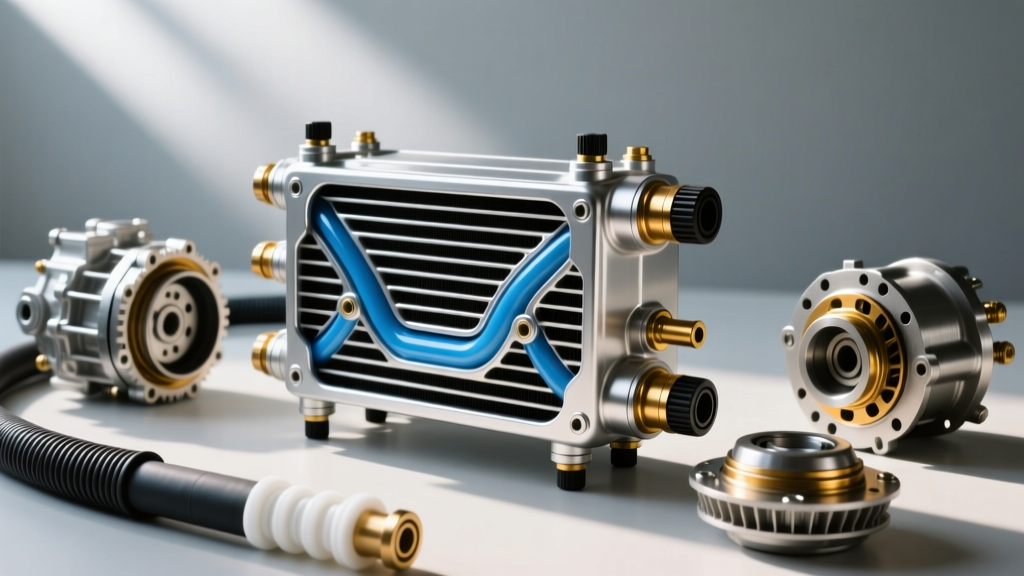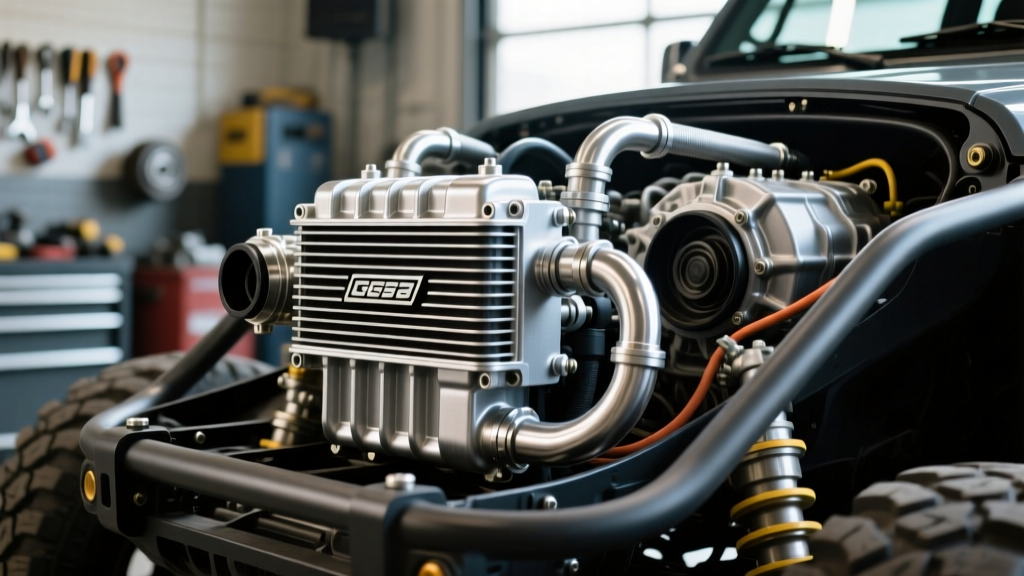
The Hidden Bottleneck: When the Best Transmission Cooler for Towing Fails
You invested heavily in the best transmission cooler for towing—perhaps a high-capacity stacked-plate Derale Series 8000 (Part #13105) or a vehicle-specific Mishimoto MMTC-F2D—yet your transmission temperatures are still climbing past 230°F under load. Worse, you might be finding puddles of red or amber ATF on your driveway after a long haul. Before you blame the cooler’s core efficiency or assume your torque converter is failing, you must inspect the weakest link in the cooling circuit: the transmission cooler line fittings.
In heavy-duty towing applications, the adapter fittings, quick-connects, and hose barbs are subjected to extreme thermal cycling and hydraulic pressure spikes. As we move through the 2026 towing season, modern 8-speed, 10-speed, and CVT transmissions demand unprecedented fluid flow rates to manage the heat generated by aggressive lockup schedules and low-viscosity fluids like Dexron ULV and Mercon LV. If your transmission cooler line fittings are restrictive, poorly sealed, or improperly torqued, even the most expensive auxiliary cooler becomes completely useless.
The Flow Dynamics of Towing: Why Fittings Sabotage Cooling
A 40,000 GVW-rated stacked-plate cooler is entirely ineffective if the factory 5/16-inch quick-connect fitting restricts fluid flow to a trickle. The transmission pump—especially in high-demand units like the Ford 10R80 or GM 10L90—relies on high-volume flow to lubricate clutch packs and cool the torque converter stator. When you adapt a high-flow cooler to restrictive factory fittings, you create a severe pressure drop.
This pressure drop triggers pump cavitation, which manifests as a distinct whining noise when the transmission is under load. Cavitation introduces air bubbles into the ATF, drastically reducing its thermal capacity and dielectric properties. The result is rapid fluid degradation, slipped clutches, and overheating, despite having the best transmission cooler for towing bolted to your frame rail.
Symptom 1: The 'Bellhousing Wash' (Quick-Connect O-Ring Failure)
If you are towing with a GM 6L80, 6L90, or 8L90 transmission, you are likely familiar with the dreaded 'bellhousing wash.' These units utilize plastic and metal quick-connect fittings secured by E-clips or retaining tabs at the transmission case. Under the sustained 200+ PSI line pressures generated during heavy towing in Tow/Haul mode, the internal Viton O-rings harden, flatten, and eventually extrude past the retaining clip.
When the O-ring fails, ATF is sprayed directly onto the bellhousing and exhaust, creating a massive fire hazard and rapid fluid loss. Troubleshooting Step: Inspect the area where the cooler lines meet the transmission case. If you see wetness, do not simply push the line back in. You must discard the factory plastic retainers.
The Fix: Upgrade to CNC-machined aluminum -6 AN O-ring boss (ORB) adapters or utilize heavy-duty line repair kits, such as those documented in Sonnax transmission technical resources. Replacing the weak push-lock mechanism with a threaded ORB fitting eliminates the risk of blow-offs entirely, securing the line against the extreme hydraulic shocks of heavy towing.
Symptom 2: Overheating Under Load & Restriction Diagnosis
If your transmission whines when shifting into Tow/Haul mode and temperatures refuse to drop below 220°F on highway grades, your transmission cooler line fittings are likely bottlenecking the system. To diagnose this, you must understand the flow limitations of your current hardware.
Flow Rate & Fitting Restriction Data
| Fitting Type | Internal Diameter | Max Flow (GPM) | Pressure Rating | Towing Suitability |
|---|---|---|---|---|
| Factory 5/16' Push-Lock | 0.210' | 1.2 - 1.8 | 150 PSI | Light Duty Only |
| Factory 3/8' Quick-Connect | 0.280' | 2.5 - 3.2 | 200 PSI | Moderate Towing |
| -6 AN ORB Aluminum | 0.340' | 4.0 - 5.5 | 500+ PSI | Heavy/Severe Towing |
| -8 AN ORB Aluminum | 0.450' | 6.5+ | 500+ PSI | Competition/Extreme |
As the table illustrates, attempting to push 4.5 GPM of fluid through a factory 5/16-inch push-lock fitting to feed a massive Derale cooler will result in a massive pressure differential. The pump works harder, generating more heat, while the cooler receives a starved, low-volume trickle. Upgrading the hard lines and fittings to a minimum of 3/8-inch OD with -6 AN ORB adapters is mandatory for unlocking the true potential of the best transmission cooler for towing.
Symptom 3: High-Pressure Line Blow-Offs at the Radiator
Ram trucks equipped with the 68RFE or Aisin AS69RC transmissions generate massive line pressure spikes—frequently exceeding 225 to 250 PSI—when towing heavy fifth-wheel trailers in low gears. If your auxiliary cooler was installed using standard barbed fittings and cheap worm-drive hose clamps at the radiator or cooler inlet, the rubber hose will expand under heat and pressure. Eventually, the hose slides off the barb, dumping your entire 12-quart fluid capacity onto the highway in a matter of seconds.
The Fix: Never use standard fuel injection clamps or low-grade worm-drive clamps on transmission cooler lines. Use high-quality 3/8-inch transmission hose (such as Gates 27058, meeting Gates Corporation fluid power specs) and secure them with constant-tension T-bolt clamps or OEM-style crimp sleeves. When using T-bolt clamps, torque them precisely to 25-30 in-lbs. Over-torquing will cut through the rubber hose, while under-torquing guarantees a blow-off under load.
Step-by-Step Diagnostic Protocol for Cooler Line Fittings
If you suspect your fittings are compromising your towing cooler upgrade, follow this diagnostic protocol:
- The Bucket Flow Test: Disconnect the return line at the transmission (the line flowing FROM the cooler back to the trans). Place it in a 1-gallon bucket. Have an assistant start the engine and idle in Park. You should see a minimum of 1 quart of fluid pumped in 15-20 seconds. If the flow is weak, your fittings or the cooler core are restricted.
- Thermal Leak Inspection: Use a UV flashlight and ATF dye, or simply inspect the fittings with a thermal camera after a heavy towing run. Leaks often only manifest when the fluid reaches 180°F+ and the O-rings soften.
- Thread Sealant Verification: If you have NPT (National Pipe Thread) fittings installed in your transmission case or cooler ports, check for leaks. Warning: Never use standard Teflon tape on NPT fittings entering a transmission. Shredded tape will travel into the valve body and clog the torque converter clutch (TCC) solenoid. Always use liquid PTFE thread sealant.
Critical Torque & Assembly Specifications
Proper installation of transmission cooler line fittings requires adherence to specific torque values to prevent cracking aluminum transmission cases or crushing O-rings. Refer to Mishimoto engineering tech guides and manufacturer spec sheets for your specific hardware. Below are the industry-standard torque specifications for heavy-duty towing applications:
- -6 AN ORB (O-Ring Boss) to Aluminum Case: 12-15 lb-ft. Do not exceed, or you will strip the soft aluminum threads of the 6L80 or 10R80 case.
- -8 AN ORB to Steel Block or Cast Iron: 20-25 lb-ft.
- 1/4' NPT Adapter Fittings: 15-18 lb-ft using liquid PTFE sealant.
- 3/8' Hose to Barbed Fitting (T-Bolt Clamp): 25-30 in-lbs (inch-pounds, NOT foot-pounds).
By addressing the often-overlooked transmission cooler line fittings, you ensure that the best transmission cooler for towing operates at its engineered peak. Eliminating flow restrictions and securing high-pressure connections will drop your towing temperatures by 20°F to 40°F, protect your clutch packs, and ensure your rig survives the steepest grades without triggering limp mode.